
World
Israel and Hamas agree Gaza truce, Biden pledges assistance

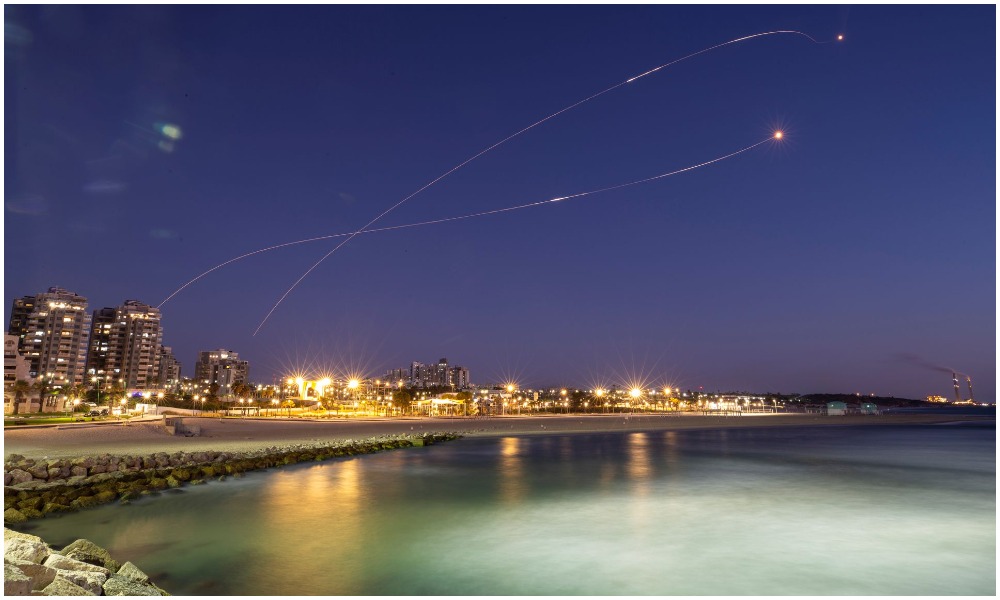
Israel and Hamas will cease-fire across the Gaza Strip border as of Friday, the United States said, bringing a potentially tenuous halt to the fiercest fighting in years.
Israeli Prime Minister Benjamin Netanyahu’s office said his security cabinet had voted unanimously in favour of a “mutual and unconditional” Gaza truce proposed by Egypt, but added that the hour of implementation had yet to be agreed.
Hamas and Egypt said the truce would begin at 2 a.m. (2300 GMT Thursday), after 11 days of Israeli-Palestinian hostilities.
In a televised address at 2200 GMT, U.S. President Joe Biden said both sides agreed the truce would begin “in less than two hours”.
The sides traded blows again in the countdown.
Sirens warned of incoming rockets in Israeli border communities, and a Reuters reporter heard an air strike in Gaza. A man in his 50s was lightly hurt in a direct hit on an Israeli factory, medics said.
Amid growing global alarm at the bloodshed, Biden had urged Netanyahu to seek de-escalation, while Egypt, Qatar and the United Nations sought to mediate.
Extending condolences to bereaved Israelis and Palestinians, Biden said Washington would work with the United Nations “and other international stakeholders to provide rapid humanitarian assistance” for the reconstruction of Hamas-controlled Gaza.
He said aid would be coordinated with the Palestinian Authority – run by Hamas’ rival, President Mahmoud Abbas, and based in the Israeli-occupied West Bank – “in a manner that does not permit Hamas to simply restock its military arsenal”.
The United States was also committed to replenishing Iron Dome interceptors that helped Israel fend off the more than 4,300 rockets fired at it from Gaza during the this month’s conflict.
Hamas said the ceasefire would be “mutual and simultaneous”.
“The Palestinian resistance will abide by this agreement as long as the Occupation (Israel) does the same,” Taher Al-Nono, media adviser to Hamas chief Ismail Haniyeh, told Reuters.
Egyptian President Abdel Fattah al-Sisi had ordered two security delegations into Israel and the Palestinian Territories to work towards upholding the ceasefire, Egyptian state TV reported.
In a televised speech Abu Ubaida, spokesman of the Hamas armed wing, said: “With the help of God, we were able to humiliate the enemy, its fragile entity and its savage army.”
He threatened Hamas rocket fire that would reach throughout Israel if it violated the truce or struck Gaza before the hour of implementation.
Rocket attacks by Hamas and the allied Islamic Jihad had resumed after an eight-hour pause earlier on Thursday, as Israel pursued shelling that it said aimed to destroy the factions’ military capabilities and deter them from future confrontations after the current conflict.
Israeli Defence Minister Benny Gantz said on Twitter that the Gaza offensive had yielded “unprecedented military gains”.
Speaking to his U.S. counterpart Lloyd Austin, Gantz said Israel’s defence establishment would “continue to work closely and in full cooperation with the Pentagon and the U.S. administration to stabilise the region,” Gantz’s office said.
Since the fighting began on May 10, health officials in Gaza said 232 Palestinians, including 65 children, had been killed and more than 1,900 wounded in aerial bombardments. Israel said it had killed at least 160 combatants in Gaza.
Authorities put the death toll in Israel at 12, with hundreds of people treated for injuries in rocket attacks that caused panic and sent people rushing into shelters.
The violence was triggered by Palestinian anger at what they viewed as Israeli curbs on their rights in Jerusalem, including during police confrontations with protesters at Al-Aqsa mosque.
Hamas previously demanded that any halt to the Gaza fighting be accompanied by Israeli drawdowns in Jerusalem. An Israeli official told Reuters there was no such condition in the truce.
“The only way there’ll be a Hamas-Jerusalem linkage is if they agree to us drowning them on ‘Jerusalem Beach’ in Tel Aviv,” security cabinet minister Tzachi Hanegbi told Israel’s top-rated Channel 12 TV earlier on Thursday.
Hamas is deemed a terrorist group in the West and by Israel, which it refuses to recognise.
The United Nations said its Middle East envoy, Tor Wennesland, was in Qatar on Thursday as part of truce efforts.


World
US readies new Russia sanctions if Putin rejects peace deal, Bloomberg News reports
A State Department spokesperson told Reuters it does not preview sanctions.
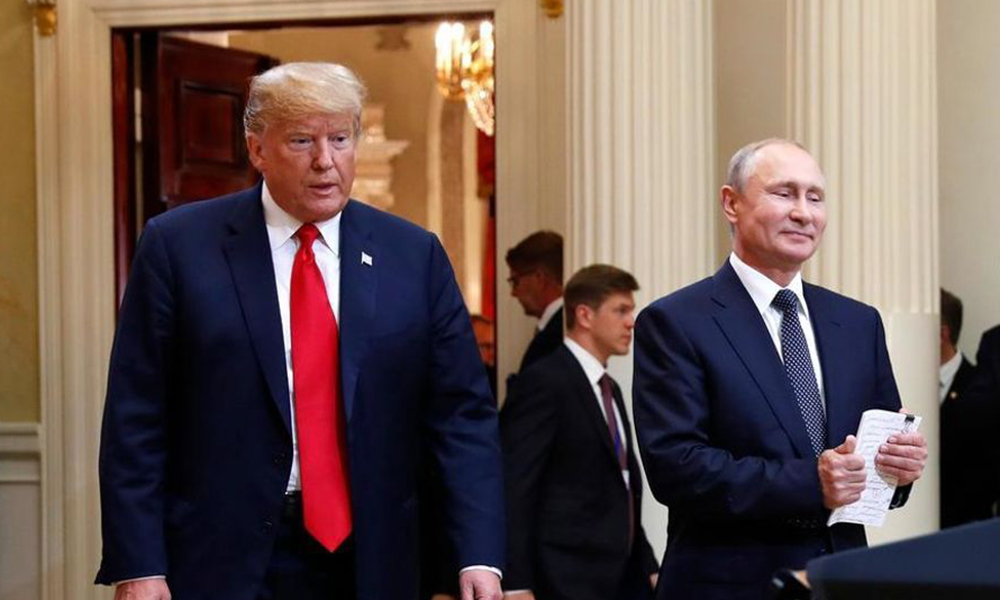
The United States is preparing a further round of sanctions targeting Russia’s energy sector to increase pressure on Moscow should it reject a peace deal with Ukraine, Bloomberg News reported on Wednesday, citing people familiar with the matter.
A White House official told Reuters that U.S. President Donald Trump had made no new decisions regarding Russian sanctions.
“It is the role of agencies to prepare options for the president to execute,” the official said.
Bloomberg had reported the U.S. was considering options including targeting vessels in what is known as Russia’s shadow fleet of tankers used to transport exported oil, as well as traders who facilitate such transactions.
The new measures could be announced as early as this week, the report said, adding that Treasury Secretary Scott Bessent discussed the move with a group of European ambassadors this week.
“It is explicitly false to conclude any decisions have been made regarding future sanctions against Russia. As we have said for months, all options remain on the table in support of President Trump’s tireless efforts to stop the senseless killing, and to achieving a lasting, durable peace,” a U.S. Treasury Department spokesperson said.
A State Department spokesperson told Reuters it does not preview sanctions.
Asked about the Bloomberg article, the Kremlin said it had not seen the report but that any sanctions harm efforts to mend U.S.-Russia relations.
World
Trump adds seven countries, including Syria, to full travel ban list
The White House cited visa overstay rates for Syria in its justification for the ban.

U.S. President Donald Trump on Tuesday expanded a list of countries subject to a full travel ban, prohibiting citizens from an additional seven countries, including Syria, from entering the United States.
The White House said in a statement that Trump signed a proclamation “expanding and strengthening entry restrictions on nationals from countries with demonstrated, persistent, and severe deficiencies in screening, vetting, and information-sharing to protect the Nation from national security and public safety threats.”
Tuesday’s move banned citizens from Burkina Faso, Mali, Niger, South Sudan, Syria and those holding Palestinian Authority-issued travel documents. The action also imposes a full ban on Laos and Sierra Leone, which had previously only been subject to partial restrictions.
The White House said the expanded ban goes into effect on January 1.
The action comes despite Trump’s vow to do everything he could to make Syria successful after landmark talks in November with Syrian President Ahmed al-Sharaa, a former al Qaeda commander who until recently was sanctioned by Washington as a foreign terrorist.
Trump has backed Sharaa, whose visit capped a stunning year for the rebel-turned-ruler who toppled longtime autocratic leader Bashar al-Assad and has since traveled the world trying to depict himself as a moderate leader who wants to unify his war-ravaged nation and end its decades of international isolation.
But in a post on his Truth Social platform on Saturday, Trump vowed “very serious retaliation” after the U.S. military said two U.S. Army soldiers and a civilian interpreter were killed in Syria by a suspected Islamic State attacker who targeted a convoy of American and Syrian forces before being shot dead. He described the incident in remarks to reporters as a “terrible” attack.
The White House cited visa overstay rates for Syria in its justification for the ban.
“Syria is emerging from a protracted period of civil unrest and internal strife. While the country is working to address its security challenges in close coordination with the United States, Syria still lacks an adequate central authority for issuing passports or civil documents and does not have appropriate screening and vetting measures,” the White House said.
Trump signed a proclamation in June banning the citizens of 12 countries from entering the United States and restricting those from seven others, saying it was needed to protect against “foreign terrorists” and other security threats. The bans apply to both immigrants and non-immigrants, such as tourists, students and business travelers.
The travel ban remains on those twelve countries, the White House said.
Trump also added partial restrictions and entry limitations on an additional 15 countries, including Nigeria, which is under scrutiny from Trump, who in early November threatened military action over the treatment of Christians in the country.
Nigeria says claims that Christians face persecution misrepresent a complex security situation and do not take into account efforts to safeguard religious freedom.
Since returning to office in January, Trump has aggressively prioritized immigration enforcement, sending federal agents to major U.S. cities and turning away asylum seekers at the U.S.-Mexico border.
The expansion of the countries subject to entry restrictions marks a further escalation of immigration measures the administration has taken since the shooting of two National Guard members in Washington, D.C., last month.
Investigators say the shooting was carried out by an Afghan national who entered the U.S. in 2021 through a resettlement program under which Trump administration officials have argued there was insufficient vetting.
Days after the shooting, Trump vowed to “permanently pause” migration from all “Third World Countries,” although he did not identify any by name or define the term.
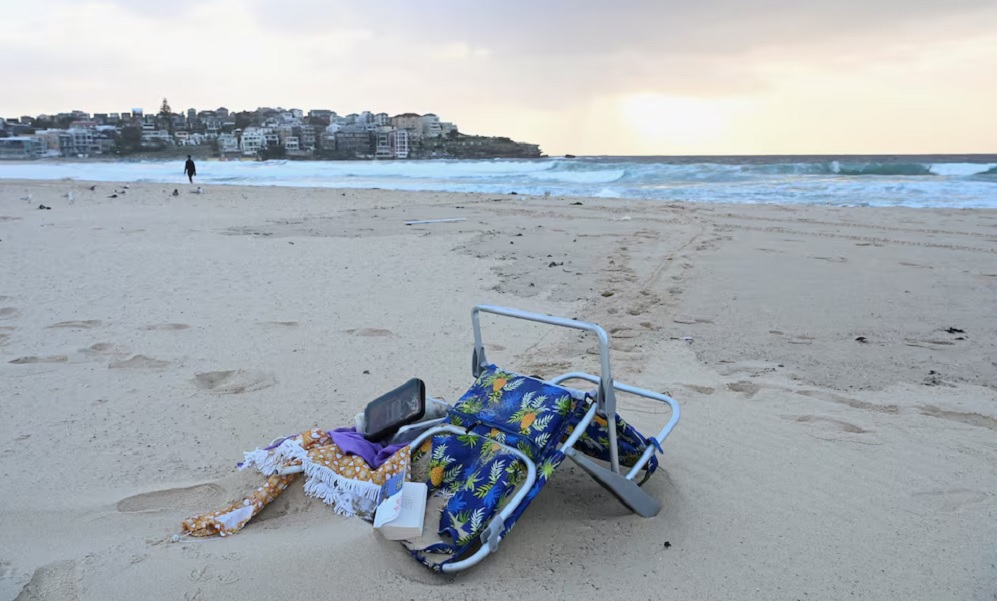
Two alleged gunmen who killed 15 people at a Jewish celebration at Sydney’s Bondi Beach were a father and son, police said on Monday, as Australia began mourning victims of its worst gun violence in almost 30 years.
The father, a 50-year-old, was killed at the scene, taking the number of dead to 16, while his 24-year-old son was in a critical condition in hospital, police said at a press conference on Monday. The father and son were identified as Sajid Akram and Naveed Akram, respectively, by state broadcaster ABC and other local media outlets, Reuters reported.
Officials have described Sunday’s shooting as a targeted antisemitic attack.
Forty people remain in hospital following the attack, including two police officers who are in a serious but stable condition, police said. The victims were aged between 10 and 87.
Witnesses said the attack at the famed beach, which was packed on a hot evening, lasted about 10 minutes, sending hundreds of people scattering along the sand and into nearby streets.
Police said around 1,000 people had attended the targeted Hanukkah event, which was held in a small park off the beach.
A bystander captured on video tackling and disarming an armed man during the attack has been hailed as a hero whose actions saved lives. 7News Australia named him as Ahmed al Ahmed, citing a relative, who said the 43-year-old fruit shop owner had been shot twice and had undergone surgery.
A fundraising page for the man had raised more than A$350,000 ($233,000) by Monday afternoon.
Police did not release the shooters’ names, but said the father had held a firearms license since 2015 and had six licensed weapons.
Home Minister Tony Burke said the father arrived in Australia in 1998 on a student visa, while his son is an Australian-born citizen.
Police did not provide details about the firearms, but videos from the scene showed the men firing what appeared to be a bolt-action rifle and a shotgun.
“We are very much working through the background of both persons. At this stage, we know very little about them,” New South Wales Police Commissioner Mal Lanyon told reporters.
Bondi local Morgan Gabriel, 27, said she had been heading to a nearby cinema when she heard what she thought were fireworks, before people started running up her street.
“I sheltered about six or seven. Two of them were actually my close friends, and the rest were just people that were on the street. But people, their phones had been left down the beach, and everyone was just trying to get away,” she said.
“It’s a very sad time this morning… Normally, like on a Monday or any morning, it’s packed. People are swimming, surfing, running. So this is very, very quiet. And there’s definitely a solemn sort of vibe.”
A makeshift memorial with flowers and Israeli and Australian flags was set up at the Bondi pavilion and an online condolence book was established. Police and private Jewish security guards wearing earpieces were positioned around as mourners paid respects and laid flowers.
WORLD LEADERS CONDEMN THE ATTACK
Authorities said they were confident only two attackers were involved in the incident, after previously saying they were checking whether a third offender was involved.
At the suspects’ home in Bonnyrigg, a suburb around 36 km (22 miles) west of the CBD, there was a heavy police presence on Monday, with a cordon wrapping around several neighbouring houses.
Australian Prime Minister Anthony Albanese visited Bondi Beach on Monday morning to lay flowers near the scene of the attack.
“What we saw yesterday was an act of pure evil, an act of antisemitism, an act of terrorism on our shores in an iconic Australian location,” Albanese told reporters.
“The Jewish community are hurting today. Today, all Australians wrap our arms around them and say, we stand with you. We will do whatever is necessary to stamp out antisemitism. It is a scourge, and we will eradicate it together.”
Albanese later urged Australians to light a candle in solidarity with the Jewish community “to show that light will indeed defeat darkness – part of what Hanukkah celebrates”, he said.
Albanese said several world leaders including U.S. President Donald Trump and French President Emmanuel Macron had reached out and offered condolences and support.
Sunday’s shootings were the most serious in a string of antisemitic attacks on synagogues, buildings and cars in Australia since the beginning of Israel’s war in Gaza in October 2023.
Israeli Prime Minister Benjamin Netanyahu said he had warned Albanese that Australia’s support for Palestinian statehood would fuel antisemitism.
In August, Australia accused Iran of directing at least two antisemitic attacks and gave Tehran’s ambassador a week to leave the country.
‘SAW BODIES ON THE GROUND’
Mass shootings are rare in Australia, one of the world’s safest countries. Sunday’s attack was the worst since 1996, when a gunman killed 35 people at the Port Arthur tourist site in the southern island state of Tasmania.
Rabbi Mendel Kastel, whose brother-in-law Eli Schlanger was killed in Sunday’s attack, said it had been a harrowing evening.
“You can very easily become very angry and try to blame people, turn on people but that’s not what this is about. It’s about a community,” he said.
“We need to step up at a time like this, be there for each other, and come together. And we will, and we will get through this, and we know that. The Australian community will help us do it,” he added.
Local woman Danielle, who declined to give her surname, was at the beach when the shooting occurred and raced to collect her daughter, who was attending a bar mitzvah at a function centre near where the alleged shooters were positioned.
“I heard there was a shooting so I bolted there to get my daughter, I could hear gunshots, I saw bodies on the ground. We are used to being scared, we have felt this way since October 7.”
Hamas militants attacked Israel on October 7, 2023, killing around 1,200 people, according to Israeli tallies. The attack precipitated Israel’s war in Gaza, which has killed more than 70,000 Palestinians, according to Gaza health authorities.
Australia’s Jewish diaspora is small but deeply embedded in the wider community, with about 150,000 people who identify as Jewish in the country of 27 million. About one-third of them are estimated to live in Sydney’s eastern suburbs, including Bondi.
Major cities including Berlin, London and New York stepped up security around Hanukkah events on Sunday following the attack at Bondi.


Afghanistan-Kazakhstan banking ties discussed in Kabul meeting

Afghanistan, Kazakhstan envoys discuss expanding trade and regional connectivity

Afghanistan and Kyrgyzstan boost trade and digital finance ties

Afghanistan seeks India’s support in standardizing traditional medicine

India reaffirms healthcare support to Afghanistan, hands over medicines and vaccines

Afghanistan U19 cricket team defeats India A U19

Afghanistan economy under pressure as Pakistan shocks reshape trade flows

Gaza death toll tops 70,000, health ministry says

India set to establish pharmaceutical factories in Afghanistan: MoIC

Afghanistan offers tax breaks, free land to attract Indian investors

Tahawol: Discussion on regional countries’ meetings on Afghanistan

Saar: Regional efforts to address Afghanistan-Pakistan issues discussed

Tahawol: Officials say interactions must be based on realities

Saar: mistreatment of Afghan refugees in Pakistan discussed

Tahawol: Intertwined interests of neighbors and Afghan security dynamics discussed
-

 Latest News4 days ago
US delivers second batch of Afghan Black Hawk helicopters to Peru
-
 Latest News3 days ago
Germany speeds up admission of Afghans from Pakistan
-

 Sport3 days ago
IPL 2026 Auction set for Abu Dhabi with $28.6 million purse at stake
-
 Business4 days ago
Afghan economy posts second year of growth despite deep structural challenges
-
 Latest News3 days ago
Afghanistan to establish independent oil and gas authority
-

 Latest News3 days ago
US intelligence chief warns of ‘direct threat’ from suspected terrorists inside the country
-

 Sport4 days ago
ATN to broadcast ‘The Best FIFA Football Awards 2025’
-

 International Sports4 days ago
ILT20: Jahangir powers Dubai Capitals to nine-run win over Abu Dhabi Knight Riders