
Latest News
Iran’s Zarif meets Taliban, calls for inclusive government

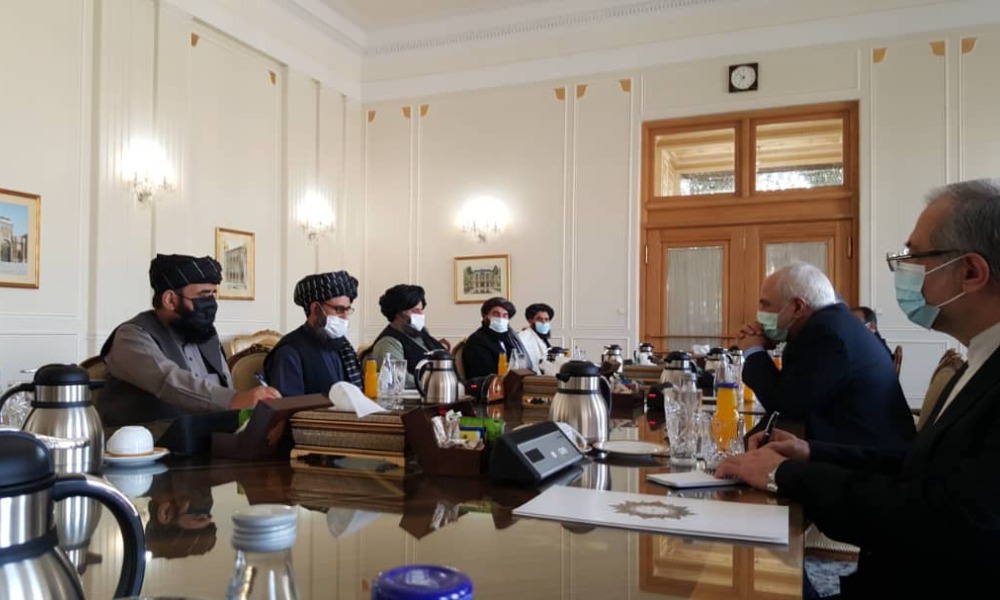
During talks with a visiting Taliban delegation, Iran’s Foreign Minister Javad Zarif on Sunday called for the formation of an inclusive government in Afghanistan.
Iran’s foreign ministry said in a press release after the meeting between the Taliban delegation, led by the group’s deputy leader Mullah Ghani Baradar, and Zarif that Iran’s foreign minister welcomed the idea of the formation of an “all-inclusive government with the participation of all ethnic and political groups in Afghanistan.”
“Political decisions could not be made in a vacuum, and the formation of an all-inclusive government must take place in a participatory process and by taking into account the fundamental structures, institutions and laws, such as the Constitution,” Zarif said.
Zarif also expressed Iran’s readiness to facilitate dialogue between the Afghan government, the Taliban and other Afghan groups.
He said: “The noble people of Afghanistan have been wronged. The war and occupation of Afghanistan have dealt heavy blows to the Afghan people.”
Zarif was quoted in the statement as having expressed hope that the Taliban would focus efforts on an immediate end to the pains and problems of Afghan people, so that the establishment of peace in Afghanistan “would strip the outsiders of a pretext for occupation”.
Meanwhile the statement noted that Baradar said in the meeting that he “denounced the destructive role of ISIS (Daesh) in Afghanistan.”
He did however express “satisfaction with the process of intra-Afghan talks, and described the formation of an all-inclusive government with the participation of all ethnic and political groups as a necessary condition for the establishment of peace in Afghanistan.”
The Taliban delegation arrived in Tehran on Tuesday at the invitation of Iran for talks with Iranian officials.
On Wednesday, they held talks with Ali Shamkhani, the secretary of Iran’s Supreme National Security Council, during which Shamkhani accused the United States of “creating a deadlock” in the intra-Afghan peace talks.
Iran’s top security official called for the “involvement of all Afghan groups” to determine the fate of their country, saying Tehran will “not recognize” any group that seeks to “seize power through war”.
The visit of the Taliban delegation to Iran comes amid a second round of intra-Afghan talks in Doha. The talks resumed earlier this month but have failed to make any headway, even as violence peaks in Afghanistan.



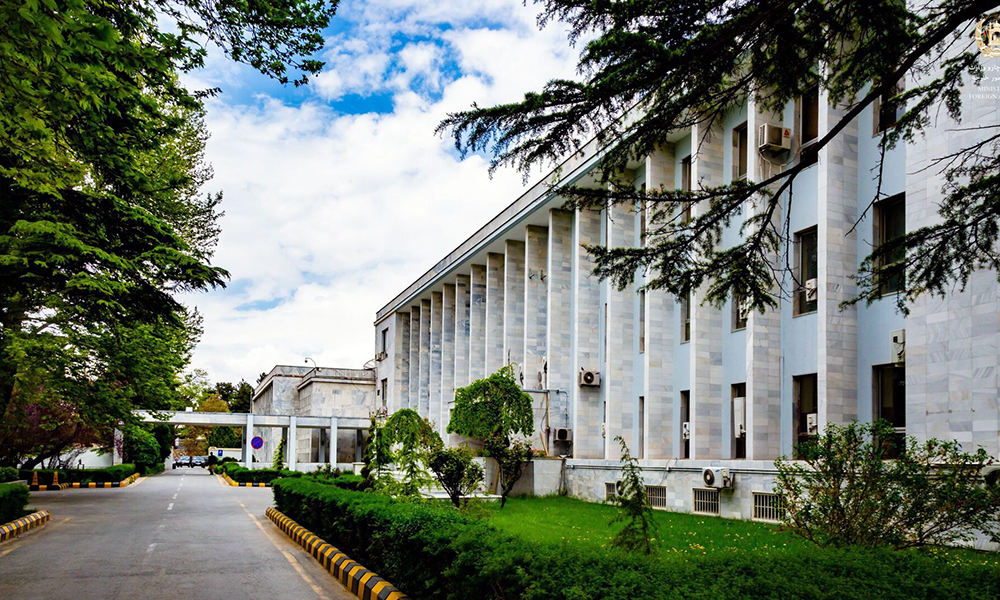
The Ministry of Foreign Affairs of Afghanistan has voiced serious concern over rapidly escalating political and security tensions in the region, warning that the consequences could negatively affect all neighboring countries.
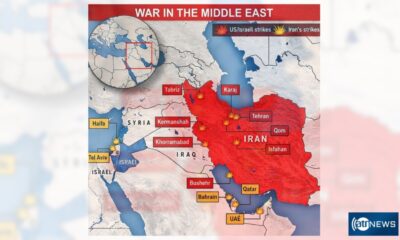
In a statement issued Sunday, the Islamic Emirate said it is deeply worried about recent strikes carried out by Israel and the United States on targets inside Iran, as well as Iran’s subsequent missile and drone attacks targeting Gulf states.
The statement comes amid one of the most serious regional escalations in years.
Over the weekend, U.S. and Israeli forces launched coordinated strikes on Iranian territory, including high-profile military and leadership targets. Iran responded with waves of missile and drone attacks on U.S. assets and Gulf countries, including the United Arab Emirates, Qatar and Bahrain, prompting airport closures, airspace disruptions and heightened security across the region.
Several Gulf states reported casualties, injuries and material damage, while embassies in multiple countries advised foreign nationals to shelter in place. Commercial aviation and shipping routes have also faced significant disruption as tensions remain high.
Against this backdrop, Afghanistan’s Foreign Ministry stressed that continued military actions violate established international principles, undermine national sovereignty and threaten the territorial integrity of states.
The IEA described the developments as unacceptable and condemnable.
The Islamic Emirate called on all parties to exercise restraint, respect national sovereignty and avoid further escalation. It urged an immediate halt to military operations and a return to dialogue and diplomatic solutions, warning that prolonged instability would have far-reaching humanitarian, economic and security consequences for the broader region.
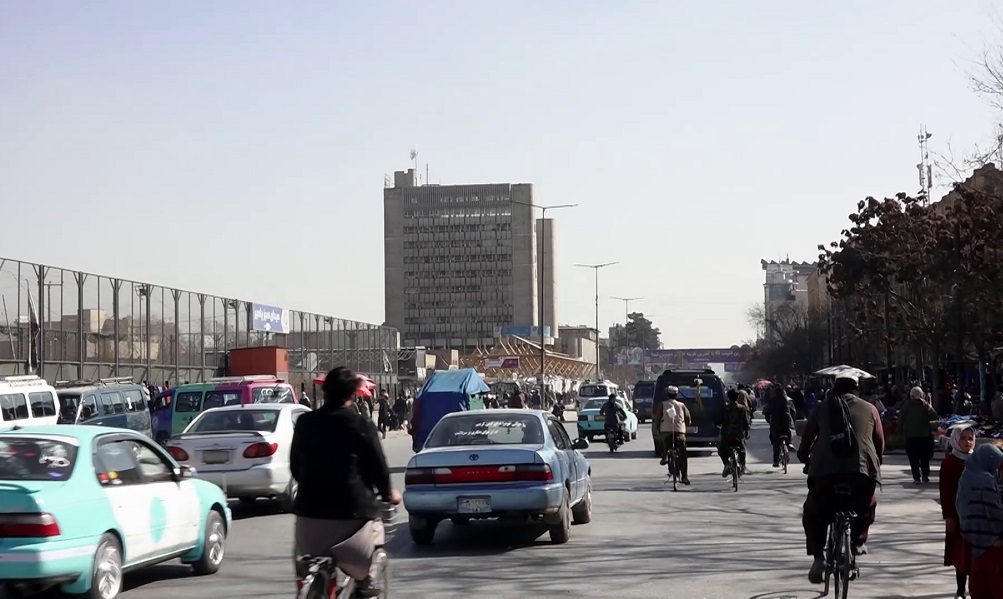
Zabihullah Mujahid, spokesperson of the Islamic Emirate, says Afghan defense forces repelled repeated airspace violations over Kabul on Saturday night by the Pakistani military, assuring the public that the security situation in the capital remains stable.
Mujahid confirmed that Afghan air-defense units targeted incoming aircraft, saying: “Air defence attacks were carried out in Kabul against Pakistani aircraft. Kabul residents should not be concerned.”
Amid rising military tensions between the Islamic Emirate and Pakistan, senior officials in Afghanistan warned that the nation is fully capable of responding to any form of aggression.
Hayatullah Muhajir Farahi, Deputy Minister of Publication at the Ministry of Information and Culture, stated: “The enemies of Afghanistan must understand that Afghans now have the ability to respond decisively to any act of aggression.”
International Sports
FIFA calls for ‘all teams to participate’ in 2026 World Cup amid US–Iran conflict
The developments come just months before Iran is due to travel to the United States for the World Cup, which will be co-hosted by the US, Mexico and Canada.
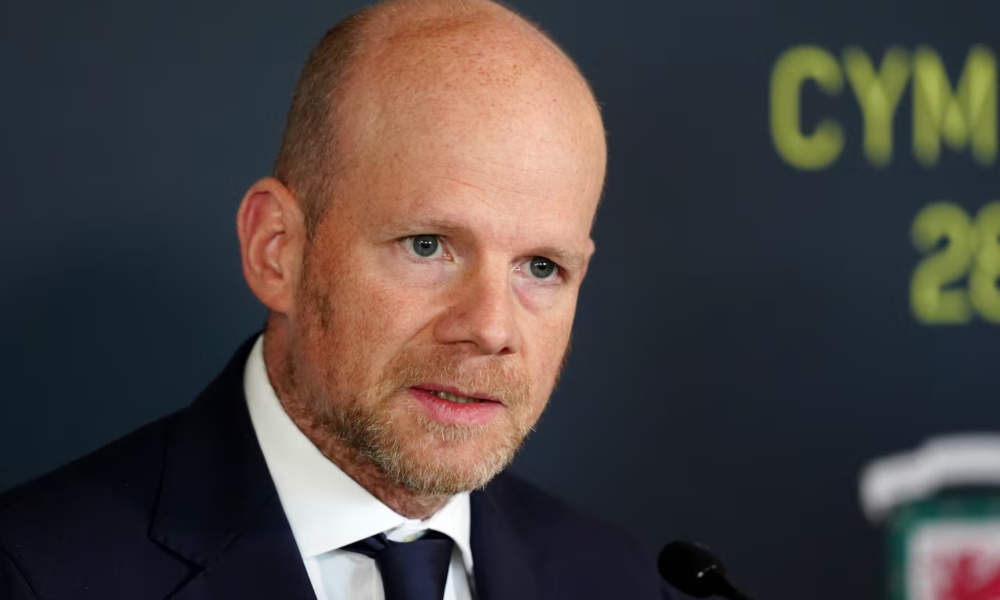
FIFA Secretary General Mattias Grafström says the governing body remains committed to having every qualified nation compete at the 2026 World Cup, despite escalating conflict between the United States and Iran.
The U.S. carried out missile attacks on Iran on Saturday and Sunday, with US President Donald Trump describing the operation as a “major combat mission.” Iran responded with strikes on US air bases in the Gulf, including facilities in the United Arab Emirates, Qatar and Bahrain.
The developments come just months before Iran is due to travel to the United States for the World Cup, which will be co-hosted by the US, Mexico and Canada.
Iran was drawn into Group G alongside Belgium, Egypt and New Zealand. Team Melli is scheduled to play two group-stage matches in Los Angeles on June 15 and 21, followed by a third in Seattle on June 26.
Speaking at the International Football Association Board’s annual general meeting in Cardiff, Wales, Grafström said FIFA is closely monitoring the situation but remains focused on ensuring the tournament proceeds safely and inclusively.
“I read the news this morning the same way you did,” Grafström said. “It is premature to comment in detail, but we will monitor developments around all issues around the world.
“Our focus is on a safe World Cup with all the teams participating. We will continue to communicate with the three host governments as we always do. Everybody will be safe.”
However, questions remain about Iran’s participation due to US travel restrictions. Iran is among 19 countries included in a travel ban announced by the Trump administration in June last year, potentially complicating entry for Iranian citizens.
In December, Iran Football Federation president Mehdi Taj warned that some national team players and staff could face visa denials because of prior military service. Several players have served in the Islamic Revolutionary Guard Corps (IRGC), which the US government designates as a foreign terrorist organization.
The U.S. State Department has not ruled out the possibility that certain Iranian players could be denied visas, adding further uncertainty to Iran’s path to the 2026 tournament.


Afghanistan expresses deep concern as Middle East crisis intensifies

Afghanistan says Pakistani airspace violation over Kabul was thwarted

FIFA calls for ‘all teams to participate’ in 2026 World Cup amid US–Iran conflict

UNSC to convene meeting on Afghanistan in March 9

Pakistan’s night strikes hit residential areas in Afghanistan, civilian casualties reported

Pakistani military jet downed in Afghanistan’s Jalalabad, pilot captured alive

IEA releases three Pakistani soldiers to mark Ramadan

AFC Futsal Asian Cup: Afghanistan to face Iran in crucial Group D clash

Afghanistan’s Chief of Armed Forces underscores readiness and equipment for national defense

Afghanistan welcomes investment and technology partnerships with India

Tahawol: Joint Israeli-US attacks on Iran discussed

Saar: Afghan retaliatory operations against Pakistan discussed

Tahawol: Carrying out retaliatory operations against Pakistan discussed

Saar: Resumption of retaliatory operations against Pakistan discussed

Tahawol: IEA’s military response against Pakistan discussed
-
 Latest News2 days ago
Pakistani military jet downed in Afghanistan’s Jalalabad, pilot captured alive
-
 Latest News2 days ago
Afghan Air Force conducts airstrikes in Islamabad, other cities
-
 Latest News2 days ago
IEA: Special circle in Pakistan has launched mission to destabilize region
-
 World4 days ago
India’s Modi backs Israel in address at Israeli parliament
-
 Latest News2 days ago
Turkey launches initiative to diffuse Afghanistan-Pakistan tension
-
 Regional3 days ago
Narendra Modi holds high-level talks after historic address to Knesset
-

 Latest News2 days ago
Afghans say they are united against Pakistan aggression
-
 Latest News3 days ago
Pakistan carries out airstrikes after Afghanistan launches retaliatory attacks