
Regional
Iran war escalation raises concern over civilian death toll
The U.S. has reported 18 military personnel killed and more than 750 wounded.

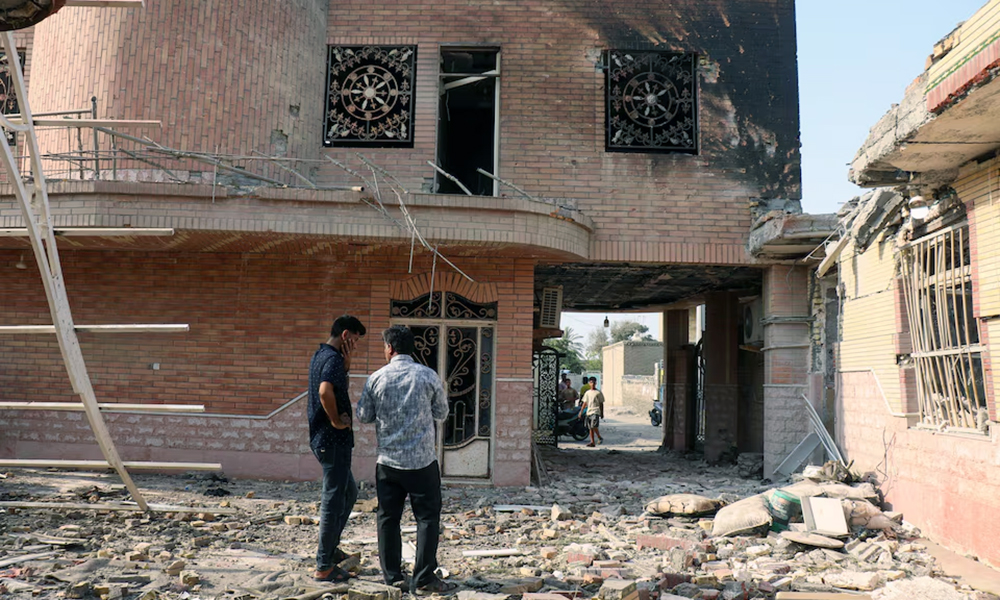
The sudden recent escalation of the Iran war has cast renewed attention on its civilian toll after Iran reported 18 dead in the last U.S. assault, including four killed and dozens wounded at a wedding, Reuters reported.
Iran’s health minister said 18 people were killed and 108 wounded in Tuesday night’s U.S. strikes across Iran. The Iranian Red Crescent said four people were killed and 67 wounded at a wedding ceremony near the coast of the Strait of Hormuz.
The return of combat operations has alarmed countries throughout the region, as Iran launched missile and drone attacks against what it said were U.S. assets in Bahrain, Jordan, Kuwait and Iraq. Kuwait’s army reported further missile and drone attacks early Thursday, saying they were intercepted by air defense systems.
The guns had largely gone silent since the previous exchange in July, although peace talks failed to advance in the interim. U.S. President Donald Trump threatened to unleash yet more military force, even though the war is unpopular at home and has driven up the cost of gasoline.
Top aides to Trump are pushing to keep the war from escalating before November’s midterm elections to staunch Republican electoral losses, and White House officials will consider ramping up military action after the vote on November 3, four people familiar with the discussions said.
Iran, for its part, has remained defiant, despite suffering heavy military and economic losses.
United Nations Secretary-General Antonio Guterres was “deeply alarmed by reports of civilian casualties, including a strike that reportedly hit a wedding ceremony in Iran,” and called for an immediate cessation of military action, his spokesperson Stephane Dujarric said.
“The Secretary-General condemns all attacks against civilians. He recalls that all parties must respect their obligations under international humanitarian law, including the principles of distinction, proportionality, and precaution,” Dujarric said.
The deaths would be in addition to the 3,636 people documented as killed in Iran as of April 7, including 1,701 civilians, according to the Human Rights Activists News Agency (HRANA), an independent Iranian rights group, read the report.
The U.S. has reported 18 military personnel killed and more than 750 wounded.
“We are aware of reports, which originated from Iranian state media. The U.S. military never targets civilians, unlike the IRGC,” U.S. Navy Captain Tim Hawkins, a spokesperson for the U.S. military’s Central Command, said in an email.
The Iranian Red Crescent Society released video showing debris strewn on the ground next to a building with a large hole in the roof, accompanied by still images showing people, some in Red Crescent vests, at a damaged building and a utility tower lying on the ground.
Reuters was able to verify the location using satellite imagery, which showed the fallen tower was 136 metres (149 yards) from the damaged building.
The wedding incident recalled the blast at a school in Minab that killed 160 peopleat a girls’ school on the first day of the war.
The Pentagon has yet to issue an official finding on the Minab strike, which would be the U.S. military’s largest civilian casualty incident in decades. It may have been the result of U.S. use of outdated targeting data, two sources familiar with the matter told Reuters.
Democratic members of the U.S. Congress have called on the administration to release findings of its investigation of the incident, but the report has not been sent to lawmakers.
U.S. defenders of the Iran war also point to civilian deaths that resulted from Iranian attempts to put down street protests that embroiled the country in December and January, before the U.S. and Israel attacked Iran on February 28. HRANA has put that death toll at more than 7,000, while Iranian exile groups claim the number is much higher.
Trump has cited an incentive for Iranians to overthrow their government as one reason for the war, in addition to seeking to halt Iran’s nuclear program and ending its support for militant groups abroad such as Hamas, Hezbollah and the Houthis.
Iran has also responded to the U.S. attacks by threatening any oil tankers that transit the Strait of Hormuz without Iranian authorization, severely curtailing traffic in a waterway that before the war carried 20% of the world’s oil supply.






Regional
Trump says US may strike Iran’s ‘Pickaxe Mountain’ nuclear facility
Pickaxe Mountain is a heavily fortified underground facility linked to Iran’s nuclear programme, located near one of the country’s major nuclear sites.
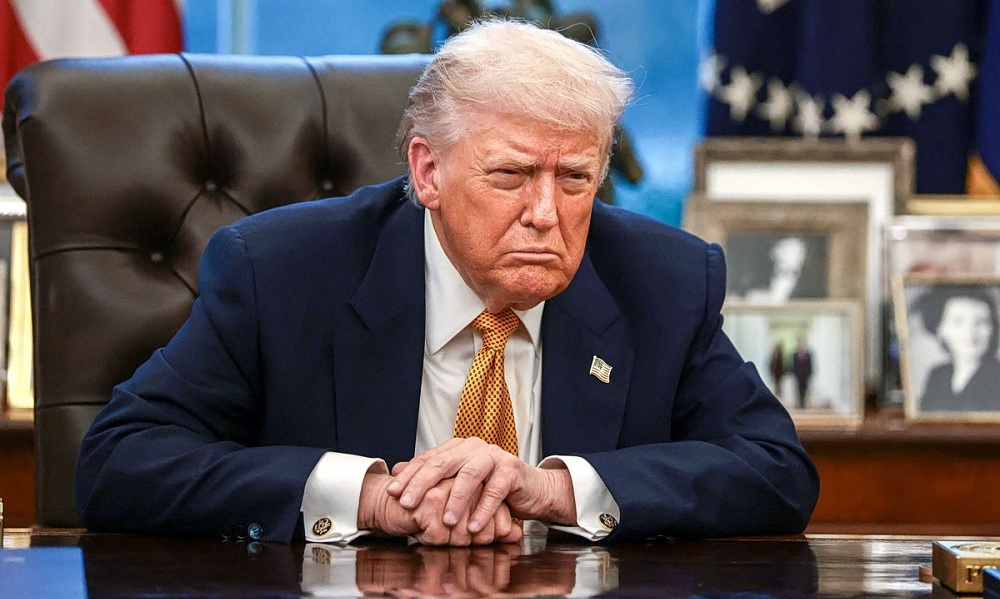
US President Donald Trump has said Washington may launch further strikes against Iran’s underground nuclear facilities, including the site known as Pickaxe Mountain, as he seeks to prevent Tehran from developing a nuclear weapon, Reuters reported.
In an interview with Newsmax on Thursday night, Trump said the United States was determined to ensure Iran never obtains a nuclear weapon, arguing that such a development would pose a serious threat.
“Their nuclear is buried under millions of tons of mountain. Now we’re looking at Pickaxe Mountain. We may have to go there. We’ll take a shot at that one. We’ll knock it out fast,” Trump said.
Pickaxe Mountain is a heavily fortified underground facility linked to Iran’s nuclear programme, located near one of the country’s major nuclear sites.
Trump also ruled out the use of nuclear weapons in the conflict, saying conventional military capabilities would be sufficient to achieve US objectives.
“I wouldn’t use nuclear. We don’t have to,” he said.
The US president reiterated that he was not considering deploying American ground troops into Iran, signalling that Washington’s military approach would continue to rely on other forms of military action.
Trump did not confirm whether he had authorised the use of the GBU-43/B Massive Ordnance Air Blast (MOAB) bomb, commonly known as the “Mother of All Bombs,” against Iranian energy infrastructure or nuclear facilities. He stressed that the weapon was not nuclear, read the report.
The remarks come amid escalating tensions between Washington and Tehran following US-Israeli strikes on Iran that began in February, with Iran’s nuclear programme remaining a central issue in the conflict.
The potential targeting of deeply buried nuclear facilities could further intensify the conflict and raise concerns about the broader regional security situation.
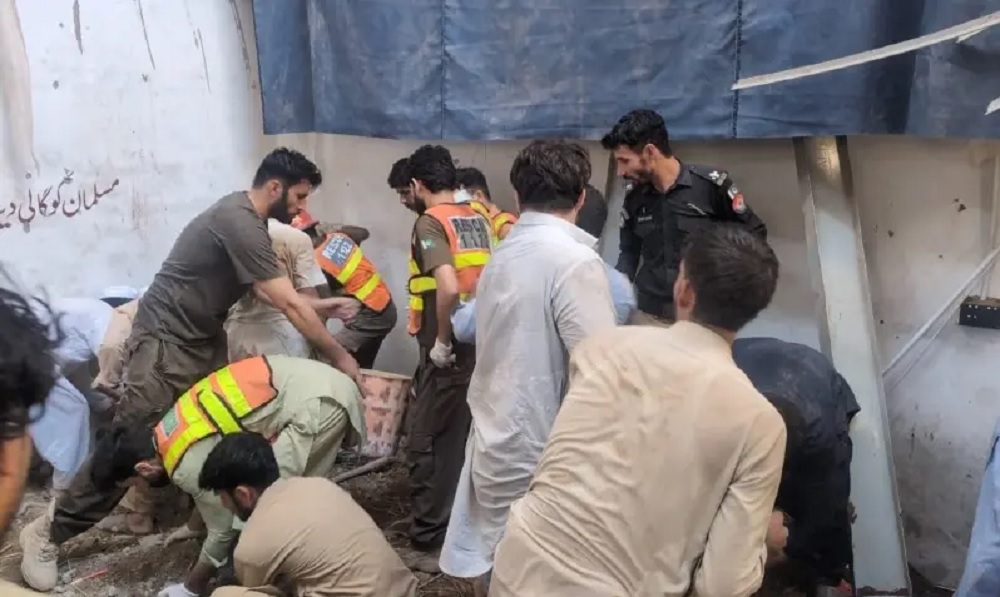
Twenty-one pupils and a teacher were killed on Thursday after a roof collapsed at a school in the northwest Pakistani city of Peshawar, a hospital official said.
Asim Khan from Peshawar’s Lady Reading Hospital confirmed the toll to AFP, adding that over 30 people were injured, with six believed to be in a critical condition.
Pakistan’s Prime Minister Shehbaz Sharif in a statement expressed “deep sorrow and grief over the loss of precious lives”.
“The Prime Minister extends his condolences to the bereaved families and prays for them to have the strength and patience to bear this irreparable loss,” the statement said.
Roof and building collapses are common across Pakistan, mainly because of poor safety standards and shoddy construction materials in the South Asian country of more than 240 million people.
In June this year more than a dozen children were killed in a roof collapse at a tutoring centre in the eastern city of Lahore.
In 2025, 27 people were killed and 10 injured when a five-storey building collapsed in the impoverished area of Lyari in the southern city of Karachi. – AFP
Regional
Saudi Aramco administrative building attacked, limited fire reported
The complex hosts a major operations centre for Aramco, which oversees a vast network of onshore and offshore oil rigs, pipelines, refineries and export terminals.
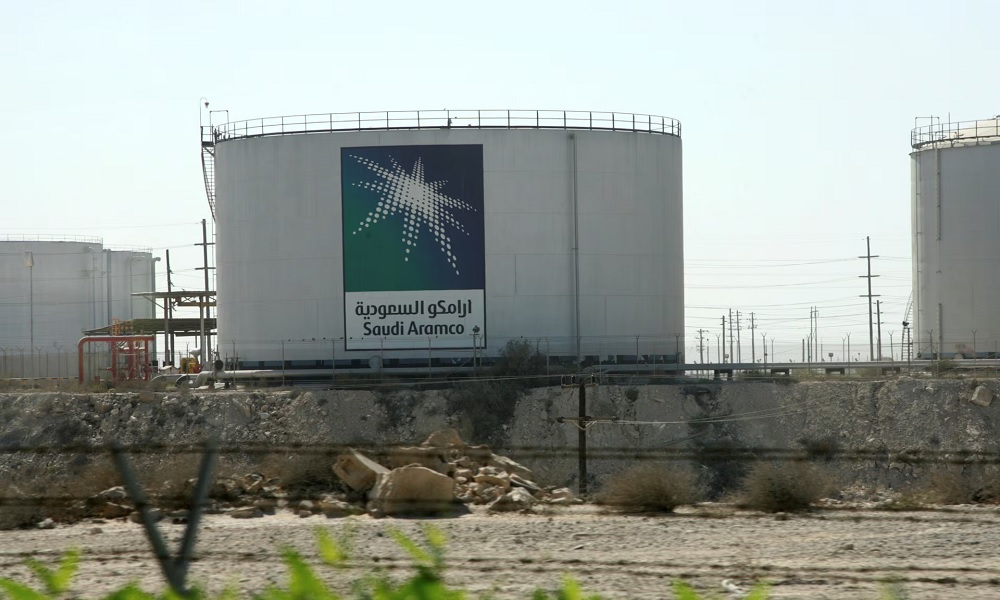
An administrative building belonging to Saudi Arabia’s state-owned oil company Saudi Aramco in the eastern city of Dhahran was attacked, causing a limited fire, the Energy Ministry said in a statement on Wednesday as fighting between Yemen’s Iran-allied Houthis and the kingdom intensified.
Authorities responded to the incident late on Tuesday and took necessary measures, the ministry said, adding that there were no injuries or deaths.
A company source told Reuters earlier that a ballistic missile hit the Aramco headquarters complex in Dhahran. The source said an office tower in the complex was struck and that its top three floors were damaged. The source and two other people with knowledge of the matter said the building was on fire.
The complex hosts a major operations centre for Aramco, which oversees a vast network of onshore and offshore oil rigs, pipelines, refineries and export terminals.
The Houthis have for a week been firing ballistic missiles and drones at key Saudi sites in retaliation for the kingdom’s backing of government forces in Yemen’s reignited civil war. Riyadh’s international airport has received four strikes, including one on Saturday that killed 13 people.
Saturday’s ballistic missile strike on Riyadh airport was the deadliest in Saudi Arabia in a decade, with further attacks grounding flights across the country.
Earlier, six sources told Reuters they heard loud booms near the Aramco complex.
The Saudi-led coalition said fragments of a missile that it had intercepted and destroyed in Dhahran had fallen on a residential area, without providing further details.
Authorities also reported that drones and missiles were intercepted and destroyed in the capital, Riyadh, and the country’s southern region.
Four people were injured in Riyadh after fragments from two Houthi missiles fell following their interception and destruction, Saudi Civil Defense said on Wednesday. The debris caused limited damage to 15 homes in the capital, the Civil Defense spokesperson said, adding that the injured were two women, a man and a child.
The Houthis had threatened a “harsh and painful” response to Saudi-led strikes on the Yemeni capital Sanaa, with spokesperson Yahya Saree saying targets could include the Saudi Aramco headquarters in Dhahran and an oil refinery in Riyadh.
The group has warned oil workers in Saudi Arabia to stay away from sites that could be targets.
The Houthis earlier on Tuesday said Saudi Arabia was attacking Sanaa, and the Saudi-led coalition warned civilians to stay away from an oil depot on the city’s outskirts.
Houthi-run Al-Masirah television reported that the Saudi-led coalition had targeted the Yemen Petroleum Company’s Sabah central station, a fuel depot on the outskirts of Sanaa.
The coalition said in a statement on Tuesday evening that it attacked the station and other sites in an operation aimed at “neutralizing the capabilities of Houthis” to threaten Saudi Arabia, Yemen and international waterways.
The Saudi cabinet, chaired by de facto ruler Crown Prince Mohammed bin Salman, issued a statement on Tuesday before the strike on Saudi Aramco saying the Houthis would face consequences for their repeated attacks on the kingdom.
REIGNITED YEMEN WAR
Saudi Arabia resumed its military campaign in Yemen in support of the internationally recognised government in a bid to reverse the Houthis’ sudden gains last month, when they swept down the Red Sea coast to the critical Bab el-Mandeb Strait.
The strait, the southern gateway to the Red Sea, has become a more vital route for Saudi and other global energy supplies since the start of the Iran war in February, when Tehran closed the Strait of Hormuz leading from the Gulf to the Indian Ocean.
While a government offensive that began a week ago pushed the Houthis from the area closest to the strait, the group remains embedded nearby and has made gains around the city of Taiz this month.
Saudi Arabia has been seeking wider support from allies for its campaign against the Houthis and to help it ward off their missile and drone attacks.
Washington, Saudi Arabia’s strongest ally and longtime security guarantor, has so far rebuffed Saudi efforts to bring it directly into the war against the Houthis.
The Yemen conflict has resumed as a spillover from the wider US-Iran war that began with the US-Israeli attack on the Islamic Republic on February 28.
Iran, Saudi Arabia’s longtime regional rival, has offered to mediate between Saudi Arabia and the Houthis, its foreign minister Abbas Araqchi said on Sunday in statements reiterated by the ministry on Monday.


Trump says US may strike Iran’s ‘Pickaxe Mountain’ nuclear facility

Tawsia: Efforts to increase energy production capacity in Afghanistan

Afghanistan Champions League: Abu Muslim Farah beat Sarsabz Yashlar 3-1

IEA ambassador: Daesh leadership and centers ‘completely’ eliminated in Afghanistan

Regional partners seek progress on Trans-Afghan corridor and CASA railway

Cricket Bonanza: Afghanistan set for packed international schedule

Afghanistan says 28 killed, 32 captured in Nuristan operation

Silk Road highway in Wakhan corridor now reaches the China border

CNN, MS NOW and Politico sue Trump, challenging White House ban

Dogharoun handles 60% of Iran’s exports to Afghanistan
Tawsia: Efforts to increase energy production capacity in Afghanistan

Saar: Review of state officials’ visits to Kabul over past month discussed

Tahawol: Kyrgyzstan’s rejection of Afghan refugees discussed

Saar: Central Asia’s trade alternative to Pakistan discussed

Tahawol: Warnings over worsening insecurity in Pakistan discussed
-

 Sport3 days ago
Afghan futsal coach: Brazil tournament is first step towards new goals and World Cup
-
 Latest News3 days ago
Afghan official says Durand Line crossings to remain closed until Islamabad accepts demands
-
 Business5 days ago
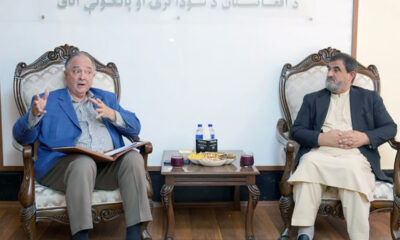
Afghanistan, US business leaders discuss trade and investment opportunities
-

 Sport5 days ago
Afghanistan U19 begin Asia Cup Preparations with Oman tour
-
 Latest News5 days ago
Mujahid accuses Pakistani military circles of sabotaging talks with Afghanistan
-

 Latest News2 days ago
India, Russia hold security talks on Afghanistan and Pakistan amid regional tensions
-
 Latest News5 days ago
Afghanistan calls for faster completion of CASA-1000 power project
-
 Sport4 days ago
Afghanistan hold Bangladesh to dramatic draw in Abu Dhabi Test