
World
Iran top diplomat says U.S. must show goodwill gesture for direct talks


Iran is ready to swap prisoners with the United States, Iran’s foreign minister said on Saturday, adding that talks to revive a 2015 nuclear deal could succeed “at the earliest possible time” if the United States makes the necessary political decisions, Reuters reported.
Reuters reported on Thursday that a U.S.-Iranian deal is taking shape in Vienna after months of indirect talks to revive the nuclear pact. The draft text of the agreement alluded to other measures, including unfreezing billions of Iranian funds in South Korean banks and the release of Western prisoners held in Iran, Reuters reported.
“We believe prisoner swap is a humanitarian issue … unrelated to the nuclear accord … We can do it immediately,” Hossein Amirabdollahian told a panel at the Munich Security Conference.
Robert Malley, who leads the indirect U.S. talks with Iran in Vienna, has suggested that securing the nuclear pact is unlikely unless Tehran releases four U.S. citizens Washington says it is holding hostage.
According to Reuters in recent years, Iran’s elite Revolutionary Guards have arrested dozens of dual nationals and foreigners, mostly on espionage and security-related charges. Tehran denies taking prisoners to gain diplomatic leverage, as claimed by rights activists.
In the past, Iran has called for the release of over a dozen Iranians in the United States, including seven Iranian-American dual nationals, two Iranians with permanent U.S. residency and four Iranian citizens with no legal status in the United States.
Most of them have been jailed for violating U.S. sanctions against Iran, Reuters reported.
When asked whether Tehran was ready to hold direct talks with Washington, Amirabdollahian did not rule this out.
“They have asked for direct meetings … If Washington’s intentions are genuine, they should take some tangible steps of goodwill on the ground such as freeing Iran’s frozen assets abroad,” he said.
The 2015 deal between Iran and major powers limited Iran’s enrichment of uranium to make it harder for Tehran to develop material for nuclear weapons, in return for a lifting of international sanctions against Tehran, read the report.
But it has eroded since 2018 when then-President Donald Trump withdrew the United States and reimposed far-reaching sanctions on Iran.
Tehran has since breached the deal’s limits and gone well beyond, rebuilding stockpiles of enriched uranium, refining it to higher fissile purity and installing advanced centrifuges to speed up output.
Both Tehran and Washington have described the nuclear talks as constructive since last week, when the negotiations resumed after a 10-day pause. However, they have also said that tough political decisions needed to be taken to overcome the remaining differences.
“I would like to emphasize here that we are ready to achieve a good deal, at the earliest possible time, if the other side makes the needed political decision,” Amirabdollahian said.
“If the talks fail in Vienna, Western powers will be responsible for the failure because we want a good deal.”
After 10 months of talks, one of the remaining differences is Iran’s demand for a U.S. guarantee of no more sanctions or other punitive steps in future, and also how and when to restore verifiable restrictions on Iran’s nuclear activity, Reuters reported.
A senior Iranian official told Reuters that Iran has shown flexibility by agreeing to “inherent guarantees” as Washington says it is impossible for President Joe Biden to provide the legal assurances Iran has demanded.
Amirabdollahian said a joint statement by the heads of the U.S. Senate and House of Representatives to back the nuclear deal would suffice as a “political guarantee”.




World
At least 30 dead in stampede at Haiti’s historic Laferriere Citadel
The stampede occurred at the Laferriere Citadel, an early-19th-century fortress built shortly after Haiti’s independence from France.
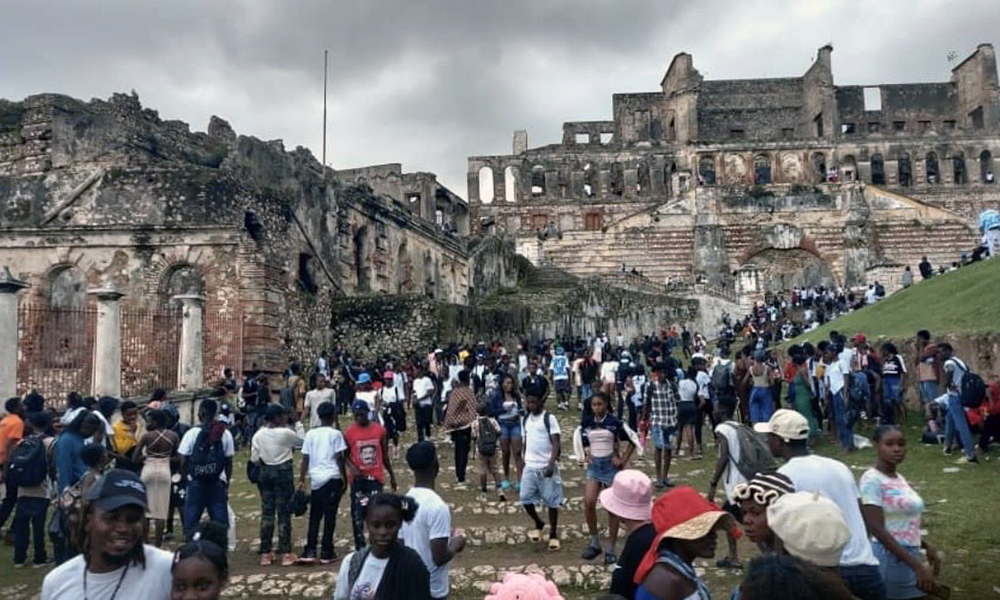
At least 30 people were killed on Saturday in a stampede in the northern countryside of Haiti, authorities said, warning that the death toll could rise, Reuters reported.
Jean Henri Petit, head of Civil Protection for Haiti’s Nord Department said the stampede occurred at the Laferriere Citadel, an early-19th-century fortress built shortly after Haiti’s independence from France.
One of Haiti’s most popular tourist attractions, the fortess was packed with students and visitors on Saturday who had come to participate in the annual celebration of the UNESCO World Heritage site, read the report.
World
US, Iran teams in Pakistan for peace talks amid doubts over Lebanon, sanctions
The Iranian delegation, led by parliamentary Speaker Mohammad Baqer Qalibaf and Foreign Minister Abbas Araqchi, arrived on Friday.
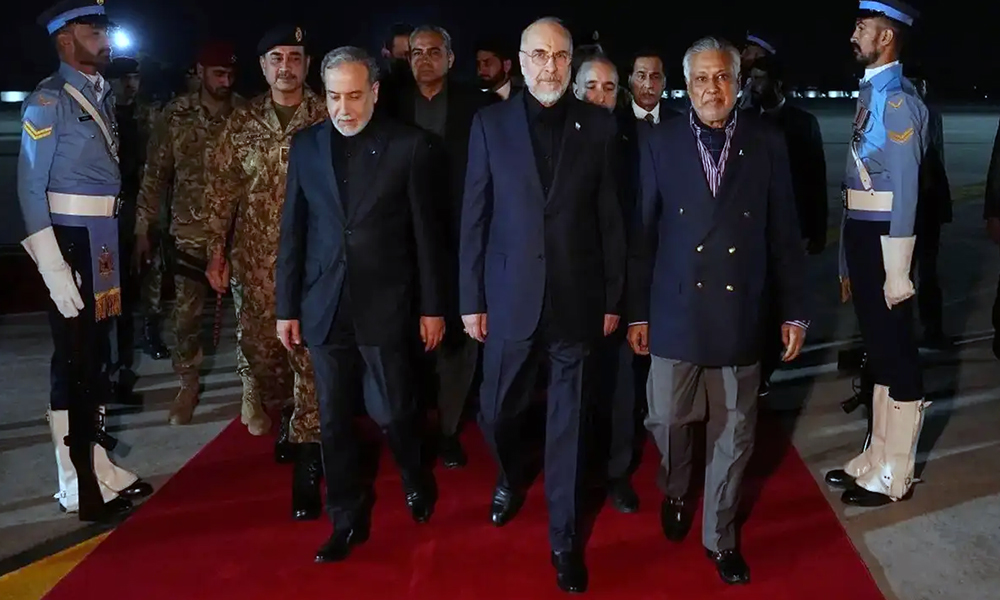
Senior U.S. and Iranian leaders were in the Pakistani capital Islamabad on Saturday for negotiations to end their six-week-old war, although Tehran threw the talks into doubt by saying they could not begin without commitments on Lebanon and sanctions, Reuters reported.
The U.S. delegation, led by Vice President JD Vance and including President Donald Trump’s special envoy Steve Witkoff and son-in-law Jared Kushner, landed in two U.S. Air Force planes at an air base in Islamabad on Saturday morning, where they were received by Pakistan’s army chief, Field Marshal Asim Munir, and Foreign Minister Ishaq Dar.
The Iranian delegation, led by parliamentary Speaker Mohammad Baqer Qalibaf and Foreign Minister Abbas Araqchi, arrived on Friday.
These will be the highest-level U.S.-Iran talks since the Islamic Revolution of 1979. If the two sides hold face-to-face negotiations as expected, they would be first direct talks since 2015, when they reached a deal on Iran’s nuclear programme.
Trump scrapped the nuclear deal in 2018 during his first term in office. That year, Iran’s then-Supreme Leader Ayatollah Ali Khamenei – who was killed at the start of the war six weeks ago – banned further direct talks between U.S. and Iranian officials.
Qalibaf said on X that Washington had previously agreed to unblock Iranian assets and to a ceasefire in Lebanon, where Israeli attacks on Iran-backed Hezbollah militants have killed nearly 2,000 people since the start of the fighting in March. He said talks would not start until those pledges were fulfilled.
Israel and the U.S. have said the Lebanon campaign is not part of the Iran-U.S. ceasefire.
Iran’s state broadcaster said the Iranian delegation would meet Pakistani Prime Minister Shehbaz Sharif around noon (0700 GMT) to determine the timing and manner of “possible negotiations”.
Qalibaf said Iran was ready to reach a deal if Washington offered what he described as a genuine agreement and granted Iran its rights, Iranian state media reported.
The White House did not immediately comment on the Iranian demands, but Trump posted on social media that the only reason the Iranians were alive was to negotiate a deal.
“The Iranians don’t seem to realize they have no cards, other than a short term extortion of the World by using International Waterways. The only reason they are alive today is to negotiate!” he said.
Vance, speaking as he headed to Pakistan, said he expected a positive outcome but added: “If they’re going to try to play us, then they’re going to find the negotiating team is not that receptive.”
Preliminary discussions have been separately held by Pakistani officials with advance teams from both sides, sources in Islamabad said.
Iran’s semi-official Tasnim news agency said these included 70 members from Tehran, including technical specialists in economic, security and political fields as well as media personnel and support staff. About 100 members of an advance U.S. team were in the city, a Pakistani government source said.
Pakistan’s Dar said he hoped the U.S. and Iran would engage in constructive talks to reach a “lasting and durable solution to the conflict”, according to a statement from Pakistan’s foreign ministry.
A Pakistani source said it was too early to say whether talks would end on Saturday, adding there was no time limit for negotiations.
Islamabad was under an unprecedented lockdown ahead of the talks with thousands of paramilitary personnel and army troops on the streets, read the report.
Trump announced a two-week ceasefire in the war on Tuesday, which has halted U.S. and Israeli airstrikes on Iran.
But it has not ended Iran’s blockade of the Strait of Hormuz, which has caused the biggest-ever disruption to global energy supplies, or calmed the parallel war between Israel and Hezbollah in Lebanon.
Israeli and Lebanese officials will hold talks in Washington on Tuesday, both sides said, amid conflicting accounts on what those talks would cover.
Lebanon’s presidency said officials from the two countries had spoken by phone on Friday and agreed to discuss announcing a ceasefire and setting a start date for bilateral talks under U.S. mediation. But Israel’s embassy in Washington said the talks would constitute the start of “formal peace negotiations” and that Israel had refused to discuss a ceasefire with Hezbollah.
Tehran’s agenda at the Islamabad talks also includes demands for major new concessions, including the end of sanctions that crippled its economy for years, and acknowledgment of its authority over the Strait of Hormuz, where it aims to collect transit fees and control access in what would amount to a huge shift in regional power.
Iran’s ships were sailing through the strait unimpeded on Friday, while those of other countries remained hemmed inside.
Disruption to energy supplies has fed inflation and slowed the global economy, with an impact expected to last for months even if negotiators succeed in reopening the strait.
The hard line taken by Iran’s leaders ahead of the negotiations followed a defiant message from its new supreme leader, Ayatollah Mojtaba Khamenei, on Thursday.
Khamenei, yet to be seen in public and said to be suffering from severe facial and leg injuries sustained in the attack that killed his father, said Iran would demand compensation for all wartime damage. “We will certainly not leave unpunished the criminal aggressors who attacked our country,” he said.
Although Trump has declared victory and degraded Iran’s military capabilities, the war has not achieved many of the aims he set out at the start: to deprive Iran of the ability to strike its neighbours, dismantle its nuclear programme and make it easier for its people to overthrow their government, Reuters reported.
Iran still possesses missiles and drones capable of hitting its neighbours and a stockpile of more than 400 kg (900 pounds) of uranium enriched near the level needed to make a bomb. Its clerical rulers, who faced a popular uprising just months ago, withstood the war with no sign of organised opposition.
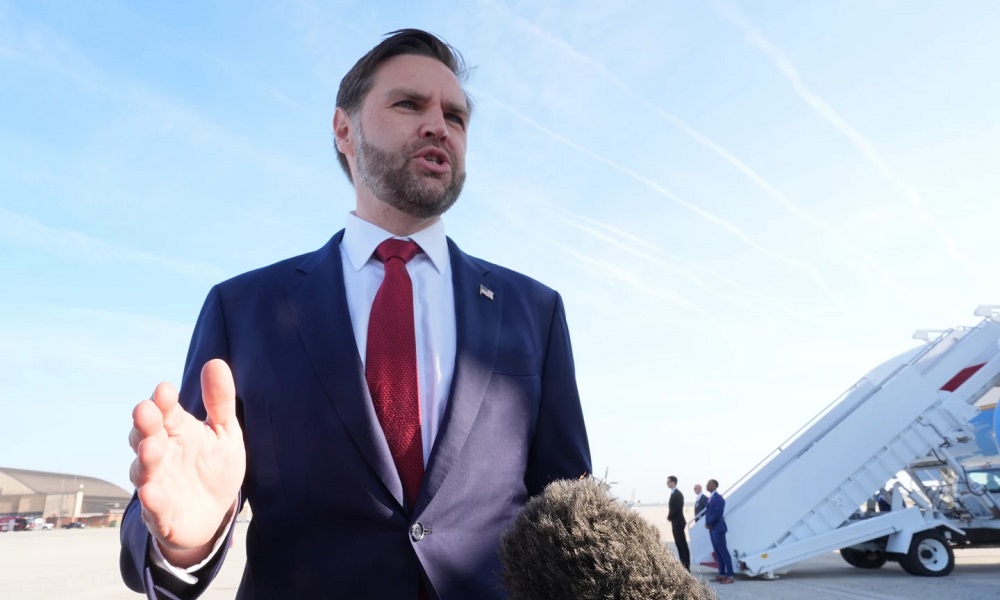
Vice President JD Vance said on Friday he was looking forward to having positive negotiations with Iran as he left for talks in Pakistan with a warning to Tehran not to “play us.”
“We’re looking forward to the negotiation. I think it’s going to be positive,” Vance told reporters before leaving Washington.
“As the president of the United States said, if the Iranians are willing to negotiate in good faith, we’re certainly willing to extend the open hand,” Vance said. “If they’re going to try to play us, then they’re going to find the negotiating team is not that receptive.”


Saar: Iran–US talks in Islamabad end inconclusive

IEA FM calls Kabul-Pakistan talks ‘positive’ in meeting with Turkish envoy

UN warns of critical funding shortfall for humanitarian aid in Afghanistan

Global outrage triggered after deadly attack on civilians in Herat

ACB holds high-level meeting with new national team head coach

IEA Supreme Leader issues Eid-ul-Fitr message urging unity and support for Islamic system

IEA supreme leader orders replacement of foreign terminology in official documents

14 Pakistani soldiers killed after military post falls along Durand line: MoD

Turkmenistan, Afghanistan discuss steps to speed up land acquisition for TAPI pipeline

IPL 2026 kicks off in under two weeks; Afghan players set to shine
Saar: Iran–US talks in Islamabad end inconclusive

Tahawol: Historic US-Iran talks in Pakistan discussed

Saar: Talks between Iran and US in Pakistan discussed

Tawsia: New transit route with Tatarstan, MoU with Uzbekistan discussed

Tahawol: China to host 2nd round of Kabul–Islamabad talks discussed
-

 Business2 days ago
Etihad Airways to expand Kabul–Abu Dhabi flights to daily service amid surging demand
-
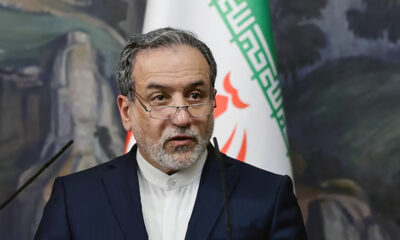
 Regional4 days ago
Iran agrees to temporary ceasefire as US pauses attacks
-

 International Sports3 days ago
IPL 2026: Gujarat Titans edge Delhi Capitals in last-ball thriller
-
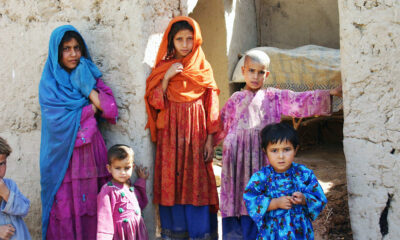
 Latest News4 days ago
Hundreds displaced as Afghanistan–Pakistan clashes deepen crisis
-
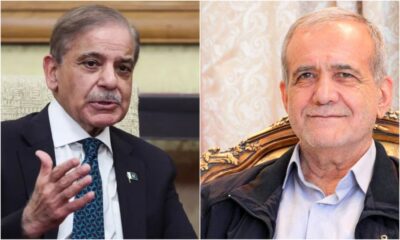
 Regional4 days ago
Pakistan PM holds 45-minute call with Iranian President
-
 Tahawol5 days ago
Tahawol: Ongoing negotiations between Kabul-Islamabad discussed
-
 Latest News3 days ago
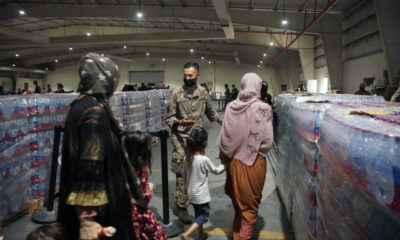
US explores third-country resettlement for stranded Afghan allies in Qatar
-

 International Sports3 days ago
FIFA appoints record number of match officials for 2026 World Cup