
Business
Iran launches trade routes through Afghanistan for Central Asia

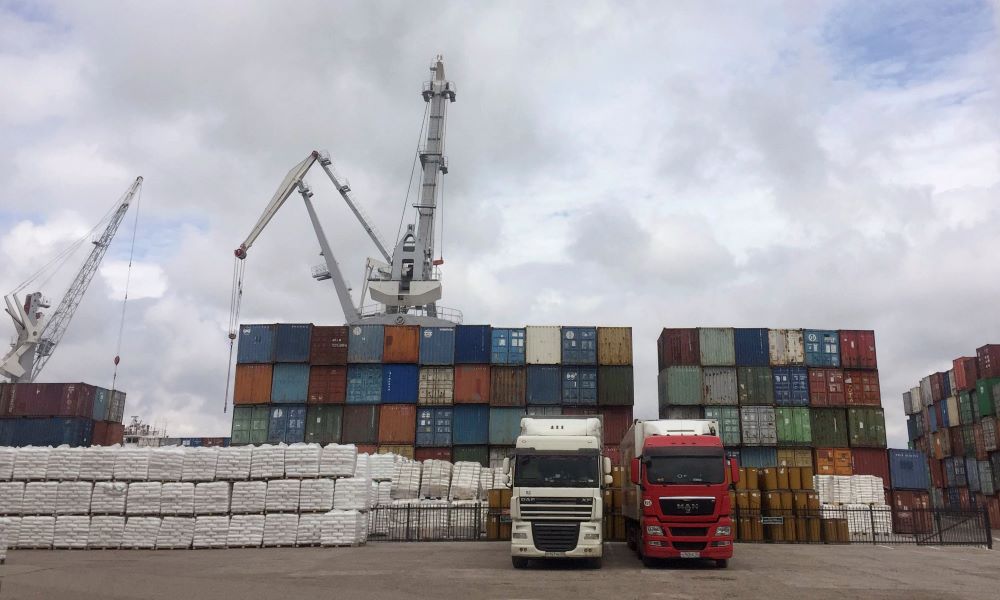
Two new key trade corridors between Iran and Central Asian countries, through Afghanistan, have been launched and are expected to considerably boost trade activities in the region.
According to Ruhollah Latifi, spokesman for the Islamic Republic of Iran Customs Administration (IRICA), the two corridors are the Kyrgyzstan-Tajikistan-Afghanistan-Iran (KTAI) route and the Iran-Afghanistan-Uzbekistan corridor.
He told Tehran Times that the aim of the corridors is to bolster trade via Iranian borders.
According to IRICA, Iran sent two shipments of goods from Shahid Rajaei Port in the southern port city of Bandar Abbas to Uzbekistan via the newly established Iran-Afghanistan-Uzbekistan corridor a few weeks ago. This was a pilot operation to assess the route and proved successful.
According to IRICA Director of Transit Bureau Mostafa Ayati, the launch of the KTAI route in late July was also successful.
Ayati said as a short and low-cost route to Central Asian countries under the TIR Convention, the development of transit corridors through Afghanistan is supported by both international bodies and the Iranian government.
He said all stakeholders were determined to develop this sector.
“The pilot opening of this corridor indicates that Afghanistan is seriously determined to develop transit in its territory and connect Central Asian countries to the southern waters, including the ports along the Persian Gulf and the Sea of Oman (Chabahar),” he noted.
Tehran Times reported that on July 26, Iran sent two truckloads of goods from Shahid Rajaei Port to Kyrgyzstan through the KTAI corridor for the first time.
The corridor was launched by IRICA in collaboration with the International Road Transport Union (IRU), and Economic Cooperation Organization (ECO) under the framework of the TIR Convention.
The Convention on International Transport of Goods Under Cover of TIR Carnets (TIR Convention) is a multilateral treaty that was concluded in Geneva on 14 November 1975 to simplify and harmonize the administrative formalities of international road transport.
A third corridor, India-Iran-Afghanistan route, is another critical route for trade through Iran between India and Afghanistan. This route is already up and running. Recently the seventh shipment of wheat from India for Afghanistan arrived at Chabahar Port.





Business
IEA issues new decree to regulate street vendors, boost urban order
The decree mandates that all municipalities adhere to urban planning standards in managing street vending activities.

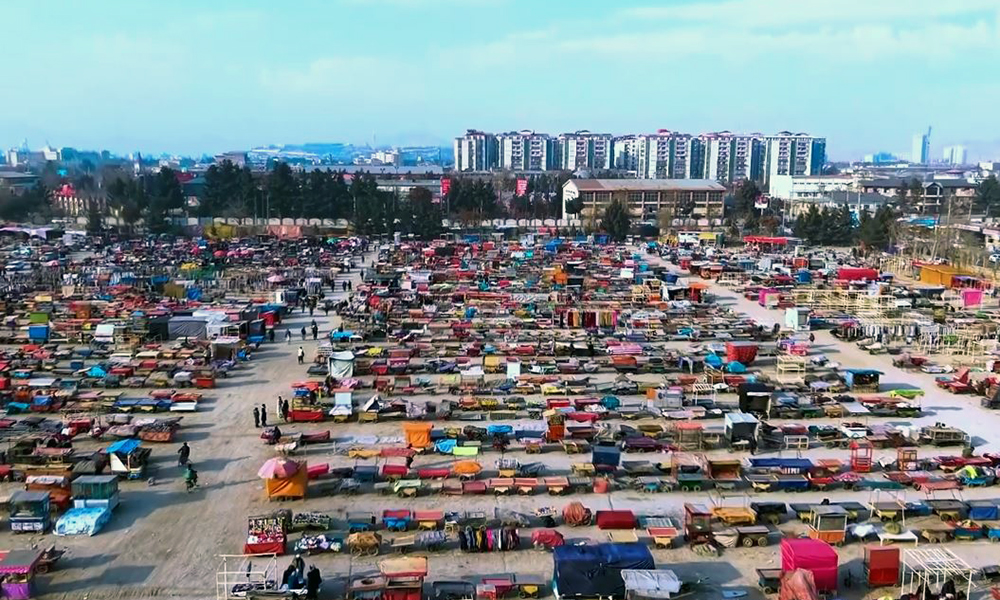
The leadership of the Islamic Emirate of Afghanistan has unveiled a new decree designed to regulate the operations of street vendors in cities across the country. The initiative seeks to create a more organized urban environment while simultaneously supporting small-scale entrepreneurs.
The decree mandates that all municipalities adhere to urban planning standards in managing street vending activities. Municipalities are instructed to designate specific areas for vendors, ensuring they have clearly marked and organized spaces to conduct business. These designated zones will be monitored to ensure compliance with both health and safety standards.
As part of the formalization of the street vending sector, vendors will be required to register and receive identification cards at no cost. The government aims to create a centralized database to track vendors’ personal details, the nature of their businesses, and their exact operating locations. This move is also intended to aid in ongoing monitoring, ensuring vendors comply with regulations and do not sell prohibited or expired goods.
In addition to these registration requirements, the decree stipulates that vendors must adhere to several conditions. These include maintaining cleanliness at their assigned spaces, refraining from selling illegal products, and avoiding the use of loudspeakers to attract customers.
To ensure compliance, the decree includes a system of enforcement. Vendors who violate the rules will first receive a written warning, while repeat offenders risk having their operating rights revoked. Authorities are committed to ensuring the decree’s effectiveness, with ongoing monitoring and corrective actions.
This new regulation represents a significant step in formalizing the street vending sector, supporting small businesses, and bringing a greater sense of order to Afghanistan’s urban areas.
Business
Etihad Airways to expand Kabul–Abu Dhabi flights to daily service amid surging demand
Etihad relaunched the route on March 20, 2026, initially operating four weekly flights.
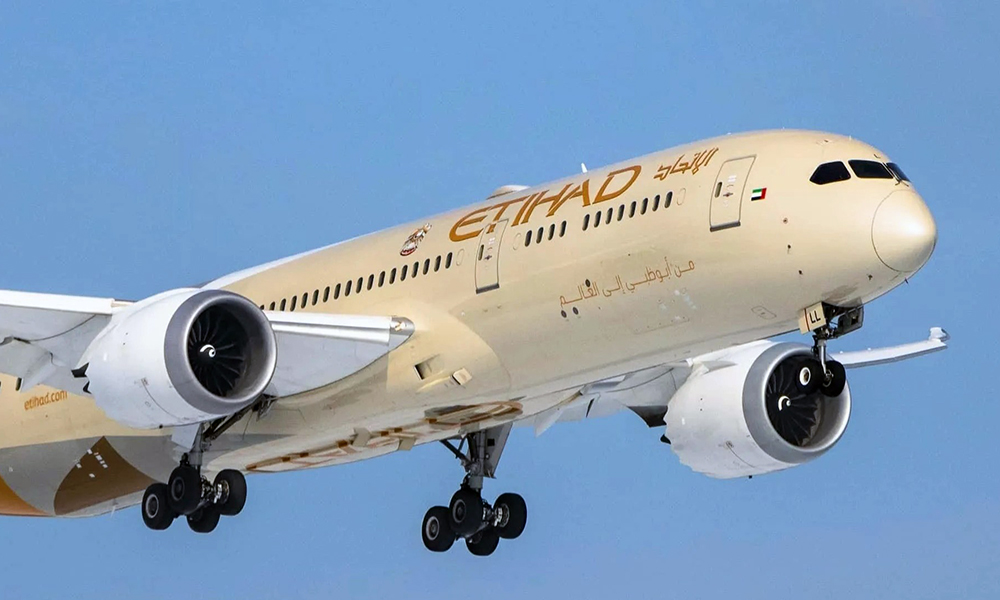
Etihad Airways has announced it will upgrade its Kabul–Abu Dhabi service to daily flights starting May 1, 2026, citing a sharp rise in passenger demand and improving international connectivity.
In a statement issued Thursday, the airline said the move follows a strong market response and higher-than-expected bookings, just weeks after operations on the route resumed. The Kabul–Abu Dhabi corridor has quickly re-emerged as a crucial air link for travelers seeking reliable international connections from Afghanistan.
Etihad relaunched the route on March 20, 2026, initially operating four weekly flights. The rapid shift to daily service underscores the route’s commercial viability and reflects growing confidence in sustained passenger demand.
Airline officials noted that the expanded schedule will offer greater flexibility and convenience for both business and leisure travelers between Afghanistan and the United Arab Emirates.
The increase in frequency is also expected to significantly boost onward connectivity, allowing passengers departing from Kabul to access major global destinations—including London, Frankfurt, Toronto, and Washington, D.C.—via Abu Dhabi.
The development is widely viewed as an important step toward strengthening Afghanistan’s air links with Europe and North America, amid signs of gradual recovery in regional and international travel.
Business
Afghanistan faces economic strains following a ‘series of shocks’ last year
These pressures have driven an estimated 11 percent population increase in the fiscal year 2025, largely due to returning migrants, the World Bank stated.
Afghanistan’s fragile economy is grappling with a series of shocks that intensified in 2025, according to a World Bank economic update report released on Wednesday.
The report noted that Afghanistan has been hit by reduced foreign aid, prolonged crossing closures along the disputed Durand Line with Pakistan, natural disasters, and a significant return of refugees from Iran and Pakistan.
These pressures have driven an estimated 11 percent population increase in the fiscal year 2025, largely due to returning migrants, the World Bank stated.
While Afghanistan’s aggregate GDP grew by around 4.8 percent last year, reflecting a rebound in nonagricultural activity and private consumption, the growth has not kept pace with population expansion. As such, per capita GDP contracted by 5.6 percent, as rising inflation and higher trade and transport costs eroded living standards.
“The influx of returnees has temporarily boosted domestic demand, but also places additional strain on labor markets, housing, and social services,” the report noted.
Looking ahead, Afghanistan’s economy is projected to grow by 4.0 percent in 2026, driven by strengthening domestic demand, higher private investment, and improved absorption of returnees into the workforce. However, the report warns that ongoing conflict in the Middle East and disruptions to trade routes, particularly the 60 percent of Afghan trade that passes through Iran, pose significant risks.
“Border closures or sudden surges in returnees could further depress per capita incomes and fuel inflation,” the World Bank said. Trade rerouting may mitigate some effects, but the country remains vulnerable to regional instability.
Despite these challenges, analysts highlight that modest growth and ongoing private-sector activity offer some hope for recovery. The World Bank emphasizes that sustained economic resilience will depend on peace, stable trade corridors, and the ability to productively integrate returning populations into the labor market.
Afghanistan’s experience underscores the broader regional pressures in the Middle East, North Africa, Afghanistan, and Pakistan (MENAAP), where conflict and humanitarian crises continue to ripple through economies, affecting inflation, trade, and social stability.


UN warns of critical funding shortfall for humanitarian aid in Afghanistan

Global outrage triggered after deadly attack on civilians in Herat

ACB holds high-level meeting with new national team head coach

Afghanistan launches first nationwide polio vaccination campaign of 2026

IPL double-header delivers thrills as teams battle for momentum

IEA Supreme Leader issues Eid-ul-Fitr message urging unity and support for Islamic system

IEA supreme leader orders replacement of foreign terminology in official documents

14 Pakistani soldiers killed after military post falls along Durand line: MoD

Turkmenistan, Afghanistan discuss steps to speed up land acquisition for TAPI pipeline

IPL 2026 kicks off in under two weeks; Afghan players set to shine

Tahawol: Historic US-Iran talks in Pakistan discussed

Saar: Talks between Iran and US in Pakistan discussed

Tawsia: New transit route with Tatarstan, MoU with Uzbekistan discussed

Tahawol: China to host 2nd round of Kabul–Islamabad talks discussed

Saar: Fragile ceasefire in the Middle East reviewed
-
 Latest News5 days ago
China seeking to build trust between Afghanistan and Pakistan
-

 Business2 days ago
Etihad Airways to expand Kabul–Abu Dhabi flights to daily service amid surging demand
-
 Regional4 days ago
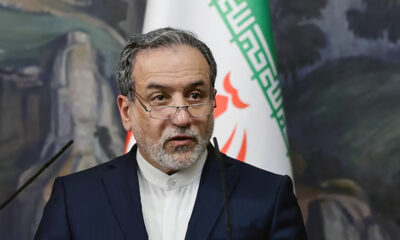
Iran agrees to temporary ceasefire as US pauses attacks
-

 Regional5 days ago
Trump says ‘a whole civilisation will die tonight’; Qatar fears regional escalation
-

 International Sports3 days ago
IPL 2026: Gujarat Titans edge Delhi Capitals in last-ball thriller
-
 Latest News4 days ago
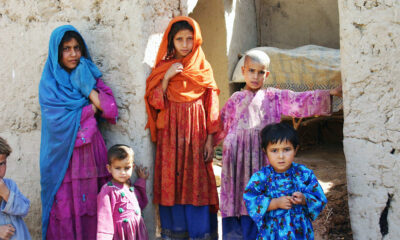
Hundreds displaced as Afghanistan–Pakistan clashes deepen crisis
-
 Regional4 days ago
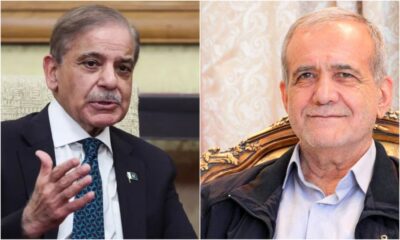
Pakistan PM holds 45-minute call with Iranian President
-
 Tahawol5 days ago
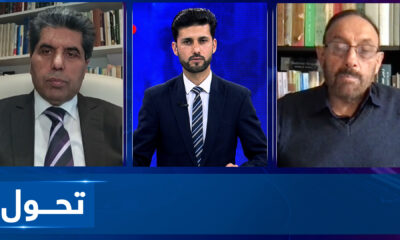
Tahawol: Ongoing negotiations between Kabul-Islamabad discussed