
World
Indonesia Semeru volcanic eruption kills 13; dozens injured

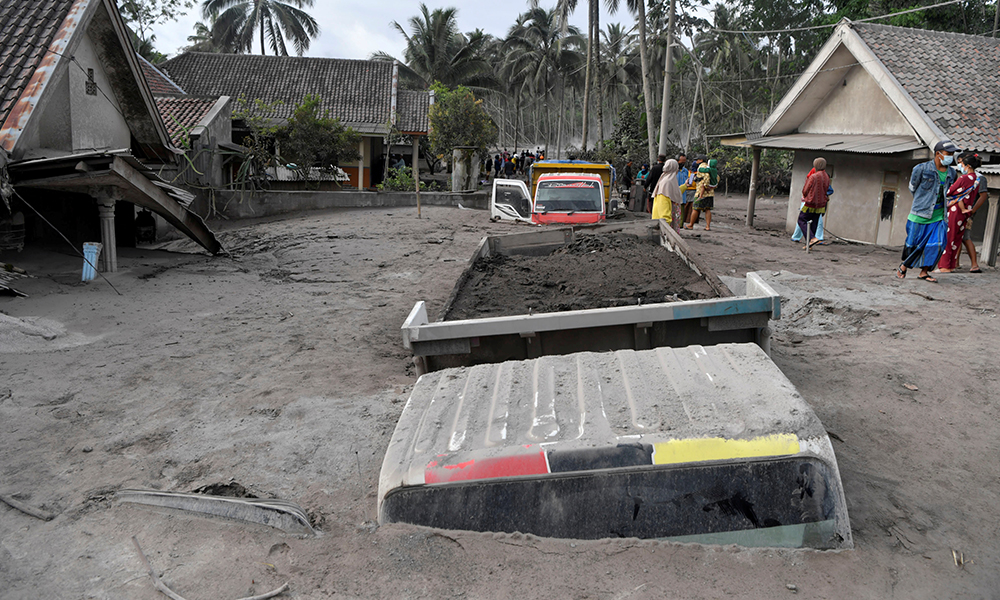
The eruption of Indonesia’s Semeru volcano has killed at least 13 people and injured dozens, the disaster mitigation agency (BNPB) said on Sunday, as search teams looked for victims in a landscape covered in deep layers of ash.
Semeru, the tallest mountain on Java island, threw up towers of ash and hot clouds on Saturday that blanketed nearby villages in East Java province and sent people fleeing in panic, Reuters reported.
The eruption severed a strategic bridge connecting two areas in the nearby district of Lumajang with the city of Malang and wrecked buildings, authorities said.
BNPB official Abdul Muhari said in a news release that 13 people had been killed. Ninety-eight were injured, including two pregnant women, and 902 have been evacuated, the statement said.
Most injuries were burns, authorities said.
Indonesia President Joko Widodo has ordered authorities to find and treat victims, the state secretary said.
Semeru had started emitting hot clouds and lava flows near its rivers recently, and the country’s volcanology center had warned people not to go near it since Wednesday, it said.
In 2010, an eruption of the Merapi volcano on Java island killed over 350 people and displaced 400,000.







World
Just one in four Americans supports US strikes on Iran, Reuters/Ipsos poll finds
The poll showed that 56% of Americans think Trump, who has also ordered strikes in Venezuela, Syria and Nigeria in recent months, is too willing to use military force to advance U.S. interests.
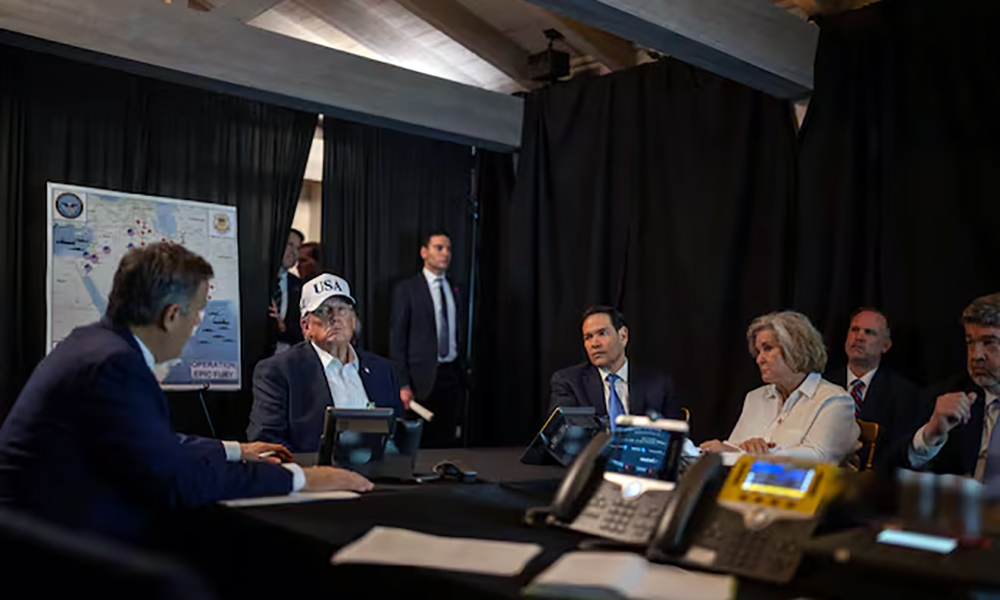
Only one in four Americans approves of the U.S. strikes that killed Iran’s leader, while about half — including one in four Republicans — believe President Donald Trump is too willing to use military force, according to a Reuters/Ipsos poll that concluded on Sunday.
Some 27% of respondents said they approved of the strikes, while 43% disapproved and 29% were not sure. About nine in 10 respondents said they had heard at least a little about the strikes, which began early on Saturday.
The poll showed that 56% of Americans think Trump, who has also ordered strikes in Venezuela, Syria and Nigeria in recent months, is too willing to use military force to advance U.S. interests. The vast majority of Democrats – 87% – held this view, as did 23% of Republicans and 60% of people who don’t identify with either political party.
The poll was conducted during the strikes on Iran by the U.S. and Israel, and closed before the U.S. military announced the first American casualties in the operation. Three U.S. service members have been killed and five more seriously wounded since the strikes, which plunged the Middle East into a new, unpredictable conflict.
While 55% of Republicans said they approved of the strikes and 13% disapproved, the Reuters/Ipsos poll found 42% in Trump’s party said they would be less likely to support the Iran campaign if it leads to “U.S. troops in the Middle East being killed or injured.”
Trump’s presidential approval rating ticked slightly lower to 39%, one percentage point below a Reuters/Ipsos poll conducted February 18-23.
The strikes on Iran began three days before the first primaries of the U.S. midterm elections, which will determine whether Trump’s Republicans maintain their majorities in Congress for the next two years. Reuters/Ipsos polls have consistently shown that voters’ top concern heading into the elections is the economy, far more than foreign affairs.
Some 45% of poll respondents, including 34% of Republicans and 44% of independents, said they would be less likely to support the campaign against Iran if gas or oil prices increased in the United States.
Prices for Brent crude surged 10% to about $80 a barrel in over-the-counter trade on Sunday, oil traders said. Analysts predicted prices could climb as high as $100 due to the latest conflict.
The most recent Reuters/Ipsos poll gathered responses online from 1,282 U.S. adults nationwide. It had a margin of error of three percentage points.
World
US lawmakers, world leaders react to death of Ayatollah Ali Khamenei after Iran strikes
The announcement drew praise from some lawmakers who have long opposed Tehran’s leadership, while others condemned the military action and questioned its legality.

Political leaders in the United States and around the world reacted sharply and along partisan lines after the reported death of Iran’s Supreme Leader, Ayatollah Ali Khamenei, following joint U.S.-Israeli strikes on Iran.
The announcement drew praise from some lawmakers who have long opposed Tehran’s leadership, while others condemned the military action and questioned its legality.
Representative Yassamin Ansari, the only Iranian American member of Congress, described Khamenei as the “epitome of evil,” saying no one should mourn his death. However, she cautioned that removing a single leader would not dismantle Iran’s political system.
“Military force alone will not secure a democratic future for the Iranian people,” she wrote on social media, warning that without a clear plan, the escalation could endanger U.S. troops and further destabilize the region.
Former Representative Marjorie Taylor Greene criticized President Donald Trump, arguing that the focus on Iran did not align with his “America First” agenda and diverted attention from domestic economic concerns.
Senator Bernie Sanders labeled the conflict a “Trump-Netanyahu war,” referring to Israeli Prime Minister Benjamin Netanyahu. Sanders said the action was unconstitutional and violated international law, urging Congress to pass a War Powers Resolution to limit further military involvement.
In contrast, Senator Lindsey Graham praised Trump’s leadership, saying he was proud of the administration’s actions and describing the president as setting a new standard for Republican foreign policy.
Reza Pahlavi, the exiled Iranian crown prince and son of the late Shah Mohammad Reza Pahlavi, declared that Khamenei had been “erased from the pages of history.” He said the Islamic Republic was nearing its end and called on Iranians to prepare for what he described as a decisive moment for change.
Ukraine’s official government social media account posted a brief message celebrating the death of a “dictator,” while Australian Prime Minister Anthony Albanese told reporters that Khamenei would not be mourned, citing his role in Iran’s missile and nuclear programs and the regime’s repression at home.
The sharply divided reactions underscore the high stakes of the escalating confrontation, as global leaders weigh the consequences of a direct strike that has dramatically reshaped the political landscape in Iran and across the Middle East.
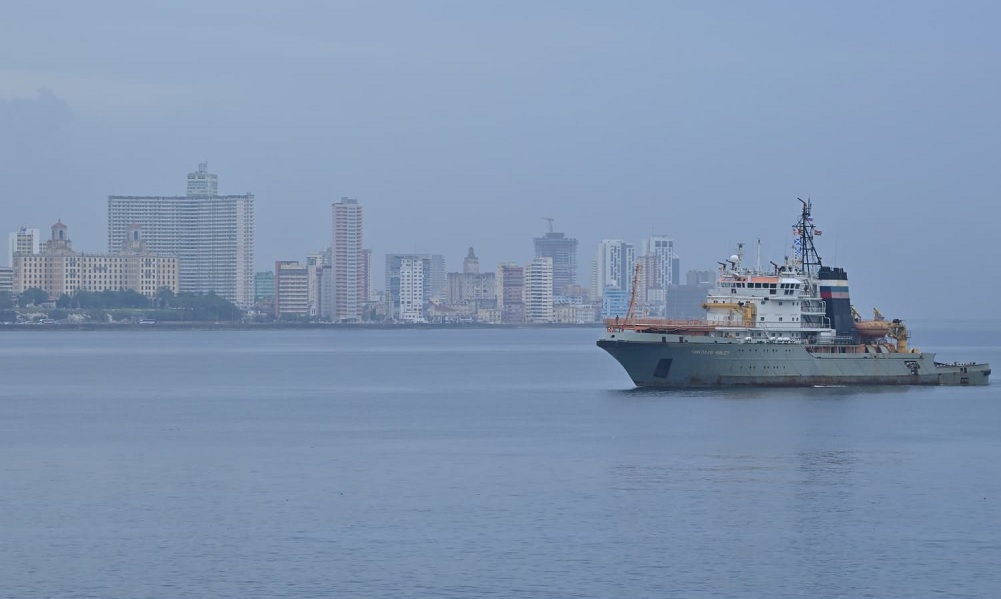
Cuban forces killed four exiles and wounded six others who sailed into Cuban waters aboard a Florida-registered speedboat on Wednesday and opened fire on a Cuban patrol, the Cuban government said at a time of heightened tensions with the United States.
Cuba’s Interior Ministry said the group was comprised of anti-government Cubans, some of whom were previously wanted for plotting attacks. They came from the United States dressed in camouflage and armed with assault rifles, handguns, homemade explosives, ballistic vests and telescopic sights, Cuba said, Reuters reported.
An additional Cuban suspect was detained inside Cuban territory in connection with the plot, the statement said.
“According to preliminary statements from the detainees, they intended to carry out an infiltration for terrorist purposes,” the Interior Ministry said in an official statement.
The wounded were evacuated and receiving medical attention, while the Cuban patrol commander was also wounded, the ministry said.
U.S. Secretary of State Marco Rubio told reporters it was not a U.S. operation and that no U.S. government personnel were involved. Cuban authorities made the U.S. aware of the incident, but the U.S. embassy in Havana would attempt to independently verify what happened, Rubio said.
“We are going to have our own information on this, we are going to figure out exactly what happened, and there are a number of things that could have happened here,” Rubio said.
“Suffice to say it is highly unusual to see shootouts in open sea like that,” he said.
The incident took place as the United States has blocked virtually all oil shipments to the island, increasing pressure on the Communist-run government.
American forces captured Venezuelan President Nicolas Maduro in Caracas on January 3, removing a key Cuban ally from power, and Rubio reiterated his rhetoric against the Cuban government on Wednesday, calling the status quo unsustainable and saying Cuba needed to change “dramatically.”
BAY OF PIGS
Cuban exiles who are largely concentrated in Miami have long dreamed of overthrowing the Cuban government or seeing it fall and have in the past plotted against the government that was established by the late revolutionary leader Fidel Castro, who died in 2016 at age 90.
Cuban exiles with support and financing from the U.S. Central Intelligence Agency carried out the failed Bay of Pigs invasion in 1961, an event that strengthened Castro while pushing him closer to his backers in the Soviet Union. Other Cuban paramilitaries have attempted or carried out acts of sabotage in decades past.
Such plots have become far less common in recent years, but opponents of Cuba’s Communist government may have been emboldened by recent events that have promoted an image of weakness for the country’s rulers. The U.S. oil blockade has exacerbated severe energy shortages.
Cuba said it identified the six detainees from the boat, two of whom were previously wanted in Cuba on suspicion of planning terrorist acts against Cuba: Amijail Sanchez Gonzalez and Leordan Enrique Cruz Gomez.
The other four were identified as Conrado Galindo Sariol, Jose Manuel Rodriguez Castello, Cristian Ernesto Acosta Guevara and Roberto Azcorra Consuegra.
In addition, Cuba said it detained another Cuban man in Cuban territory, Duniel Hernandez Santos, who had come from the United States to the island in order to receive the infiltrators.
One of the dead was identified as Michel Ortega Casanova, while the other three dead had yet to be identified, Cuba said.
The speedboat came within one nautical mile of a channel on Falcones Cay, on the north coast of Cuba about 200 km (120 miles) east of Havana, when it was approached by five members of a Cuban border patrol unit, Cuba said.
The speedboat then opened fire, wounding the commander of the Cuban vessel, the statement said.
Florida politicians called for separate investigations, saying they did not trust the Cuban account.
Florida Attorney General James Uthmeier said he was ordering prosecutors to open an investigation in conjunction with other state and federal law enforcement partners.
U.S. Representative Carlos Gimenez, a Republican whose district includes the southern tip of Florida, called for a federal investigation, saying he had asked the U.S. State Department and military to look into the matter.
“United States authorities must determine whether any of the victims were U.S. citizens or legal residents and establish exactly what occurred,” Gimenez said.


Saar: Afghan forces’ operation against Pakistani military

AFC postpones Champions League matches amid escalating Middle East tensions

Ayatollah’s wife dies from injuries sustained in airstrike on Tehran residence

Bayat Foundation assists needy families in Kabul amid ongoing humanitarian crisis

Needy families in Herat receive much-needed Ramadan aid from Bayat Foundation

Pakistani military jet downed in Afghanistan’s Jalalabad, pilot captured alive

IEA releases three Pakistani soldiers to mark Ramadan

Afghan Air Force conducts airstrikes in Islamabad, other cities

AFC Futsal Asian Cup: Afghanistan to face Iran in crucial Group D clash

Afghanistan’s Chief of Armed Forces underscores readiness and equipment for national defense
Saar: Afghan forces’ operation against Pakistani military

Tahawol: Afghanistan and the Region Under the Shadow of Rising Tensions

Tahawol: Joint Israeli-US attacks on Iran discussed

Saar: Afghan retaliatory operations against Pakistan discussed

Tahawol: Carrying out retaliatory operations against Pakistan discussed
-
 Latest News3 days ago
Pakistani military jet downed in Afghanistan’s Jalalabad, pilot captured alive
-
 Latest News4 days ago
Afghan Air Force conducts airstrikes in Islamabad, other cities
-
 Latest News3 days ago
IEA: Special circle in Pakistan has launched mission to destabilize region
-

 World5 days ago
India’s Modi backs Israel in address at Israeli parliament
-
 Latest News4 days ago
Turkey launches initiative to diffuse Afghanistan-Pakistan tension
-
 Latest News17 hours ago
Afghan air force strikes key Pakistani military installations in retaliatory operation
-
 Regional4 days ago
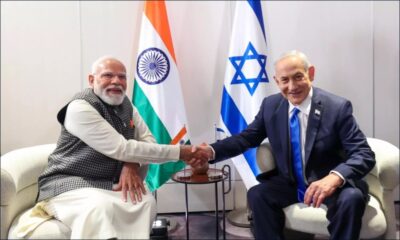
Narendra Modi holds high-level talks after historic address to Knesset
-

 Latest News4 days ago
Afghans say they are united against Pakistan aggression