
Latest News
In shock announcement, Trump says U.S. wants to take over Gaza Strip
Senior Hamas official Sami Abu Zuhri condemned Trump’s calls for Gazans to leave as “expulsion from their land.”

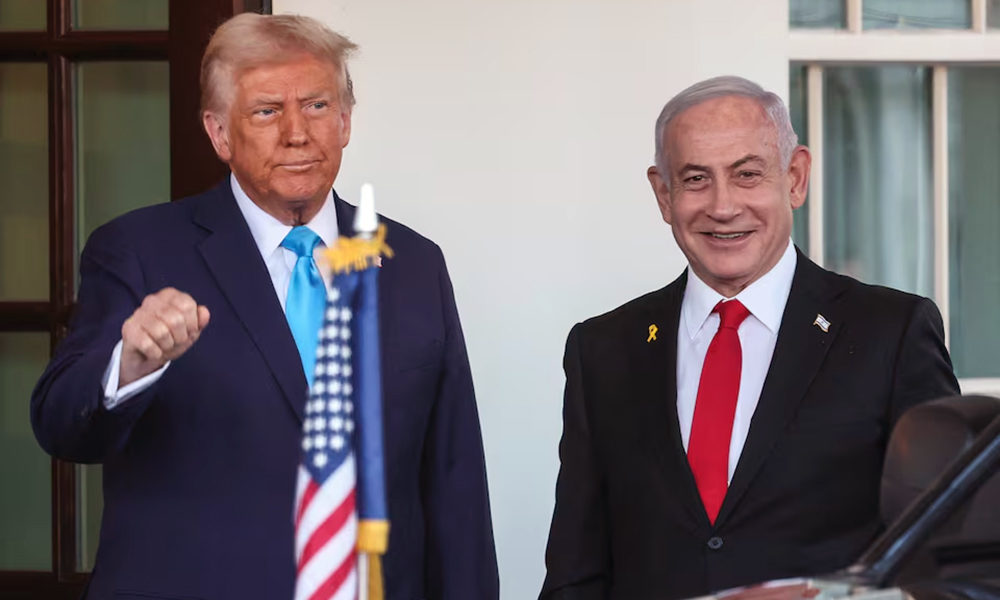
President Donald Trump said the U.S. would take over the war-ravaged Gaza Strip and develop it economically after Palestinians are resettled elsewhere, actions that would shatter decades of U.S. policy toward the Israeli-Palestinian conflict, Reuters reported.
Trump unveiled his surprise plan, without providing specifics, at a joint press conference on Tuesday with visiting Israeli Prime Minister Benjamin Netanyahu.
The announcement followed Trump’s shock proposal earlier on Tuesday for the permanent resettlement of the more than two million Palestinians from Gaza to neighboring countries, calling the enclave – where the first phase of a fragile Israel-Hamas ceasefire and hostage release deal is in effect – a “demolition site.”
Trump can expect allies and foes alike to strongly oppose any U.S. takeover of Gaza, and his proposal raises questions whether Middle East power Saudi Arabia would be willing to join a renewed U.S.-brokered push for a historic normalization of relations with U.S. ally Israel.
The U.S. taking a direct stake in Gaza would run counter to longtime policy in Washington and for much of the international community, which has held that Gaza would be part of a future Palestinian state that includes the occupied West Bank, read the report.
“The U.S. will take over the Gaza Strip, and we will do a job with it too,” Trump told reporters. “We’ll own it and be responsible for dismantling all of the dangerous unexploded bombs and other weapons on the site.”
“We’re going to develop it, create thousands and thousands of jobs, and it’ll be something that the entire Middle East can be very proud of,” Trump said. “I do see a long-term ownership position and I see it bringing great stability to that part of the Middle East.”
Asked who would live there, Trump said it could become a home to “the world’s people.” Trump touted the narrow strip, where Israel’s military assault in response to Hamas’ Oct. 7, 2023, cross-border attack has leveled large swaths, as having the potential to be “The Riviera of the Middle East.”
Trump did not directly respond to a question of how and under what authority the U.S. can take over and occupy Gaza, a coastal strip 25 miles (45 km) long and at most 6 miles (10 km) wide, with a violent history. Successive U.S. administrations, including Trump in his first term, had avoided deploying U.S. troops there.
Several Democratic lawmakers quickly condemned the Republican president’s Gaza proposals, Reuters reported.
Netanyahu, referred to a few times by Trump by his nickname, “Bibi,” would not be drawn into discussing the proposal in depth other than to praise Trump for trying a new approach.
The Israeli leader, whose military had engaged in more than a year of fierce fighting with Hamas militants in Gaza, said Trump was “thinking outside the box with fresh ideas” and was “showing willingness to puncture conventional thinking.”
Netanyahu may have been relieved that Trump, who forged close ties with the Israeli leader during his first term in the White House, did not pressure him publicly to maintain the ceasefire. He faces threats from far-right members of his coalition to topple his government unless he restarts the fighting in Gaza to destroy Iran-backed Hamas.
Some experts have suggested Trump sometimes takes an extreme position internationally to set the parameters for future negotiations. In his first term, Trump at times issued what were seen as over-the-top foreign policy pronouncements, many of which he never implemented.
A U.N. damage assessment released in January showed that clearing over 50 million tonnes of rubble left in Gaza in the aftermath of Israel’s bombardment could take 21 years and cost up to $1.2 billion.
Jonathan Panikoff, former deputy U.S. national intelligence officer for the Near East, said Trump’s plan would mean a lengthy U.S. military commitment and if it came to fruition would be viewed by the Arab world as Washington “not learning its lessons from nation building in Iraq and Afghanistan.”
Trump earlier repeated his call for Jordan, Egypt and other Arab states to take in Gazans, saying Palestinians there had no alternative but to abandon the coastal strip, which must be rebuilt after nearly 16 months of a devastating war between Israel and Hamas militants.
But this time Trump said he would support resettling Palestinians “permanently,” going beyond his previous suggestions that Arab leaders had already steadfastly rejected.
Forced displacement of Gaza’s population would likely be a violation of international law and would be fiercely opposed not only in the region but also by Washington’s Western allies. Some human rights advocates liken the idea to ethnic cleansing.
Senior Hamas official Sami Abu Zuhri condemned Trump’s calls for Gazans to leave as “expulsion from their land.”
“We consider them a recipe for generating chaos and tension in the region because the people of Gaza will not allow such plans to pass,” he said.
Trump offered no specifics on how a resettlement process could be implemented but his proposal echoed the wishes of Israel’s far right and contradicted Democratic former President Joe Biden’s commitment against mass displacement of Palestinians, Reuters reported.
Aaron David Miller, a former Middle East adviser to Republican and Democratic administrations, said Trump had given Netanyahu a “huge pass” with his Gaza announcement. “He validated almost every right-wing fantasy in Israel,” Miller said.
The Saudi government, in a statement, stressed its rejection of any attempt to displace Palestinians from their land and said it would not establish relations with Israel without establishment of a Palestinian state.
Just two weeks into his second term, Trump was hosting Netanyahu at the White House to discuss the future of the Gaza ceasefire, strategies to counter Iran and hopes for a renewed push for an Israeli-Saudi normalization deal.
His Gaza proposal followed a frenetic first two weeks in office in which Trump has talked about a U.S. takeover of Greenland, warned of the possible seizure of the Panama Canal and declared that Canada should be the 51st U.S. state.
Some critics have said Trump’s expansionist rhetoric echoes old-style imperialism, suggesting it could encourage Russia in its war in Ukraine and give China justification for invading self-ruled Taiwan.
Trump described the Gaza Strip as a longtime “symbol of death and destruction” and said Palestinians there should be housed in “various domains” in other countries. He said the U.S. will take over the Gaza Strip, “level the site” and create economic development but did not say how.
Trump, who had a career of developing real estate before getting into politics, cast a broad-brush, optimistic vision of a U.S. takeover of Gaza while skirting details on how the United States would go about possessing the enclave and securing it.
He was also vague on where the Palestinian inhabitants of Gaza would go, saying he was confident Egypt and Jordan would take many of them, despite those governments already rejecting the idea.
What impact Trump’s proposals have on negotiations over the second phase of the Gaza ceasefire deal was unclear, as Hamas has adamantly insisted it wants to remain in Gaza while Netanyahu has vowed to destroy the group and never allow it to again rule the territory, read the report.
Trump’s Middle East envoy, Steve Witkoff, played a key role in helping the Biden administration secure the long-sought Gaza deal before the Jan. 20 transfer of power in the U.S. The first phase has led to Hamas’ release of 18 hostages and Israel’s release of hundreds of jailed Palestinians.
“We’re in Phase 2 now,” Witkoff told reporters earlier. He said he met Netanyahu on Monday to discuss parameters for the policy negotiations and would meet the prime minister of Qatar, a mediator in the negotiations, in the U.S. on Thursday.


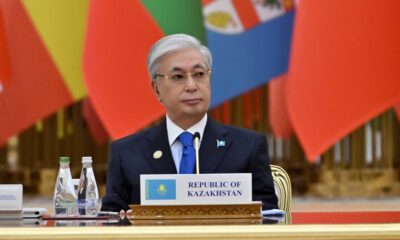


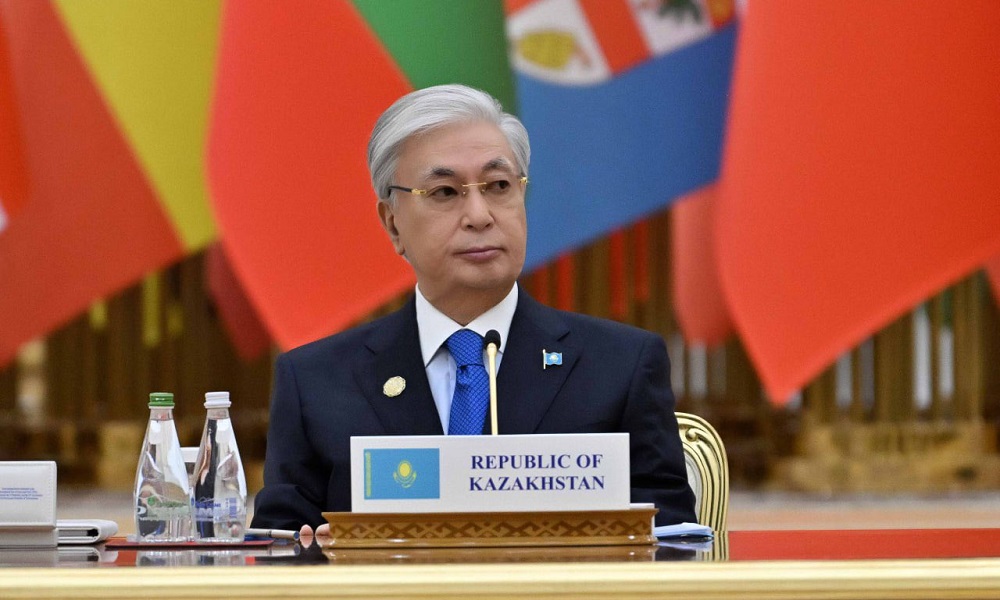
Kazakhstan’s President Kassym-Jomart Tokayev has emphasized the continuation of humanitarian assistance to Afghanistan, stating that the ongoing provision of such aid plays an important role in ensuring regional security.
Speaking at the international conference “Peace and Trust” in Ashgabat, the capital of Turkmenistan, Tokayev described addressing complex humanitarian challenges and the reconstruction of Afghanistan as a necessity.
“To ensure regional security, we consider it essential to continue providing assistance to Afghanistan, including by strengthening international efforts to address complex humanitarian issues and the reconstruction of this country. Kazakhstan remains committed to supporting the people of Afghanistan through humanitarian aid, educational projects, trade development, and food security initiatives,” he said.
Meanwhile, experts believe that sustainable improvement of the humanitarian situation in Afghanistan requires broad cooperation from the international community and support for the country’s economic development.
“Investment can be defined as one of the fundamental drivers of the economic cycle, and whenever Afghan traders do not take their money out of the country and instead invest domestically, it naturally leads to greater growth and dynamism in Afghanistan’s economy,” said Abdul Zahoor Modabber, an economic analyst.
As the humanitarian crisis in Afghanistan continues, reports by international relief organizations indicate that millions of citizens of the country are in urgent need of food, health, and livelihood assistance.
The reduction in funding for aid organizations, the impacts of climate change, and the return of migrants have increased concerns about a further deterioration of the humanitarian situation in the country.
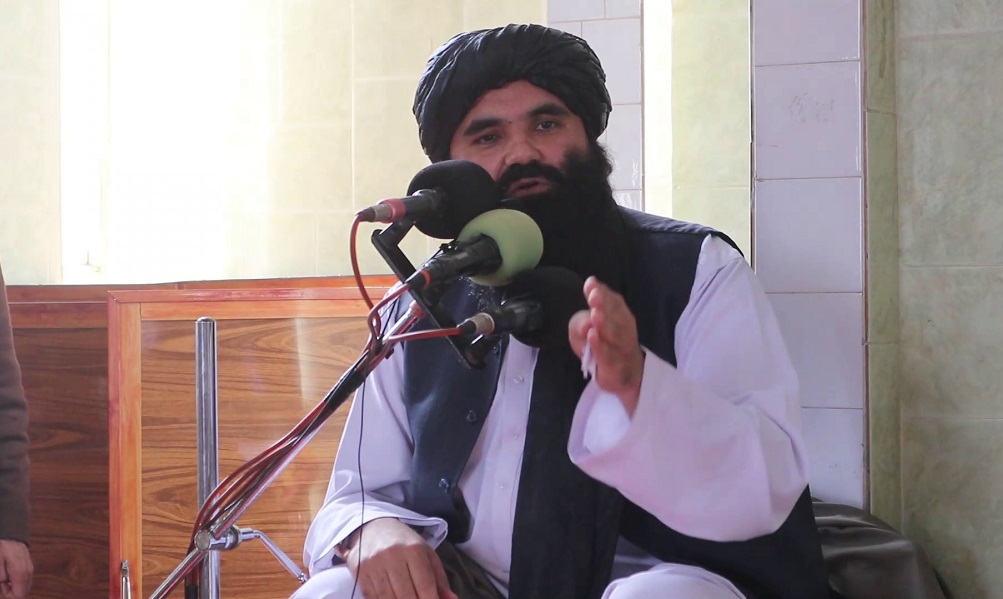
Khalifa Sirajuddin Haqqani, Minister of Interior of the Islamic Emirate of Afghanistan, said during a visit to Khost province on Friday that any government which rules through fear cannot be considered a true government.
“A government is one that is loved by its people, one that serves them with respect and compassion, and from whose behavior people learn ethics and sincerity,” he said.
Haqqani also stressed that Afghans who opposed the Islamic Emirate in the past should be tolerated and treated in a way that helps eliminate hostility and animosity, paving the way for national cohesion.


ACL: Jawanan Perozi 1-0 Arman FC; Abu Muslim Farah 2-0 Sarsabz Yashlar

Continued aid to Afghanistan vital for regional security: Kazakh president

Islamic Emirate declines to attend Tehran meeting on Afghanistan

Sirajuddin Haqqani: A government that intimidates its people is not a true government

Afghanistan’s health minister likely to visit India next week

Pakistan will lose big market in both Afghanistan, Central Asia: Sarhadi

Afghanistan records $580m in fruit exports in six months

Tashkent: Central Asian leaders say regional stability hinges on Afghanistan

Afghan Abdalyan beat Sri Lanka A by 3 wickets in Rising Stars Asia Cup opener

Afghanistan U19 cricket team defeats India A U19

Saar: Calls to avoid using Afghan soil against nations

Tahawol: UNSC meeting outcome regarding Afghanistan discussed

Saar: Ongoing Kabul–Islamabad tensions discussed

Tahawol: Pakistan’s warning on Afghanistan reiterated

Saar: UN’s meeting on Afghanistan reviewed
-

 Latest News2 days ago
Muttaqi: Afghanistan’s progress requires both religious and modern education
-

 Sport4 days ago
ILT20: Desert Vipers edge Gulf Giants in historic super over thriller
-

 Regional4 days ago
Six Pakistani soldiers killed in TTP attack in Kurram District
-

 Business4 days ago
Trade bodies warn almost 11,000 Afghan transit containers stuck at Karachi port
-
 World4 days ago
Powerful 7.6 earthquake hits northern Japan, tsunami warnings issued
-
 Latest News3 days ago
Trump calls Afghanistan a ‘hellhole’ country as US expands immigration restrictions
-

 Sport3 days ago
Commanding wins for Arman FC and Sarsabz Yashlar in Afghanistan Champions League
-
 Latest News5 days ago
Pakistan’s top general calls on IEA to pick between ties with Islamabad or TTP