
Latest News
IEA’s higher education minister confirms public universities to reopen soon


Mawlavi Abdul Baqi Haqqani, the Islamic Emirate’s acting minister of higher education, said the reason for the closure of state universities was because of financial problems but stated these issues would be resolved and the education facilities would reopen soon.
Speaking at a press conference in Kabul on Wednesday, Haqqani said that there are 40 public and 150 private universities in Afghanistan, all of which will be operational from September. He said government universities will soon reopen.
Haqqani said the Ministry of Higher Education was committed to standardizing all educational institutions in the country and that private universities without licenses would no longer have the right to enroll new students.
He said efforts were being made to make Afghanistan’s education system competitive with the rest of the world. He also said scholarships for Afghan students have been discussed with officials from the Ministries of Higher Education of Turkey, Iran, Pakistan, Uzbekistan and the European Union.
Haqqani reiterated that the country’s education system is based on the Islamic system and that all Sharia and Islamic laws must be observed at educational institutions.






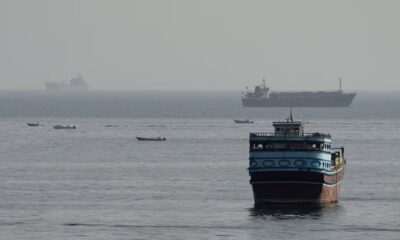

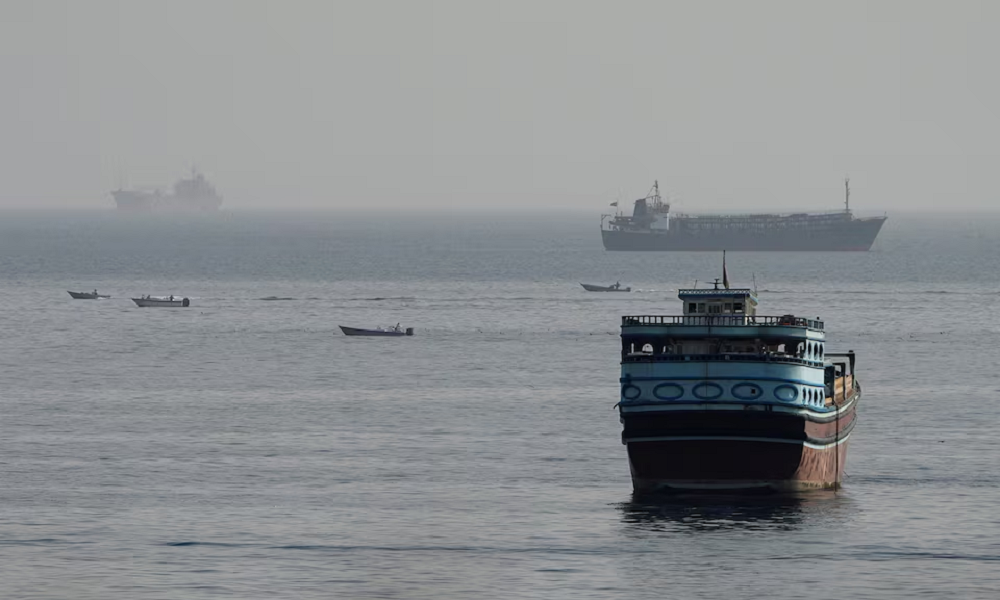
Iran is seeking greater control over shipping through the Strait of Hormuz under a temporary proposal being discussed with Oman, according to a senior Iranian source familiar with the negotiations.
The source told Reuters that Tehran wants authority over all vessels entering the strategic waterway, while also maintaining oversight of outbound traffic with the ability to intervene if necessary.
Under the proposal, ships leaving the Gulf would travel through a route between Iran and Oman, with Oman issuing final clearance after notifying Iranian authorities.
According to the source, the proposal represents a compromise from Iran’s original demand for full control over shipping in both directions. Tehran is not expected to soften its current position, arguing that its security concerns must be addressed before any long-term arrangement can be reached.
Negotiations over the waterway have become one of the most contentious issues following the recent conflict involving the United States, Israel and Iran.
While Washington maintains that the memorandum of understanding that ended the fighting requires the Strait of Hormuz to be reopened for normal international shipping, Tehran insists the agreement preserves its authority over maritime traffic through the passage.
Last month, Iran rejected an Omani proposal that would have divided responsibility for transit routes equally between the two countries, saying the plan did not adequately address its security concerns.
The Strait of Hormuz is one of the world’s most strategically important maritime chokepoints.
Roughly one-fifth of global oil consumption passes through the narrow waterway each day, along with significant volumes of liquefied natural gas, petrochemicals, fertilisers and other commercial goods.
Any disruption to traffic through the strait can have an immediate impact on global energy prices, shipping costs and international trade.
Located between Iran and Oman, the strait is approximately 34 kilometres (21 miles) wide at its narrowest point. Since 1968, ships have used internationally recognised traffic lanes established under a United Nations-backed routing system, allowing vessels to transit through both Iranian and Omani territorial waters while treating the passage as an international shipping route.
The outcome of the current negotiations is expected to play a key role in determining when normal commercial shipping can fully resume through one of the world’s busiest and most strategically significant waterways.

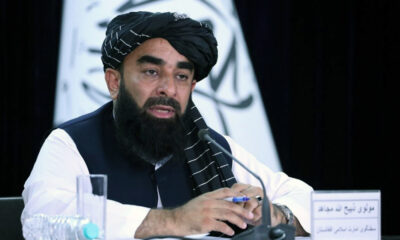
The spokesman for the Islamic Emirate Zabihullah Mujahid says no unauthorized individual or group is allowed to operate in Afghanistan or use the country’s territory against other nations. Responding to security concerns raised by the special representatives of China and Pakistan.
Mujahid said Afghanistan’s position on regional security is clear and that its territory will not be used for activities against any other country. He added that any propaganda or concerns raised by certain parties about Afghanistan are their own responsibility and that the internal security problems of other countries are unrelated to the Islamic Emirate.
“Afghanistan enjoys nationwide security. No unauthorized group is allowed to operate here, and Afghan territory is not used against any country. We have taken strict measures to prevent such activities. If some parties spread propaganda or express concerns about Afghanistan, that is their own matter. The reality is that no unauthorized group posing a threat to any country exists or is allowed to operate in Afghanistan,” said Mujahid.
His remarks came after Pakistan’s Special Representative for Afghanistan, Mohammad Sadiq, and China’s Special Representative for Afghanistan, Yu Xiaoyong, held talks on Monday on regional security and the latest developments concerning Afghanistan.
During the meeting, the two envoys discussed threats posed by Tehreek-e-Taliban Pakistan (TTP) and the East Turkestan Islamic Movement (ETIM), which Pakistan claims are operating from Afghan territory.
Latest News
WFP warns Afghanistan’s child malnutrition crisis deepens as aid cuts put millions at risk
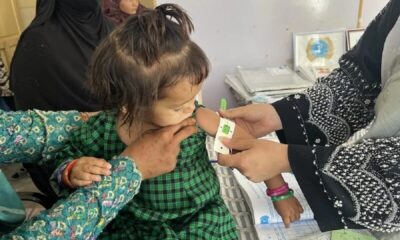
WFP estimates that 3.7 million children and 1.2 million pregnant and breastfeeding women are expected to suffer from acute malnutrition this year unless urgent action is taken.
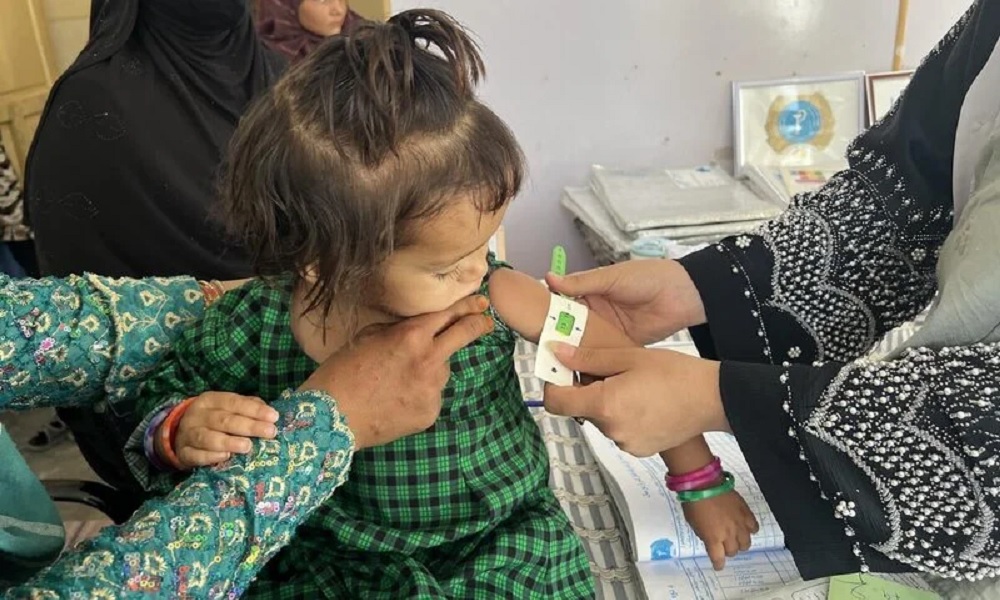
The United Nations World Food Programme (WFP) has warned that Afghanistan is facing a worsening child malnutrition crisis, with funding shortages forcing life-saving nutrition and food programmes to scale back at a time when they are needed most.
According to WFP, child acute malnutrition has reached critical levels in 12 provinces, including Helmand, Kandahar, Baghlan and Logar, with the situation expected to deteriorate through October. The agency said nearly one-third of Afghanistan’s provinces are now experiencing critical levels of child malnutrition—the highest number on record.
WFP estimates that 3.7 million children and 1.2 million pregnant and breastfeeding women are expected to suffer from acute malnutrition this year unless urgent action is taken.
“Feeble cries of malnourished babies haunt the health clinics of Afghanistan as worried mothers—many themselves weakened by hunger—bring their children, desperate for treatment,” said WFP Country Director in Afghanistan John Aylieff. “We are witnessing the next generation waste away in spite of this being harvest time – a time of plenty. This is not simply heartbreaking—it is unacceptable.”
The agency attributed the worsening situation to a combination of conflict, unemployment, high food prices, reduced humanitarian funding, supply disruptions caused by conflict in the Middle East, and the prolonged closure of the Pakistan border, which limited access to nutrition supplies.
WFP said 142 health centres closed in 2025 due to funding cuts, leaving more than 13,000 children without nutrition treatment, while nearly one million mothers and children missed essential nutrition services for five months this year.
“Afghanistan is already gripped by one of the world’s most severe and unrelenting malnutrition crises, and these staggering numbers could climb even higher. This crisis could eclipse all previous projections and condemn countless more children and mothers to preventable death,” added Aylieff.
The agency called for an urgent $540 million over the next six months to maintain and expand nutrition programmes, warning that without immediate support, the crisis could claim more lives and reach unprecedented levels.


Tahawol: China-Pakistan talks on Afghanistan security reviewed

Afghanistan aim to strengthen ODI ranking in Ireland series

Saar: Discussion on Iran’s warning to the US

Iran wants oversight of Hormuz traffic under proposed Oman plan

No unauthorized group allowed to operate in Afghanistan: IEA spokesman

Pakistan’s governance system has ‘collapsed’: Mohsin Naqvi

India offers 1,000 online scholarships for Afghan students for 2026-27 academic year

Cricket world pays tribute to Afghanistan fast bowler Shapoor Zadran

Turkey spent over $120 million to prepare airport for Qatar-donated U.S. presidential aircraft

Thousands pay final respects as Afghan cricketer Shapoor Zadran buried in Kabul
Tahawol: China-Pakistan talks on Afghanistan security reviewed
Saar: Discussion on Iran’s warning to the US

Tahawol: Worsening security crisis in Khyber Pakhtunkhwa

Saar: Trump’s claim over Iran talks

Tahawol: US cancelling strikes on Iran
-
 Latest News5 days ago
Pakistan’s governance system has ‘collapsed’: Mohsin Naqvi
-

 Sport5 days ago
Qosh Tepa crowned champions of inaugural Afghanistan Wrestling Premier League
-

 Latest News4 days ago
World Bank: Afghanistan’s economic growth too weak to improve living standards
-
 Latest News3 days ago
Uzbek president calls for Central Asia-Afghanistan development space
-

 World3 days ago
US to make visa bond program permanent for people from dozens of countries
-
 Sport1 day ago
Only two days to go before Afghanistan and Ireland begin ODI series
-

 Sport2 days ago
AFC confirms clubs for 2026/27 competitions; draw set for August 18
-
 World4 days ago
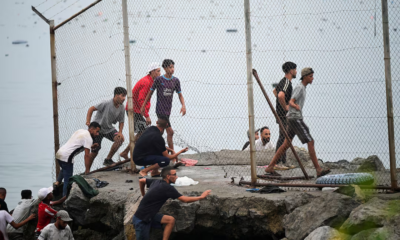
Spain says migrant surge into Ceuta has eased as thousands return to Morocco