
Latest News
IEA visits orphans of former govt security forces ahead of Eid

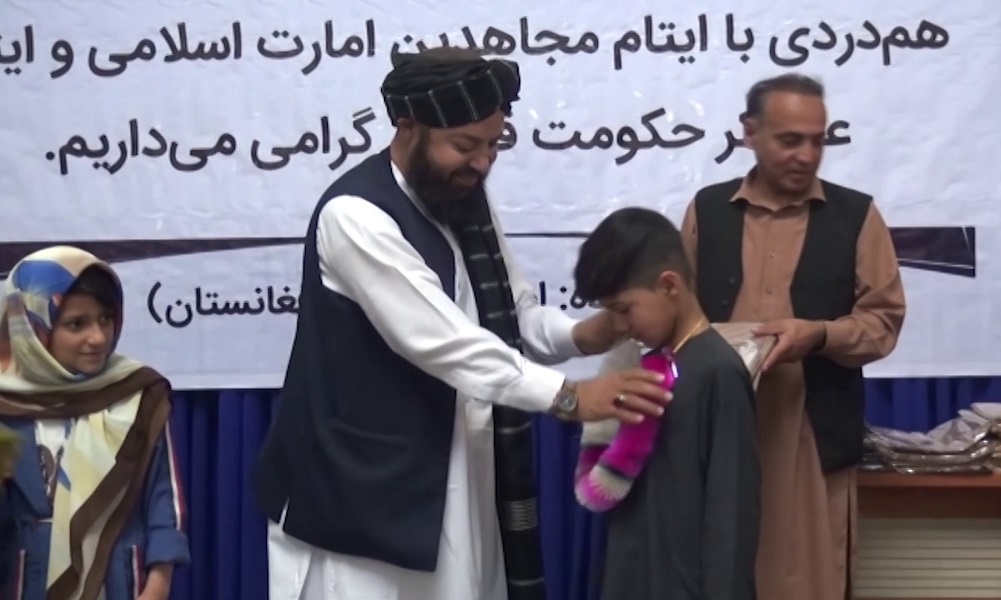
Dozens of homeless children in Herat, who lost their fathers to the war, welcomed food and clothing given to them by Islamic Emirate of Afghanistan (IEA) officials on Saturday.
The initiative was launched to console the orphans of the security forces of the previous government and the Mujahideen of the Islamic Emirate (IE).
Some families want the government to take care of the orphans, saying that the annual salaries of security forces are not paid and that they live in difficult conditions.
The local administration of Herat has prepared new clothes for these children in a bid to help them.
“The feeling of happiness should return to all the homes of Afghans and that we can have a clear and common message that our nation is no longer interested in creating orphans,” said Naeem al-Haq Haqqani, Herat’s director of information and culture.
Some of these children are the children of security forces of the former government who were killed, and some are the children of the forces of the Islamic Emirate. They each express their hatred of war and say that life without a father is difficult for them.
“We do not want anyone to be orphaned like us,” said Mohibullah, an orphan.
“Today, we would be very happy if the father was with us, on the eve of Eid, we are without a father,” said Zubair, another orphan.
“Since I lost my father, I think there is no one to support me, but I hope that the Islamic Emirate and the current government can cooperate and solve our problems,” said Wajiha, another orphan.
Some families of the victims of slain security forces claim that they have not received their salaries for the past eight months.
Abdul Tawab, the brother of a former soldier who died, said: “Someone who used to spend 10,000 afghanis monthly, unfortunately, has been cut off for 9 months. Pay at least 50 percent of the martyr’s salary.”
“I lost a young brother whose children survived, but now we cannot celebrate Eid al-Fitr,” said Mohammad Asif, the brother of a dead soldier.
Thousands of security forces from both the former government and the Islamic Emirate died in the war over the last two decades. Thousands of orphans now live in impoverished conditions.





Latest News
Sweden to lead EU outreach to IEA as bloc weighs Afghan deportations
The talks – expected to focus on deportation procedures – are being prepared jointly by Sweden and the European Commission.
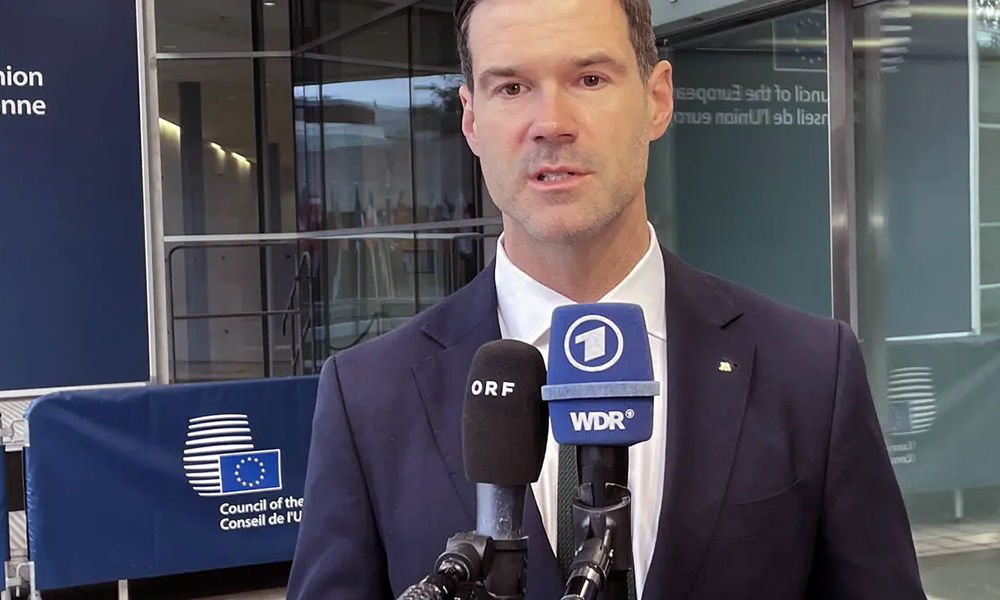
Sweden has confirmed it will play a key role in facilitating renewed European Union engagement with Afghanistan’s Islamic Emirate authorities, as Brussels intensifies efforts to coordinate the return of Afghan nationals from member states.
The move follows reports that an IEA delegation could travel to Brussels in the coming months for sensitive, technical-level discussions with EU and national officials.
The talks – expected to focus on deportation procedures – are being prepared jointly by Sweden and the European Commission.
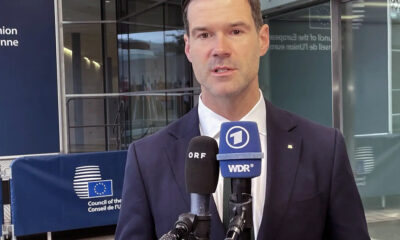
Sweden’s Migration Minister, Johan Forssell, confirmed Stockholm’s involvement, stating that Sweden would work with the Commission to invite a technical delegation from Kabul to continue dialogue in Brussels.
The discussions are expected to include representatives from the Commission, the EU’s diplomatic arm – the European External Action Service – and a small group of member states, including Belgium and Sweden.
The initiative was reportedly prompted in part by Belgium’s migration authorities and builds on a joint EU-Belgian mission to Kabul earlier this year, which laid the groundwork for further engagement with Afghanistan’s rulers.
EU officials have meanwhile increasingly acknowledged the need for limited, pragmatic engagement – particularly on migration management.
A spokesperson for the European Commission confirmed that preparations are underway for follow-up talks after the Kabul visit, though it remains unclear whether the EU executive will formally host the meeting in Brussels.
The outreach reflects growing pressure within the bloc to adopt a more coordinated approach to Afghan returns.
In late 2025, Belgium led an initiative backed by 19 EU countries calling for stronger cooperation on deporting Afghan nationals convicted of crimes, highlighting divisions within the EU over migration policy and the legal and ethical complexities of returning individuals to Afghanistan.
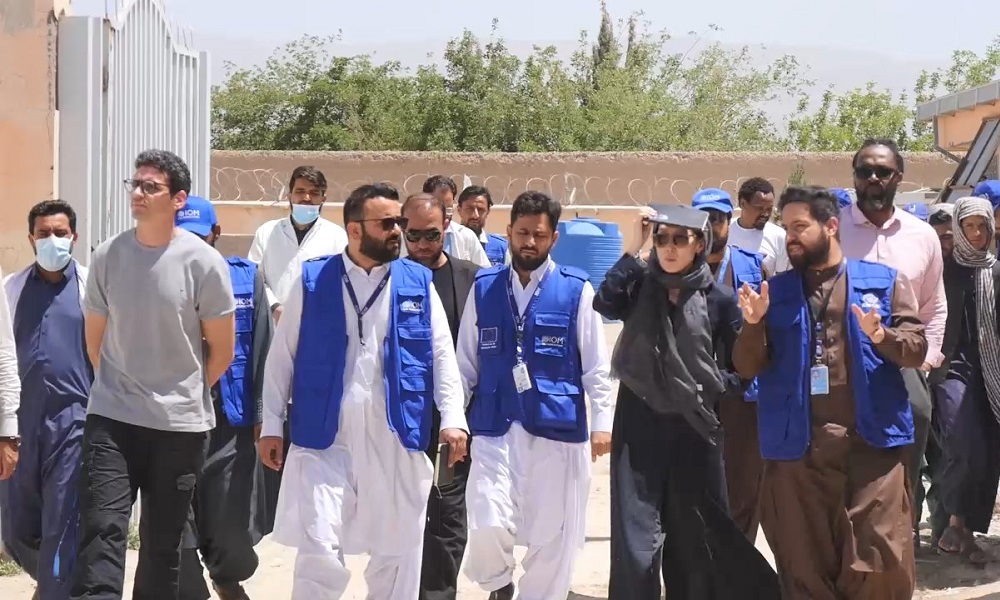
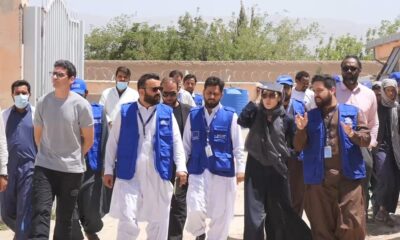
Mihyung Park, International Organization for Migration (IOM) Chief of Mission in Afghanistan, said during her visit to Kandahar that Afghanistan is still facing a serious humanitarian crisis in relation to returning migrants.
Mihyung Park made these remarks during a visit to a returnee center in the Spin Boldak district of Kandahar province, adding that the organization’s assistance to returnees will continue.
According to her, the current situation in the region shows that the flow of Afghan migrants returning from Iran and Pakistan is still increasing.
She added that although the needs of returnees have grown, aid resources are limited, and therefore the organization will focus on families that are in the greatest need of assistance.
ccording to IOM, around three million Afghans returned from Iran and Pakistan to the country in 2025 alone. This process is still ongoing, which has further increased the need for humanitarian assistance.
Latest News
Afghan goes on trial in US for Kabul airport bombing in 2021
The suicide bombing was carried out by Abdul Rahman al-Logari, who detonated an explosive device at approximately 5:36 p.m.
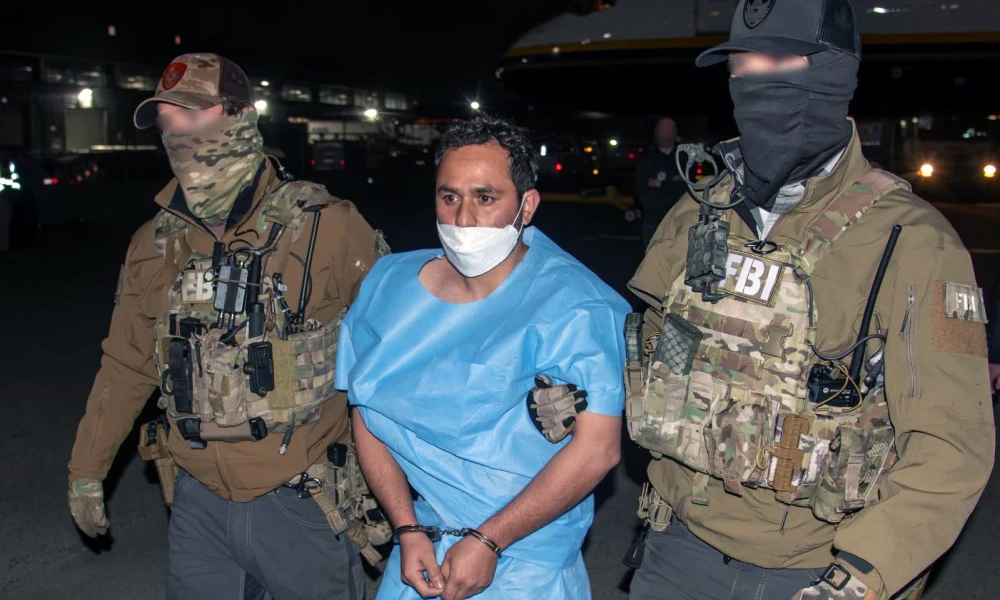
An Afghan national has gone on trial in a U.S. federal court over his alleged role in the deadly 2021 bombing at Kabul airport during the final days of the American withdrawal from Afghanistan.
Mohammad Sharifullah, also known as “Jafar,” faces a charge of providing and conspiring to provide material support to ISIS-K, the Afghan affiliate of the Islamic State group, resulting in death. He has pleaded not guilty.
The attack, which took place on August 26, 2021, at Kabul airport, killed more than 180 people, including 13 U.S. service members, as thousands of Afghans crowded the facility seeking evacuation amid the Islamic Emirate return to power.
A jury was selected on Monday, with opening statements and witness testimony beginning shortly thereafter. If convicted, Sharifullah could face life imprisonment.
Prosecutors allege that Sharifullah helped prepare for the bombing at Abbey Gate, the airport’s main entry point during the evacuation. According to court filings, he admitted during FBI interviews that he scouted a route for the attacker, checking for security presence and reporting back to other ISIS-K (Daesh) members that the route was clear.
The suicide bombing was carried out by Abdul Rahman al-Logari, who detonated an explosive device at approximately 5:36 p.m.
Sharifullah told investigators he had been released from prison about two weeks before the attack and was subsequently recruited, receiving a motorcycle and a mobile phone, prosecutors said.
Assistant U.S. Attorney John Gibbs told the court that the defendant spoke extensively with authorities, participating in multiple FBI interviews conducted in Pakistan, during transit to the United States, and after arrival.
“You will hear his words, and you will see a great deal of evidence of his guilt,” Gibbs said in his opening remarks.
However, defence attorney Geremy Kamens rejected the allegations, arguing that the wrong person had been charged and that any statements made by Sharifullah were obtained under duress.
“This man, Mohammad Sharifullah, had nothing to do with it,” Kamens told the court, adding that the central issue was identifying who was truly responsible.
Expert testimony from Bruce Hoffman provided jurors with context on ISIS operations and described the situation at the airport ahead of the bombing as “complete pandemonium.”
During cross-examination, the defence sought to shift attention toward the IEA’s control over Kabul at the time, highlighting their influence in the days leading up to the attack.
In April 2023, IEA authorities said they had killed an ISIS-K figure described as the mastermind behind the Abbey Gate bombing, an operation carried out without U.S. involvement, according to officials from the administration of Joe Biden.
The U.S. withdrawal from Afghanistan has faced sustained criticism over its execution, particularly in the wake of the airport attack.


Sweden to lead EU outreach to IEA as bloc weighs Afghan deportations

Pakistan PM welcomes US-Iran ceasefire extension

Trump declares Iran ceasefire extension with peace talks in doubt

Tahawol: Russia’s Security Concerns Over Afghanistan discussed

Afghanistan still facing humanitarian crisis regarding returnees: IOM chief

IEA supreme leader orders replacement of foreign terminology in official documents

Russia deems US military presence in Afghanistan unacceptable

Afghanistan hosts inaugural Afghanistan–Central Asia Consultative Dialogue to strengthen regional cooperation

TAPI gas pipeline advances 25 km in Afghanistan

Russia backs Uzbekistan–Afghanistan trade hub, praises regional economic cooperation
Tahawol: Russia’s Security Concerns Over Afghanistan discussed

Saar: Islamic Emirate delegation’s visit to Brussels discussed

Tahawol: Pakistan’s failed efforts to impose war in Afghanistan discussed

Saar: Demand for the country’s exports to Iran discussed

Tahawol: Fragile ceasefire between Iran and US discussed
-
 Business5 days ago
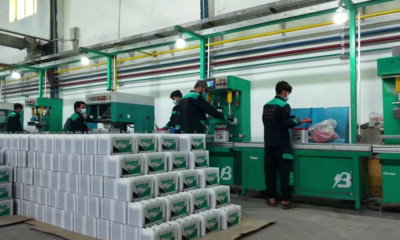
Afghanistan moves toward self-sufficiency in car battery production
-

 Latest News3 days ago
Afghanistan launches media platform to improve access to information
-

 Business5 days ago
Uzbekistan launches exchange-based trade system with Afghanistan to boost bilateral commerce
-
 Latest News4 days ago
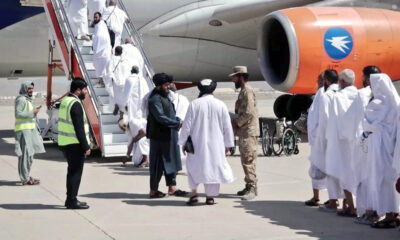
Afghanistan to airlift 30,000 pilgrims to Saudi Arabia in 96 flights for Hajj 2026
-

 Regional4 days ago
Ships crossing Hormuz need OK from IRGC, unfreezing funds part of deal, Iran official says
-
 Business4 days ago
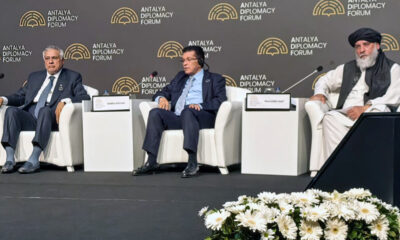
Afghan commerce minister highlights trade trust and market stability at Antalya Forum
-
 Latest News2 days ago
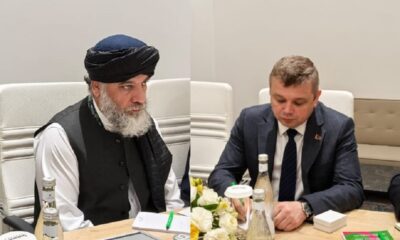
Afghanistan, Belarus hold talks on fuel imports
-
 Latest News4 days ago
Afghanistan and Russia discuss expansion of banking cooperation in Moscow meeting