
Latest News
IEA rejects reports of selling US military equipment to Pakistan

Islamic Emirate of Afghanistan (IEA) officials on Thursday rejected reports published in the media that the new government is selling off US military equipment to Pakistan.
IEA officials said there was no truth in these reports and that it was simply propaganda.
“We have faced propaganda for the past 20 years… there are video clips that show some military equipment being transferred from one province to another. It (selling equipment) is rumors, it is not true,” said Inayatullah Khorazmi, spokesman for the Ministry of Defense.
Reports emerged on Thursday that sources told Pakistan’s Dawn News that in order to ensure that lethal weapons left behind by the Americans do not fall into the hands of the Tehrik-i-Taliban Pakistan (TTP) militants and other terrorist groups, Pakistan is buying back a huge cache of these weapons.
It is estimated that US forces left behind nearly 200,000 deadly weapons.
Last month, the New York Times also reported that US weapons, which were seized by the IEA after American troops withdrew, were being openly sold in shops by Afghan gun dealers who paid for the weapons and ammunition.
Under a US training and assistance program, that cost American taxpayers more than $83 billion over 20 years of war, the equipment was originally provided to the Afghan security forces.
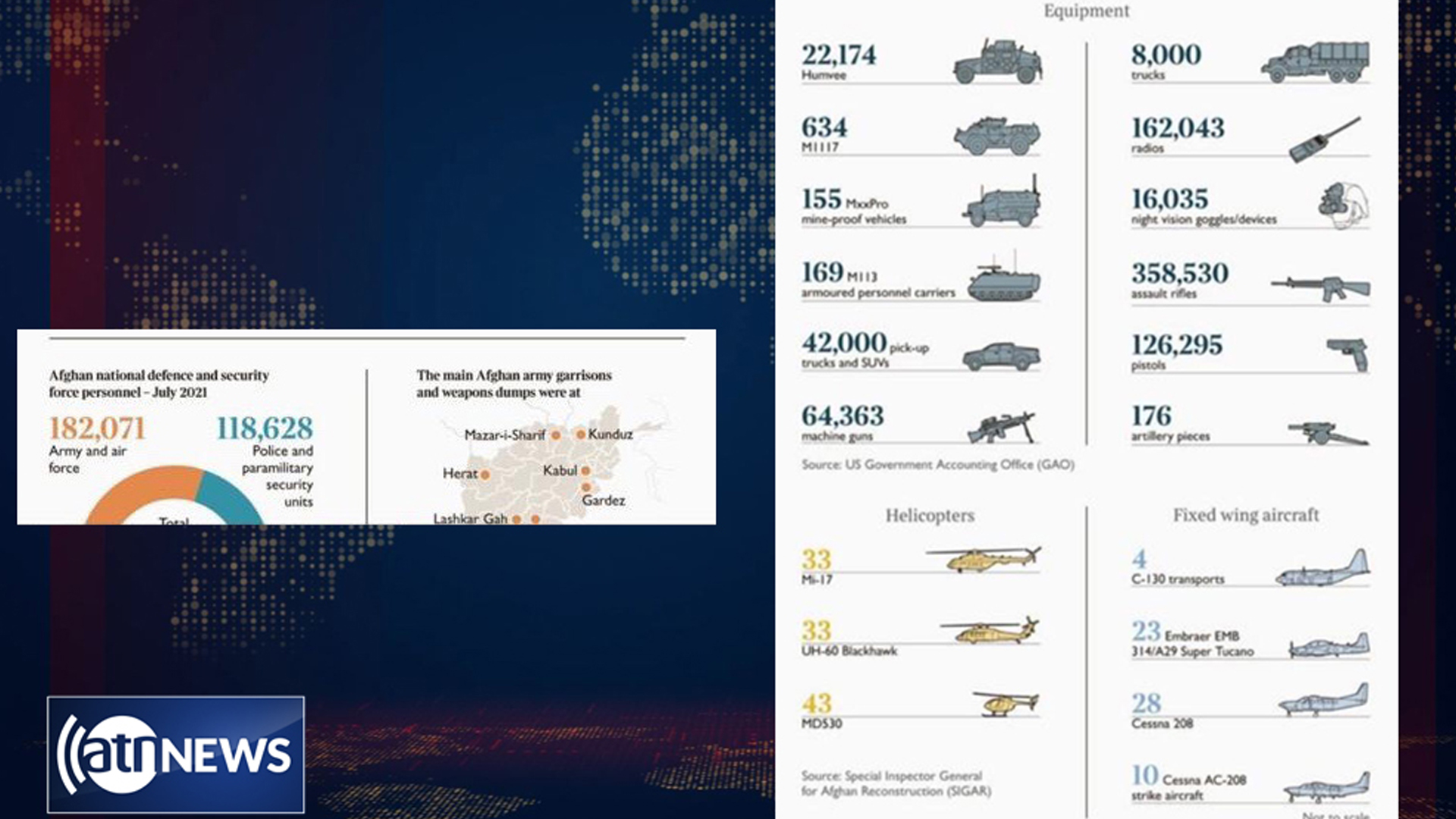
According to documents seen by Ariana News, equipment in the Afghan army’s possession at the time of the government’s collapse, in August, was as follows:
1- 22,174 military tactical vehicles
2- 8,000 military trucks
3- 634 armored 1117M tanks
4- 155 armored vehicles
5- 169 M113 military tanks
6- 42, 000 Ranger and Hilux vehicles
7- 33 (Mi-17) helicopters
8- 33 UH-60 Black Hawk helicopters
9- 43 (MD-530) helicopters
10- Four transport helicopters
11- 23 (A29) fighter planes
12- 28 transport planes
13- 10 (AC- 208) military planes
14- 16,243 telecommunication devices
15- 16,035 night vision cameras
16- 358,530 M16 firearms
17- 126, 295 pistol
18- 176 rocket launchers
This equipment was reported to be in Kabul, Kunduz, Helmand, Balkh, Herat and Paktia bases that were taken control of by IEA forces.
One former military official, Sadiq Shinwari said Pakistan is hoping to take possession of millions of dollars worth of equipment.
“Pakistan wants to transfer equipment worth millions from Afghanistan. Pakistan’s recent speech was a campaign, because of its intelligence goals,” said Shinwari.
Over the years, thousands of units of equipment were handed over to the Afghan government by the US. Between 2017 and 2019, the former Afghan government was given:
1- 7,035 weapons
2- 4,702 military vehicles
3- 20,040 grenades
4- 2,520 bombs plus other heavy artillery
In addition to the listed equipment, the document seen by Ariana News indicated there had been just over 182,000 soldiers and 118,600 national police and intelligence forces (NDS) combined wgho were in service at the time of the government’s collapse.
For years, the Afghan government said security forces totaled over 300,000 but speculation was always rife that this number included ghost soldiers.






Latest News
Ex-US envoy Khalilzad condemns Pakistan air attacks on Afghanistan
He described the situation as a tragedy for both Pakistan and its neighbors, urging the Pakistani leadership to reconsider its policies and change course.
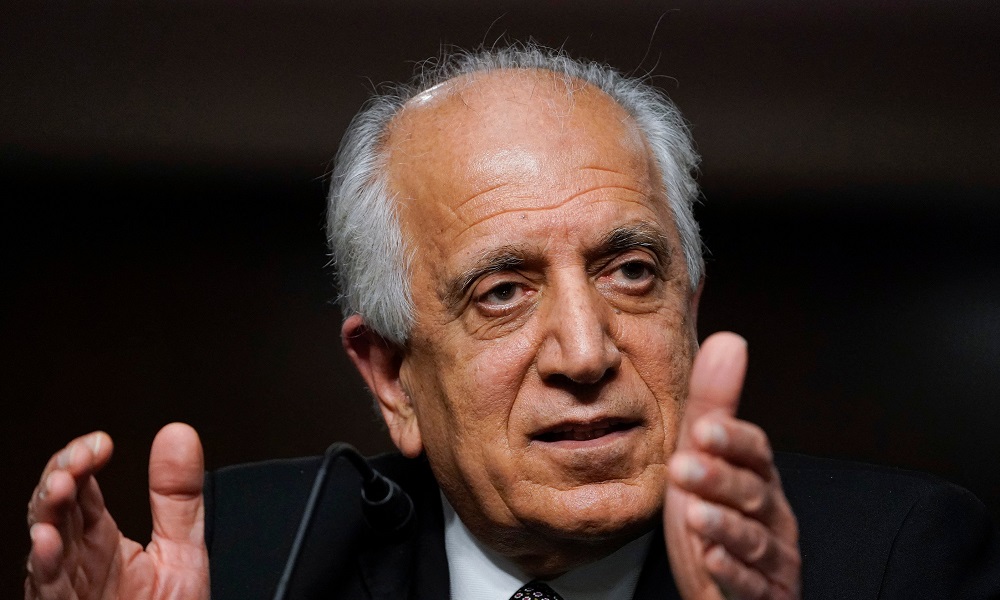
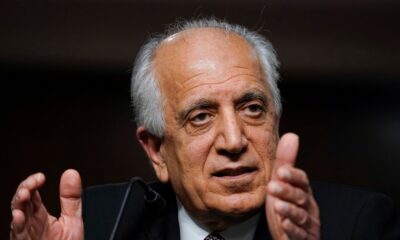
Former U.S. Special Envoy for Afghanistan, Zalmay Khalilzad, has strongly condemned Sunday’s airstrikes by Pakistan on Afghanistan. He stated that these attacks killed and wounded numerous innocent women, children, and elderly.
Khalilzad pointed to Pakistan’s long history of misgovernance, interference in minority rights, manipulation of democratic processes, and repeated military takeovers as the root causes.
He described the situation as a tragedy for both Pakistan and its neighbors, urging the Pakistani leadership to reconsider its policies and change course.
Latest News
Japan contributes $2.08 million to World Bank Trust Fund for Afghanistan
Japan has remained one of the major donors to Afghanistan’s humanitarian and development efforts.
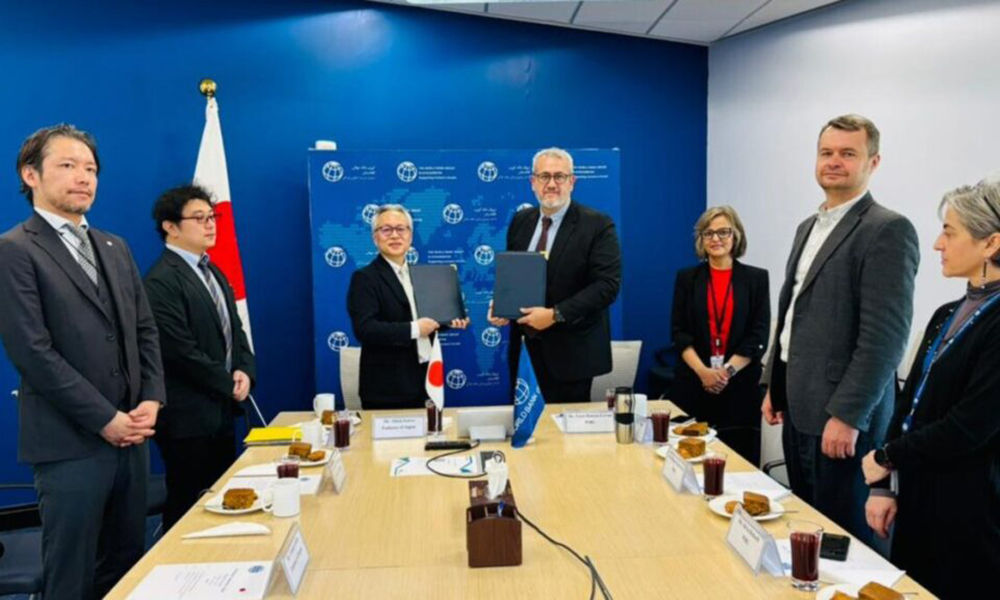
Japan has signed a $2.08 million contribution agreement with the World Bank to support humanitarian and livelihood programs in Afghanistan, its diplomatic mission in Kabul said on Sunday.
The funding will be channeled through the Afghanistan Reconstruction Trust Fund (ARTF), a multi-donor trust fund administered by the World Bank that finances essential services and development programs in the country.
In a statement, Japan said the contribution is intended to support people in need and promote livelihoods among vulnerable Afghans, including women and young people.
“Japan stands with the Afghan people,” the statement said.
Japan has remained one of the major donors to Afghanistan’s humanitarian and development efforts.
Latest News
Mujahid: Afghanistan will target perpetrators, not civilians
In an interview with Ariana News, Mujahid claimed that a specific military circle within Pakistan is behind the latest tensions.
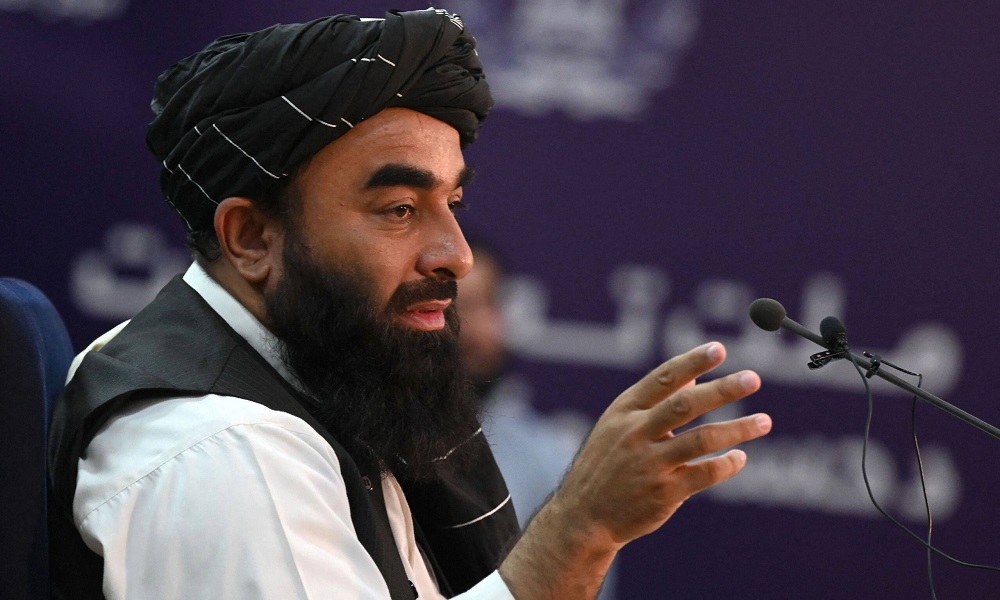
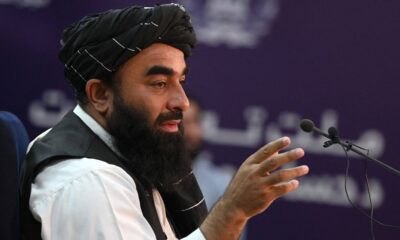
Zabihullah Mujahid, spokesman for the Islamic Emirate of Afghanistan, has warned that Pakistan’s recent actions will not go unanswered, stating that Afghan forces would target those directly responsible rather than civilians.
In an interview with Ariana News, Mujahid claimed that a specific military circle within Pakistan is behind the latest tensions.
He accused the group of acting on directives from external backers to carry out attacks and undermine relations between the two countries.
Mujahid emphasized that the Islamic Emirate distinguishes between civilians and those engaged in military operations, asserting that its response would be directed only at individuals responsible for what he described as crimes.
“We must make it clear that unlike Pakistan, we do not target civilians. Our target is the real criminals — Pakistani military personnel responsible for these acts,” he said.
This comes in the wake of airstrikes early Sunday morning on Nangarhar and Paktika provinces, which have sharply escalated tensions between Afghanistan and Pakistan.
Pakistani officials say the strikes targeted militant hideouts along the border, describing them as intelligence-based operations against armed groups accused of carrying out attacks inside Pakistan.
Islamabad has repeatedly blamed Tehrik-e-Taliban Pakistan (TTP) fighters for a surge in violence and has alleged that such groups operate from Afghan territory.
Afghan authorities, however, have condemned the strikes as a violation of the country’s sovereignty, reporting civilian casualties and damage to residential areas.
Officials in Kabul say the attacks have further strained already fragile relations between the two neighbors.
Cross-border tensions have flared repeatedly in recent years over security concerns, militant activity, and disputes along the disputed Durand Line. Diplomatic engagements and temporary de-escalation efforts have so far failed to produce a lasting solution, leaving the border region volatile and prone to renewed confrontation.


Ex-US envoy Khalilzad condemns Pakistan air attacks on Afghanistan

Tahawol: Repeat crimes by Pakistani military in Afghanistan discussed

Saar: Pakistani military regime’s airstrikes on Afghanistan

Japan contributes $2.08 million to World Bank Trust Fund for Afghanistan

Mujahid: Afghanistan will target perpetrators, not civilians

AFC Futsal Asian Cup 2026: Day One Review

IEA releases three Pakistani soldiers to mark Ramadan

AFC Futsal Asian Cup: Afghanistan to face Iran in crucial Group D clash

Afghanistan’s Chief of Armed Forces underscores readiness and equipment for national defense

Afghanistan welcomes investment and technology partnerships with India
Tahawol: Repeat crimes by Pakistani military in Afghanistan discussed
Saar: Pakistani military regime’s airstrikes on Afghanistan

Tahawol: US military review for attack against Iran discussed

Saar: Afghanistan’s expanding ties with Central Asia discussed

Tawsia: Calls for implementing development and infrastructure projects
-
 Latest News4 days ago
Afghanistan’s Chief of Armed Forces underscores readiness and equipment for national defense
-
 Latest News3 days ago
Afghanistan welcomes investment and technology partnerships with India
-

 Sport4 days ago
Afghan Peaks founder climbs Aconcagua to promote Afghanistan’s mountain potential
-

 Latest News3 days ago
Indian customs seize Chinese walnuts falsely declared as Afghan
-

 Business4 days ago
Pakistan allows re-export of stranded Afghan transit cargo
-
 Latest News3 days ago
Pakistan’s Punjab to send home 20 more Afghans in repatriation drive
-

 Latest News4 days ago
Pakistan signals possible air strikes as Kabul releases Pakistani soldiers in goodwill move
-
 Business5 days ago
Afghanistan’s 2026 Development Framework meeting highlights self-reliance and economic stability