
Latest News
IEA reject claims by UNSC that foreign groups are active in Afghanistan

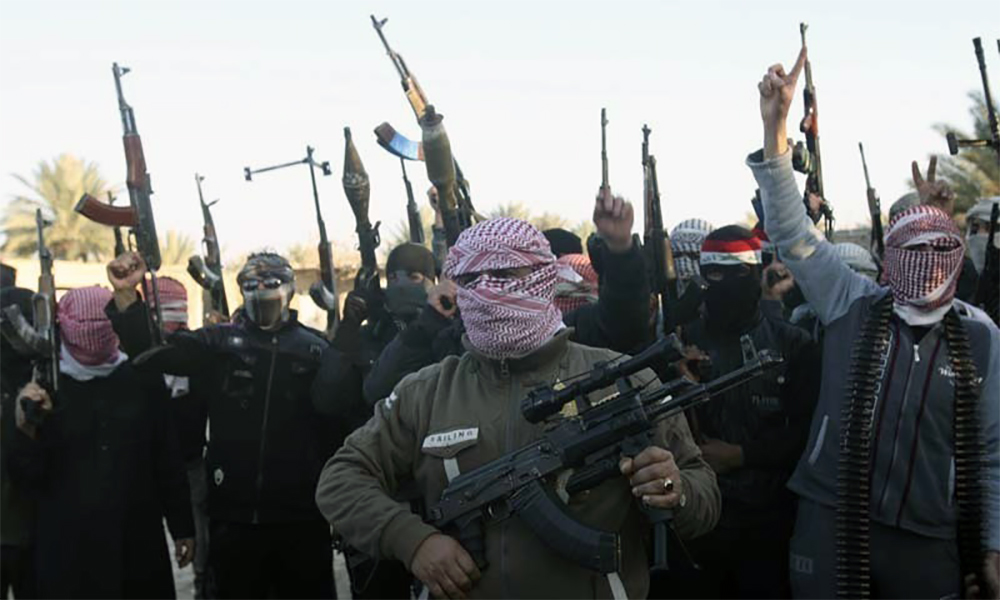
The Islamic Emirate of Afghanistan (IEA) on Monday rejected claims by the United Nations Security Council (UNSC) that there are foreign terrorist groups sheltering in Afghanistan.
In a statement issued by the foreign ministry, the IEA said there were no foreign groups in the country and that for the past nine months, the new government has worked to build an environment of trust between Afghanistan and the international community.
The ministry said it “views UNSC Monitoring Team Report (13) asserting the existence and operation of foreign groups in Afghanistan as unfounded and rejects it in the strongest terms.”
“The fact remains that since the return to power of the Islamic Emirate, the world and the region have been prevented from facing any harm from Afghanistan,” the foreign ministry statement said.
The IEA said it will live up to its commitments and ensure that no country is threatened by Afghanistan.
The foreign ministry also called on the UNSC to obtain facts and to allow the IEA’s representatives to take up their rightful posts at the United Nations.
“We also urge abstinence from seeking unsubstantiated information from anonymous sources, and to grant the current Afghan government its legitimate right to directly present factual information to the UNSC and other countries through its permanent representatives at the UN,” read the statement.
The United Nations Security Council report, released on Friday, stated there is a persistent threat to Pakistan’s security from the Afghanistan-based Tehreek-e-Taliban Pakistan (TTP) and warned that prospects of success of the ongoing peace process with the terror group were bleak,
The annual report of the 1988 IEA sanctions committee monitoring team noted TTP’s linkages with the IEA and explained how they benefitted from the fall of the Ashraf Ghani regime last year and touched upon the IEA’s relations with other terrorist groups operating from Afghanistan.
The TTP, the report noted, had up to 4,000 fighters based in east and south-east areas along the Afghanistan-Pakistan border and made up the largest group of foreign fighters based there.
This was the team’s first report for the committee since the IEA takeover of Kabul in August last year.
The UNSC stated in its report: “The Taliban (IEA) victory in Afghanistan has inspired terrorists around the world, although the relocation of foreign terrorist fighters to Afghanistan has not materialized in significant numbers.
“The Taliban have continued to insist publicly that there are no foreign terrorist fighters in Afghanistan, even though Member States are clear that many fought alongside the Taliban in 2021.
“Central Asian embassies based in Afghanistan reported with concern the appearance of several leaders of foreign terrorist groups apparently moving freely around Kabul from August onwards,” the report stated.
However, the UNSC stated that “there are reports that the Taliban (IEA) have forced some foreign terrorist fighters to disarm or have relocated others away from the capital so that they remain inconspicuous.”
“TTP constitutes the largest component of foreign terrorist fighters in Afghanistan, with their number estimated to be several thousand. Other groups include the Eastern Turkistan Islamic Movement (ETIM), Islamic Movement of Uzbekistan, Jaish-i-Mohammed (JiM), Jamaat Ansarullah and Lashkar-e-Tayyiba (LeT), with each numbering in the few hundreds,” read the report.
“TTP has arguably benefitted the most of all the foreign extremist groups in Afghanistan from the Taliban (IEA) takeover.
“It has conducted numerous attacks and operations in Pakistan. TTP also continues to exist as a stand-alone force, rather than feeling pressure to merge its fighters into Afghan Taliban units, as is the prospect for most foreign terrorist fighters,” read the report.
The UNSC meanwhile said in its report that following the IEA takeover, some members of ETIM were relocated IEA from Badakhshan to provinces further from the Chinese border as part of the Taliban’s efforts both to protect and restrain the group.
“Assessments of the group’s size range from a low of several dozen fighters, according to one Member State, to as many as 1,000 members, according to other Member States,” UNSC reported.
The report noted that several Member States reported some ETIM members have fraudulently obtained local identity documents by fabricating Afghan identities. “The group is seeking to further entrench its presence in the country by both organizing marriages to local women and facilitating the relocation of Uighur women to Afghanistan.”






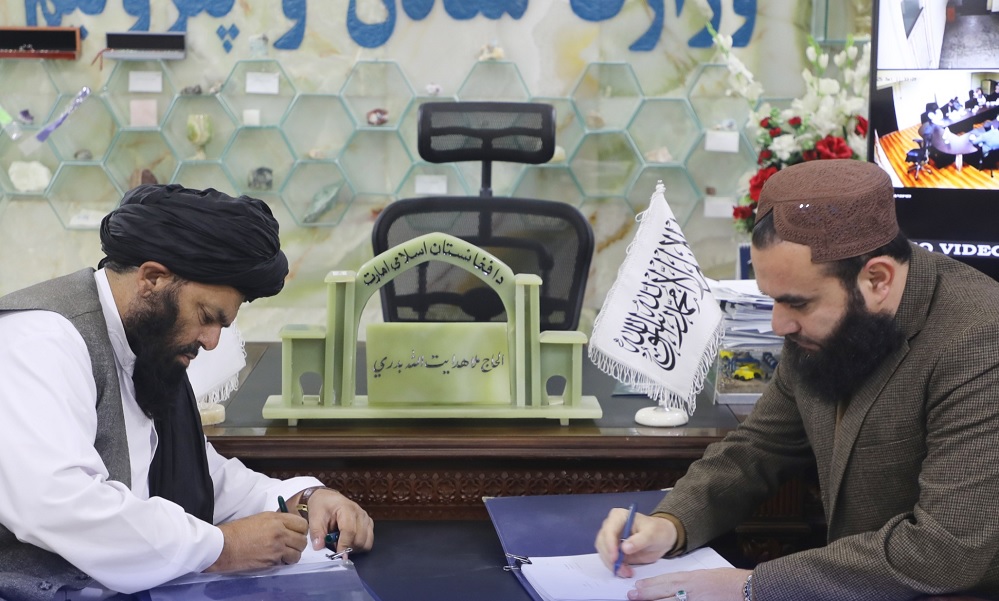
The Ministry of Mines and Petroleum of Afghanistan has signed a 30-year agreement with a private company to extract marble in Daikundi province.
Under the contract, the company will invest AFN 283 million in exploring and mining marble at the “Mesh-Uliya” site, spanning 16.74 square kilometers in central Daikundi.
Hedayatullah Badri, Minister of Mines and Petroleum, stated that the marble will be processed domestically before being exported abroad. He added that the Mesh-Uliya project is expected to create around 200 jobs, and the company is committed to supporting local communities through social initiatives.
Economic experts highlight that such investments, especially those focusing on domestic processing, are crucial for job creation, boosting exports, and strengthening the national economy. Analysts further note that the project will improve local infrastructure, expand social services, and enhance the economic and social well-being of Daikundi residents.
Since the return of the Islamic Emirate to power, efforts to develop Afghanistan’s mining sector have intensified, with multiple contracts signed in areas including cement, copper, iron, and lapis lazuli, involving both domestic and international companies.
Latest News
Major fire in Mandawi Kabul market contained, extensive losses prevented
Local shopkeepers said the fire broke out around 4 a.m.
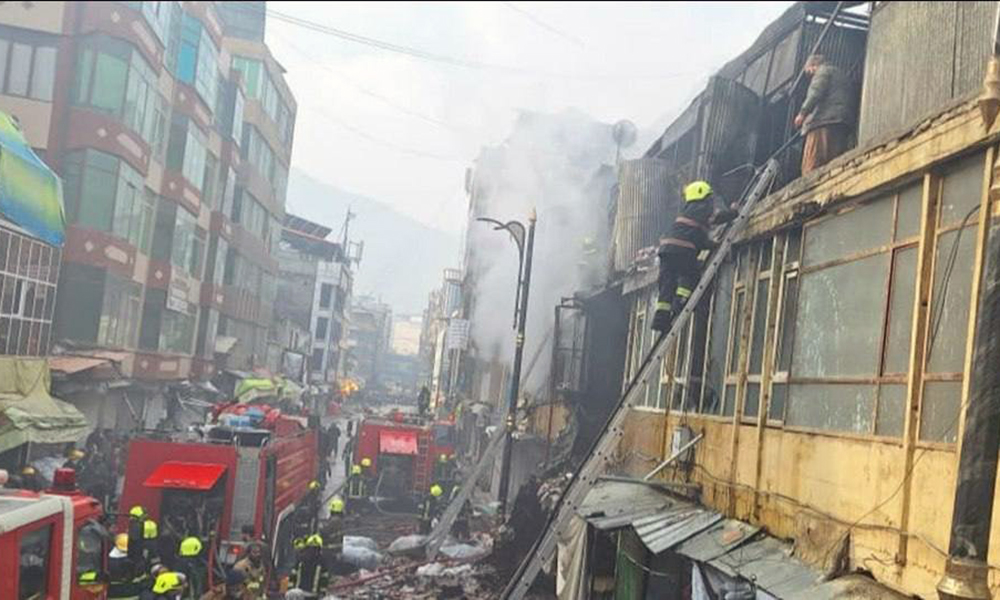
The Ministry of Interior reported that personnel from the General Directorate of Firefighting and Emergency Response successfully prevented the further spread of a fire at Mandawi market on Kabul early Sunday morning.
Abdul Mateen Qani, spokesperson for the ministry, said that the fire destroyed 10 storage facilities and 8 shops. He added that initial losses are estimated at around $700,000, but timely action by firefighting personnel saved property worth approximately $2.2 million.
Qani explained that the fire was caused by an electrical short circuit. He praised the rapid and effective containment operations, which prevented more extensive damage.
Local shopkeepers said the fire broke out around 4 a.m.


Trump plans expanded immigration crackdown in 2026 despite backlash

Tahawol: CSTO’s security concerns over Afghanistan

Saar: UNAMA’s activities in Afghanistan reviewed

Pakistan’s kinno exports falter as tensions with Afghanistan continue

Afghanistan and Kuwait draw 4-4 in friendly futsal match

Afghanistan economy under pressure as Pakistan shocks reshape trade flows

Gaza death toll tops 70,000, health ministry says

India set to establish pharmaceutical factories in Afghanistan: MoIC

Afghanistan offers tax breaks, free land to attract Indian investors

Iran rerouting more oil to China through Indonesia to dodge US sanctions
Tahawol: CSTO’s security concerns over Afghanistan
Saar: UNAMA’s activities in Afghanistan reviewed

Tahawol: Iran’s pledges to facilitate trade with Afghanistan discussed

Saar: Discussion on severe tensions between Kabul and Islamabad

Tawsia: India’s enthusiasm for investing in Afghanistan discussed
-

 International Sports5 days ago
IPL 2026: Teams take shape after auction as franchises balance star power and depth
-

 International Sports5 days ago
ILT20: Abu Dhabi Knight Riders end Desert Vipers’ unbeaten run in dramatic one-run win
-
 Latest News3 days ago
Afghan border forces prevent illegal entry of hundreds into Iran
-
 Latest News2 days ago
Pakistan summons Afghan diplomat over deadly attack in North Waziristan
-

 Business5 days ago
Mahirood Customs leads Iran’s exports to Afghanistan
-
 Latest News5 days ago
Afghanistan, Kyrgyzstan discuss expanding trade and economic cooperation
-
 Latest News3 days ago
Japan allocates nearly $20 million in humanitarian aid for Afghanistan
-
 Latest News2 days ago
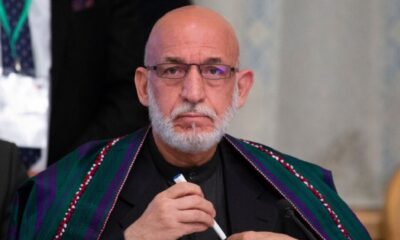
Karzai urges reopening of girls’ schools and universities for Afghanistan’s bright future