
Latest News
IEA imposes strict dress codes on the few girls schools still open

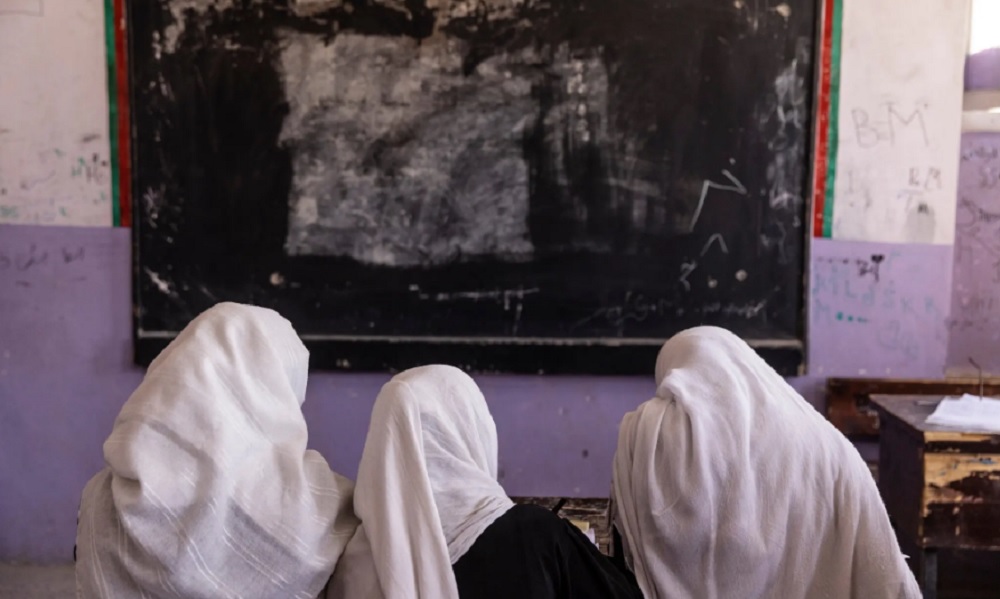
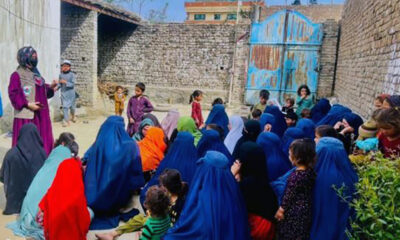
Despite the Islamic Emirate of Afghanistan’s (IEA) decision to suspend schooling for teenage girls, Human Rights Watch found that a number of girls’ schools, mostly in Balkh province, are still open but have strict dress codes in place.
According to the watchdog, many girls’ secondary schools have remained open in the province since the IEA took power but that they have been threatened with closure if they refuse to comply with the rules.
HRH stated in a report that one Balkh school was closed for several days after some students had their faces uncovered, while another school now has a teacher assigned to “prevent vice and promote virtue.”
“The requirements on hijab are getting tougher day by day,” said a teacher.
“They have spies to record and report.… If students or teachers don’t follow their strict hijab rules, without any discussion they fire the teachers and expel the students,” the teacher said.
She shared a photo with HRW of her school’s assembly; students and teachers all wore uniforms allowing only their eyes to show.
A student at another school explained: “We are not allowed to wear belts. Our sleeves should be large to hide our elbows and the shape of our arms. But then we were reprimanded because when we write on the board, our sleeves roll back and our arms are revealed.… One day we are asked to have loose sleeves, and the next day we are admonished for it.”
The latest order, she said, was to wear loose sleeves but pin them at the wrist.
“All the girls in my school believe the Taliban (IEA) authorities want to make it so harsh and strict on us that we give up on education on our own,” the student said, adding that she and her classmates are still determined to study.
Following these demands, the US Representative for Women in Afghanistan reiterated that the issue of girls’ schools should be taken seriously by the Islamic Emirate.
In an interview with VOA, Rina Amiri said that the closure of girls’ schools puts not only girls and women but the entire population at risk of poverty; it creates widespread hardship and instability
“It is not possible to deprive 50% of the population of their rights altogether and expect that this action will have better results, any measure that continues in this way and is not taken seriously by the Taliban, the country will suffer catastrophic consequences,” said Amiri.





Latest News
IEA slams UN sanctions as ‘unreasonable’ after update to listings
Speaking in response to the move, Islamic Emirate spokesperson Zabihullah Mujahid said the continued use of sanctions reflects a failure of policy and analysis.
The Islamic Emirate of Afghanistan (IEA) has sharply criticized the United Nations’ sanctions regime following the latest update to listings targeting senior leaders, calling the measures “unreasonable and ineffective.”
Speaking in response to the move, Islamic Emirate spokesperson Zabihullah Mujahid said the continued use of sanctions reflects a failure of policy and analysis. He argued that repeating such measures “lacks logic” and suggests that international bodies have not properly assessed their impact.
Mujahid said the move ultimately harms ordinary Afghans rather than decision-makers, warning that restrictions placed on individuals extend to government institutions and broader society. “These actions undermine the rights of the people,” he said, adding that there is no clear or justified basis for maintaining or expanding the measures.
He also described the sanctions as a tool of political pressure, claiming decisions are made without meaningful consultation with Afghan authorities and lack transparency.
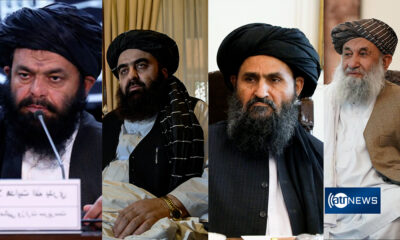
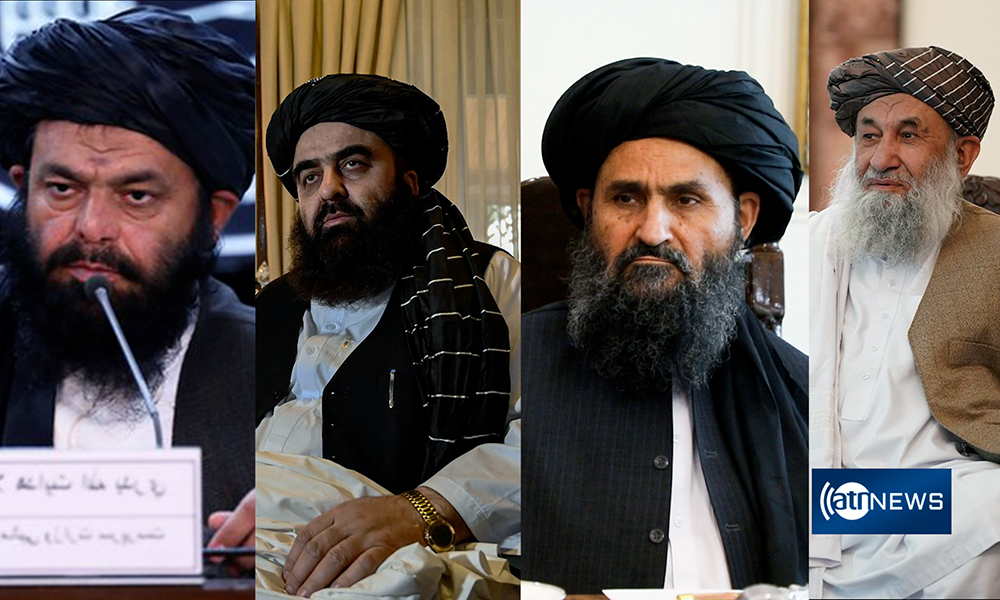
The comments came after the United Nations Security Council (UNSC) announced updates to its sanctions list as part of ongoing enforcement efforts. The council’s 1988 Sanctions Committee confirmed revisions to identifying details for four senior IEA officials: Mohammad Hassan Akhund, Abdul Ghani Baradar, Amir Khan Muttaqi, and Hedayatullah Badri.
The changes do not impose new sanctions but update aliases and personal information to improve enforcement of existing measures, including asset freezes, travel bans, and arms embargoes.
For example, Mohammad Hassan Akhund is also listed under “Mullah Haji,” while Hedayatullah Badri is identified as “Gul Agha Ishaqzai,” names associated with their previous roles.
UN officials say such updates are necessary to maintain the accuracy of the consolidated sanctions list used globally by governments and financial institutions.
The revisions follow a broader review last month covering 22 IEA figures, reaffirming their designation under the sanctions regime. More than 30 individuals remain listed, including Sirajuddin Haqqani, Abdul Salam Hanafi, and Abdul Haq Wasiq.
However, Supreme Leader Hibatullah Akhundzada continues to be absent from the list, despite repeated updates.
The sanctions framework – maintained under UN authority and binding on all member states – has recently been extended for another year, ensuring continued monitoring of IEA-linked individuals and entities.
While largely procedural, the latest update highlights ongoing international pressure on the IEA leadership, even as the group seeks greater diplomatic engagement.
It also comes amid scrutiny over foreign travel by sanctioned officials, including Abdul Ghani Baradar and Amir Khan Muttaqi, raising questions about enforcement of the restrictions.
Latest News
Regional security talks focus on Afghanistan border risks
Officials reviewed progress on joint efforts to strengthen border security, with further meetings of foreign and defense ministers expected in the coming months.
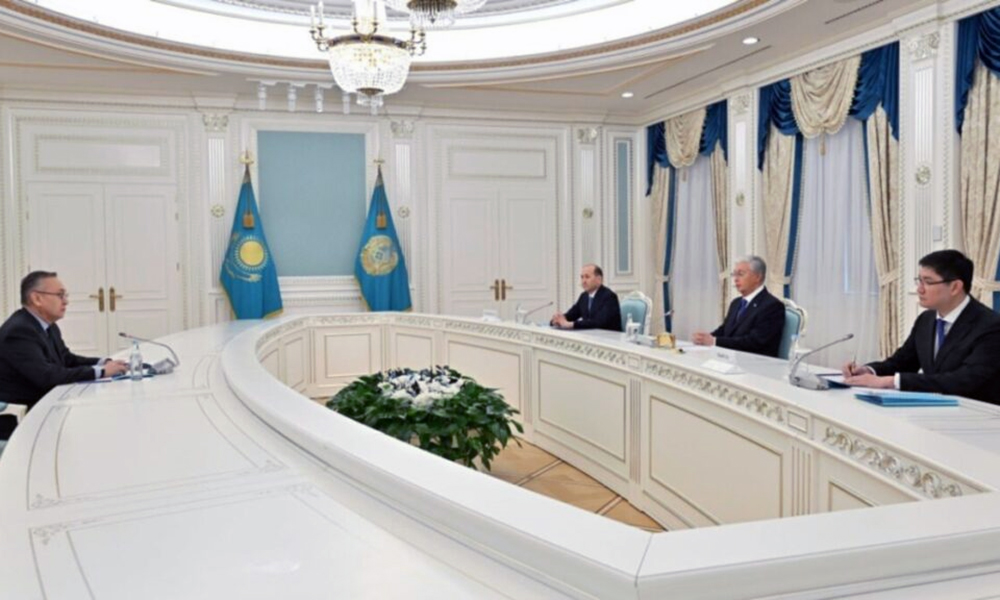
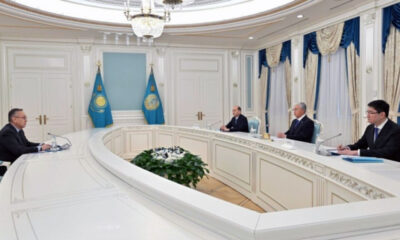
Regional security concerns linked to Afghanistan were the focus of high-level talks between the secretary general of the Collective Security Treaty Organization, Imangali Tasmagambetov, and Kazakhstan’s President Kassym-Jomart Tokayev in Astana this week.
The meeting, held under the framework of the CSTO, addressed ongoing risks along Afghanistan’s northern borders, particularly the frontier with Tajikistan.
Officials reviewed progress on joint efforts to strengthen border security, with further meetings of foreign and defense ministers expected in the coming months.
Since the Islamic Emirate’s return to power in 2021, Central Asian countries have remained concerned about potential spillover threats, including militancy and instability along shared borders.
IEA officials, including Foreign Minister Amir Khan Muttaqi, have sought to reassure neighboring states that Afghan territory will not be used to threaten regional security. However, organizations such as the Commonwealth of Independent States continue to warn that conditions in Afghanistan could pose medium-term risks to border stability.
Regional partners are now exploring additional measures to contain potential threats while maintaining security along their external frontiers.
Latest News
Conflict with Pakistan deepens challenges for Afghan women, report finds
The findings underline the importance of sustained humanitarian engagement to address the evolving needs of communities affected by the conflict.
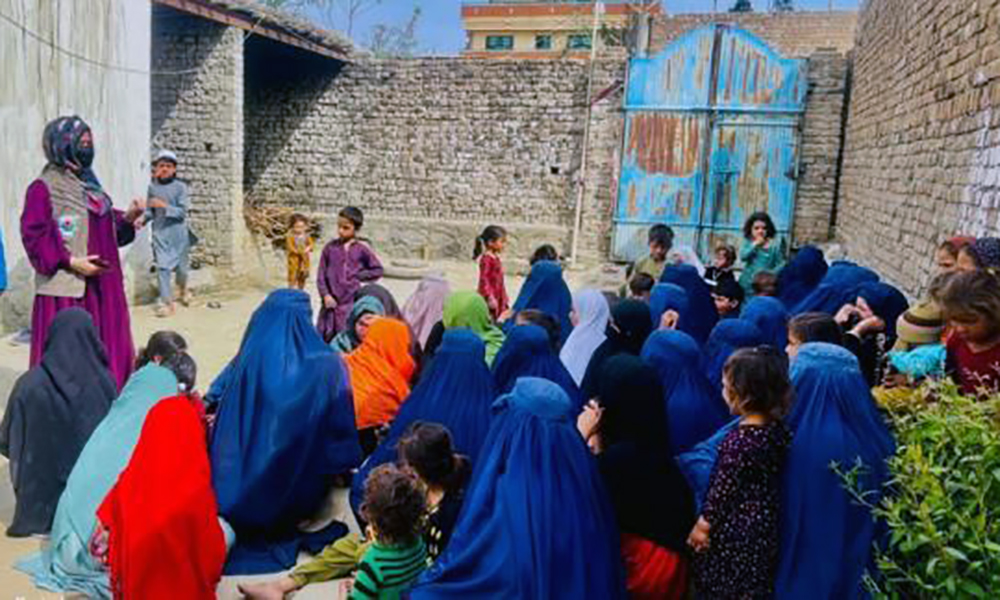
A new Gender Alert by humanitarian partners, including the United Nations Office for the Coordination of Humanitarian Affairs, highlights the growing impact of recent Afghanistan–Pakistan hostilities on women and girls across the country.
The report, developed by the Operational Gender Coordination Group with input from women’s organisations and aid workers, draws on field assessments conducted amid ongoing security constraints. It finds that cross-border airstrikes and clashes since late February have affected at least ten provinces, including Kabul, Khost and Nangarhar.
Women and girls account for more than half of those affected — part of an estimated 90,000 people impacted overall. Many families, including those previously displaced by the 2025 earthquake, have faced renewed displacement and economic strain.
Loss of income has emerged as a key concern, with many women reporting difficulties sustaining livelihoods due to insecurity and limited access to markets and supplies. Women also identified food, shelter and healthcare as priority needs, alongside concerns around safety and dignity.
Access to essential services has become more challenging in some areas. Assessments indicate that women face barriers to healthcare due to movement constraints, limited availability of female staff and logistical challenges. Humanitarian access is also uneven, with some communities reporting difficulties in receiving aid.
Food insecurity is increasing, with households adopting coping strategies such as reducing food intake. At the same time, concerns about safety have led many women to limit movement, affecting access to services, markets and daily activities.
The report also notes growing psychosocial stress, with women describing heightened anxiety and uncertainty amid the ongoing situation. Access to mental health support remains limited, particularly in affected and remote areas.
Humanitarian agencies are calling for continued support to ensure women and girls can access assistance, including targeted aid, improved service delivery and greater inclusion of women in response efforts.
The findings underline the importance of sustained humanitarian engagement to address the evolving needs of communities affected by the conflict.


IEA slams UN sanctions as ‘unreasonable’ after update to listings

Regional security talks focus on Afghanistan border risks

Trump says Iran wants to make a deal

Tahawol: Consequences of US blockade on Strait of Hormuz discussed

Saar: New Afghanistan–Uzbekistan trade agreement discussed

IEA Supreme Leader issues Eid-ul-Fitr message urging unity and support for Islamic system

IEA supreme leader orders replacement of foreign terminology in official documents

Turkmenistan, Afghanistan discuss steps to speed up land acquisition for TAPI pipeline

IPL 2026 kicks off in under two weeks; Afghan players set to shine

Afghanistan hosts inaugural Afghanistan–Central Asia Consultative Dialogue to strengthen regional cooperation
Tahawol: Consequences of US blockade on Strait of Hormuz discussed
Saar: New Afghanistan–Uzbekistan trade agreement discussed

Tahawol: Failure of US–Iran talks in Islamabad discussed

Saar: Iran–US talks in Islamabad end inconclusive

Tahawol: Historic US-Iran talks in Pakistan discussed
-
 Business4 days ago
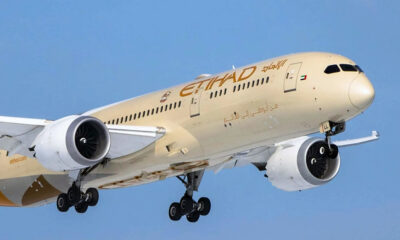
Etihad Airways to expand Kabul–Abu Dhabi flights to daily service amid surging demand
-

 International Sports5 days ago
FIFA appoints record number of match officials for 2026 World Cup
-
 Latest News4 days ago
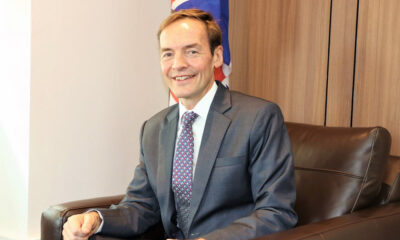
UK backs Afghanistan–Pakistan talks, calls dialogue key to lasting peace
-
 Business5 days ago
Afghanistan faces economic strains following a ‘series of shocks’ last year
-

 Sport3 days ago
Afghanistan’s new cricket head coach Richard Pybus arrives in Kabul
-
 Sport5 days ago
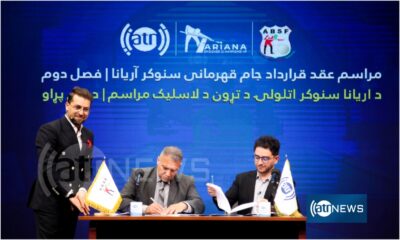
ATN seals Ariana Snooker Championship deal for five seasons
-
 Latest News5 days ago
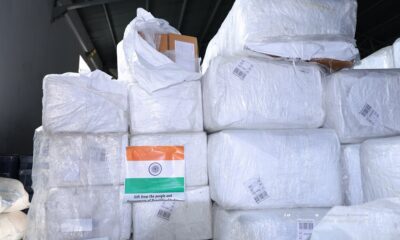
India sends 3 tons of humanitarian aid to flood-affected families in Afghanistan
-
 Sport5 days ago
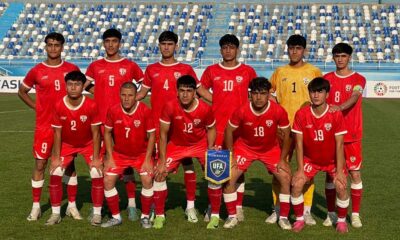
Afghanistan U-17s fall to Uzbekistan as CAFA campaign nears conclusion