
Business
IEA directs commission to take urgent steps to stabilize Afghan currency

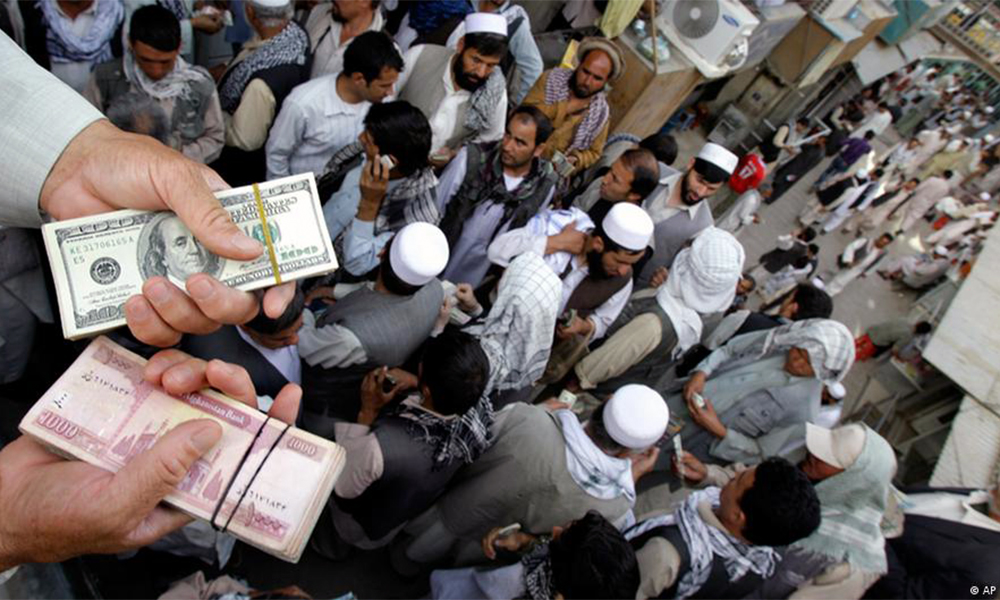
The Islamic Emirate of Afghanistan (IEA) on Monday held a minister’s council meeting at the Presidential Palace to find ways to stabilize the weakening Afghan currency.
IEA deputy spokesman Inamullah Samangani said in a tweet that the council directed the economic commission headed by Mawlawi Abdul Salam Hanafi to take urgent steps to stabilize the Afghani against the US dollar in coordination with all economic institutions.
“The commission was also tasked to take serious steps to prevent the smuggling of dollars, the spread of fake Afghan currency and eliminate other factors that have a negative impact on the value of the Afghan currency, and continue to urgently identify ways to stabilize the Afghan currency,” Samangani tweeted.
Meanwhile, Afghanistan’s Central Bank is meeting with money exchangers, commercial banks and business leaders on Tuesday in the hope of also finding ways to stabilize the value of the Afghani – which has fallen sharply in the last week against the US dollar.
This worrying drop in value of the Afghani against the dollar comes amid a deepening economic and humanitarian crisis and has led to a sharp increase in the price of goods, including essential items like food and fuel.
Officials from the Money Exchange Union in Sarai Shahzada, (Afghanistan’s largest money exchanging market) said on Monday the exchange rate was 123 AFN to the dollar, after sliding from 110 AFN to the dollar on Sunday.
A month ago, it was under 90 AFN to the dollar.
Union officials said part of the problem was due to rumors being spread by some money changers, who have since been let go.
On Monday, the market’s “Boli” section, which determines the value of the AFN and deals with large transactions, was closed.
Meanwhile, local media reported on Tuesday that a money changer suffered a stroke inside his shop in Farah province following the drop in value of the AFN.
According to shop owners in the area, the money changer had owed a significant amount of money to lenders and died as the AFN dropped.







Business
Russia-Afghanistan trade surges 150% in first seven months of 2026
Russia’s main exports to Afghanistan include natural gas, petrol, diesel, wheat, wheat flour, sunflower oil and other agricultural products.
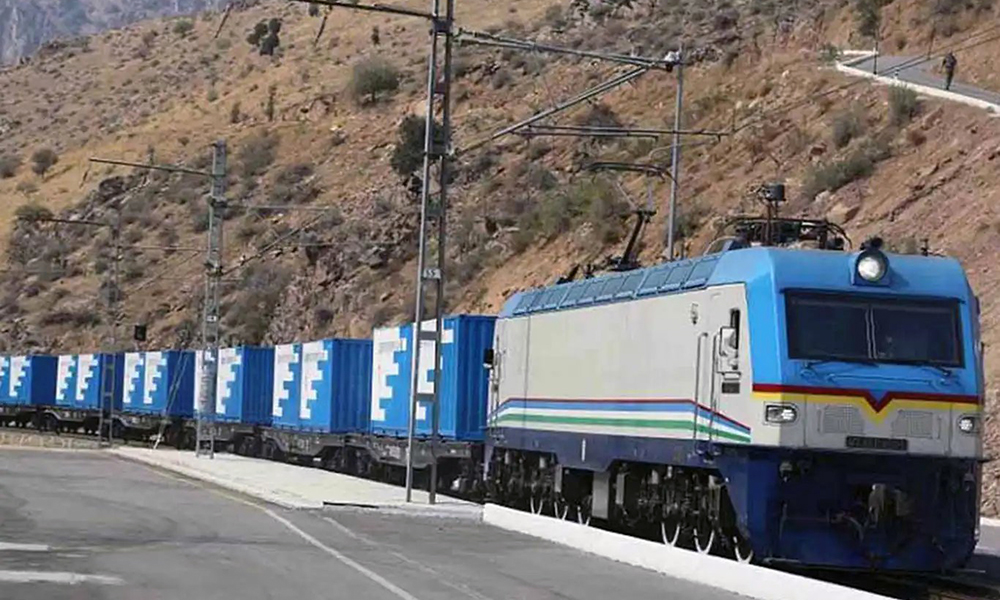
Trade between Afghanistan and Russia increased by 150 percent in the first seven months of 2026 compared with the same period last year, according to figures released on October 7.
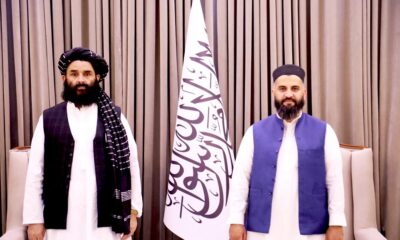
Russian Deputy Prime Minister Alexei Overchuk and Afghanistan’s Foreign Minister Amir Khan Muttaqi discussed expanding bilateral cooperation in trade, energy, investment and transport, as well as strengthening ties between businesses in the two countries.
The talks also focused on developing the International North-South Transport Corridor, which could strengthen Afghanistan’s role as a regional transit route and improve its access to markets in Central Asia and beyond.
The proposed Trans-Afghan railway could further enhance Afghanistan’s position as a regional transit hub. Kazakhstan, Uzbekistan and the United Arab Emirates recently signed a memorandum of understanding on the project, which is estimated to cost about $5 billion and take around five years to complete.
Russian customs data shows that bilateral trade reached about $326 million in 2025, while Afghan figures put the total at approximately $590 million. Both sides, however, reported that trade had doubled compared with 2024.
Russia’s main exports to Afghanistan include natural gas, petrol, diesel, wheat, wheat flour, sunflower oil and other agricultural products.
Afghanistan’s exports to Russia remain considerably smaller, at about $4 million, and consist mainly of fresh and dried fruit, including raisins, dried apricots, pomegranates, grapes, apples and cherries. Other exports include cotton, watermelons, medicinal plants and some mineral products.
If the current growth rate continues, bilateral trade based on Russian statistics could reach approximately $815 million in 2026.
Officials say improved transport links and stronger business-to-business cooperation could further expand economic ties between Afghanistan and Russia.
Business
Afghan products attract Saudi buyers at major food expo in Jeddah
At two international exhibitions last year, Afghan businesses supported by the programme secured more than $25 million in trade prospects.
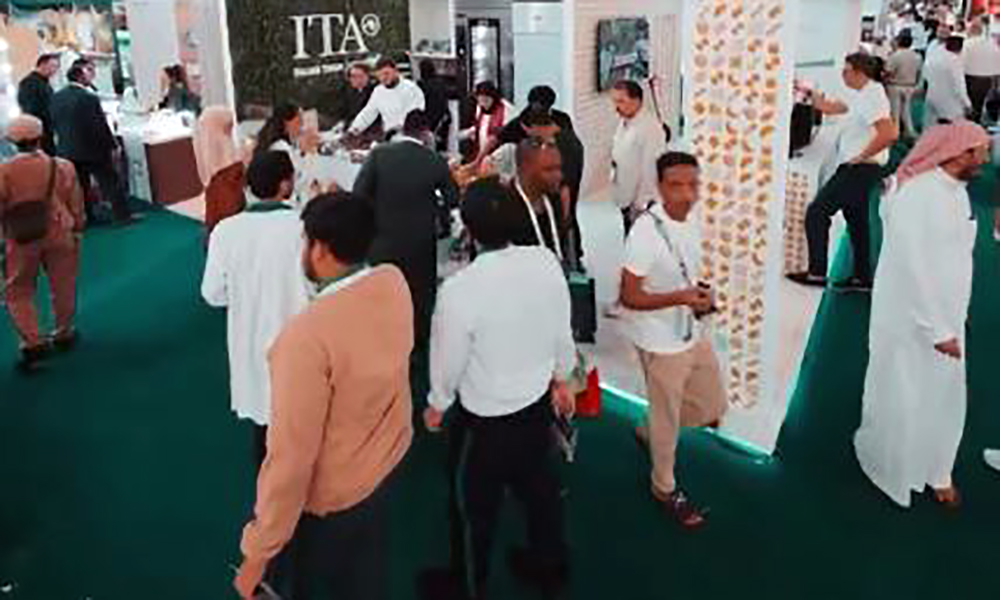
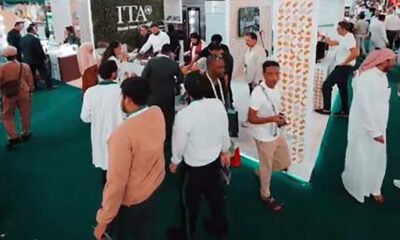
Five Afghan businesses showcased a range of Afghanistan’s well-known agricultural and food products at the Saudi Food Show 2026 in Jeddah, Saudi Arabia, with their products attracting strong interest from Saudi buyers.
The expo was held from September 27 to 29, 2026, providing Afghan companies with an opportunity to connect directly with buyers, distributors and representatives of major retail chains.
The businesses presented dried fruits, nuts, spices, pomegranate juice and fruit concentrates, highlighting Afghanistan’s potential in the agricultural and food export sector.
Their participation was supported through the Afghanistan Community Resilience Programme, funded by the European Union and jointly implemented by UNDP, FAO, IOM and UNODC. The programme focuses on strengthening vulnerable Afghan families and communities affected by the ban on poppy cultivation, climate change and displacement, particularly in Kandahar, Helmand and Badghis.
According to UNDP, the programme works with Afghan businesses to access national and international markets, helping create demand for legal agricultural products and supporting farmers, processors and rural workers.
At two international exhibitions last year, Afghan businesses supported by the programme secured more than $25 million in trade prospects.
UNDP also said that, over the past five years, it has supported more than 13,000 agribusinesses and farmers in reaching new markets, while helping facilitate the sale of more than 23,000 metric tonnes of agricultural produce.
The next major international expo is Annapoorna Inter Food in Mumbai, India, scheduled for December 9–11, where another eight to 10 Afghan businesses are expected to participate.
Business
Baradar opens Fifth Imam Abu Hanifa International Exhibition in Kabul
Hundreds of Afghan and foreign companies are participating in the seven-day exhibition, with around 600 booths showcasing products across various sectors, including food, medicines, dairy products, construction materials, handicrafts, carpets, plastics and iron products.
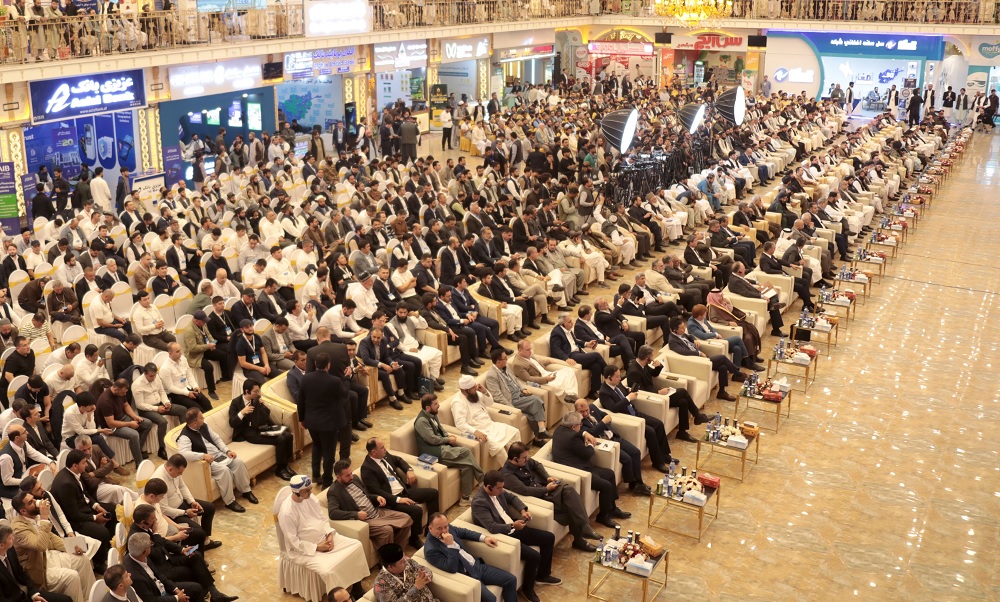
Mullah Abdul Ghani Baradar Akhund, the Islamic Emirate’s Deputy Prime Minister for Economic Affairs, on Wednesday inaugurated the Fifth General and International Imam Abu Hanifa (RA) Exhibition at the Afghanistan International Exhibition Center in Kabul.
Speaking at the opening ceremony, Baradar said the exhibition is an important platform for showcasing Afghanistan’s economic potential, supporting domestic production, expanding trade relations and strengthening direct commercial ties with the region.
He said Afghanistan’s agricultural, industrial and commercial products, including fresh and dried fruits, can help strengthen trade relations and open new regional and international markets for Afghan products.
“Trade relations and commercial ties among the countries of the region and the world are based on an important principle of trade, namely comparative and absolute advantages,” Baradar said.
He added that every country has comparative or absolute advantages in producing goods and products, which he described as a key driver of regional and international trade.
Baradar also said the Islamic Emirate is working to rebuild Afghanistan’s economic foundations despite limited resources.
“The Islamic Emirate of Afghanistan is not only completing unfinished chapters in the country’s economic growth and development, but has also, with limited resources, initiated new chapters in rebuilding the country’s economic foundations,” he said.
Baradar highlighted the opening of the Wakhan Economic and Trade Road, saying the route would strengthen Afghanistan’s role in regional trade and transit.
“The Wakhan Economic and Trade Road has been opened. This road connects China with European markets through Afghanistan via the shortest route and transforms Afghanistan into a major hub for regional transit and trade,” Baradar said.
He added that major infrastructure would gradually be developed along the route in addition to generating transit revenues.
Baradar further said the Islamic Emirate’s efforts to improve regional connectivity are aimed at transforming Afghanistan’s borders into centers of economic cooperation.
“We are transforming our borders from points of threat into points of connection for strategic economic cooperation,” he said, describing regional connectivity as one of the Islamic Emirate’s top priorities.
Meanwhile, Nooruddin Azizi, the Minister of Industry and Commerce, called for mutually beneficial foreign investment in Afghanistan. He said the Islamic Emirate will not allow the country’s raw minerals to be exported in the future.
Hundreds of Afghan and foreign companies are participating in the seven-day exhibition, with around 600 booths showcasing products across various sectors, including food, medicines, dairy products, construction materials, handicrafts, carpets, plastics and iron products.


Tahawol: CSTO meeting on Afghanistan reviewed

Saar: Guterres’s talks with Pakistani officials on Afghanistan discussed

Arman FC defeat Istiqlal Kabul 3-2 in thrilling comeback

Russia-Afghanistan trade surges 150% in first seven months of 2026

Afghan delegation travels to Moscow for Global Digital Forum

UAE firm eyes investment in Salang’s second tunnel and pharmaceutical factories

US Treasury ratchets up pressure on Iran with sweeping new aviation sanctions

EU and FAO launch €5m programme to strengthen Afghanistan’s agrifood sector

Omar Zawak, Toofan Herat secure victories in Afghanistan Champions League

Crystal Palace cruise into EFL Cup fourth round
Tahawol: CSTO meeting on Afghanistan reviewed
Saar: Guterres’s talks with Pakistani officials on Afghanistan discussed

Tahawol: Consequences of US war in Afghanistan reviewed

Saar: Expulsion of Afghan refugees from Pakistan discussed

Tahawol: Discussion on outcome of Moscow Format meeting
-

 Sport4 days ago
Cricket Bonanza: Afghanistan set for packed international schedule
-
 Regional5 days ago
India, Pakistan summon top diplomats over border incident
-
 Latest News5 days ago
Afghanistan inaugurates 121 km Wakhan road to China border
-

 Sport4 days ago
ACL: Sorkh Poshan extend perfect run with 1-0 win over Khurasan
-

 Sport4 days ago
Afghanistan U19 to face Bangladesh, Oman in Youth ODIs
-

 Sport5 days ago
ACL: Toofan Herat crush Sarsabz Yashlar 3-0
-
 Regional4 days ago
Yemeni government launches offensive to seize all areas from Iran-backed Houthis
-

 Latest News3 days ago
Ariana Afghan Airlines ends 15-year control of ticketing and operational systems by Pakistani firm