
Business
IEA calls for investors, says visas for foreigners will recommence


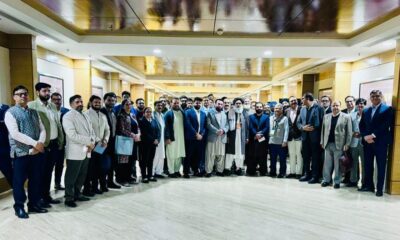
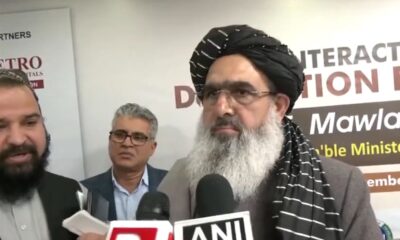
The Islamic Emirate of Afghanistan (IEA) has called on national and international agencies to start interacting with local traders and business owners and promised to start issuing visas to foreigners.
IEA officials said the ministry of mines and petroleum has been granted permission to secure contracts with domestic and foreign companies.
Officials said at a economy-focused meeting Monday that a process is being put into place for visas to be issued to foreigners. According to officials, contracts have already been signed with companies for the extraction of iron ore in Herat province and for the extraction of lead in Ghor province.
An IEA official said government is also looking at ways to issue visas for business owners arriving at Kabul airport.
“We know that the Islamic Emirate of Afghanistan is working hard to develop bank accounts and investments in the country and has even provided some facilities in this regard, but we must raise this issue with the countries of the world so that investors and businessmen can be sure,” said Khan Jan Alokozay, a member of the Chamber of Commerce and Investment of Afghanistan.
Economic analysts have also urged government to encourage investment in the country and to assist domestic traders in order to restart the country’s economy.
“In the current situation the government must work hard to convince traders and people to invest in the country and provide them with more facilities for their investments,” said Sayed Rahman Imran, an economic analyst.



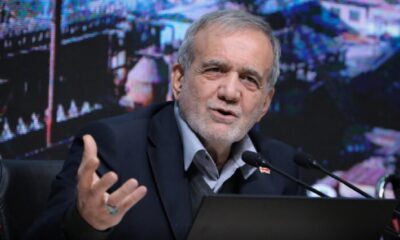


Iranian President Masoud Pezeshkian has said that Tehran will facilitate trade and economic exchanges with Afghanistan, including easing procedures at customs and local marketplaces.
He made the remarks during a televised interview following his visit to South Khorasan province, which shares a border with Afghanistan.
Pezeshkian, in a separate event addressing local business leaders, highlighted the province’s strategic advantages, citing its rich mineral resources, proximity to neighboring countries such as Afghanistan and Pakistan, and access to the ocean via the Chabahar port. He described the region as “a golden opportunity not found everywhere,” emphasizing its potential for economic growth and cross-border commerce.
Business
Afghanistan, Kazakhstan envoys discuss expanding trade and regional connectivity
Ambassador Shakeeb thanked Kazakhstan for its continued support and constructive engagement with Afghanistan, particularly in efforts aimed at peace and economic development.

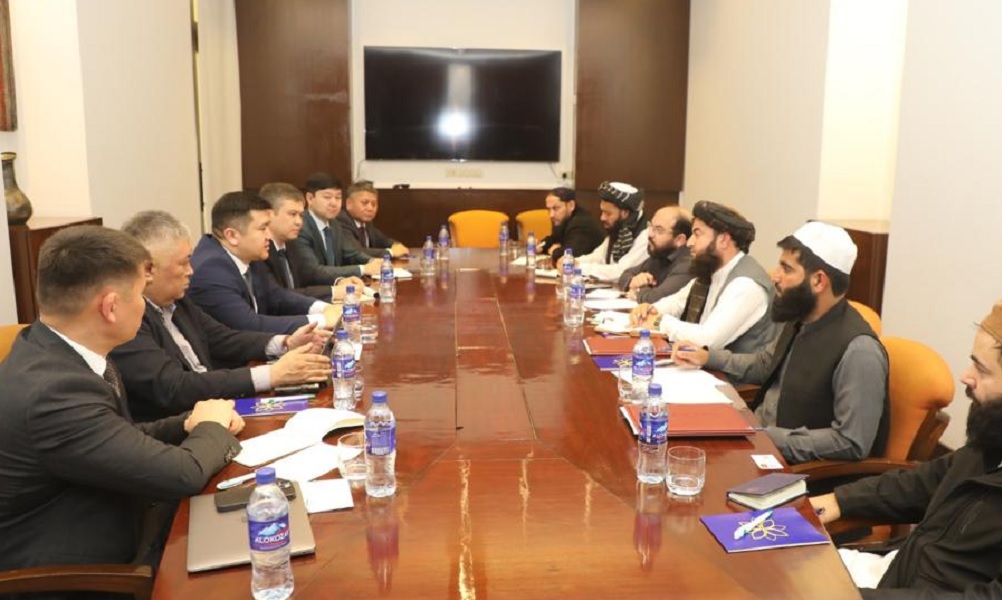
Afghanistan’s Ambassador to Pakistan, Sardar Ahmad Shakeeb, has met with Kazakhstan’s Ambassador to Pakistan, Yerzhan Kistafin, to explore ways to strengthen bilateral relations and advance regional cooperation.
The two envoys exchanged views on Afghanistan–Kazakhstan ties, regional connectivity, and major infrastructure initiatives, as well as the opportunities and challenges facing regional trade. Discussions also touched on Kazakhstan’s role in promoting regional stability and other matters of mutual interest.
Ambassador Shakeeb thanked Kazakhstan for its continued support and constructive engagement with Afghanistan, particularly in efforts aimed at peace and economic development.
He expressed hope that the proposed $3 billion joint trade agreement, once finalized, would bring tangible benefits to both countries and contribute to broader regional economic integration.
Ambassador Kistafin reaffirmed Kazakhstan’s support for stability and economic growth in Afghanistan, highlighting his country’s involvement in key regional connectivity and trade projects.
He said the current security and stability situation in Afghanistan has increased Kazakhstan’s confidence in expanding regional trade and transit, and praised the efforts of the Islamic Emirate in this regard.
He also stressed the need for coordinated regional efforts to ensure lasting stability, sustainable economic development, and the smooth movement of goods and transit across the region.


Tahawol: Iran’s pledges to facilitate trade with Afghanistan discussed

Saar: Discussion on severe tensions between Kabul and Islamabad

Afghan health minister calls for medical cooperation between Kabul and New Delhi

Deputy PM Baradar urges world to expand economic ties with IEA instead of sanctions

Karzai urges reopening of girls’ schools and universities for Afghanistan’s bright future

Afghanistan U19 cricket team defeats India A U19

Afghanistan economy under pressure as Pakistan shocks reshape trade flows

Gaza death toll tops 70,000, health ministry says

India set to establish pharmaceutical factories in Afghanistan: MoIC

Afghanistan offers tax breaks, free land to attract Indian investors
Tahawol: Iran’s pledges to facilitate trade with Afghanistan discussed
Saar: Discussion on severe tensions between Kabul and Islamabad

Tawsia: India’s enthusiasm for investing in Afghanistan discussed

Tahawol: Global concerns over migration escalation discussed

Saar: Calls for Afghanistan’s balanced, economy-oriented foreign policy discussed
-
 Latest News5 days ago
IEA supreme leader stresses enforcement of Sharia law and sincere public service
-

 International Sports4 days ago
IPL 2026: Teams take shape after auction as franchises balance star power and depth
-

 Sport5 days ago
ILT20: Sharjah Warriorz secure 11-run victory over Gulf Giants
-
 Business5 days ago
Afghanistan, India discuss expanding investment opportunities
-

 Sport5 days ago
Abu Muslim Farah crowned champions of fifth season of Afghanistan Champions League
-
 International Sports4 days ago
ILT20: Abu Dhabi Knight Riders end Desert Vipers’ unbeaten run in dramatic one-run win
-

 Latest News5 days ago
EU and IFC launch €5 million program to support Afghanistan’s private sector
-
 Latest News4 days ago
High-level Kyrgyz delegation arrives in Kabul