
Latest News
IEA aim to boost Afghan security forces, anti-aircraft capacity: army chief

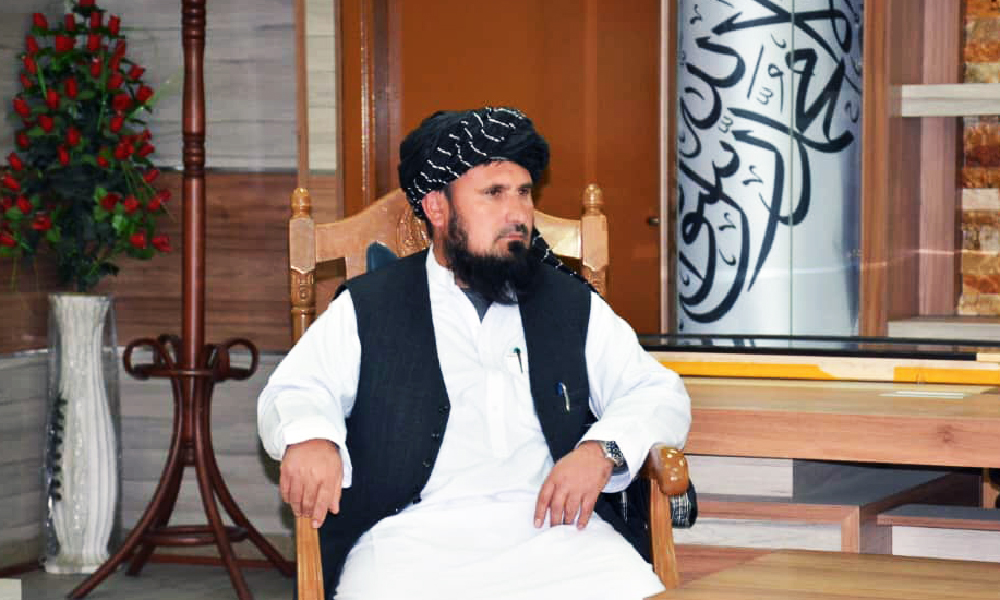
Defence has received the largest share of funds in Afghanistan’s budget as the Islamic Emirate of Afghanistan (IEA) government aims to boost forces by a third and build anti-aircraft missile capacity, the army chief told Reuters in a rare interview to foreign media.
The defence ambitions of the IEA, which took over in 2021, come in the face of strong international criticism of its policies, such as restrictions on work and education for women, that have hampered steps towards diplomatic recognition.
In his remarks on Tuesday, Qari Fasihuddin Fitrat, a commander from the northern region of Badakhshan and the chief of army staff, condemned incursions by foreign drones into Afghan airspace, read the report.
Defence forces now numbering 150,000 are targeted to be increased by 50,000, he said, speaking in his office in the highly fortified defence ministry in Kabul, the capital, although he did not reveal the precise figure of the funds.
“The ministry of defence is the top-ranked in the budget,” he said, adding that it received a significantly higher sum than other ministries, as it was a priority in the budget, which is largely funded by boosted tax and customs revenue.
Since their takeover, the IEA have spent 1-1/2 years building a civilian administration and a national military out of an insurgent force that fought a 20-year war against foreign forces and the previous U.S.-backed Afghan government, Reuters reported.
No foreign nation has formally recognised the government, which is battling economic headwinds following sanctions on the banking sector and the cutoff of all development aid.
Fitrat said a major defence focus was securing Afghan airspace against drones and other incursions.
“Anti-aircraft missiles are the need of countries,” he said, adding that all nations sought developed weapons to ensure the integrity of their territory and airspace, a problem Afghanistan also faced.
“There is no doubt that Afghanistan is trying, and doing its best, to have it.”
But Fitrat declined to elaborate on where authorities were looking to procure anti-aircraft missiles from, Reuters reported.
He also stopped short of naming Pakistan, against which the IEA administration has regularly protested, accusing its neighbour of allowing drones to enter Afghanistan.
“We are doing our best to find a solution for protection of our airspace. We will work on it by using all our capability,” Fitrat added.
“From where we will obtain it is confidential, but we should have it.”
Pakistan’s foreign ministry did not immediately respond to a request for comment, read the report.
Pakistan officials have not confirmed whether its airspace is used for drone access to Afghanistan.
“We have always tried, and will try, to solve the issue using diplomatic ways, and we have done our best to be patient regarding these cases,” Fitrat said, but sounded a note of caution.
“Neighbouring countries should not let our patience be exhausted.”
Ties between the neighbours have occasionally been tense as as Pakistan has accused the Islamic Emirate of Afghanistan (IEA) administration of allowing Afghan territory to be used as a haven for militant groups, Reuters reported.
Among these is the Pakistani Taliban (TTP), which has stepped up attacks in Pakistan in recent months.
The IEA administration denies allowing its territory to be used for attacks on others, however.
There have been border clashes between the forces of both, and analysts say that in the event of conflict escalating, Pakistan’s airforce would give it a strong edge.
Fitrat said former security personnel, who form a significant share of Afghanistan’s forces, were being paid and treated in the same way as IEA fighters.
The comments follow concern voiced by international rights groups and the United Nations that some former members of Afghan security forces members were targeted or killed.
While the IEA have declared a general amnesty for former combatants, saying they would investigate cases of wrongdoing, they have not detailed legal action regarding alleged extrajudicial targeting.







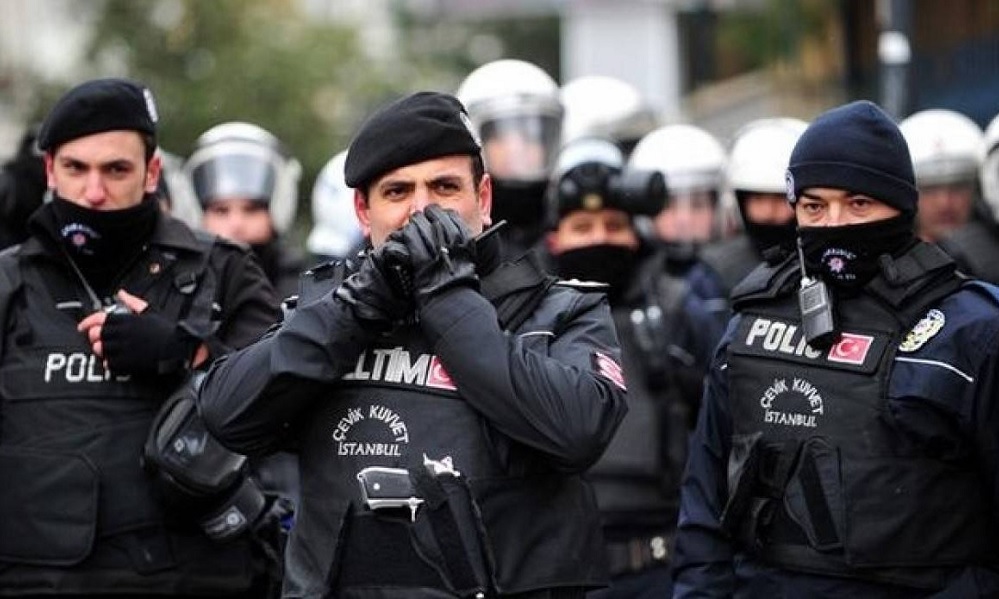
Turkish intelligence agents have captured a senior member of Daesh near the Durand Line, reportedly preventing planned suicide attacks in Turkey and other countries, according to Turkey’s state-run Anadolu Agency on Monday.
The suspect, identified as Mehmet Goren, is a Turkish citizen. He was apprehended during a covert operation and transferred to Turkey. Details on the timing of the operation or the involvement of Afghan and Pakistani authorities were not disclosed.
According to the report, Goren had risen through the ranks of Daesh and was allegedly tasked with carrying out suicide bombings in Turkey, Pakistan, Afghanistan, and Europe.
Daesh has a history of deadly attacks in Turkey, including the January 1, 2017 shooting at an Istanbul nightclub that killed 39 people.
Anadolu Agency reported that Goren’s arrest also provided intelligence on the group’s recruitment strategies and planned activities.
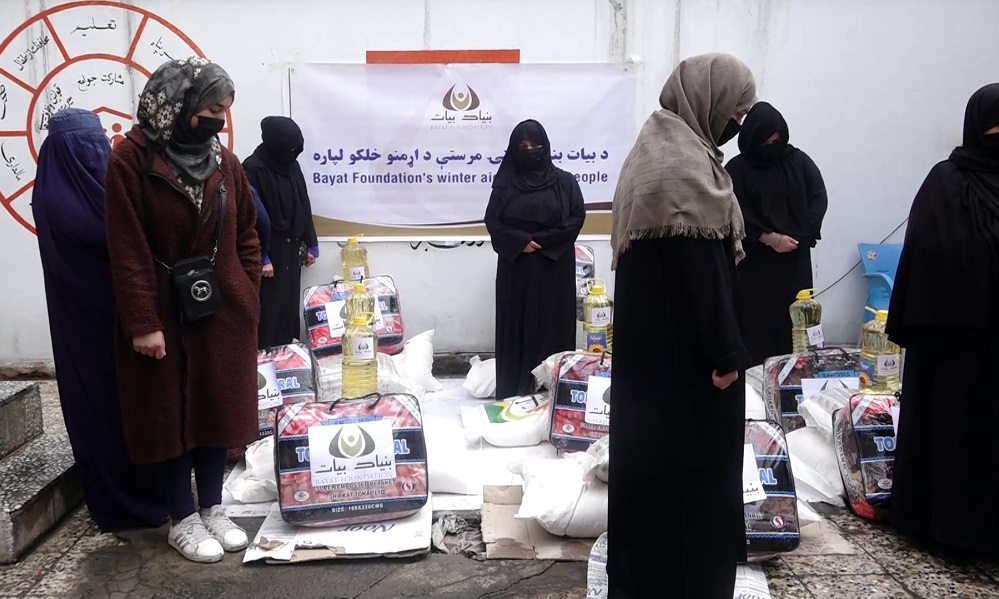
Dozens of needy families in Kabul’s fifth district have received essential winter assistance from the Bayat Foundation, as part of ongoing efforts to ease hardship during the cold season and worsening economic conditions.
According to foundation officials, the aid package includes staple food items such as flour, rice, and cooking oil, along with warm blankets to help families cope with freezing temperatures. Haji Mohammad Ismail, Deputy Head of Bayat Foundation, said the distribution began in Kabul and will soon be expanded to other provinces.
“Our assistance includes flour, rice, cooking oil, and blankets,” Ismail said. “Today, we started distributing these items in Kabul’s fifth district, and God willing, the aid will reach other provinces in the near future.”
Afghanistan continues to face widespread poverty, unemployment, and food insecurity, with many families struggling to meet basic needs, particularly during winter when access to work and heating becomes more difficult.Humanitarian organizations and charitable foundations have stepped up relief efforts to support those most affected.
Beneficiaries welcomed the assistance, describing it as a lifeline. “May God bless you for helping the poor. We had nothing and no work,” said one recipient. Another added, “Thank you for your help. Our flour was almost finished.”
Bayat Foundation officials stressed that winter aid distributions will continue in Kabul and other provinces in the coming days, as part of their broader commitment to supporting needy families across the country.
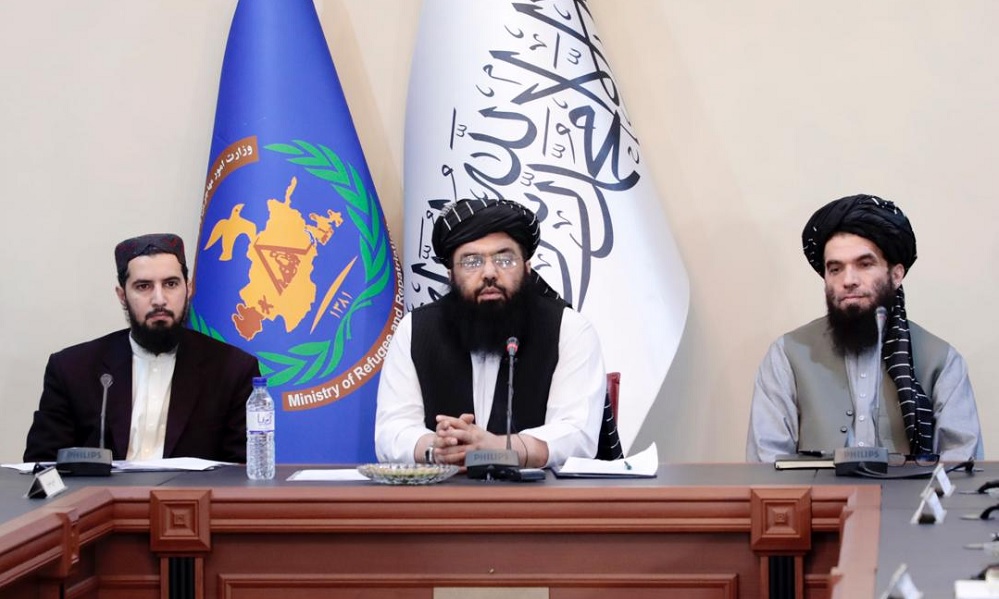
Since the Islamic Emirate came to power, approximately 6.8 million Afghans have returned home, either voluntarily or forcibly, from neighboring countries and other nations, according to the Minister of Refugees and Repatriation.
Mawlawi Abdul Kabir, speaking at a meeting on finalizing a draft plan for a permanent migration solution in Afghanistan, added that 1.3 million Afghans have been internally displaced due to natural disasters during the same period.
With winter approaching, widespread poverty and severe cold are threatening thousands of lives. Meanwhile, the forced expulsion of Afghan migrants from neighboring countries, particularly Iran and Pakistan, continues.
The Islamic Emirate has repeatedly urged neighboring states to allow migrants to return voluntarily. According to UNHCR, over two million Afghans have returned from Iran and Pakistan since the start of 2025.


Tahawol: Return of 6.8 million Afghan refugees to IEA rule

Saar: Pakistan army chief’s allegations against Afghanistan

Turkish intelligence captures a Daesh member near the Durand Line

Dozens of needy families in Kabul receive winter aid from Bayat Foundation

Nearly seven million Afghan refugees return home since Islamic Emirate’s takeover

Afghanistan economy under pressure as Pakistan shocks reshape trade flows

Gaza death toll tops 70,000, health ministry says

Afghanistan offers tax breaks, free land to attract Indian investors

Iran rerouting more oil to China through Indonesia to dodge US sanctions

Islamic Emirate declines to attend Tehran meeting on Afghanistan
Tahawol: Return of 6.8 million Afghan refugees to IEA rule
Saar: Pakistan army chief’s allegations against Afghanistan

Tahawol: CSTO’s security concerns over Afghanistan

Saar: UNAMA’s activities in Afghanistan reviewed

Tahawol: Iran’s pledges to facilitate trade with Afghanistan discussed
-
 Latest News3 days ago
Afghan border forces prevent illegal entry of hundreds into Iran
-
 Latest News3 days ago
Pakistan summons Afghan diplomat over deadly attack in North Waziristan
-
 Latest News2 days ago
Afghan health minister calls for medical cooperation between Kabul and New Delhi
-
 Latest News1 day ago
Afghanistan signs 30-year deal for marble mining in Daikundi
-

 Latest News3 days ago
Japan allocates nearly $20 million in humanitarian aid for Afghanistan
-
 Latest News2 days ago
Karzai urges reopening of girls’ schools and universities for Afghanistan’s bright future
-
 Health5 days ago
Afghanistan seeks India’s support in standardizing traditional medicine
-

 World5 days ago
US readies new Russia sanctions if Putin rejects peace deal, Bloomberg News reports