
Science & Technology
Hyundai plans U.S. EV plant, in talks with Georgia

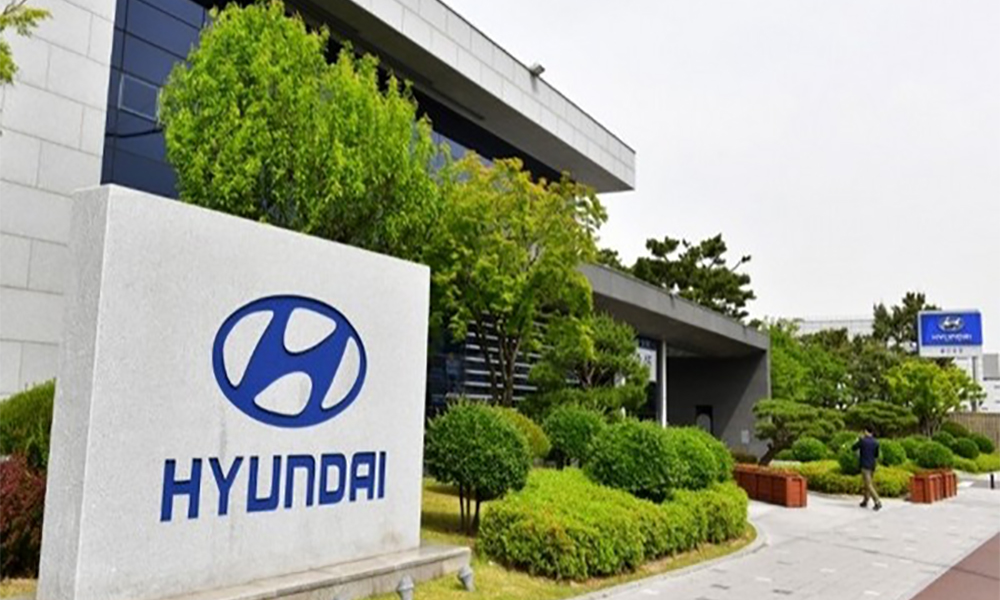
Hyundai Motor Co (005380.KS) plans to build a new electric-vehicle manufacturing plant in the United States and has held discussions with officials in Georgia, near existing plants for the Hyundai and Kia (000270.KS) brands, people with knowledge of its plans told Reuters.
Hyundai Motor confirmed an imminent plan for a new EV plant but declined to comment on any details, including site negotiations.
“We are excited to announce a new EV plant plan in the United States soon, but we do not have details to share at this stage,” Hyundai said in a statement to Reuters when asked about its investment plans.
Hyundai has been in advanced discussions with state officials to build a dedicated EV facility in Georgia, three people with direct knowledge of the talks told Reuters. Details of the investment, including its projected cost and the number of jobs it would be expected to create, were not immediately known.
The new Georgia EV facility, if it is finalized, would serve both Hyundai and Kia as the brands move to roll out a pair of fully electric SUVs – the Ioniq 7 and EV9 – aimed at the U.S. market, the three people with knowledge of the plans told Reuters.
Georgia’s Economic Department declined to comment. “We do not comment on speculation about economic development projects,” said a state economic development department spokesperson.
The announcement of an investment deal by Hyundai would come at a time when the administration of President Joe Biden has been pushing for more investment in EVs and related suppliers to create jobs and drive a clean-energy agenda. It would also mark a major economic development win for Georgia, which has pushed to establish itself as a regional hub for the emerging EV industry.
The announcement could come days before the May 24 Georgia primary election in which Republican Governor Brian Kemp is being challenged by former U.S. Senator David Perdue.
The Atlanta Journal-Constitution reported the company could hire 8,500 as part of its plans to build a new factory. The newspaper said the plant could be located on a more than 2,200-acre site that the state had previously proposed to Rivian, Volvo and Jaguar Land Rover.
Hyundai had been working to announce its U.S. investment in EV manufacturing sometime later this month to coincide with Biden’s planned visit to Seoul, another person with knowledge of the plans said.
Hyundai announced a $300-million investment last month to manufacture the all-electric Genesis GV 70 and a hybrid version of the Santa Fe at its Alabama plant. The Genesis model would be Hyundai’s first EV made in the United States.
Hyundai’s comment to Reuters was the company’s first confirmation that it was nearing an announcement on a site for a new EV plant.
Hyundai affiliate Kia also said last month that it was looking to shift production to the United States but was not considering a dedicated EV factory on its own.
Kia has said it will have 14 EVs by 2027. Hyundai has said it will roll out 17 by 2030, including six for its luxury Genesis brand.
Hyundai’s battery supplier, SK Innovation’s (096770.KS) battery unit SK On, has just built two adjacent plants in Georgia. The first, which mostly supplies Volkswagen AG (VOWG_p.DE), kicked off production in the first quarter. The second, which will supply batteries for Ford Motor Co (F.N), is set to begin production early next year.
SK On will supply the battery for the Ioniq 7, a person with knowledge of that contract told Reuters. SK On said it cannot comment on supply deals involving specific customers.
Biden is set to travel to South Korea on May 20 for meetings with South Korea’s incoming president Yoon Suk-yeol, an advocate of steps to shore-up South Korea’s ties with the United States.
The Biden administration has said it will allocate more than $3 billion in infrastructure funding to finance EV manufacturing. Biden wants half of vehicles sold in the United States to be electric by 2030.
Other Asian companies that have announced plans to build U.S. battery plants include Korea’s LG Energy Solution (373220.KS) and Samsung SDI (006400.KS).
Reuters reported earlier this month that CATL, the world’s largest battery maker, was in talks to open battery plants that would serve BMW AG (BMWG.DE) and Ford with potential sites in South Carolina and Kentucky.
A South Korea media report said Yoon, who takes office on Tuesday, was also planning a follow-up visit to Washington after Biden visits Seoul, where he would be accompanied by leaders of South Korea’s top conglomerates including Hyundai Motor and SK to discuss investment in the United States.
A spokeswoman for Yoon on Monday denied the plan as reported.








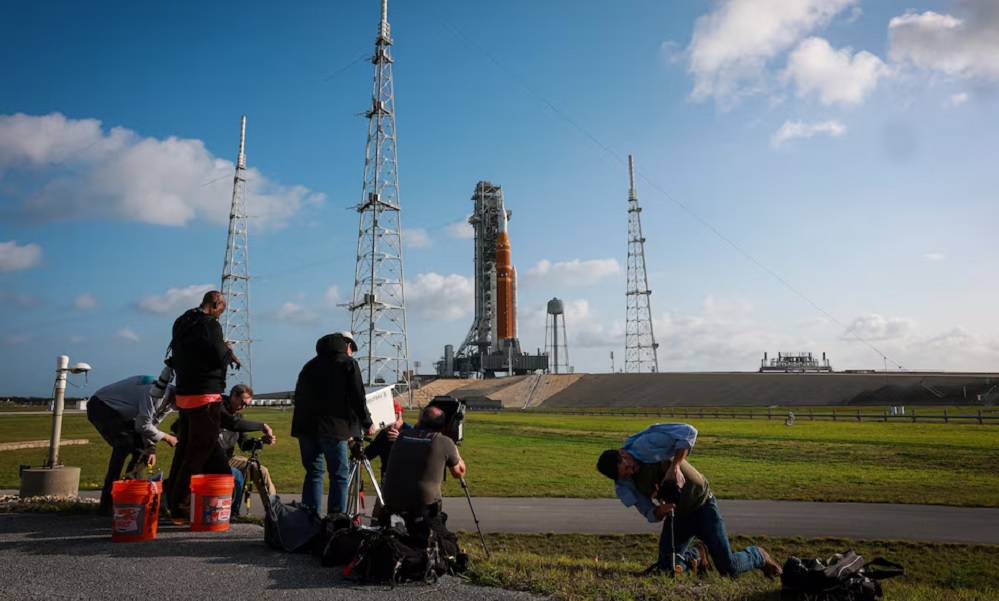
NASA is preparing to launch the first crew of astronauts toward the moon in over 53 years with its second Artemis mission, a key test flight in humanity’s broader lunar goals as the U.S. races to reassert leadership in space faced with growing competition from China.
Three U.S. and one Canadian astronaut are due for liftoff aboard NASA’s Orion capsule and Space Launch System rocket on Wednesday for a 10-day test mission swinging around the moon and back, a winding journey taking them deeper into space than humans have ever gone before, Reuters reported.
The mission is the first crewed test flight in NASA’s Artemis program, the flagship U.S. effort to begin regular flights to the moon, at an estimated cost of at least $93 billion since 2012. Not since Apollo 17 in 1972 have humans touched down on the moon’s surface, a tricky feat NASA aims to repeat in 2028 at the rugged lunar south pole.
The U.S. is the only country to have put humans on another celestial body with its six lunar landings of the Apollo program, driven by competition with the former Soviet Union.
China, a formidable technological rival to the U.S., has made steady progress in its own moon program in recent years, with a string of robotic lunar landings and a 2030 goal to put its own crew on the surface. U.S. officials have focused on beating China to the surface.
ANSWERING ‘THE QUESTION OF OUR LIFETIME’
NASA astronaut Christina Koch, Artemis II mission specialist, on Sunday said the moon is a “witness plate” to the solar system’s formation, and a stepping stone to Mars, “where we might have the most likelihood of finding evidence of past life.”
“Many, many countries have recognized the value that there is in exploring further into the solar system, to the moon and on to Mars,” she told reporters. “They recognize that not only can we gain all these extremely tangible benefits, but that we have the opportunity to answer the question that could be the question of our lifetime, which is, are we alone?”
“Answering that question starts at the moon,” she said. “The question is not should we go, but should we lead, or should we follow?”
Through a series of increasingly advanced Artemis missions extending into the next decade, the U.S. aims to set precedent for how others will operate and coexist on the moon’s surface, where someday countries and companies can exploit rocky lunar resources and practice for much more difficult missions to Mars.
COMMERCIAL LUNAR MARKET
NASA is relying on an array of companies in its moon program with the hope of stimulating a commercial lunar market in the future, the value of which is hard to estimate, analysts say.
A PricewaterhouseCoopers report from January estimates $127 billion in revenues by 2050 from lunar surface activities, with investments potentially reaching $72 billion to $88 billion through the same period.
But for now, and in the near future, governments will drive companies’ lunar strategies and revenue. It will be a long time before commercial growth exists on the moon independently of government funding, said Akhil Rao, an economist at analysis firm Rational Futures who was a research economist at NASA.
“NASA did not see a short-run economic value that companies would be able to derive that would allow NASA to be hands-off,” said Rao, who was among a team of economists and space policy staff laid off last year amid the Trump administration’s sweeping federal workforce cuts.
The Artemis II mission will pose a greater test of NASA’s Orion capsule and SLS, which conducted a similar mission without crew in 2022. The astronauts on board will test critical life-support systems, crew interfaces, navigation and communications before NASA proceeds with more complex missions in the following years.
Liftoff is scheduled for April 1, though it could happen any day after until April 6, depending on weather conditions in Florida and any last-minute snags with the rocket. Thereafter, another launch window, determined largely by the orbital mechanics between Earth and the moon, opens on April 30.
Artemis III, the next mission planned for 2027, will involve the Orion capsule docking in Earth’s orbit with NASA’s two lunar landers – the Blue Moon system from Jeff Bezos’ Blue Origin and Starship from Elon Musk’s SpaceX. The delicate tag-up will demonstrate how the landers will pick up astronauts before heading for the moon’s surface.
That mission was added to the program in February by NASA’s new administrator, Jared Isaacman, a billionaire private astronaut who has more broadly shaken up the program with new objectives. His decision pushed the program’s first crewed lunar landing to Artemis IV.
The architecture is more complex than the Apollo missions, involving an array of companies funded by NASA with the hope of stimulating private competition and market activity around the moon. Boeing and Northrop Grumman lead SLS and Lockheed Martin builds Orion for NASA.
SpaceX and Blue Origin are developing their own landers with NASA funding but under different types of contracts that allow them to offer the spacecraft to other customers.
Science & Technology
Trump administration set to receive $10 billion fee for brokering TikTok deal, WSJ reports
Vice President JD Vance had in September said that the new U.S. company will be valued at around $14 billion.

President Donald Trump’s administration is set to receive a roughly $10 billion fee from investors in the recently completed deal to take control of TikTok’s U.S. business, the Wall Street Journal reported on Friday, citing people familiar with the matter.
TikTok’s Chinese owner, ByteDance, in January finalized a deal to establish a majority American-owned joint venture that will secure U.S. data, to avoid a U.S. ban on the short video app used by over 200 million Americans.
TikTok USDS Joint Venture LLC will secure U.S. user data, apps and algorithms through data privacy and cybersecurity measures. It disclosed few details about the divestiture.
Vice President JD Vance had in September said that the new U.S. company will be valued at around $14 billion.
The payment is part of the agreement through which investors friendly with the administration gained control of TikTok’s U.S. operations from ByteDance, WSJ said. It is on top of the investments already made to establish a new entity to operate the app in the U.S.
Investors Oracle (ORCL.N), Silver Lake, Abu Dhabi’s MGX and other backers paid about $2.5 billion to the Treasury Department when the deal closed and are to make a number of subsequent payments until the total reaches $10 billion, per the Journal.
TikTok and the White House did not immediately respond to Reuters requests for comment.
Officials from the administration have said the fee is justified, citing Trump’s role in rescuing TikTok’s U.S. operations and guiding negotiations with China to complete the deal while tackling lawmakers’ concerns over national security, according to WSJ.
Earlier this month, Trump and U.S. Attorney General Pam Bondi were sued by retail investors in two social media rivals of TikTok seeking to reverse the U.S. president’s approval of a deal by the company’s Chinese owner ByteDance to form a majority American-owned joint venture.
Science & Technology
NASA eyes March 6 launch of astronaut moon mission
Artemis program managers completed a comprehensive simulation of the Space Launch System’s launch-day countdown, but said remaining work could still push the launch date further into March.
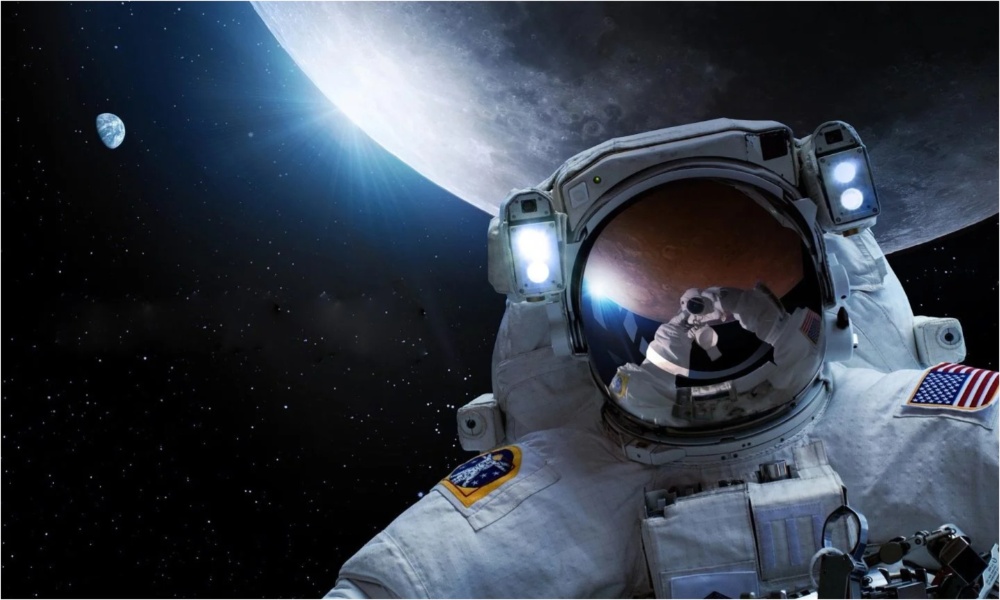
NASA officials said the agency was targeting March 6 for the launch of four astronauts around the moon and back as part of its Artemis II mission after overcoming rocket-fueling snags in a second key launch rehearsal this week, but cautioned that remaining prep work could warrant more time.
The U.S. space agency on Thursday night capped a nearly 50-hour rehearsal of the Artemis II launch countdown, fueling the rocket with some 730,000 gallons of propellant without running into the pesky hydrogen leaks that hobbled an initial rehearsal last month, officials said during a news conference.
Artemis program managers were elated that the Wet Dress Rehearsal, a comprehensive simulation of the Space Launch System’s launch-day countdown, went smoothly, but said remaining work ahead could still push the launch date further into NASA’s March launch window.
“I felt like last night was a big step in us earning our right to fly. So, felt really good, very proud of the team,” said NASA launch director Charlie Blackwell-Thompson.
Remaining work includes testing the rocket’s flight termination system and conducting a sweeping Flight Readiness Review, a day-long meeting of agency management during which they effectively double-check all rocket hardware and mission procedures before liftoff. – Reuters


5.8-magnitude earthquake shakes parts of Afghanistan

Tawsia: This week’s key economic developments in Afghanistan discussed

Iran claims it shot down US F-35 jet

Tripartite agreement to launch new Russia–Turkmenistan–Afghanistan transit corridor

China says Afghanistan–Pakistan peace talks show progress

Prominent Muslim scholar issues fatwa calling for Afghanistan-Pakistan ceasefire

IEA Supreme Leader issues Eid-ul-Fitr message urging unity and support for Islamic system

14 Pakistani soldiers killed after military post falls along Durand line: MoD

Afghanistan steps in to replace Iran in supplying fruits and vegetables to Russia

Afghan airstrikes target Pakistani military sites in retaliation for air attacks
Tawsia: This week’s key economic developments in Afghanistan discussed

Tahawol: Start of talks between Kabul-Islamabad in China discussed

Saar: Ongoing US and Israeli attacks on Iran discussed

Tahawol: Ongoing US–Israeli war with Iran discussed

Saar: Afghanistan-Pakistan talks in China discussed
-
 Latest News4 days ago
TAPI gas pipeline advances 25 km in Afghanistan
-

 Business4 days ago
Afghanistan opens doors to agribusiness investments amid rising opportunities
-

 Latest News2 days ago
Baradar approves 17 projects worth over one billion AFN
-

 Latest News5 days ago
Afghan diaspora protests in London and Oslo over Pakistan strikes
-
 Latest News5 days ago
Pakistan shelling in Afghanistan’s Kunar leaves civilian casualties, says IEA
-

 Business4 days ago
Russia backs Uzbekistan–Afghanistan trade hub, praises regional economic cooperation
-

 Sport4 days ago
ATN secures broadcast rights for inaugural Afghanistan Wrestling Premier League
-
 Regional5 days ago
Pakistan hosts regional powers for Iran talks, with focus on Hormuz proposals