
Latest News
Hekmatyar claims political parties already in talks with Taliban

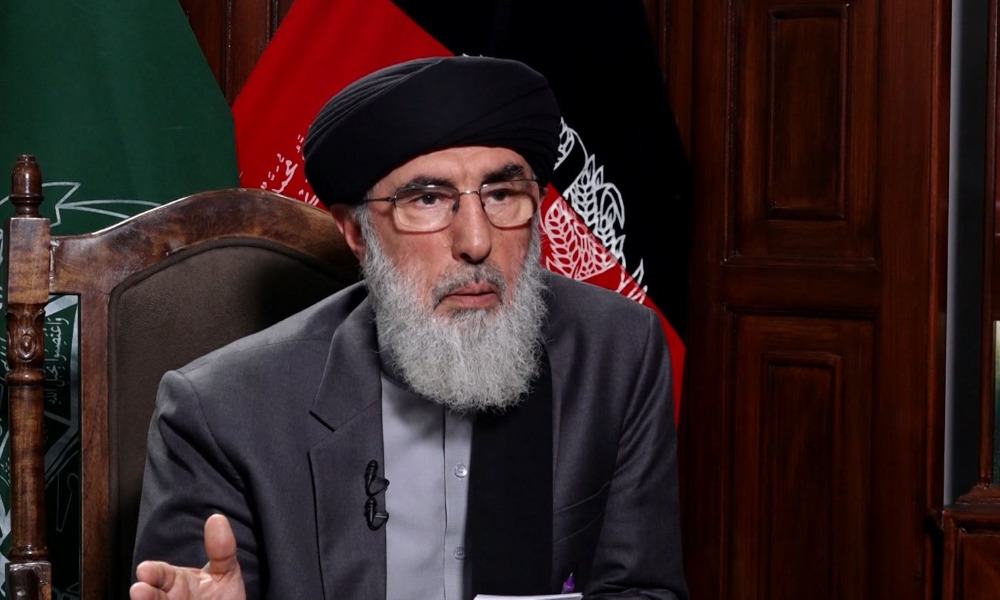
Gulbuddin Hekmatyar, the leader of Hizb-e-Islami, says that Afghan political parties have already started negotiations with the Taliban, and that initial agreements have been made.
In an interview with Ariana News, Hekmatyar stated that government’s negotiating team is not “comprehensive” and government is consulting with Afghan political parties on issues around the process.
He said that there is no consensus between government and the political parties on the Afghan peace process.
“Government does not have a political consensus, they have not reached an agreement with the leading political parties; therefore, it made the parties start direct talks with the Taliban and the Taliban is also ready to sit with the parties around the negotiating table,” Hekmatyar said.
“An initial agreement has been reached even on the location of the negotiations. The Taliban also knows that the system is not honest and they are wasting time,” he said.
Meanwhile, Hekmatyar believes that government is following a hostile policy, and urged government to change its approach to the Taliban.
The Hizb-e-Islami leader said: “I think reaching peace with the current system is impossible. If anyone wants the system and the security forces to be sustainable, and not to face Dr. Najibullah’s fate: they must enter into peace negotiations honestly.”
Najibullah was the president of Afghanistan from 1987 until his resignation in April 1992, shortly after which the mujahideen took over Kabul. After a failed attempt to flee to India, Najibullah remained in Kabul living in the United Nations headquarters until his death at the hands of the Taliban after their capture of the city.
Hekmatyar also stated that government “should not look for an alternative ally to pursue the Afghan war.”
In addition, Hekmatyar claimed that the Afghan government has no authority to make the decision in terms of the peace process, saying that the “US is a decision-maker in the process.”
The Afghan government has not yet commented on Hekmatyar’s remarks.
Opposition grows over Ghani’s decree
Hekmatyar’s statement is another hurdle in the way of intra-Afghan negotiations after a number of prominent figures baulked at President Ashraf Ghani’s decree Sunday appointing more than 40 members of the High Council for National Reconciliation.
First to reject his appointment was former president Hamid Karzai, who was then followed by former foreign minister Salahuddin Rabbani and Hekmatyar.
Abdullah Abdullah, the Chairman of the High Council for National Reconciliation meanwhile issued a statement Monday opposing Ghani’s decree.
He said the president does not have the authority to appoint people to the body tasked with leading peace talks with the Taliban.
Abdullah said in the statement that “consultations about the formation of the council continue with political and civil society leaders and it will conclude soon.”

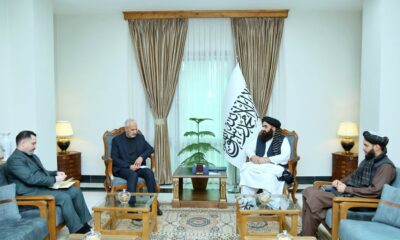



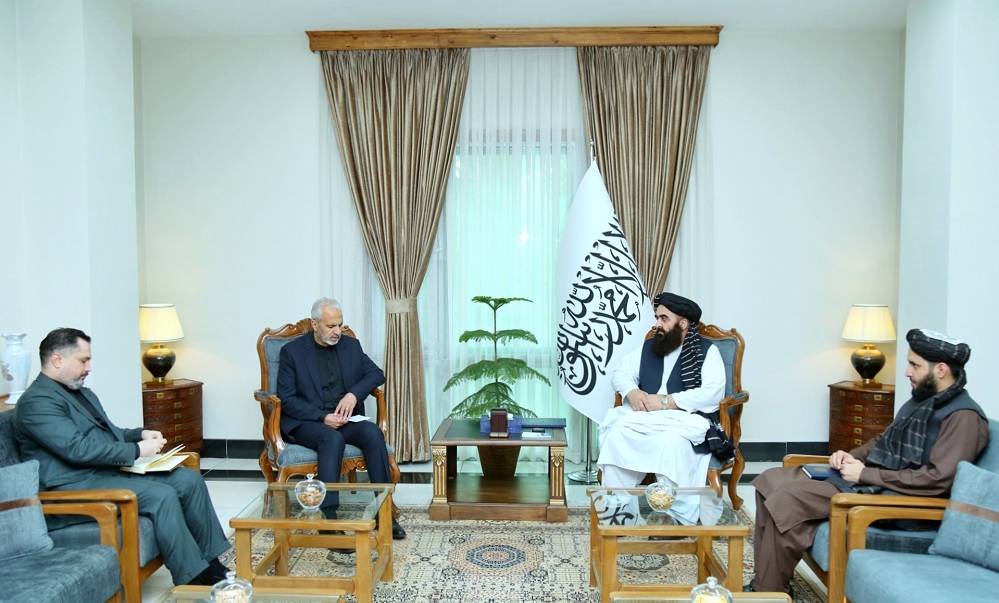
Amir Khan Muttaqi, Foreign Minister of the Islamic Emirate of Afghanistan, met with Ali-Reza Beikdeli, Iran’s acting ambassador in Kabul, to discuss bilateral relations and regional developments.
According to a statement from the Afghan Ministry of Foreign Affairs, Muttaqi criticized what he called the “aggression” of the United States and Israel against Iran, warning that the expansion of conflict to other countries affects the entire region.
He also highlighted the growing trade relations between Afghanistan and Iran, describing them as a positive sign of cooperation. In addition, Muttaqi praised the “constructive stance” of Iranian officials regarding recent tensions between Afghanistan and Pakistan, emphasizing that the resolution of legitimate concerns from both sides is only possible through genuine dialogue.
Beikdeli reaffirmed Iran’s position on U.S. and Israeli actions and described bilateral cooperation with Afghanistan—particularly in trade—as positive. He added that Iran’s leadership is closely monitoring the situation between Afghanistan and Pakistan and supports a peaceful resolution.
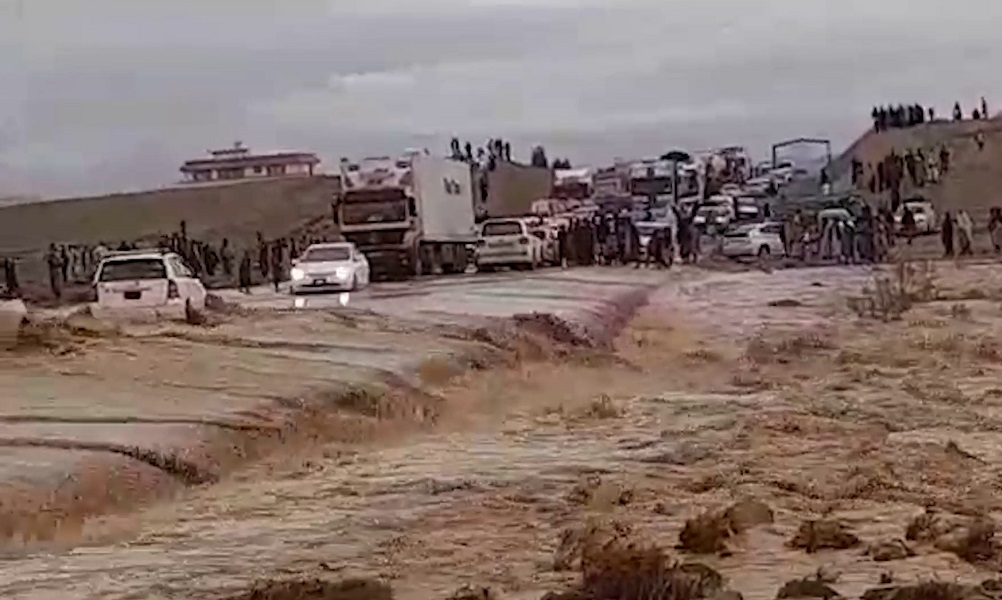
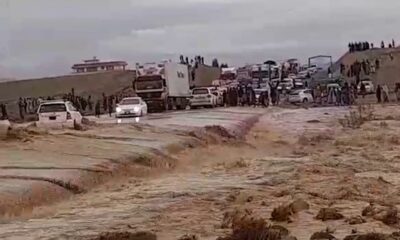
At least 17 people have lost their lives and 26 others have been injured as floods, landslides, and lightning strikes hit multiple provinces across Afghanistan, authorities said on Sunday.
Yousuf Hammad, spokesperson for the National Disaster Management Authority, said that in the past 24 hours, the provinces of Parwan, Daikundi, Maidan Wardak, Logar, Herat, Farah, Ghor, Badghis, Samangan, Sar-e Pol, Jowzjan, Faryab, and Laghman were all affected by natural disasters.
The disasters have also caused significant property damage. Thirty-seven homes were completely destroyed, while 110 others suffered partial damage. Around 80 kilometers of roads and 582 jeribs of agricultural land were damaged or destroyed.
Authorities emphasized that emergency response efforts are ongoing to provide relief and assistance to the affected communities.
Latest News
Afghanistan and Uzbekistan hold high-level bilateral meeting to boost trade and economic cooperation
Governor Abdullazov welcomed the initiatives of Minister Azizi, describing the Afghan people as friends and brothers, and provided an overview of the industrial and production capacities of Namangan Province.
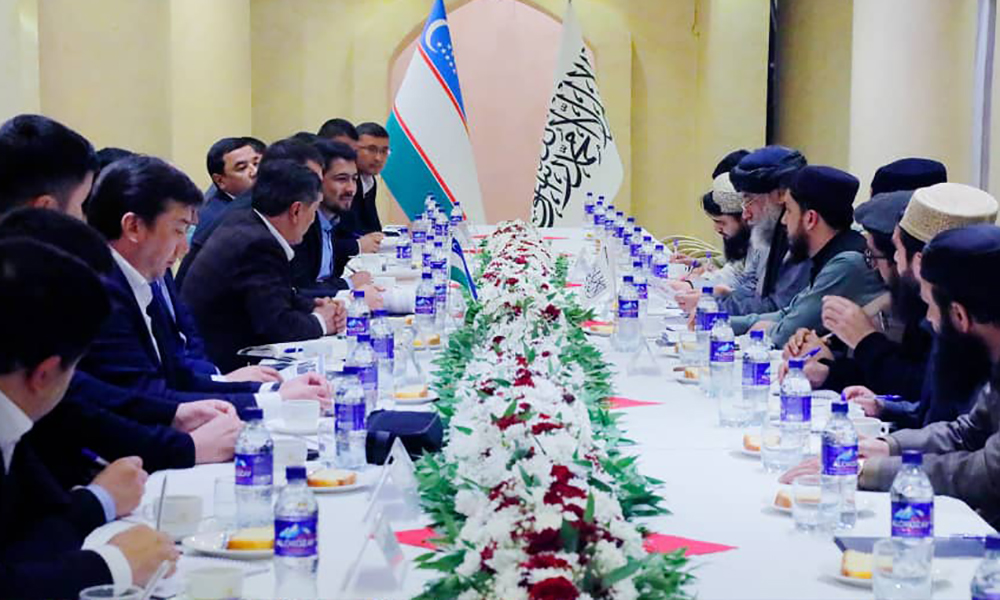
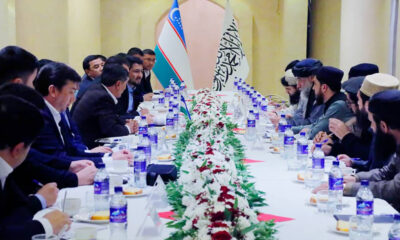
A high-level bilateral meeting between Afghanistan and Uzbekistan was held to strengthen trade and economic relations, particularly with the Namangan region of Uzbekistan. The meeting brought together Nooruddin Azizi, Minister of Industry and Commerce of the Islamic Emirate of Afghanistan, and Shukhrat Abdullazov, Governor of Namangan Province, along with their respective delegations.
At the outset of the meeting, Minister Azizi expressed appreciation for Uzbekistan’s four years of cooperation with the Islamic Emirate and the people of Afghanistan, emphasizing the country’s commitment to brotherhood and bilateral collaboration.
Governor Abdullazov welcomed the initiatives of Minister Azizi, describing the Afghan people as friends and brothers, and provided an overview of the industrial and production capacities of Namangan Province.
During the discussions, both sides explored cooperation in key sectors, including:
- Export and production of medicinal herbs and spices in Afghanistan
- Poultry farming capacity and joint ventures in the sector
- Investment and trade in precious and semi-precious stones, including exports
- Export of agricultural machinery and equipment, drip irrigation systems, and collaboration with Afghan farmers
Minister Azizi reaffirmed Afghanistan’s readiness for joint ventures and trade promotion between the two countries, highlighting investment opportunities in cold storage facilities, agricultural and medicinal product factories, and other sectors.
At the conclusion of the meeting, it was decided that a delegation from Afghanistan’s private sector would visit Namangan Province to identify trade opportunities. The Afghan delegation was also invited to attend the annual historic Flower Festival in Namangan, held every May.


Tahawol: Efforts for Kabul-Islamabad de-escalation

Saar: Restrictions on girls’ education in Afghanistan discussed

Bamyan hosts ski competition sponsored by AWCC

Afghan FM meets Iran’s acting ambassador in Kabul, discusses regional issues

Pentagon preparing for weeks of ground operations in Iran, Washington Post reports

Pakistani military jet downed in Afghanistan’s Jalalabad, pilot captured alive

Prominent Muslim scholar issues fatwa calling for Afghanistan-Pakistan ceasefire

Afghan air force strikes key Pakistani military installations in retaliatory operation

IEA Supreme Leader issues Eid-ul-Fitr message urging unity and support for Islamic system

14 Pakistani soldiers killed after military post falls along Durand line: MoD
Tahawol: Efforts for Kabul-Islamabad de-escalation
Saar: Restrictions on girls’ education in Afghanistan discussed

Tahawol: Concerns over spread of Middle East crisis discussed

Saar: Weakening relations between Kabul and Washington discussed

Exclusive interview with Indrika Ratwatte, Deputy UN Special Representative for Afghanistan
-
 Latest News4 days ago
Tajikistan shifts stance on Afghanistan amid rising border tensions
-
 Latest News3 days ago
Russia deems US military presence in Afghanistan unacceptable
-
 Latest News3 days ago
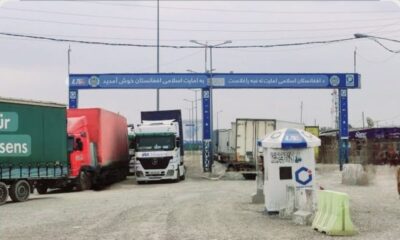
IEA says Iranian drivers no longer need visas to enter Afghanistan
-
 Latest News5 days ago
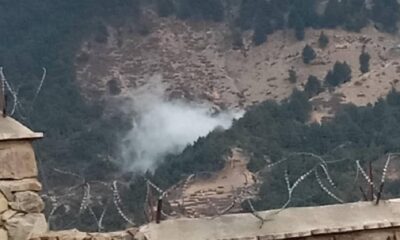
Two civilians killed, eight injured in fresh shelling by Pakistan in Kunar
-

 Sport5 days ago
IPL 2026: RCB sold for $1.78 billion in landmark deal
-
 Sport4 days ago
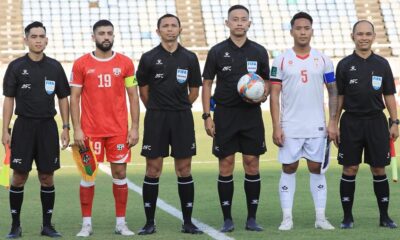
Myanmar trump Afghanistan 2-1 in Asian Cup Qualifier
-
 Sport4 days ago
Afghanistan to face Myanmar in crucial AFC clash
-
 Business5 days ago
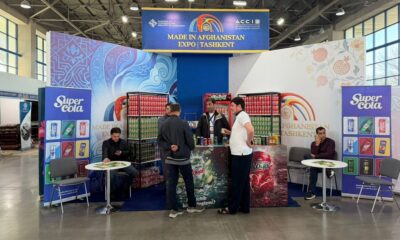
‘Made in Afghanistan’ expo opens in Tashkent