
Business
Govt to call for tenders for 68 mines across Afghanistan

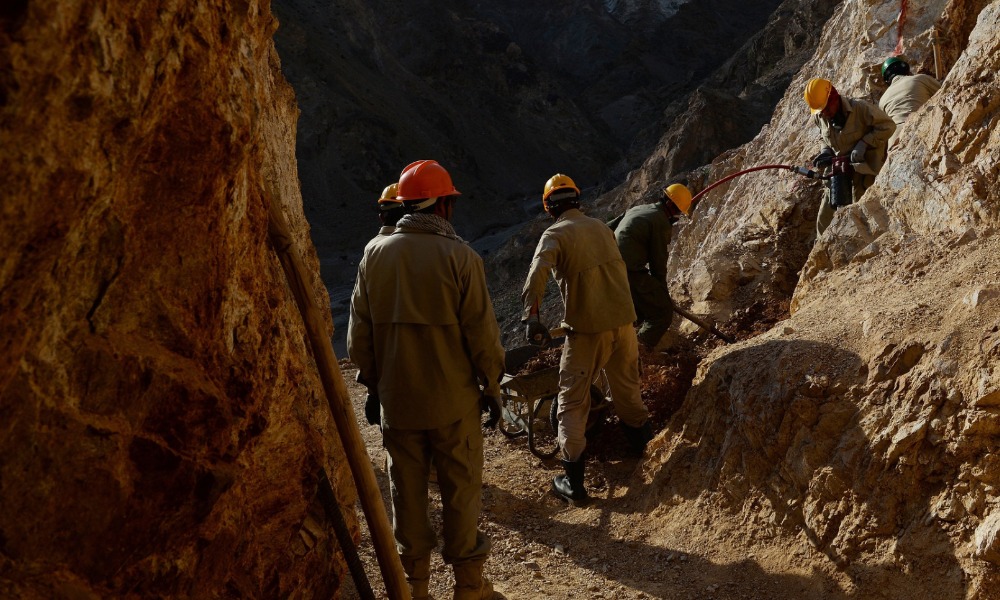
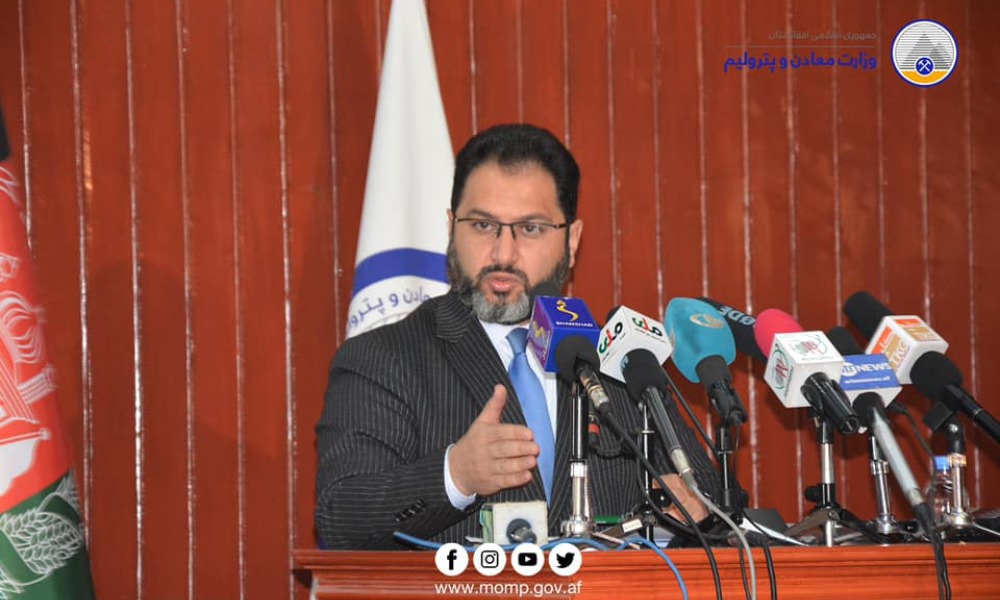
Afghan Ministry of Mines and Petroleum said on Thursday that of 108 mines in 23 provinces, the High Economic Council has approved the launch of a tender process for 68 of these mines.
Minister of Mines and Petroleum Haroon Chakhansuri said 800 million AFs will be invested in these mines.
According to Chakhansuri, the annual revenue generation from these mines will be between 150 and 170 million AFs and 3,000 jobs will be created.
“Mines with a high income will be focused on. The mineral extraction process will take place in three parts, first small mines after that mid-size mines and at the end large mines,” stated Chakhansuri.
He also said that they will start work on the Turkmenistan-Afghanistan-Pakistan-India (TAPI) gas pipeline project by the end of the month but did not provide further details.
Meanwhile, investors said that wide-spread corruption in government and the presence of armed groups are challenges facing the mining industry.
International organizations and the government also said that illegal extraction of minerals from mines is a substantial source of income for armed groups.
“Private sector is willing to invest in mining but the government should pay attention to our demands. We need the mines and have the capacity to extract the minerals,” said Abdul Nasir Reshtia, head of the association of steel factories.
In 2007 the United States Geological Service did a study and discovered nearly $1 trillion in untapped mineral deposits in Afghanistan, far beyond any previously known reserves.
The previously unknown deposits — including huge veins of iron, copper, cobalt, gold and critical industrial metals like lithium — are so big and include so many minerals that are essential to modern industry that Afghanistan could eventually be transformed into one of the most important mining centers in the world.
At the time, an internal Pentagon memo, for example, stated that Afghanistan could become the “Saudi Arabia of lithium,” a key raw material in the manufacture of batteries.
However, the industry has not only been dogged by corruption but it is also dominated by warlords and insurgents and largely goes unregulated, and under-developed.





Business
Dogharoun border handling 70% of Iran’s exports to Afghanistan
Dogharoun also accounted for 34 percent of the province’s imports and 20 percent of inbound transit goods from Afghanistan to Iran during the same period.
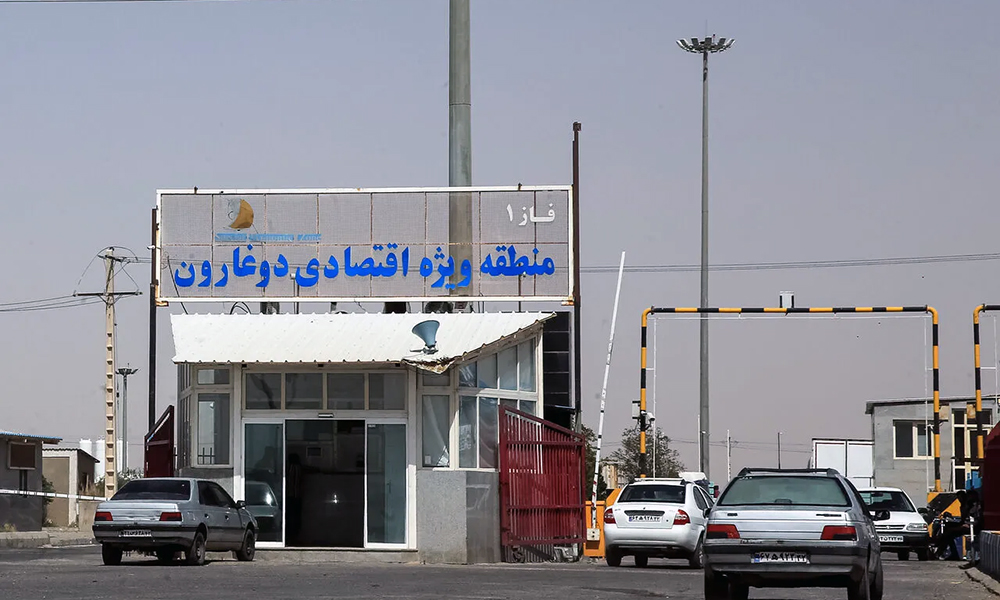
Mohsen Rokni, head of the Dogharoun border terminal, says the crossing accounted for 70 percent of Iran’s exports to Afghanistan during the first half of the current solar year, making it the leading export gateway among border crossings in Iran’s Razavi Khorasan Province.
According to Rokni, Dogharoun also accounted for 34 percent of the province’s imports and 20 percent of inbound transit goods from Afghanistan to Iran during the same period.
He said major Iranian exports through the crossing include construction materials, steel products, food items, fruits and vegetables, and petroleum products.
Located near the Iranian city of Taybad along the Afghan border, Dogharoun remains a key trade and transit route between the two countries.
Business
Regional partners seek progress on Trans-Afghan corridor and CASA railway
The discussions took place during the international NEW SILK WAY business forum in Astana, attended by senior transport officials from the five countries.
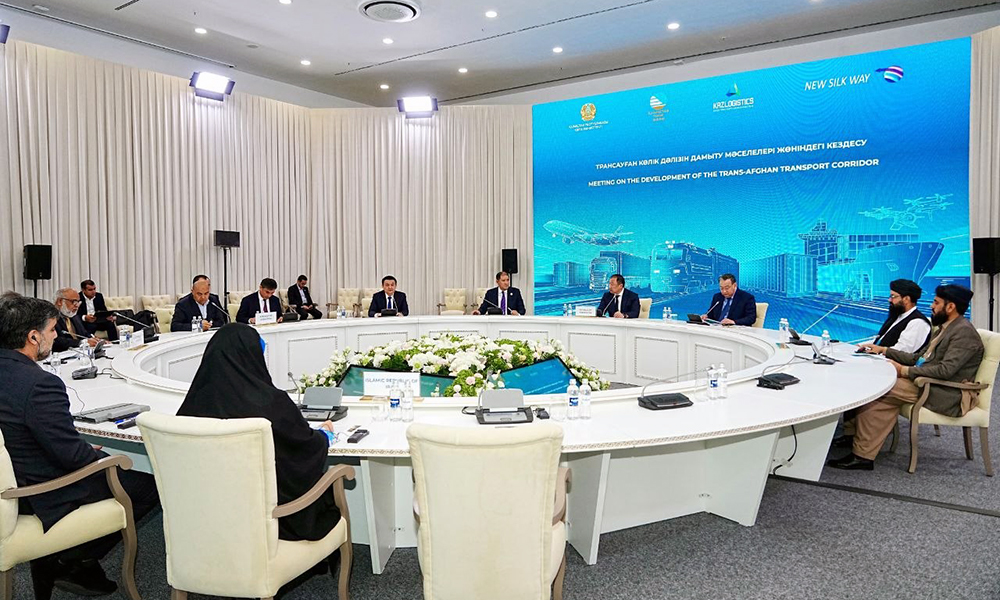
Officials from Kazakhstan, Afghanistan, Uzbekistan, Pakistan and Iran have discussed ways to advance the Trans-Afghan transport corridor and the Central Asia-South Asia (CASA) railway project, aiming to strengthen regional connectivity and expand trade routes.
According to Kazakhstan’s Ministry of Transport, the discussions took place during the international NEW SILK WAY business forum in Astana, attended by senior transport officials from the five countries.
The meeting focused on the CASA railway project, which aims to improve transport links between Central, South and West Asia, increase freight capacity and provide better access to international markets and seaports.
Participants reviewed the project’s current status and practical implementation requirements, including route coordination, infrastructure development and the establishment of a cargo base.
They also discussed financing mechanisms, attracting potential investors and international financial institutions, and strengthening coordination among Kazakhstan, Uzbekistan, Afghanistan and Pakistan.
Kazakhstan’s Minister of Transport, Nurlan Sauranbaev, said the participating countries had reaffirmed their shared interest in developing the Trans-Afghan corridor and implementing the CASA railway project.
“It is important for us to move from discussions to practical action,” Sauranbaev said, adding that the project could create an additional transport link between the regions, increase transit capacity, expand freight opportunities and strengthen trade and economic ties.
Following the meeting, participants reaffirmed their commitment to continued cooperation and the development of practical measures to advance the project.
Business
IsDB urges MENAP countries to boost economic resilience and private investment
The meeting brought together regional finance ministers, central bank governors and international financial institutions to discuss economic challenges and policy priorities.
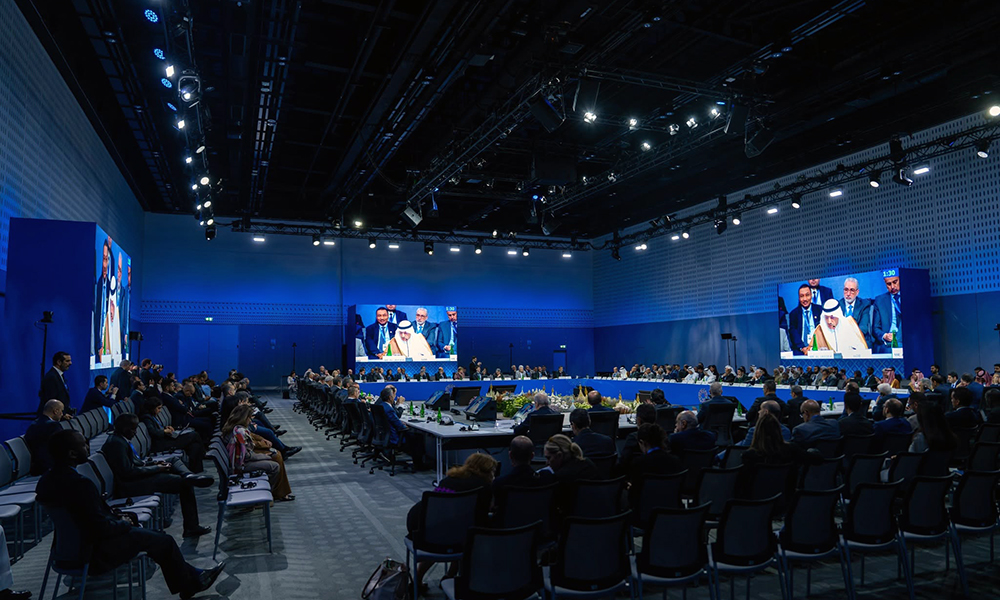
The Islamic Development Bank (IsDB) Group has urged countries across the Middle East, North Africa, Afghanistan and Pakistan (MENAP) region to strengthen economic resilience, address structural challenges and attract private investment to support sustainable growth.
IsDB Group Chairman Dr. Muhammad Al Jasser outlined the priorities during the MENAP Ministers and Governors’ Meeting with the managing director of the International Monetary Fund (IMF), held on the sidelines of the World Bank Group and IMF meetings in Bangkok, Thailand, according to an IsDB statement.
Al Jasser identified four key priorities: maintaining macroeconomic stability, addressing structural economic weaknesses, mobilizing private capital and strengthening regional integration.
He stressed the need to rebuild fiscal and external financial buffers to help countries withstand economic shocks, while investing in infrastructure, human capital and economic diversification.
He also highlighted the importance of private-sector investment, stronger partnerships and innovative financing mechanisms in driving development.
On regional cooperation, Al Jasser called for improved connectivity and stronger trade and investment ties to develop regional value chains and create opportunities for sustainable growth.
The IsDB Group said it has approved nearly US$100 billion cumulatively for member countries across the MENAP region, reaffirming its commitment to supporting more diversified, resilient and inclusive economies.
The meeting brought together regional finance ministers, central bank governors and international financial institutions to discuss economic challenges and policy priorities.


Afghanistan finish runners-up after 6-0 defeat to Brazil in futsal final

Trump endorses Netanyahu in close Israeli election

ACL: League leaders Sorkh Poshan claim another 3 points

Tahawol: Afghanistan’s empty seat at OIC Meeting

Toofan Herat beat Istiqlal Kabul 2-0 in Afghanistan Champions League clash

Cricket Bonanza: Afghanistan set for packed international schedule

Afghanistan says 28 killed, 32 captured in Nuristan operation

Silk Road highway in Wakhan corridor now reaches the China border

CNN, MS NOW and Politico sue Trump, challenging White House ban

Dogharoun handles 60% of Iran’s exports to Afghanistan
Tahawol: Afghanistan’s empty seat at OIC Meeting

Saar: Islamic Emirate–Pakistan clashes discussed

France rocked by nationwide clashes, looting and fires

Tahawol: Russian economic delegation’s visit to Kabul

Saar: Discussion on harsh criticism of Pakistan at Moscow meeting
-

 Sport5 days ago
Afghan futsal coach: Brazil tournament is first step towards new goals and World Cup
-
 Latest News5 days ago
Afghan official says Durand Line crossings to remain closed until Islamabad accepts demands
-
 Latest News4 days ago
India, Russia hold security talks on Afghanistan and Pakistan amid regional tensions
-
 Latest News4 days ago
Uzbekistan gains ground in Afghanistan’s flour market as Kazakhstan loses exports
-
 World5 days ago
Yemen hospitals overwhelmed by surge in war casualties, Red Cross warns
-
 Latest News5 days ago
OIC envoy briefs Kabul diplomats on talks with Afghan authorities
-

 Sport1 day ago
Afghanistan reach Brazil futsal tournament final after beating Cape Verde 4-2
-
 Regional4 days ago
School roof collapse kills teacher, 21 children in NW Pakistan