
Latest News
Ghani’s bodyguard claims he has proof the ex-president stole millions


A senior member of the former president’s security staff said on Sunday that Ashraf Ghani took with him “hundreds of millions” of dollars in cash while fleeing Kabul in August.
Brigadier General Piraz Ata Sharifi, who was head of Ghani’s bodyguard unit, said he also has video proof of this alleged theft.
In an interview with the UK’s Daily Mail, Sharifi, who is currently in hiding, said he saw huge bags of cash being transferred but also acquired a video clip from a CCTV camera.
“I have a [CCTV] recording [from the palace] which shows that an individual at the Afghan Bank brought a lot of money to Mr Ghani before he left,” Mr Sharifi claimed.
“Hundreds of millions, perhaps billions of dollars. There were many big bags, and they were heavy.”
He said he was disappointed as he liked Ghani. “This money was for the currency exchange market.
“Each Thursday, the dollars were brought for that purpose. Instead, it was taken by the president. Mr Ghani knew in the end what would happen. So, he took all the money and escaped,” Sharifi said.
Ghani, however, last month denied the allegation that he left Kabul with a helicopter full of cash, stating he left with only the clothes he was wearing.
Reports first emerged in late August that Ghani fled the country on August 15 taking $169 million in cash with him.
His abrupt departure allowed the Islamic Emirate of Afghanistan (IEA) to take Kabul two weeks before the US troop withdrawal had been completed.
However, last week, the US government’s inspector general in charge of investigating misuse of aid money in Afghanistan told Congress he’s “looking into” claims that Ghani and his subordinates stole millions of dollars before fleeing.
“We haven’t proven that yet. We’re looking into that,” Inspector General John Sopko said during a House hearing on Afghanistan.
“There are allegations, but not only with President Ghani. There are allegations with senior officials in their finance ministry, their central bank and a number of other ministries walking off with millions of dollars,” he said.
“But again, those are just allegations. We have not confirmed any of those yet,” he said.



Latest News
IEA condemn attacks on Saudi airports amid rising regional tensions
It urged all parties involved to refrain from violence, prevent further escalation and take necessary measures to protect civilians.
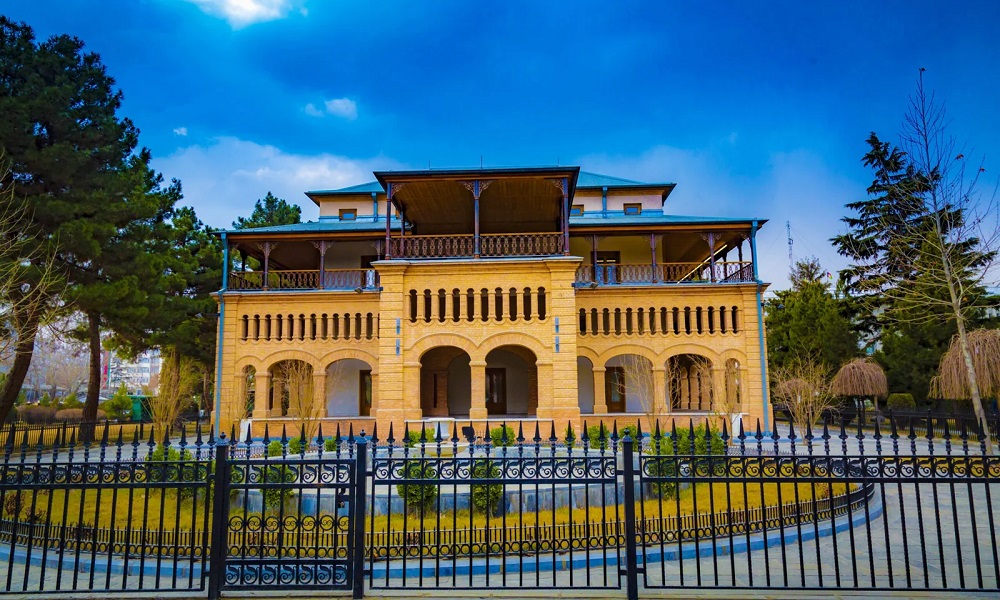
The Islamic Emirate’s Ministry of Foreign Affairs has expressed concern over recent attacks on Riyadh and other airports in Saudi Arabia, describing the reported civilian casualties as deeply regrettable.
In a statement issued on Monday, Abdul Qahar Balkhi, spokesperson for the ministry, said that any attack threatening the lives and safety of civilians is condemnable.
The ministry warned that escalating violence and the widening scope of the conflict could jeopardize the security and stability of the entire region.
It urged all parties involved to refrain from violence, prevent further escalation and take necessary measures to protect civilians.
According to Saudi officials, one person was killed and 12 others injured in Saturday’s attack on King Khalid International Airport in Riyadh.
Latest News
EU pledges continued humanitarian aid for returning Afghans
The two officials discussed humanitarian assistance for returnees, their reintegration into society and measures to address their longer-term needs.
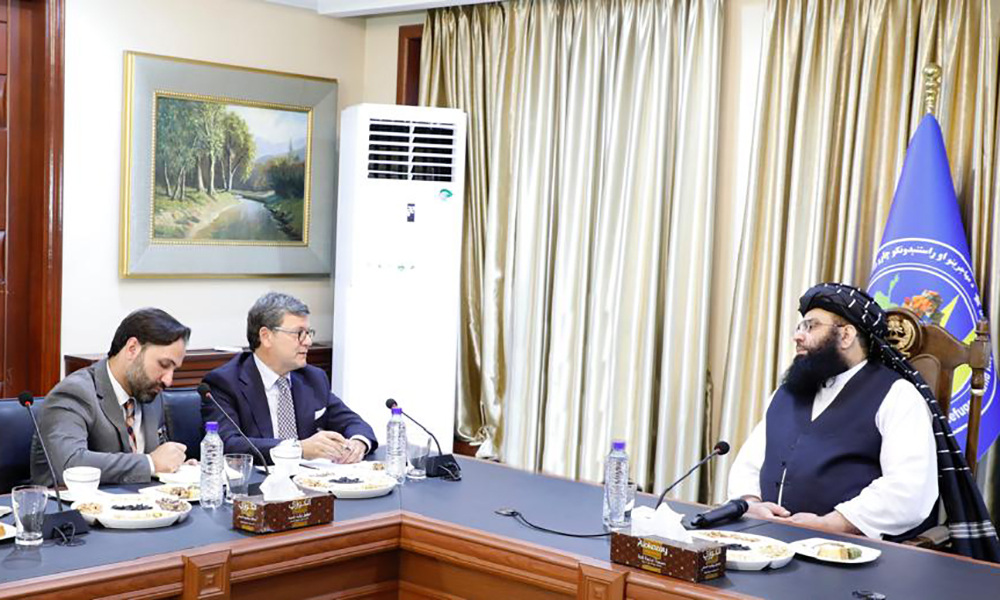
The European Union has reaffirmed its commitment to providing humanitarian assistance to returning Afghans, with a focus on reintegration, employment opportunities and sustainable solutions to the challenges they face.
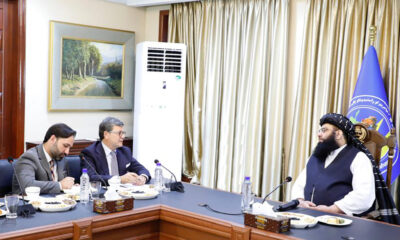
The commitment was reiterated during a meeting between Afghanistan’s Minister of Refugees and Repatriation, Mawlawi Abdul Kabir, and the EU’s newly appointed representative to Afghanistan, Nicola Bellomo, according to a statement from the ministry.
The two officials discussed humanitarian assistance for returnees, their reintegration into society and measures to address their longer-term needs.
Bellomo praised the Islamic Emirate’s handling of the return of millions of Afghans, saying the process had been managed successfully despite the challenges posed by the return of approximately eight million people.
He said the EU would continue providing humanitarian assistance to Afghans and expressed its readiness to cooperate on creating employment opportunities and addressing the difficulties faced by returnees.
Abdul Kabir said the Islamic Emirate was working towards sustainable solutions for returning Afghans, noting that 80 townships had been designated to accommodate them.
He also called on the EU to support the construction of residential townships, stressing the need to provide adequate housing and assistance to vulnerable returnees, particularly women and those without family support.
Latest News
Mujahid accuses Pakistani military circles of sabotaging talks with Afghanistan
Mujahid reiterated that Afghanistan does not interfere in Pakistan’s internal affairs and would not allow its territory to be used to create insecurity in Pakistan or any other country.
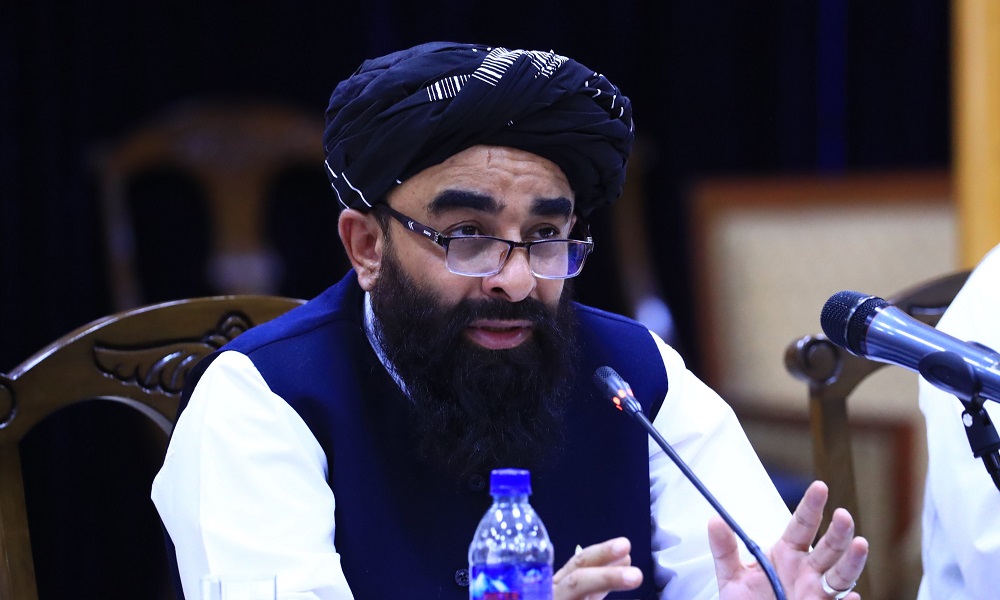
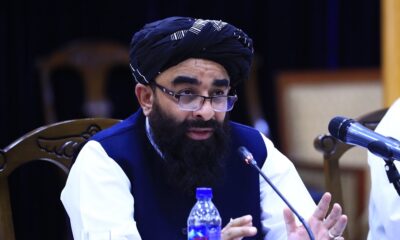
Zabihullah Mujahid, spokesperson for Afghanistan’s Islamic Emirate, has accused certain Pakistani military circles of repeatedly undermining negotiations and efforts to resolve differences between Kabul and Islamabad through dialogue.
Speaking to Ariana News in response to recent remarks by Pakistan’s prime minister, Mujahid said the Islamic Emirate did not blame Pakistan’s political leadership, which he claimed was willing to resolve bilateral differences. However, he alleged that certain military circles had repeatedly obstructed progress towards negotiations and mutual understanding.
Mujahid reiterated that Afghanistan does not interfere in Pakistan’s internal affairs and would not allow its territory to be used to create insecurity in Pakistan or any other country.
He said the Islamic Emirate had taken effective measures to prevent Afghan territory from being used for such purposes, but alleged that certain circles in Pakistan continued to pursue policies of insecurity and aggression, undermining diplomatic efforts.
Commenting on recent developments in Pakistan’s Khyber Pakhtunkhwa province, Mujahid said the situation there and Pakistan’s internal affairs were unrelated to Afghanistan.
He stressed that Afghanistan did not want insecurity in any country and urged the countries concerned to address their internal challenges through appropriate channels, reiterating that the Islamic Emirate would not interfere in their domestic affairs.


IEA condemn attacks on Saudi airports amid rising regional tensions

EU pledges continued humanitarian aid for returning Afghans

Mujahid accuses Pakistani military circles of sabotaging talks with Afghanistan

▶️Pakistan deploys military to Peshawar after emergency rule declared

One dead in new attack on Saudi airport, a day after Houthi strike kills 13

EU and FAO launch €5m programme to strengthen Afghanistan’s agrifood sector

Cricket Bonanza: Afghanistan set for packed international schedule

Houthi advance in Yemen puts U.S. in a new bind

New warnings reignite debate over AI threat to humanity

UN warns of mounting humanitarian and human rights pressures in Afghanistan

Tahawol: EU appointing new envoy for Afghanistan

Saar: Pakistan’s political, security and economic crises

Saar: Ongoing expulsion of Afghan refugees from Iran and Pakistan discussed

Tahawol: CSTO meeting on Afghanistan reviewed

Saar: Guterres’s talks with Pakistani officials on Afghanistan discussed
-
 Regional3 days ago
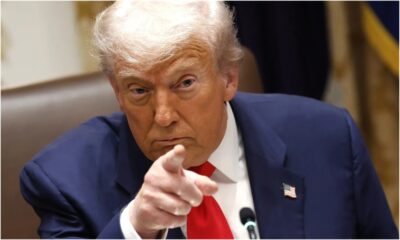
Trump says US will not attack Iran before midterm elections in November
-
 Business4 days ago
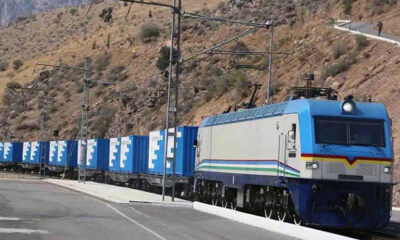
Russia-Afghanistan trade surges 150% in first seven months of 2026
-
 World4 days ago
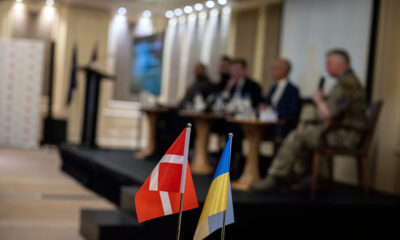
Denmark says Russia has conducted sabotage attacks against its defense firms
-
 World3 days ago
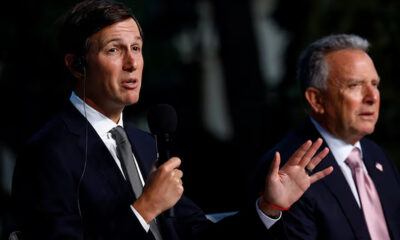
Witkoff, Kushner to meet Ukrainians for talks on the war, says US source
-
 Latest News2 days ago
Pakistan issues new directives for Afghan medical students and doctors
-

 Sport4 days ago
Arman FC defeat Istiqlal Kabul 3-2 in thrilling comeback
-
 Latest News2 days ago
Iranian lawmaker praises Afghanistan’s support, accuses Pakistan of ‘hypocrisy’
-
 Business4 days ago
Afghan products attract Saudi buyers at major food expo in Jeddah