
Latest News
Ghani says Afghanistan is ‘not at risk of collapse’

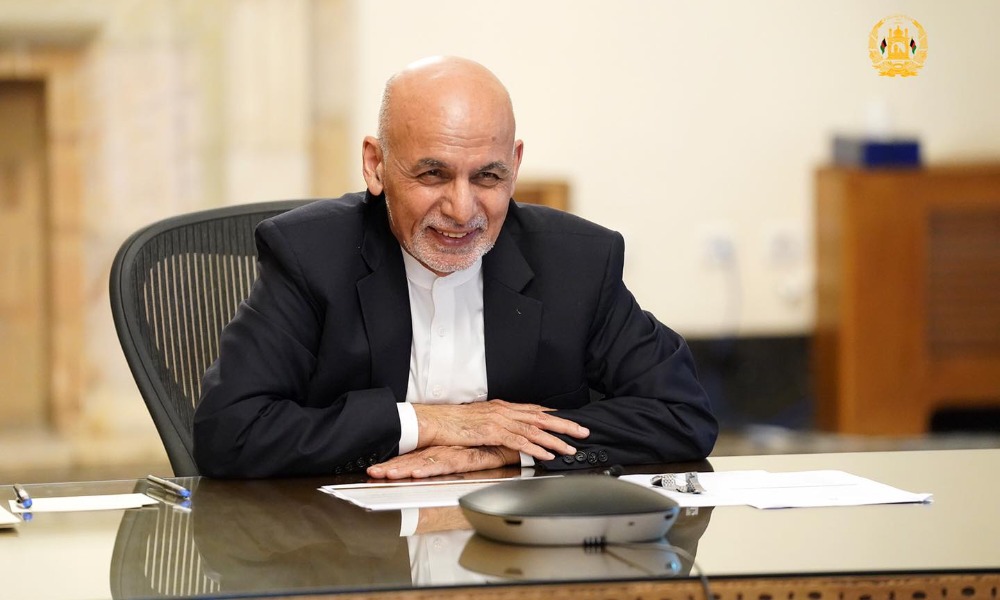
President Ashraf Ghani said on Thursday that US President Joe Biden and NATO Secretary-General Jens Stoltenberg’s decision to withdraw foreign forces set the context for a “reset” of assumptions, alignments, and actions and that the Afghan government is “not at risk of collapse”.
Addressing a virtual event organized by Azerbaijan’s Nizami Ganjavi International Center, Ghani said: “We are not at risk of collapse. The narrative of the Afghan government falling apart is a false narrative.”
According to him, Afghan commandos, special forces, and air force alone are 40,000 strong, and “they have trained among the best, they are among the best in the region.”
“As long as this force stays, there is no risk of state collapse,” Ghani said adding he is proud to be their commander-in-chief.
He also said all these forces have been brought into one command of the Afghanistan National Authority for Special Operations and that they carry out 30 to 40 operations every day “with precision and determination”.
Ghani added that the people of Afghanistan are also armed “and ready to defend their villages and districts”.
He said the nature of the war has become a challenge as there are no rules to it, pointing out that never since the Mongol invasion have women and Ulema been targeted and assassinated.
“It’s this unrestricted war that needs to end,” he said.
Ghani said he had a “very constructive” conversation with Biden on Wednesday night and a good one-and-a-half-hour meeting with visiting US Secretary of State Antony Blinken on Thursday.
He said: “I respect President Biden’s decision,” and that in the 24 hours that followed the phone conversation he spent worked to “help frame the next chapter of our relationship with the United States, NATO, non-NATO allies” including Azerbaijan that has close to 1,000 troops in Afghanistan.
He said the fundamental issue was that as the context changes, Afghanistan must change accordingly.
Ghani pointed out that Biden’s decision was a game-changer as “it forces all actors and stakeholders in the region, in Eurasia, in the Islamic world and globally to rethink their assumptions.”
He said Biden’s decision now removes the uncertainty over whether US troops would be withdrawn adding that this uncertainty has hovered over Afghanistan for the past two years.
“Now the ambiguity has been removed, we have clarity.”
Ghani also stated it brings an end to the narrative of US/NATO being “part of a larger regional competition and Afghanistan as a site of the competition with other big powers”.
“Also, I hope this puts an end to conspiracy theories,” he said adding that for Afghanistan, it is now a narrative of responsibility, of partnership, of nation-building, peacebuilding and market building among others.
Regional countries will also have to rethink the parameters of their own security and their partnerships with Afghanistan he said adding that the UN will get a “renewed importance” in its function as a peacemaker.
Ghani said Biden’s move heralds a new chapter in the strategic partnership with the US and according to Blinken the Strategic Partnership Agreement and the Bilateral Security Agreement (BSA) will “remain intact” while assistance for the defense and security forces and humanitarian assistance will continue.
He said this was, however “a moment of choice for the Taliban. Will they opt for peace that is on the table? Or will they opt for conquest?”
Ghani stated that Biden and Stoltenberg’s announcement on the withdrawal of troops also provided “a moment of choice for Pakistan.”
He said for Pakistan it is a decision of destiny. “Will it opt for regional cooperation, international partnership, and regional prosperity through joint efforts, or will it give way to the forces that have tendered to support and sustain the Taliban and the wave of extremism for which Pakistan next to Afghanistan has probably paid the highest price? So, it is a moment of decision.”
Ghani also reiterated earlier commitments that for the sake of peace he was willing to hold elections within the next six to 12 months so the people “can choose their leader”.


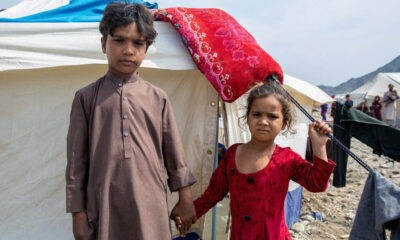

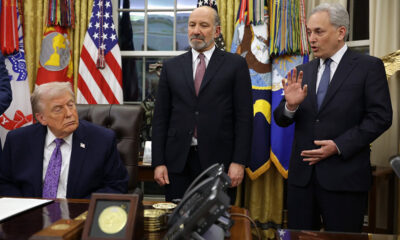


The Indian Ministry of External Affairs has condemned recent airstrikes by Pakistan on Afghanistan’s territory.
In a statement, Ministry spokesperson Shri Randhir Jaiswal said the attacks resulted in the deaths of several civilians and the destruction of civilian infrastructure.
He described the strikes as yet another act of aggression by Pakistan, which continues to oppose the idea of an independent Afghanistan.
India reiterated that Afghanistan’s sovereignty and territorial integrity must be fully respected.
Latest News
14 Pakistani soldiers killed after military post falls along Durand line: MoD
The statement added that Afghan forces destroyed one armored tank and a military vehicle belonging to Pakistani troops during the fighting.
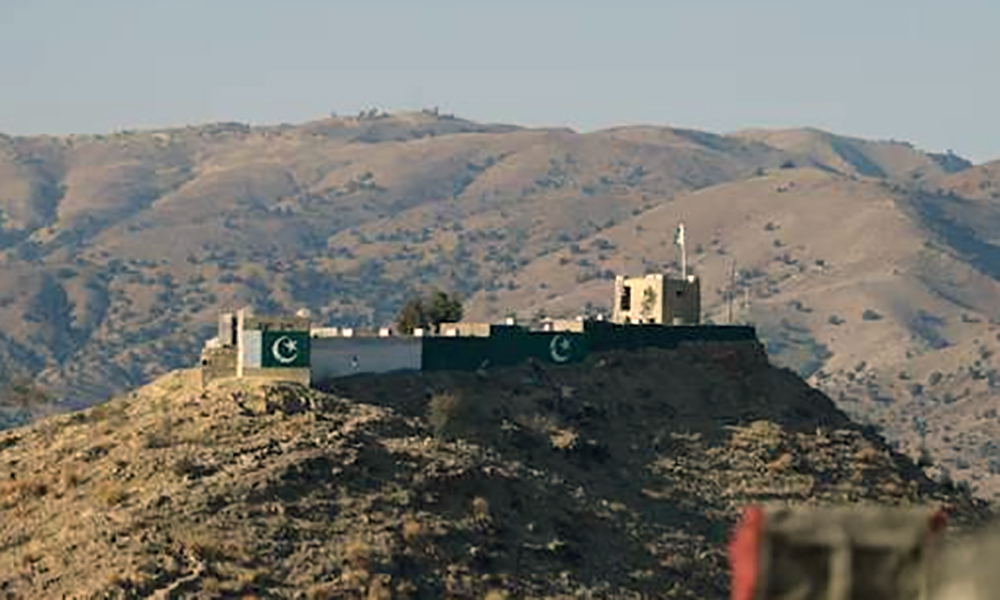
Afghanistan’s Ministry of Defense announced Saturday that Afghan defensive forces captured a Pakistani military post along the Durand Line in eastern Afghanistan following clashes between the two sides.
In a statement, the ministry said the operation was launched in response to what it described as “crimes of the Pakistani military regime” in border areas of Kunar and Nangarhar provinces.
According to the ministry, 14 Pakistani soldiers were killed and 11 others wounded during the operation.
The statement added that Afghan forces destroyed one armored tank and a military vehicle belonging to Pakistani troops during the fighting.
Defense officials emphasized that Afghanistan’s forces remain prepared to respond to any threats along the Durand Line.
Latest News
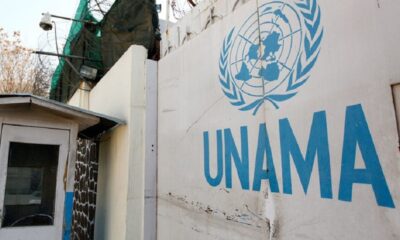
UN Security Council to vote on extension of UNAMA mission in Afghanistan
The Islamic Emirate of Afghanistan has previously criticized UNAMA’s activities, claiming that the mission’s reports misrepresent the situation in Afghanistan.
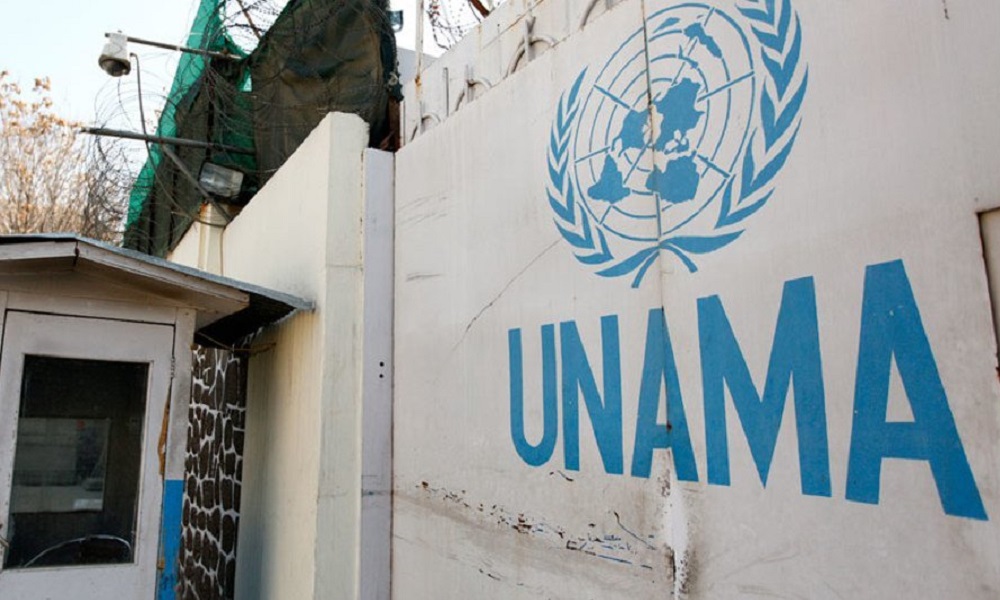
The United Nations Security Council is set to vote on Monday regarding the extension of the UN Assistance Mission in Afghanistan (UNAMA), with a draft resolution proposing a three-month extension until June 17.
The debate over the mission’s extension has divided key members of the Council. China initially called for a one-year extension, while the United States has advocated for a shorter duration. The U.S. position is based on the belief that a three-month extension would allow the Council to conduct a comprehensive review of UNAMA’s mandate before committing to a longer-term renewal.
A statement from the Security Council explained that Washington views this as an opportunity to reassess the mission’s appropriateness and effectiveness. “This mission is one of the most costly political special missions of the United Nations and operates in a highly complex environment. Therefore, the Council needs to assess whether the mission remains appropriate and effective,” the statement read.
The draft resolution also emphasizes growing concerns about human rights in Afghanistan, particularly the ongoing restrictions placed on women and girls. It calls on the Islamic Emirate of Afghanistan to lift these limitations and stresses the need for continued support in areas such as development, counterterrorism, and mine clearance. UNAMA’s field presence is also considered vital for providing critical humanitarian support and monitoring developments on the ground.
The Islamic Emirate of Afghanistan has previously criticized UNAMA’s activities, claiming that the mission’s reports misrepresent the situation in Afghanistan, painting a negative and misleading image to the international community. As the vote approaches, the future of the mission—and its ability to effectively address Afghanistan’s ongoing challenges—hangs in the balance.


Tahawol: Afghan, Chinese FMs’ phone talks discussed

Saar: UN meeting on UNAMA mission in Afghanistan discussed

India condemns Pakistani airstrikes on Afghanistan

RGC navy commander claims attacks on three US military bases

14 Pakistani soldiers killed after military post falls along Durand line: MoD

Pakistani military jet downed in Afghanistan’s Jalalabad, pilot captured alive

Afghan Air Force conducts airstrikes in Islamabad, other cities

IEA releases three Pakistani soldiers to mark Ramadan

Afghanistan’s Chief of Armed Forces underscores readiness and equipment for national defense

Afghanistan welcomes investment and technology partnerships with India
Tahawol: Afghan, Chinese FMs’ phone talks discussed
Saar: UN meeting on UNAMA mission in Afghanistan discussed

Exclusive interview with Stephen Rodriguez, UN Development Programme Representative in Afghanistan

Tawsia: Trade agreement between Afghanistan-Uzbekistan

Tahawol: Discussion on intensification of attacks in Middle East
-

 Sport4 days ago
Afghanistan’s white-ball series against Sri Lanka postponed
-
 Latest News1 day ago
Afghan airstrikes target Pakistani military sites in retaliation for air attacks
-
 Latest News5 days ago
Russia, China and UK urge Afghanistan and Pakistan to resolve issues through dialogue
-
 Latest News5 days ago
Trump envoy warns Afghanistan could face fate similar to Iran or Venezuela over detained Americans
-
 Latest News5 days ago
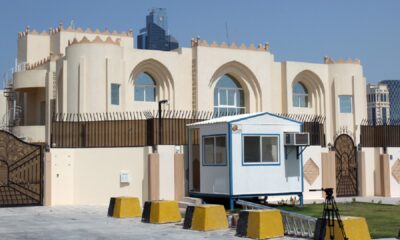
Reports about closure of IEA’s Doha office denied
-
 Latest News2 days ago
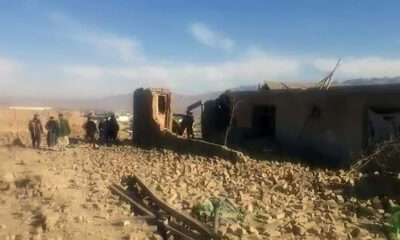
IEA condemns Pakistan’s airstrikes in several Afghan provinces
-
 Regional5 days ago
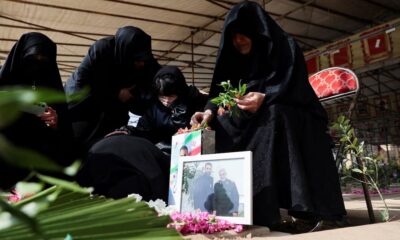
Iran says oil blockade will continue until attacks end, Trump threatens to hit harder
-

 Business4 days ago
Uzbekistan ratifies preferential trade agreement with Afghanistan