
Latest News
Ghani rejects Abdullah’s proposed five cabinet candidates

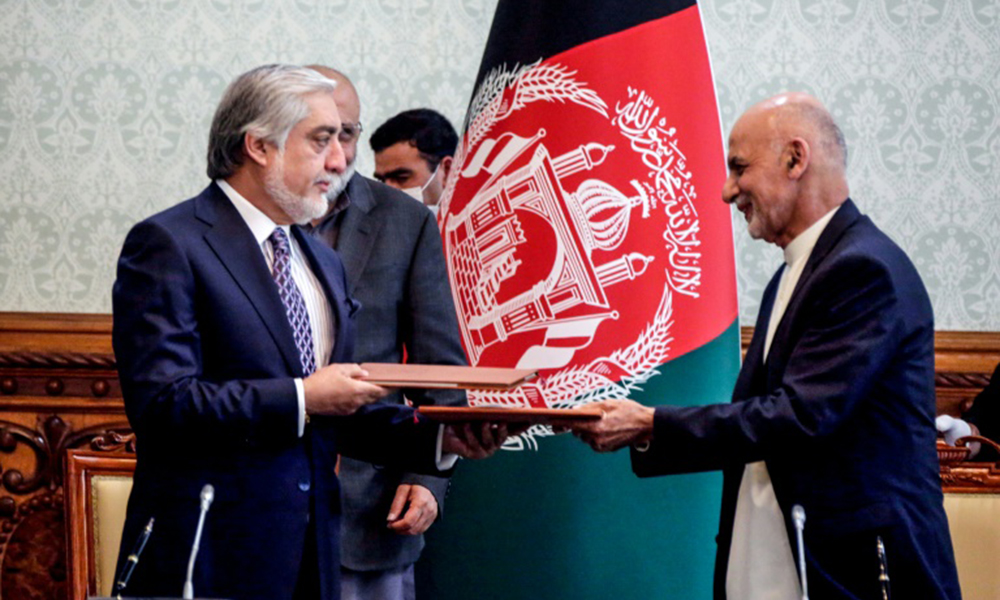
President Ashraf Ghani has rejected his power-sharing partner Abdullah Abdullah’s proposed five key cabinet candidates, sources told Ariana News.
The nominees were including Anwar al-Haq Ahadi nominated for the Ministry of Agriculture – Mustafa Mastour, Ministry of State for Peace – Noor Rahman Akhlaqi, Ministry of Immigration – Fazl Ahmad Manawi, Ministry of Justice and Mohebullah Samim nominated for the Ministry of Tribes are the figures on the red list of the president Ghani.
The Presidential palace, however, said that ministry candidates should have political weight and merit and represent people.
“The main goal of the Afghan government is to nominate people to the parliament who have political weight, who is a mirror of the stability of the government and people should trust the past of the candidates. This is important for completing the cabinet,” said Sediq Sediqqi, the president’s spokesman.
But Sapidar says the political agreement and the constitution set the standard.
“The criteria for the ministerial nominee are clear in the constitution, but unfortunately the presidential spokesman is unaware of the ongoing debates and the provisions of the constitution,” said Fraidoun Khawzun, spokesman for the chairman of the High National Reconciliation Council.
This clash and dispute are also criticized. Some politicians say a number of figures nominated by the president are also not qualified.
Sayed Ishaq Gilani, leader of the Afghan Solidarity Movement, said: “Someone said I am illiterate, but Mr. Ghani has introduced her as the minister of a structure that is the body of Afghanistan, while she knows nothing more than embroidery. These actions of the president will create tension and persecution against Afghanistan.”
However, Article 72 of the Constitution states the criteria for selecting a ministerial candidate as per the following:
1. Having Afghan citizenship
2. Having higher education, work experience, and a good reputation
3. Age over 35 years
4. Not being convicted of crimes and violations against humanity
“The conditions provided for a ministerial nominee are in Article 72 of the Afghan constitution and cannot be accepted at the behest of individuals,” said lawyer Wahid Farzaei.
There are concerns that domestic political challenges could also delay the peace process.







The Ministry of Foreign Affairs of the Islamic Emirate of Afghanistan, in a statement, announced that it has summoned the Chargé d’Affaires of the Pakistani Embassy in Kabul and conveyed its “strong and firm” protest over the violation of Afghanistan’s airspace and the bombing of civilian homes.
According to the statement, Pakistan’s military regime once again blatantly violated Afghanistan’s airspace on Tuesday night and bombed civilian homes in parts of Khost, Paktika, and Kunar provinces.
As a result, 11 children, one woman, and one elderly man were killed, while 14 other civilians, including women and children, were injured.
The foreign ministry added that the Islamic Emirate considers this attack and act of human rights violation a clear breach of international principles and laws. The IEA strongly condemned the incident and once again emphasized that defending its territory and ensuring the security of its people is its religious responsibility.
The ministry stated that the Pakistani side must understand that instead of pursuing proxy policies, it should fundamentally resolve its internal problems.
The statement read: “How is it possible that killing children and women in one land could mean ensuring the security of another?”
The ministry further stated that Pakistan’s army will bear full responsibility for all consequences of these repeated and provocative actions.
Afghanistan’s Ministry of Justice has announced that the procedure governing the mobilization, collection, and distribution of assistance for migrants returning to Afghanistan has been published in the Official Gazette following its approval by the leader of the Islamic Emirate.
According to the ministry, the procedure consists of an introduction, three chapters, four sections, and 14 articles, and will be implemented by central and provincial committees responsible for mobilizing, collecting, and distributing aid to returning migrants.
The document outlines the composition and authorities of the central and provincial committees, as well as the mechanisms for soliciting, collecting, registering, storing, and distributing cash, in-kind, and service-based assistance. It also specifies oversight measures for aid distribution and restrictions related to the receipt and allocation of assistance.
Under the new procedure, the central committee is tasked with preparing lists of donors and the needs of returning migrants, and formally engaging with domestic donors and Afghans living abroad to attract additional support.
The Ministry of Justice added that the procedure also defines the methods for mobilizing aid and prohibits the collection of domestic assistance outside official channels, as well as the receipt of foreign assistance in violation of the laws and principles of the Islamic Emirate and the provisions of the procedure.
The ministry further noted that the same issue of the Official Gazette includes a decree by the leader of the Islamic Emirate dissolving the Directorate for the Review of Residential Affairs under the General Directorate of Administrative Affairs and transferring its responsibilities to the Supreme Court.
International Sports
One Day to Go: Everything you need to know about FIFA World Cup 2026
With one day remaining until kickoff, anticipation is building around the world as football prepares to take centre stage once again.

The countdown is almost over. In just one day, the FIFA World Cup 2026 will get underway, launching what is widely regarded as the world’s greatest sporting event.
Football fans across Afghanistan and around the globe are preparing for a month of excitement as 48 nations compete for the most coveted prize in international football.
What is the FIFA World Cup?
The FIFA World Cup is the premier international football tournament, held every four years and featuring the world’s best national teams.
The 2026 edition will be the largest in the tournament’s history, expanding from 32 to 48 teams and featuring a record 104 matches.
Where is the tournament being held?
For the first time, the World Cup will be jointly hosted by three countries:
- United States
- Canada
- Mexico
Matches will be played across 16 host cities throughout North America.
When does the tournament start?
The tournament kicks off on June 11, with hosts Mexico facing South Africa in the opening match in Mexico City.
The final will be played on July 19 in New York.
Why is this World Cup historic?
The 2026 tournament marks several major milestones:
- First World Cup hosted by three nations.
- First World Cup featuring 48 teams.
- Largest World Cup ever with 104 matches.
- First time Canada hosts World Cup matches.
Organizers expect millions of fans to attend matches, while billions around the world are expected to follow the tournament on television and digital platforms.

Which teams are among the favourites?
Several traditional football powers enter the tournament among the leading contenders, including:
Argentina (defending champions)
- France
- Brazil
- England
- Spain
- Germany
- Portugal
Stars such as Kylian Mbappé, Erling Haaland, Vinícius Júnior, Jude Bellingham, Harry Kane and Lionel Messi are expected to be among the tournament’s biggest attractions.
How can fans in Afghanistan watch the World Cup?
Football supporters across Afghanistan will be able to follow every moment of the tournament through Ariana Radio and Television Network’s (ATN) extensive coverage – on both TV and radio.
Ariana Television will broadcast FIFA World Cup 2026 matches live across Afghanistan, bringing viewers comprehensive coverage of the world’s biggest football event.
For fans on the move or unable to watch television, Ariana FM will also provide live match broadcasts throughout the tournament, ensuring supporters can stay connected to the action wherever they are.
What can fans expect?
From dramatic goals and unforgettable upsets to emerging stars and title contenders battling for glory, the FIFA World Cup consistently delivers some of sport’s most memorable moments.
With one day remaining until kickoff, anticipation is building around the world as football prepares to take centre stage once again.
Fans in Afghanistan can tune in to Ariana Television from 11:30pm to watch kick off between Mexico and South Africa on Thursday night, June 11.



Tahawol: Fresh Pakistani military attacks on Afghanistan discussed

Saar: Emphasis on continued Indian support for Afghanistan discussed

Islamic Emirate summons Pakistan’s Chargé d’Affaires over latest airstrike

Pakistan says all aboard military helicopter killed in crash in Pakistani Kashmir

Procedure for mobilizing and distributing aid to returning migrants approved

Afghanistan signs $46 million deal to develop standard laboratory complexes

Large blast near Beit Shemesh part of pre-planned test: Israeli defense firm

Trump returns from China with stability but little progress

Afghanistan announce squad for India series

Afghanistan, Russia sign military cooperation agreement
Tahawol: Fresh Pakistani military attacks on Afghanistan discussed
Saar: Emphasis on continued Indian support for Afghanistan discussed

Tahawol: Calls for Afghanistan’s integration discussed

Saar: Alleviating impact of pressure on Afghanistan discussed

Tahawol: The Shadow of War Returns to the Middle East
-

 International Sports2 days ago
Norway’s Viking-inspired World Cup team photo goes viral
-
 Latest News5 days ago
Uzbekistan advances feasibility study for Trans-Afghan Railway Project
-

 International Sports5 days ago
From AI to Robot Dogs: What’s new at FIFA World Cup 2026
-

 Latest News3 days ago
UNAMA voices concern over reported detention of women in Herat
-

 Latest News5 days ago
Karzai welcomes graduation of 74 Afghan girls from US universities
-
 Regional5 days ago
Iran declares support for Hezbollah with wider peace deal in doubt
-

 Business5 days ago
Uzbekistan reports strong surge in trade with global partners led by China
-

 International Sports3 days ago
World Cup 2026: Ten attacking stars set to steal the show in North America