
Latest News
Ghani gives UNICEF’s polio unit boss 24 hours to leave Afghanistan

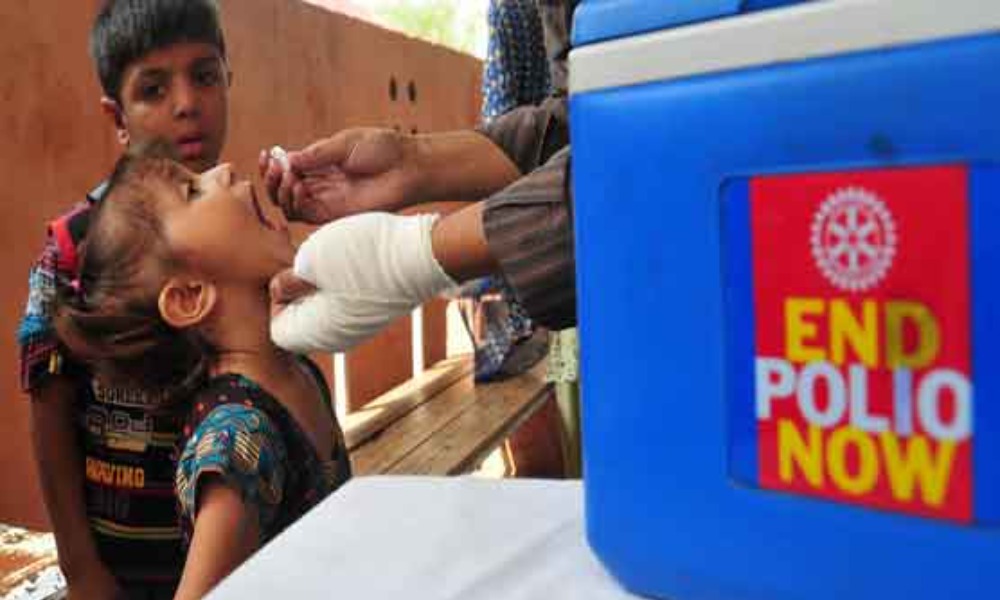
President Ashraf Ghani gave Mohammed Mohammedi, the head of the United Nations Children’s Fund’s (UNICEF) polio eradication team in Afghanistan, 24 hours to leave the country, a presidential spokesman said.
According to a Facebook post on Wednesday by Dawa Khan Menapal, Mohammedi was given notice to leave the country for “ignoring the president and for the lack of transparency in his work.”
Meanwhile the Ministry of Public Health said that UNICEF had spent $22 million on an awareness campaign around polio but failed to provide a report to government.
According to Masooma Ghafari, the deputy spokeswoman for the health ministry, there was still an increase in the number of cases despite money having been spent on polio campaigns.
“We need to bring changes in the section,” she said.
Ghani’s sudden move to have Mohammedi expelled drew sharp criticism from some analysts who felt the move would have a negative effect on aid coming in from international organizations.
“Unfortunately, President Ghani’s act with an international organization was startling, and the act will affect the planning of international organizations badly,” said Asif Mobaligh, an international affairs analyst.
Ghani chats to Bill and Melinda Gates about polio concerns
The sudden move to expel Mohammedi also comes just days after Ghani held a telephone conference call with Bill and Melinda Gates whose Foundation is a key donor in Afghanistan’s drive to rid the country of wild polio.
During the meeting the Gates and Ghani expressed their concerns over the surge in polio cases in Afghanistan due to restrictions imposed by the Taliban in areas under their control, the Presidential Palace said in a statement after the virtual meeting.
“The two sides also held a comprehensive discussion on reforming the polio vaccine implementation process and increasing facilities in this regard,” the statement read.
Bill and his wife Melinda run the Bill and Melinda Gates Foundation – a funding organization. Polio eradication is one of their top priorities.
The virtual meeting on Monday night came after the Afghan Ministry of Public Health claimed that more than 3.5 million children have been deprived of anti-polio vaccinations due to Taliban restrictions.
Lancet reports 2020 was a bad year for polio
Earlier this month, the world’s leading medical journal, The Lancet, reported that there is growing concern about the effect the COVID-19 pandemic could have on global efforts to eradicate the disease.
Polio vaccination campaigns in Afghanistan were stopped in March last year for several months before being restarted in August.
Speaking to The Lancet, Mohammedi said the decision to halt vaccinations had been “a precautionary measure” as they did not want to contribute towards the spread of COVID-19.
“We didn’t want to replace one virus with another,” he said.
In 2020, 56 polio cases were reported in Afghanistan; in 2019 the number was 29.
UNICEF however estimates that last year, about 50 million children in Afghanistan and Pakistan missed out on vaccines because of the disruption in immunisation due to the pandemic.
Abdul Quayum Pokhla, director of the Regional Emergency Operation Centre for polio in
Kandahar, meanwhile told The Lancet that “2020 was another bad year not just for the south, but for the whole country.”
He said: “The virus spread not just to endemic areas in Afghanistan, but to some free zones. We’ve missed so many children and it will lead to reduced immunity. We are expecting more cases – the virus is circulating in the environment.”
UNICEF states that since 2018, approximately one million children just in southern Afghanistan have missed out on polio vaccinations because of insecurity.
“When it comes to a rise in polio cases, does it make a difference to have 50 or 100 cases? It’s the same root causes,” Mohammedi said.
“We have issues with access and this lack of access has been underestimated by the polio programme. For more than two and a half years some areas have had no access [to vaccines] but the strategy is the same”.
He said “polio is not a priority except for people working for the programme. We have donors that have become massively passive. We need active donors. The UN talks about polio as
if it’s a priority, but it’s not at all. If it were a top priority, the game would change.




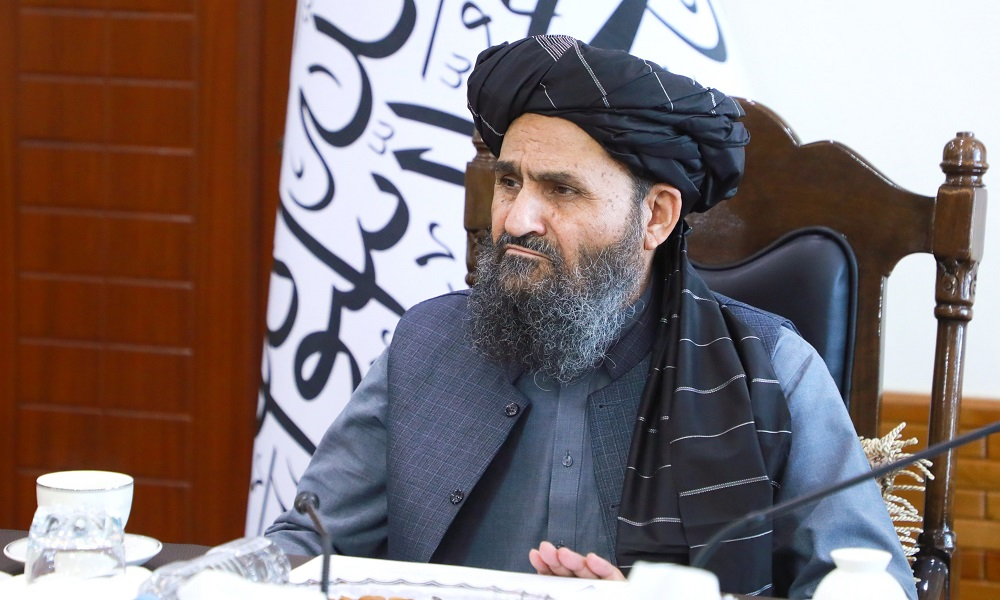
Afghanistan’s Economic Commission has approved 66 draft national standards and testing methods covering a wide range of agricultural, industrial and commercial sectors.
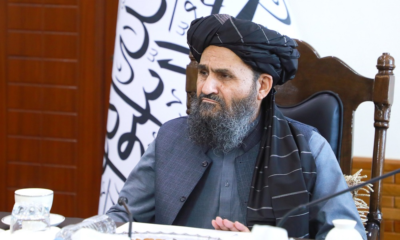
The commission, chaired by Deputy Prime Minister for Economic Affairs Mullah Abdul Ghani Baradar, approved 36 national standards and 30 testing methods following discussions and a review of the proposals, according to a statement from the Office of the Prime Minister.
The approved standards cover areas including agricultural products, food, medicines, textiles, chemicals and plastics, telecommunications and electricity, mining, construction materials and environmental protection, among other sectors.
The move is aimed at establishing clearer standards and testing procedures across key areas of production and trade, helping to provide a common framework for assessing the quality and safety of products.
The commission also discussed the ownership and management of coal unloading, loading, processing and packaging facilities in Paktia, Paktika, Khost, Kandahar and Nangarhar provinces.
Following a comprehensive assessment, the commission decided that the facilities would fall under the Ministry of Transport and Civil Aviation, which will oversee their operations.
Latest News
Petition filed in Islamabad High Court against PMDC directive affecting Afghan students
The move comes as Afghan medical students continue to challenge PMDC directives that could affect their ability to continue their studies in Pakistan.
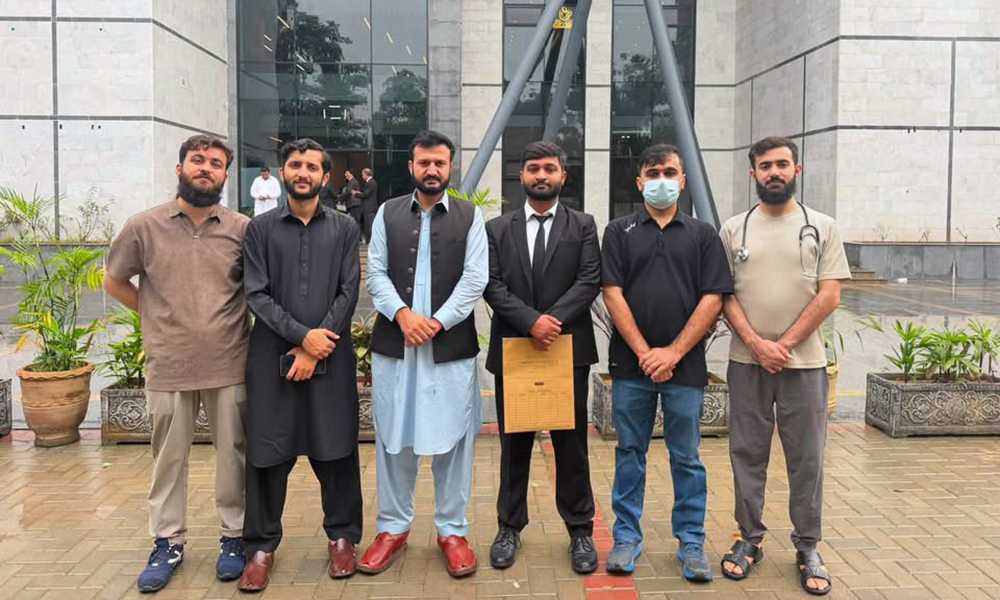
A petition has been filed in the Islamabad High Court challenging a recent notification issued by the Pakistan Medical and Dental Council (PMDC) that affects Afghan students studying at medical institutions in Pakistan.
The petition was submitted on behalf of Afghan students by Islami Jamiat-e-Talaba (IJT), which said it is seeking legal relief for students impacted by the directive.
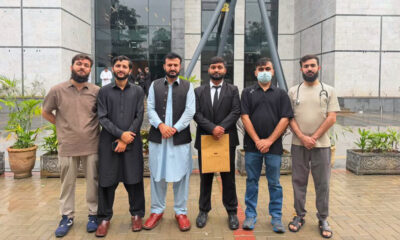
According to a statement issued on Tuesday, IJT chief Sahibzada Waseem Haider visited the Islamabad High Court alongside Afghan students from the Federal Medical College in Islamabad and IJT Islamabad chief Hashir Abbasi. Legal representation is being provided by Advocate Imran Shafiq and his team.
The move comes as Afghan medical students continue to challenge PMDC directives that could affect their ability to continue their studies in Pakistan.
Earlier, the Lahore High Court and the Sindh High Court granted interim relief to Afghan students through stay orders, temporarily preventing the implementation of measures affecting students enrolled in institutions across Punjab and Sindh.
“We remain hopeful that, following a detailed hearing, the students’ academic future will be safeguarded and the PMDC’s unjust notification will be reviewed,” Haider said in the statement.
He added that IJT has actively supported Afghan students and organised solidarity demonstrations at medical and dental colleges across Pakistan.
The issue has sparked concern among Afghan students studying in Pakistan, many of whom are enrolled in advanced years of their medical education and fear that changes to regulations could disrupt their studies and future careers.
The Islamabad High Court is expected to consider the petition and determine whether relief should be granted to the affected students while the case proceeds.
Latest News
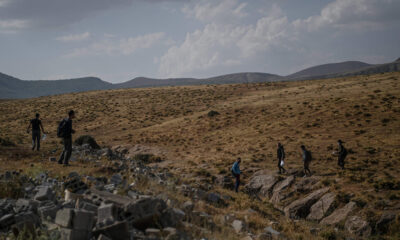
At least 17 Afghan migrants reportedly die of thirst near Iran border
Videos released by the group show people digging several graves at an unidentified location.
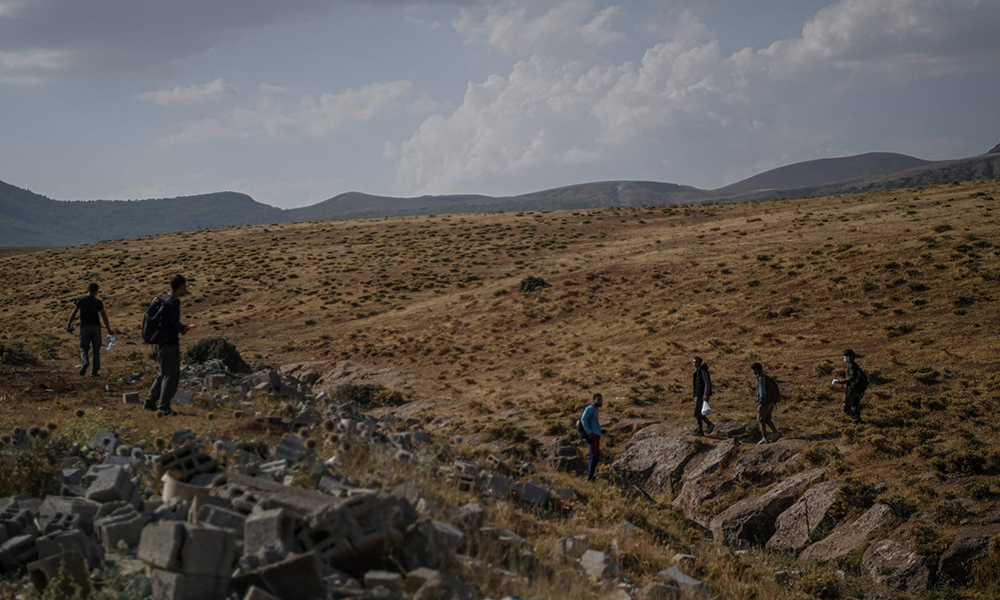
At least 17 Afghan migrants, including women and children, have reportedly died from severe thirst near Saravan in southeastern Iran, according to the human rights group HalVash.
The incident reportedly occurred on Thursday, September 10, in the Mak-Sukhteh area of Rutak, Saravan County. HalVash said the victims’ bodies were later transferred to a morgue in the nearby city of Khash.
Videos released by the group show people digging several graves at an unidentified location.
HalVash reported that five of the victims were members of a family from Afghanistan’s Baghlan province. They included a 45-year-old mother and her four daughters, aged 22, 18, 16 and 14. Relatives of the family live in Saravan, and a funeral prayer was expected to be held Sunday.
According to HalVash, at least six other victims were children under the age of 14.
Witnesses and relatives told the group that the migrants ran critically short of water during their journey and died of thirst. Some reportedly died within a short distance of one another.
A relative said the men travelling with the group separated from the women and children during the journey, leaving the women and children to continue without adequate access to water.
Local sources said the bodies were transferred to Khash because the Saravan morgue lacked sufficient capacity.
Four days after the incident, relatives were reportedly still working to arrange the transfer and burial of the victims.
HalVash cautioned that it could not independently verify the exact number of deaths or all details surrounding the incident. The identities of the remaining victims and the circumstances of their deaths were still under investigation.


Tahawol: Afghanistan at the center of UN discussions

Nabi reaches 2,500 T20I runs

Economic Commission approves 66 draft national standards

Saar: Afghanistan’s relations with regional countries discussed

Petition filed in Islamabad High Court against PMDC directive affecting Afghan students

Four mediators struggle to secure lasting Pakistan-Afghanistan ceasefire

Juma Khan Fateh surrenders to IEA forces in Badakhshan

Afghanistan’s trade diversification challenges Pakistan

Syria and Saudi Arabia condemn Kabul bombing, express solidarity with Afghanistan

Saudi energy group signs major Afghanistan deals covering gas exploration and pipeline plans
Tahawol: Afghanistan at the center of UN discussions
Saar: Afghanistan’s relations with regional countries discussed

Tahawol: Houthis’ return to regional power dynamics

Tahawol: Calls for U.S. engagement with Afghanistan

Saar: End of Chinese ambassador’s mission in Kabul
-

 Sport4 days ago
Omar Zawak, Toofan Herat secure victories in Afghanistan Champions League
-

 Sport2 days ago
Zadran calls on Afghan fans to rally behind team against India
-
 Latest News2 days ago
Khalilzad warns US risks losing influence in Afghanistan to China and Russia
-

 Latest News4 days ago
Kabul to host tripartite meeting on Afghan migrants’ problems
-

 Regional4 days ago
Saudis shut down oil pipeline as Houthis tighten grip on Red Sea shipping
-

 Latest News4 days ago
Pakistan court blocks expulsion of Afghan medical students
-
 Business2 days ago
EU and FAO launch €5m programme to strengthen Afghanistan’s agrifood sector
-
 World3 days ago
Houthi advance in Yemen puts U.S. in a new bind