
Latest News
Ghani explains three pillar approach to a better Afghanistan

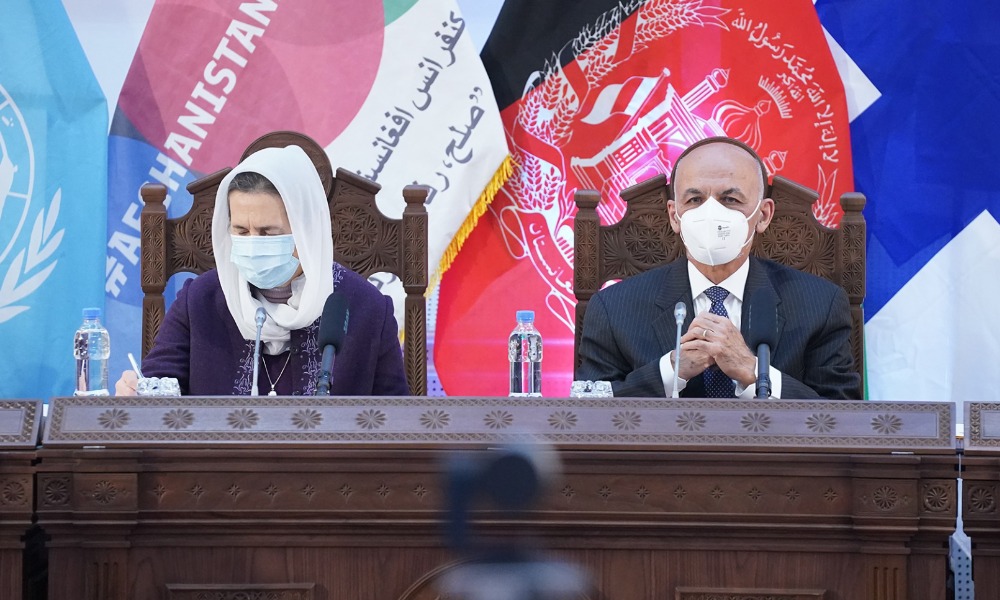
President Ashraf Ghani called for a moment of silence on Tuesday, while delivering his keynote remarks virtually at the Geneva Conference, for victims of recent attacks, including the Kabul University attack.
Geneva Conference 2020 has brought together about 70 foreign countries and stakeholders who will decide the funding assistance to Afghanistan for the years 2021 to 2024.
Addressing delegates Ghani said: “We, the Afghan people, government and the international community-share a vision of a sovereign, unified, democratic Afghanistan at peace with itself, the region and the world, capable of preserving and expanding the gains of the past two decades.”
Ghani said the country’s “three-pillar approach of peace, state and market-building presented in the second Afghan National Peace & Development Framework were validated & further enriched through a series of workshops with our partners in a spirit of genuine openness”.
Ghani said that we must build a strong regional consensus for a stable and peaceful Afghanistan.
“A sovereign, unified and democratic Afghanistan at peace…is a shared vision of all. This is not just the ultimate objective of our negotiations with the Taliban in Doha, but more importantly, it is also the ultimate goal of the work we do every day,” Ghani added.
Ghani says conditions of well-being need to be created and “rules of the game” also need to be created so that Afghanistan does not find itself “pulled backwards by vacuums of governance in which destructive forces can thrive such as corruption and unequal distribution of resources.
Ghani says “peace-making process will, inshallah, result in an agreement on paper. But peace-building is a multi-dimensional, cross-sectoral, long-term process that will allow us to actually implement the components of any peace agreement on paper.”
Ghani highlighted the need to establish rule of law and security and providing services that build citizen’s trust in government in order to sustain a peace agreement.
“In this way market-building and state-building are inextricably linked to peace-building”.
Ghani stated that regional connectivity is not only key to Afghanistan’s market and state-building agenda but also a key to the country’s peace-building agenda.
“We need to create a strong regional consensus for a stable and peaceful Afghanistan,” he said.
Ghani said Afghanistan is facing daunting challenges but the country needs to adjust to deal with these issues and also acknowledged that “a lot more needs to be done now with a lot less”.
Ghani also mentioned the Afghan security forces and their ability to safeguard the country.
“We have been able to retake most of the districts captured by the Taliban,” Ghani said.
He also stated that there are less than 10,000 foreign troops in the country currently. “International forces reduced from 150,000 in 2011, to below 10,000 today,” he said.
Ghani asked international partners to help Afghanistan “do more with less” in the years ahead and said key sectors “are low-hanging fruits for increasing efficiency and output relatively quickly by implementing cost-cutting measures and deflating bloated bureaucracies”.
Ghani said that Afghanistan is currently focusing on self-sufficiency measures in the education, urban development, energy and infrastructure sectors.
“The real test of the strength of our partnership and the virtue of our shared vision is if we are able to avoid an even greater tragedy of our shared history. We must not let history repeat her tragedies here in Afghanistan.”
UN chief Antonio Guterres delivered a pre-recorded message to the pledging conference and highlighted the achievements Afghanistan has made over the years despite the serious challenges the country has faced over the years including conflict and poverty.
Guterres said Afghans have suffered for too long and called for an immediate humanitarian ceasefire.
Guterres told delegates it’s important that the peace process is inclusive and urges Afghanistan’s neighbors to support the country in its quest for peace and prosperity.

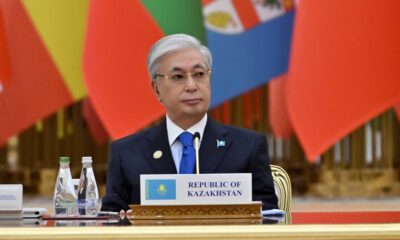

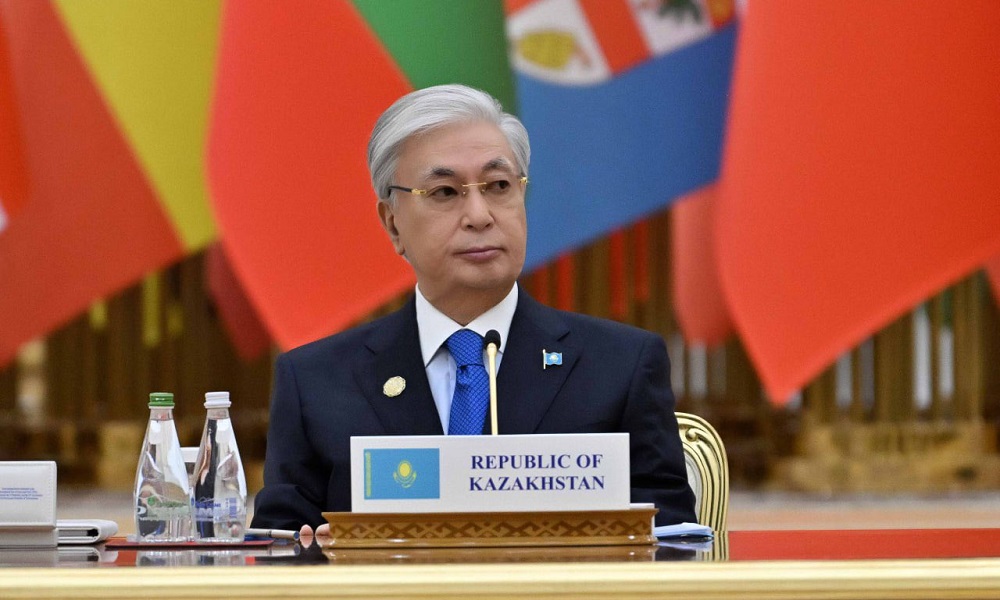
Kazakhstan’s President Kassym-Jomart Tokayev has emphasized the continuation of humanitarian assistance to Afghanistan, stating that the ongoing provision of such aid plays an important role in ensuring regional security.
Speaking at the international conference “Peace and Trust” in Ashgabat, the capital of Turkmenistan, Tokayev described addressing complex humanitarian challenges and the reconstruction of Afghanistan as a necessity.
“To ensure regional security, we consider it essential to continue providing assistance to Afghanistan, including by strengthening international efforts to address complex humanitarian issues and the reconstruction of this country. Kazakhstan remains committed to supporting the people of Afghanistan through humanitarian aid, educational projects, trade development, and food security initiatives,” he said.
Meanwhile, experts believe that sustainable improvement of the humanitarian situation in Afghanistan requires broad cooperation from the international community and support for the country’s economic development.
“Investment can be defined as one of the fundamental drivers of the economic cycle, and whenever Afghan traders do not take their money out of the country and instead invest domestically, it naturally leads to greater growth and dynamism in Afghanistan’s economy,” said Abdul Zahoor Modabber, an economic analyst.
As the humanitarian crisis in Afghanistan continues, reports by international relief organizations indicate that millions of citizens of the country are in urgent need of food, health, and livelihood assistance.
The reduction in funding for aid organizations, the impacts of climate change, and the return of migrants have increased concerns about a further deterioration of the humanitarian situation in the country.
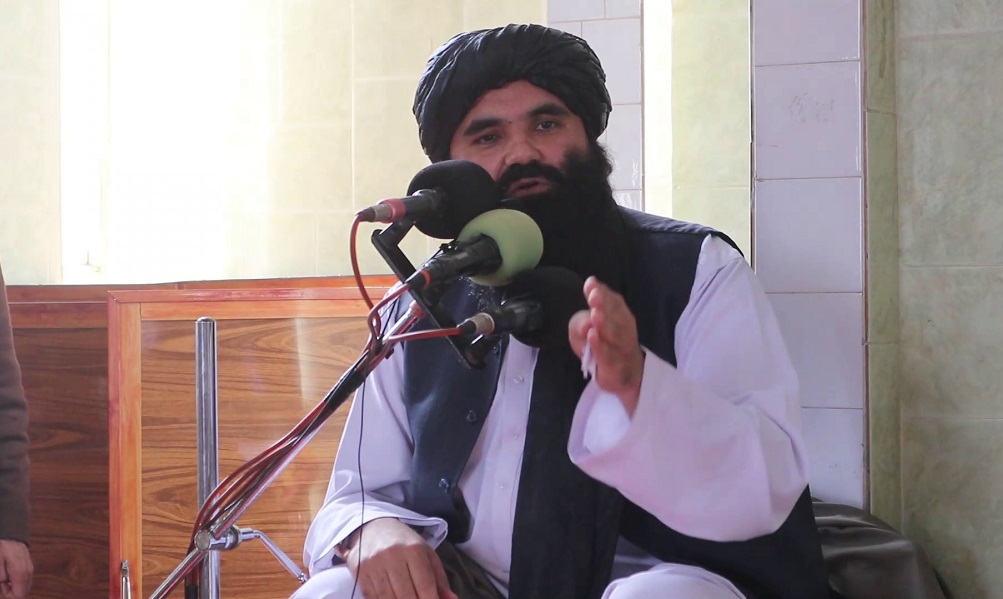
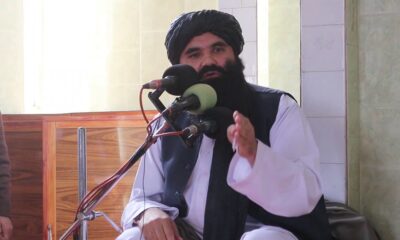
Khalifa Sirajuddin Haqqani, Minister of Interior of the Islamic Emirate of Afghanistan, said during a visit to Khost province on Friday that any government which rules through fear cannot be considered a true government.
“A government is one that is loved by its people, one that serves them with respect and compassion, and from whose behavior people learn ethics and sincerity,” he said.
Haqqani also stressed that Afghans who opposed the Islamic Emirate in the past should be tolerated and treated in a way that helps eliminate hostility and animosity, paving the way for national cohesion.


Continued aid to Afghanistan vital for regional security: Kazakh president

Islamic Emirate declines to attend Tehran meeting on Afghanistan

Sirajuddin Haqqani: A government that intimidates its people is not a true government

Afghanistan’s health minister likely to visit India next week

Top Pakistani, British officials discuss Afghan relocation

Pakistan will lose big market in both Afghanistan, Central Asia: Sarhadi

Afghanistan records $580m in fruit exports in six months

Tashkent: Central Asian leaders say regional stability hinges on Afghanistan

Afghan Abdalyan beat Sri Lanka A by 3 wickets in Rising Stars Asia Cup opener

Afghanistan U19 cricket team defeats India A U19

Saar: Calls to avoid using Afghan soil against nations

Tahawol: UNSC meeting outcome regarding Afghanistan discussed

Saar: Ongoing Kabul–Islamabad tensions discussed

Tahawol: Pakistan’s warning on Afghanistan reiterated

Saar: UN’s meeting on Afghanistan reviewed
-

 Sport4 days ago
ILT20: Desert Vipers edge Gulf Giants in historic super over thriller
-
 Latest News2 days ago
Muttaqi: Afghanistan’s progress requires both religious and modern education
-

 Regional4 days ago
Six Pakistani soldiers killed in TTP attack in Kurram District
-

 Business4 days ago
Trade bodies warn almost 11,000 Afghan transit containers stuck at Karachi port
-
 World4 days ago
Powerful 7.6 earthquake hits northern Japan, tsunami warnings issued
-

 Latest News3 days ago
Trump calls Afghanistan a ‘hellhole’ country as US expands immigration restrictions
-
 Sport5 days ago
Sorkh Poshan Khafi defeats Sarsabz Yashlar 4-0 in Afghanistan Champions League
-

 Sport3 days ago
Commanding wins for Arman FC and Sarsabz Yashlar in Afghanistan Champions League