
World
Gaza ceasefire uncertain, Israel vows to continue Rafah operation

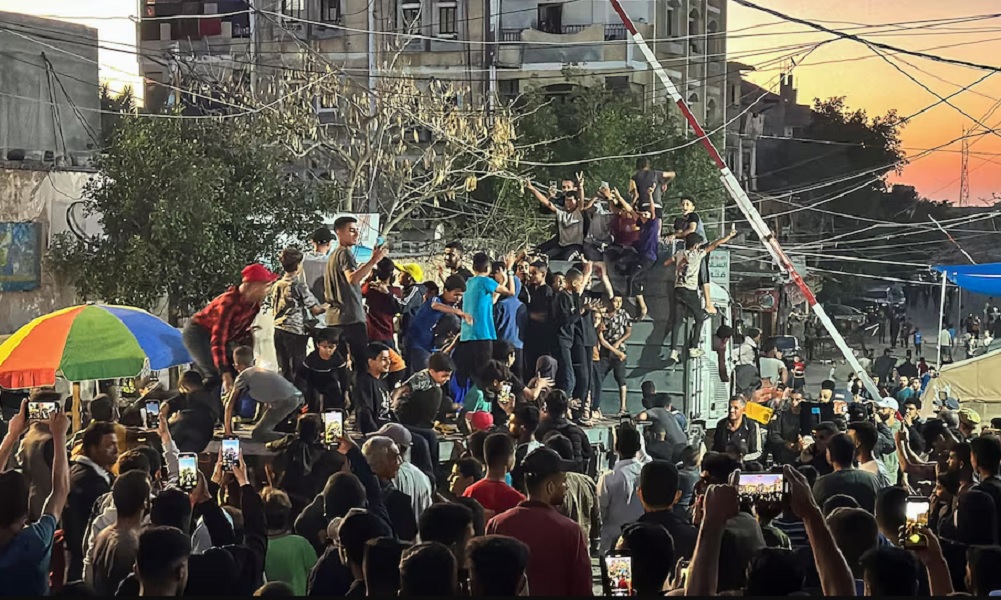
Hamas on Monday agreed to a Gaza ceasefire proposal from mediators, but Israel said the terms did not meet its demands and pressed ahead with strikes in Rafah while planning to continue negotiations on a deal.
The developments in the seven-month-old war came as Israeli forces struck Rafah on Gaza’s southern edge from the air and ground and ordered residents to leave parts of the city, which has been a refuge for more than a million displaced Palestinians.
Hamas said in a brief statement that its chief, Ismail Haniyeh, had informed Qatari and Egyptian mediators that the group accepted their proposal for a ceasefire.
Israeli Prime Minister Benjamin Netanyahu’s office said later that the truce proposal fell short of Israel’s demands but Israel would send a delegation to meet with negotiators to try to reach an agreement.
Qatar’s foreign ministry said its delegation will head to Cairo on Tuesday to resume indirect negotiations between Israel and Hamas.
In a statement, Netanyahu’s office added that his war cabinet approved continuing an operation in Rafah. Jordan’s Foreign Minister Ayman Safadi said on social media site X that Netanyahu was jeopardizing a ceasefire by bombing Rafah.
An Israeli official, speaking on condition of anonymity, said the proposal that Hamas approved was a watered-down version of an Egyptian offer and included elements that Israel could not accept.
“This would appear to be a ruse intended to make Israel look like the side refusing a deal,” said the Israeli official.
U.S. State Department spokesman Matthew Miller said Washington would discuss the Hamas response with its allies in the coming hours, and a deal was “absolutely achievable”.
More than 34,600 Palestinians have been killed in the conflict, according to Gaza health officials. The U.N. has said famine is imminent in the enclave.
The war began when Hamas attacked Israel on Oct. 7, killing about 1,200 people and abducting 252 others, of whom 133 are believed to remain in captivity in Gaza, according to Israeli tallies.
RAFAH HIT BY STRIKES
Any truce would be the first pause in fighting since a week-long ceasefire in November, during which Hamas freed around half of the hostages.
Since then, all efforts to reach a new truce have foundered over Hamas’ refusal to free more hostages without a promise of a permanent end to the conflict, and Israel’s insistence that it would discuss only a temporary pause.
Taher Al-Nono, a Hamas official and adviser to Haniyeh, told Reuters the proposal met the group’s demands for reconstruction efforts in Gaza, return of displaced Palestinians and a swap of Israeli hostages for Palestinian prisoners in Israeli jails.
The Hamas deputy chief in Gaza, Khalil Al-Hayya, told Al Jazeera television the proposal comprised three phases of six weeks each, with Israel to pull its troops out of Gaza in the second phase.
Earlier on Monday, Israel ordered the evacuation of parts of Rafah, the city on the Egyptian border that has served as the last sanctuary for around half of Gaza’s 2.3 million residents.
An Israeli strike on a house in Rafah killed five Palestinians, including a woman and a girl, medics said.
Israel believes that a significant number of Hamas fighters, along with potentially dozens of hostages, are in Rafah and has said that victory requires taking the key city.
Israel’s closest ally, the United States, has called on it not to assault Rafah, saying it must not do so without a full plan in place to protect civilians there, which has yet to be presented.
A separate U.S. official said that Washington is concerned about Israel’s latest strikes against Rafah but does not believe they represent a major military operation.
Israel said on Monday it was conducting limited operations on the eastern part of Rafah. Palestinian residents said there were massive air strikes.
“They have been firing since last night and today after the evacuation orders, the bombardment became more intense because they want to frighten us to leave,” Jaber Abu Nazly, a 40-year-old father of two, told Reuters via a chat app.
“Others are wondering whether there is any place safe in the whole of Gaza,” he added.
Instructed by Arabic text messages, phone calls and flyers to move to what the Israeli military called an “expanded humanitarian zone” around 20 km (12 miles) away, some Palestinian families began trundling away in chilly spring rain.
Some piled children and possessions onto donkey carts, while others left by pick-up or on foot through muddy streets.
As families dismantled tents and folded belongings, Abdullah Al-Najar said this was the fourth time he had been displaced since the fighting began seven months ago.
“God knows where we will go now. We have not decided yet.”
(Reuters)






Venezuelan opposition leader Maria Corina Machado on Friday promised political change after slipping out of the country in secret to collect the Nobel Peace Prize, as the shock waves intensified from the Trump administration’s seizure of an oil tanker earlier this week.
That escalation came on the heels of a large-scale U.S. military buildup in the southern Caribbean as President Donald Trump campaigns to oust Venezuelan leader Nicolas Maduro, pushing relations to their most volatile point in years, Reuters reported.
The effects could ripple through the region, with Venezuelan oil exports falling sharply and crisis-stricken Cuba, already straining to power its grid, at risk of losing supply.
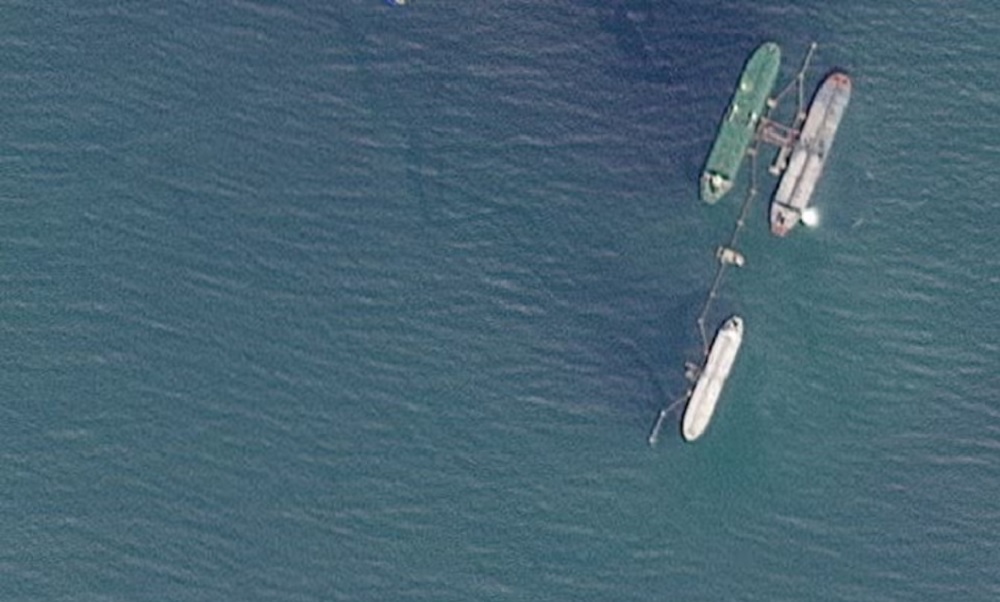
The U.S. seizure of the Skipper tanker off Venezuela’s coast on Wednesday marked the first U.S. capture of Venezuelan oil cargo since sanctions were imposed in 2019.
The vessel is now heading to Houston, where it will offload its cargo onto smaller ships, Reuters reported.
The Trump administration does not recognize Maduro, in power since 2013, as Venezuela’s legitimate leader.
Washington has signalled more seizures are planned as part of efforts to choke off sanctioned oil flows, and subsequently imposed new sanctions on three nephews of Maduro’s wife and six tankers linked to them.
The U.S. military presence in the Caribbean has grown as Trump in recent weeks has discussed potential military intervention in Venezuela, based on accusations that the country ships narcotics to the United States. The Venezuelan government has denied the accusations.
So far there have been over 20 U.S. military strikes in the Caribbean and Pacific against suspected drug vessels this year, in which nearly 90 people have been killed, alarming human rights advocates and stirring debate among U.S. lawmakers.
While many Republicans have backed the campaign, Democrats have questioned whether the campaign is illegal and urged more transparency, including the release of a full, unedited video, opens new tab of strikes on a suspected drug-trafficking boat.
MACHADO DEFIES BAN, URGES TRANSITION
Machado defied a decade-long travel ban and a period in hiding to travel to Oslo on Thursday, noting that she would soon bring the Nobel Peace Prize back home to Venezuela.
She said Maduro would leave power “whether there is a negotiated changeover or not,” vowed she is focused on a peaceful transition, and thanked Trump for his “decisive support.”
Machado is aligned with U.S. hardliners who accuse Maduro of ties to criminal networks – claims that U.S. intelligence has reportedly questioned.
When asked at a press conference in Oslo if she believed U.S. intervention was needed in Venezuela, Machado replied, “We are asking the world to help us.”
Venezuela condemned the tanker seizure as “blatant theft” and “international piracy,” saying it would file complaints with international bodies.
At the same time, Venezuelan lawmakers took a step to withdraw the country from the International Criminal Court, which is currently investigating alleged human rights abuses in the South American country.
Adding to the friction, the Venezuelan government announced the suspension of a U.S. migrant repatriation flight on Friday. A U.S. official countered that deportation flights would continue.
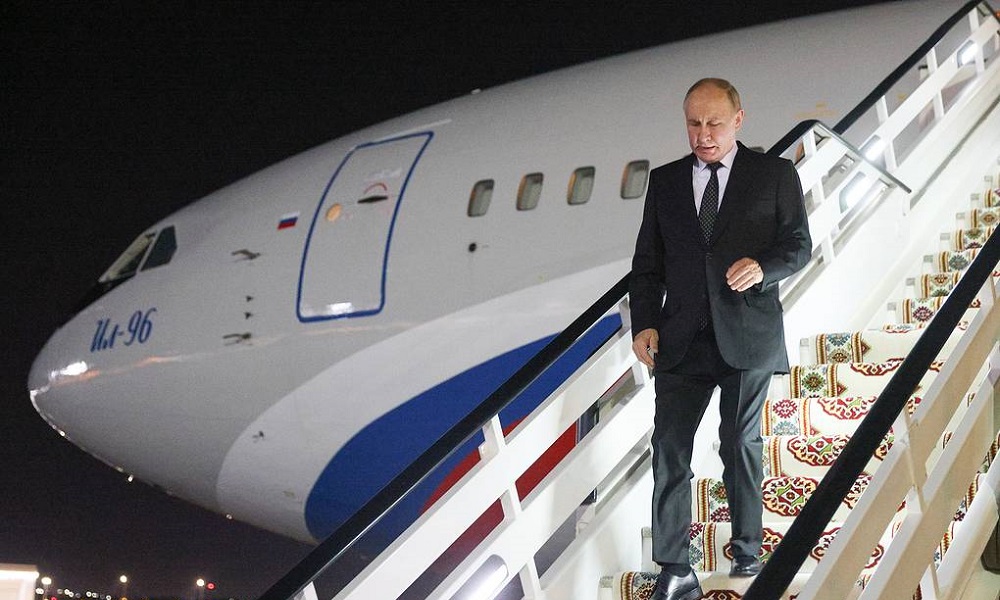
Russian President Vladimir Putin has arrived in Turkmenistan’s capital for a two-day visit.
According to TASS, the presidential aircraft of the Rossiya Special Flight Detachment landed near the presidential terminal of Ashgabat International Airport, commonly referred to as the “small bird” for its distinctive design.
During his visit, Putin will attend an international forum titled “Peace and Trust: Unity of Goals for a Sustainable Future” and hold several bilateral meetings.
The Kremlin has confirmed talks with Turkish President Recep Tayyip Erdogan, while the Iranian Embassy has announced that a meeting with President Masoud Pezeshkian is also planned.
The Ashgabat forum will also be attended by Turkmen President Serdar Berdymukhamedov, along with the presidents of Armenia, Iraq, Kazakhstan, Kyrgyzstan, Uzbekistan and Tajikistan, as well as the prime ministers of Azerbaijan, Hungary, Georgia and Pakistan.

President Donald Trump’s administration officially launched his “Trump Gold Card” visa program on Wednesday to provide a pathway, with a steep price, for non-U.S. citizens to get expedited permission to live in the United States.
The website Trumpcard.gov, complete with an “apply now” button, allows interested applicants to pay a $15,000 fee to the Department of Homeland Security for speedy processing, Reuters reported.
After going through a background check or vetting process, applicants must then make a “contribution” — the website also calls it a “gift” — of $1 million to get the visa, similar to a “Green Card,” which allows them to live and work in the United States.
“Basically it’s a Green Card, but much better. Much more powerful, a much stronger path,” Trump told reporters at the White House. “A path is a big deal. Have to be great people.”
Commerce Secretary Howard Lutnick said some 10,000 people have already signed up for the gold card during a pre-registration period and he expected many more to do so. “I would expect over time that we’d sell, you know, thousands of these cards and raise, you know, billions, billions of dollars,” Lutnick told Reuters in a brief interview.
Lutnick said the gold card program would bring people into the United States who would benefit the economy. He compared that to “average” Green Card holders, whom he said earned less money than average Americans and were more likely to be on or have family members on public assistance. He did not provide evidence for that assertion.
Trump’s administration has pursued a broad crackdown on immigration, deporting hundreds of thousands of people who were in the country illegally and also taking measures to discourage legal immigration.
The gold card program is the Trump version of a counter balance to that, designed to make money for the U.S. Treasury in the same way the president, a former New York businessman and reality television host, has said his tariff program has successfully done.
Lutnick noted that there was also a corporate version of the gold card that allowed companies to get expedited visas for employees they wanted to work in the United States, for a $2 million contribution per employee.


Continued aid to Afghanistan vital for regional security: Kazakh president

Islamic Emirate declines to attend Tehran meeting on Afghanistan

Sirajuddin Haqqani: A government that intimidates its people is not a true government

Afghanistan’s health minister likely to visit India next week

Top Pakistani, British officials discuss Afghan relocation

Pakistan will lose big market in both Afghanistan, Central Asia: Sarhadi

Afghanistan records $580m in fruit exports in six months

Tashkent: Central Asian leaders say regional stability hinges on Afghanistan

Afghan Abdalyan beat Sri Lanka A by 3 wickets in Rising Stars Asia Cup opener

Afghanistan U19 cricket team defeats India A U19

Saar: Calls to avoid using Afghan soil against nations

Tahawol: UNSC meeting outcome regarding Afghanistan discussed

Saar: Ongoing Kabul–Islamabad tensions discussed

Tahawol: Pakistan’s warning on Afghanistan reiterated

Saar: UN’s meeting on Afghanistan reviewed
-

 Sport4 days ago
ILT20: Desert Vipers edge Gulf Giants in historic super over thriller
-

 Latest News2 days ago
Muttaqi: Afghanistan’s progress requires both religious and modern education
-

 Regional4 days ago
Six Pakistani soldiers killed in TTP attack in Kurram District
-

 Business4 days ago
Trade bodies warn almost 11,000 Afghan transit containers stuck at Karachi port
-
 World4 days ago
Powerful 7.6 earthquake hits northern Japan, tsunami warnings issued
-
 Latest News3 days ago
Trump calls Afghanistan a ‘hellhole’ country as US expands immigration restrictions
-

 Sport5 days ago
Sorkh Poshan Khafi defeats Sarsabz Yashlar 4-0 in Afghanistan Champions League
-

 Sport3 days ago
Commanding wins for Arman FC and Sarsabz Yashlar in Afghanistan Champions League