
Latest News
Ex-Nato head says Putin wanted to join alliance early on in his rule

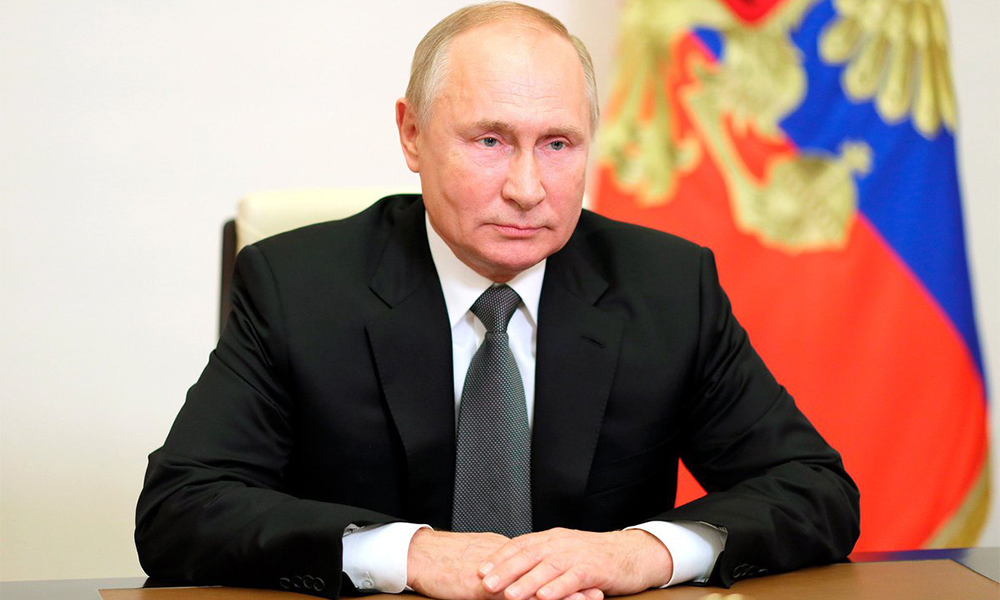
Vladimir Putin wanted Russia to join NATO but did not want his country to have to go through the usual application process and stand in line “with a lot of countries that don’t matter”, the former NATO chief, George Robertson said this week.
Robertson, a former Labour defence secretary who led Nato between 1999 and 2004, said Putin made it clear at their first meeting that he wanted Russia to be part of western Europe, the UK’s Guardian reported.
“They wanted to be part of that secure, stable, prosperous west that Russia was out of at the time,” he said.
Robertson recalled an early meeting with Putin, who became Russian president in 2000. “Putin said: ‘When are you going to invite us to join NATO?’ And [Robertson] said: ‘Well, we don’t invite people to join NATO, they apply to join NATO.’ And he said: ‘Well, we’re not standing in line with a lot of countries that don’t matter’.”
Robertson’s comments underscore how Putin’s worldview has evolved during his 21 years of unbroken rule of Russia, the Guardian reported.
Robertson also recalled how he became the first and only NATO secretary general to invoke NATO’s collective defence clause, known as article five, in the wake of the 9/11 attacks.
After the 9/11 attacks, many NATO allies joined the US in invading Afghanistan, with NATO taking over the mission command in 2003.
Robertson was however critical of the US’s chaotic withdrawal two months ago, but contended that the 20-year long mission of western military forces made a difference, despite the return of the Islamic Emirate of Afghanistan (IEA).




Latest News
EU pledges continued humanitarian aid for returning Afghans
The two officials discussed humanitarian assistance for returnees, their reintegration into society and measures to address their longer-term needs.
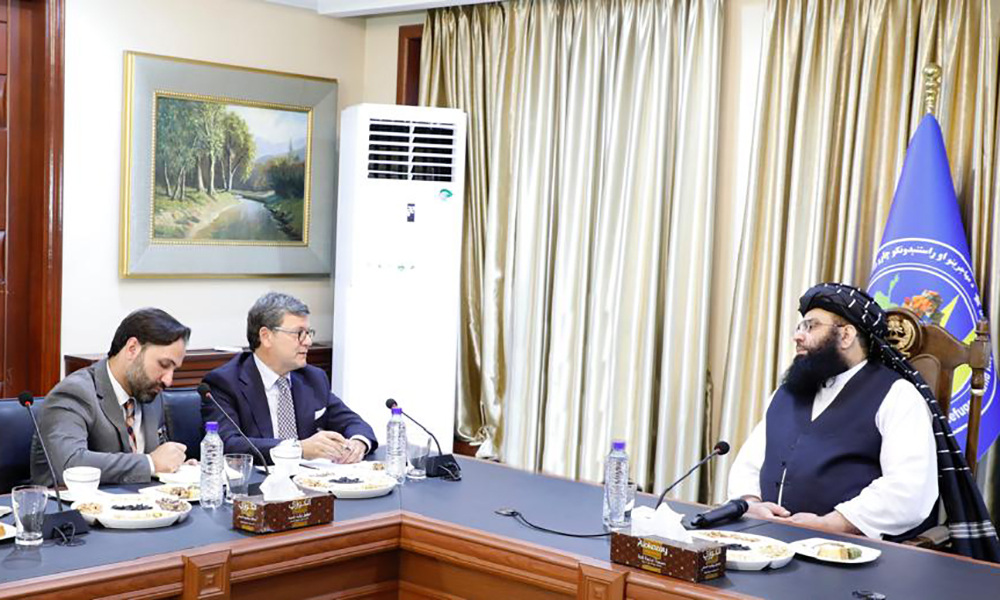
The European Union has reaffirmed its commitment to providing humanitarian assistance to returning Afghans, with a focus on reintegration, employment opportunities and sustainable solutions to the challenges they face.
The commitment was reiterated during a meeting between Afghanistan’s Minister of Refugees and Repatriation, Mawlawi Abdul Kabir, and the EU’s newly appointed representative to Afghanistan, Nicola Bellomo, according to a statement from the ministry.
The two officials discussed humanitarian assistance for returnees, their reintegration into society and measures to address their longer-term needs.
Bellomo praised the Islamic Emirate’s handling of the return of millions of Afghans, saying the process had been managed successfully despite the challenges posed by the return of approximately eight million people.
He said the EU would continue providing humanitarian assistance to Afghans and expressed its readiness to cooperate on creating employment opportunities and addressing the difficulties faced by returnees.
Abdul Kabir said the Islamic Emirate was working towards sustainable solutions for returning Afghans, noting that 80 townships had been designated to accommodate them.
He also called on the EU to support the construction of residential townships, stressing the need to provide adequate housing and assistance to vulnerable returnees, particularly women and those without family support.
Latest News
Mujahid accuses Pakistani military circles of sabotaging talks with Afghanistan
Mujahid reiterated that Afghanistan does not interfere in Pakistan’s internal affairs and would not allow its territory to be used to create insecurity in Pakistan or any other country.
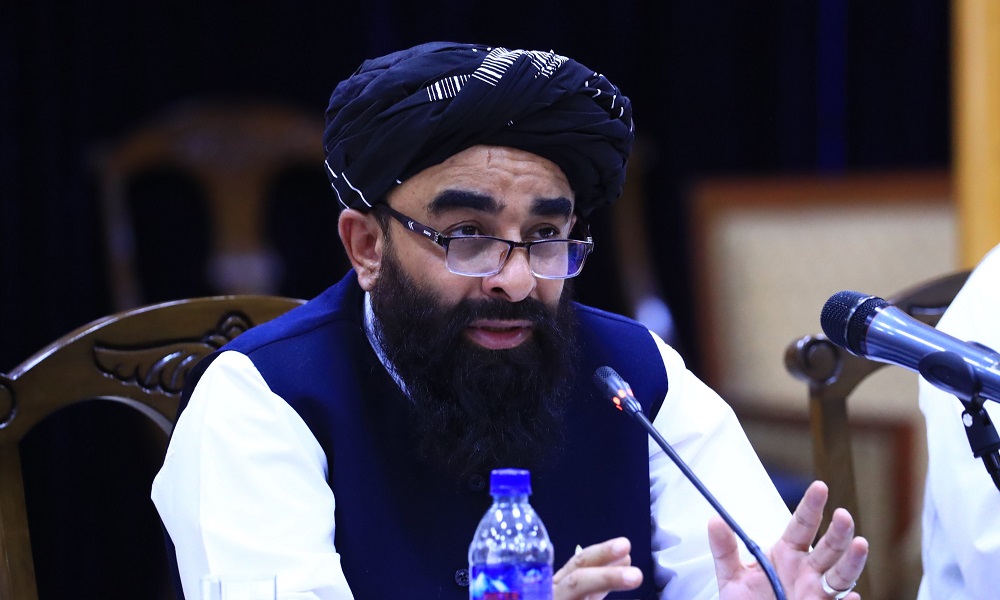
Zabihullah Mujahid, spokesperson for Afghanistan’s Islamic Emirate, has accused certain Pakistani military circles of repeatedly undermining negotiations and efforts to resolve differences between Kabul and Islamabad through dialogue.
Speaking to Ariana News in response to recent remarks by Pakistan’s prime minister, Mujahid said the Islamic Emirate did not blame Pakistan’s political leadership, which he claimed was willing to resolve bilateral differences. However, he alleged that certain military circles had repeatedly obstructed progress towards negotiations and mutual understanding.
Mujahid reiterated that Afghanistan does not interfere in Pakistan’s internal affairs and would not allow its territory to be used to create insecurity in Pakistan or any other country.
He said the Islamic Emirate had taken effective measures to prevent Afghan territory from being used for such purposes, but alleged that certain circles in Pakistan continued to pursue policies of insecurity and aggression, undermining diplomatic efforts.
Commenting on recent developments in Pakistan’s Khyber Pakhtunkhwa province, Mujahid said the situation there and Pakistan’s internal affairs were unrelated to Afghanistan.
He stressed that Afghanistan did not want insecurity in any country and urged the countries concerned to address their internal challenges through appropriate channels, reiterating that the Islamic Emirate would not interfere in their domestic affairs.
Latest News
UNESCO warns of risks to Afghanistan’s historic Minaret of Jam
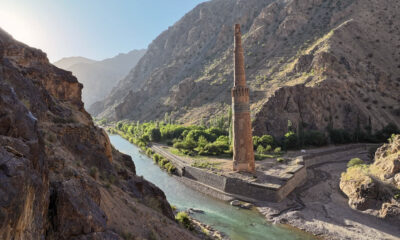
The Minaret of Jam is one of Afghanistan’s most important historical monuments and a remarkable example of medieval Islamic architecture.
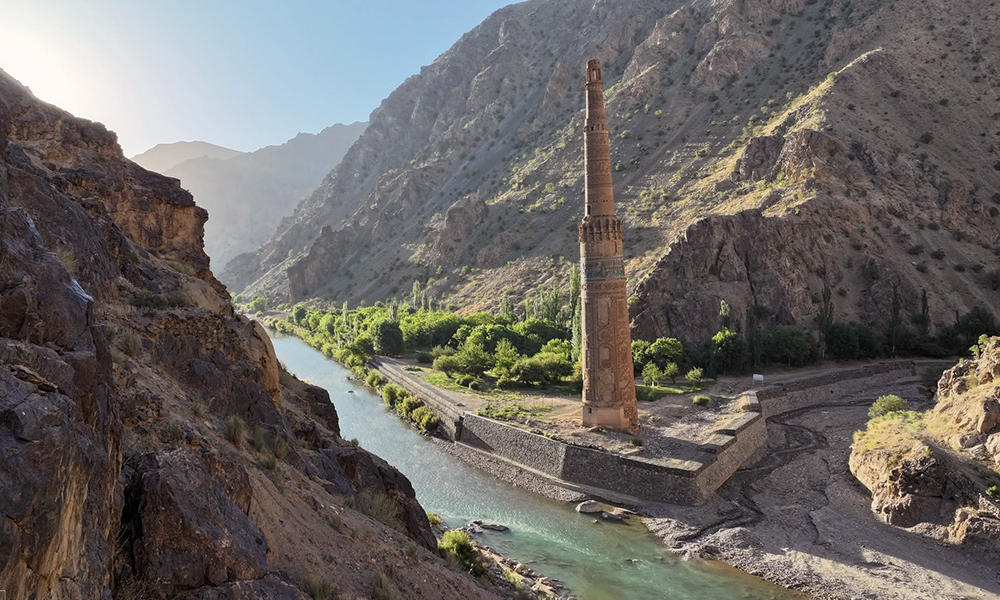
The UNESCO Kabul Office has warned that Afghanistan’s historic Minaret of Jam faces serious threats from natural hazards and conservation challenges, highlighting the need for continued efforts to protect the UNESCO World Heritage Site.
In a Facebook post, the office said UNESCO, with funding from the ALIPH Foundation, has made progress in monitoring the minaret’s condition, mitigating flood risks and supporting the local community.
Regular analysis of data collected through structural monitoring equipment allows specialists to assess the monument’s stability and inform long-term conservation plans, the office said.
The completion of a bridge in the area was also hailed as an important milestone, improving access for emergency response and providing local communities with safer and more reliable connections.
Meanwhile, the Aga Khan Foundation, with support from the ALIPH Foundation, is carrying out additional work to strengthen the minaret’s structural stability and ensure its long-term preservation.
UNESCO stressed that protecting the monument requires sustained commitment, technical expertise and international cooperation.
It said safeguarding the Minaret of Jam is essential to preserving an irreplaceable part of Afghanistan’s history and a shared cultural legacy for future generations.
The Minaret of Jam is one of Afghanistan’s most important historical monuments and a remarkable example of medieval Islamic architecture.
It stands in a remote valley in Ghor province, where the Hari Rud and Jam Rud rivers meet, surrounded by rugged mountains.
Built in the 12th century, the minaret is famous for its intricate brickwork, decorative inscriptions and geometric patterns. Rising approximately 65 metres, it is considered one of the finest surviving examples of Ghurid-era architecture and reflects the cultural and architectural achievements of the Ghurid dynasty, which ruled parts of present-day Afghanistan and the surrounding region.
The minaret was built around 1194 under the Ghurid sultan Ghiyath al-Din Muhammad. Its design and decoration influenced the development of Islamic architecture beyond Afghanistan, including the Qutb Minar in Delhi, India.
UNESCO added the Minaret of Jam to both its World Heritage List and its List of World Heritage in Danger in 2002.


EU pledges continued humanitarian aid for returning Afghans

Mujahid accuses Pakistani military circles of sabotaging talks with Afghanistan

▶️Pakistan deploys military to Peshawar after emergency rule declared

One dead in new attack on Saudi airport, a day after Houthi strike kills 13

UNESCO warns of risks to Afghanistan’s historic Minaret of Jam

EU and FAO launch €5m programme to strengthen Afghanistan’s agrifood sector

Cricket Bonanza: Afghanistan set for packed international schedule

Houthi advance in Yemen puts U.S. in a new bind

New warnings reignite debate over AI threat to humanity

UN warns of mounting humanitarian and human rights pressures in Afghanistan

Tahawol: EU appointing new envoy for Afghanistan

Saar: Pakistan’s political, security and economic crises

Saar: Ongoing expulsion of Afghan refugees from Iran and Pakistan discussed

Tahawol: CSTO meeting on Afghanistan reviewed

Saar: Guterres’s talks with Pakistani officials on Afghanistan discussed
-

 Regional3 days ago
Trump says US will not attack Iran before midterm elections in November
-
 Business5 days ago
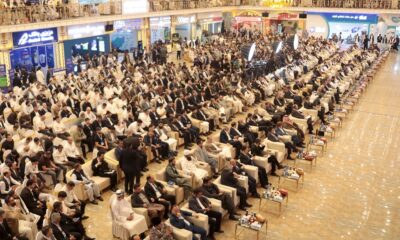
Baradar opens Fifth Imam Abu Hanifa International Exhibition in Kabul
-
 Business4 days ago
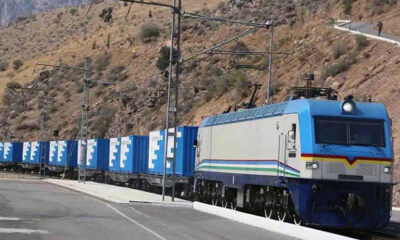
Russia-Afghanistan trade surges 150% in first seven months of 2026
-
 World4 days ago
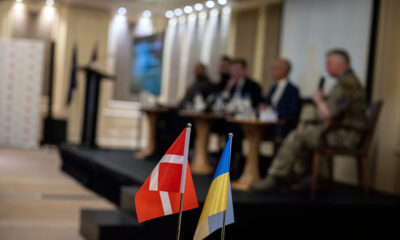
Denmark says Russia has conducted sabotage attacks against its defense firms
-
 World3 days ago
Witkoff, Kushner to meet Ukrainians for talks on the war, says US source
-
 Latest News2 days ago
Pakistan issues new directives for Afghan medical students and doctors
-

 Sport4 days ago
Arman FC defeat Istiqlal Kabul 3-2 in thrilling comeback
-
 Latest News2 days ago
Iranian lawmaker praises Afghanistan’s support, accuses Pakistan of ‘hypocrisy’