
Science & Technology
Europe agrees landmark AI regulation deal


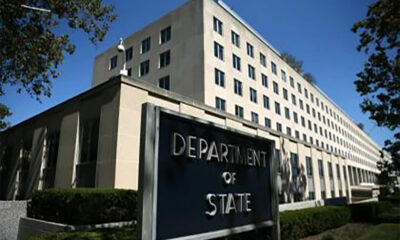
Europe on Friday reached a provisional deal on landmark European Union rules governing the use of artificial intelligence including governments’ use of AI in biometric surveillance and how to regulate AI systems such as ChatGPT.
With the political agreement, the EU moves toward becoming the first major world power to enact laws governing AI, Reuters reported.
Friday’s deal between EU countries and European Parliament members came after nearly 15 hours of negotiations that followed an almost 24-hour debate the previous day.
The two sides are set to hash out details in the coming days, which could change the shape of the final legislation.
“Europe has positioned itself as a pioneer, understanding the importance of its role as a global standard setter. This is yes, I believe, a historical day,” European Commissioner Thierry Breton told a press conference.
The accord requires foundation models such as ChatGPT and general purpose AI systems (GPAI) to comply with transparency obligations before they are put on the market.
These include drawing up technical documentation, complying with EU copyright law and disseminating detailed summaries about the content used for training.
Governments can only use real-time biometric surveillance in public spaces in cases of victims of certain crimes, prevention of genuine, present, or foreseeable threats, such as terrorist attacks, and searches for people suspected of the most serious crimes.
The agreement bans cognitive behavioural manipulation, the untargeted scrapping of facial images from the internet or CCTV footage, social scoring and biometric categorisation systems to infer political, religious, philosophical beliefs, sexual orientation and race.
Consumers would have the right to launch complaints and receive meaningful explanations while fines for violations would range from 7.5 million euros ($8.1 million) or 1.5% of turnover to 35 million euros or 7% of global turnover.







Science & Technology
Australia social media ban set to take effect, sparking a global crackdown
For the social media businesses, the implementation marks a new era of structural stagnation as user numbers flatline and time spent on platforms shrinks, studies show.
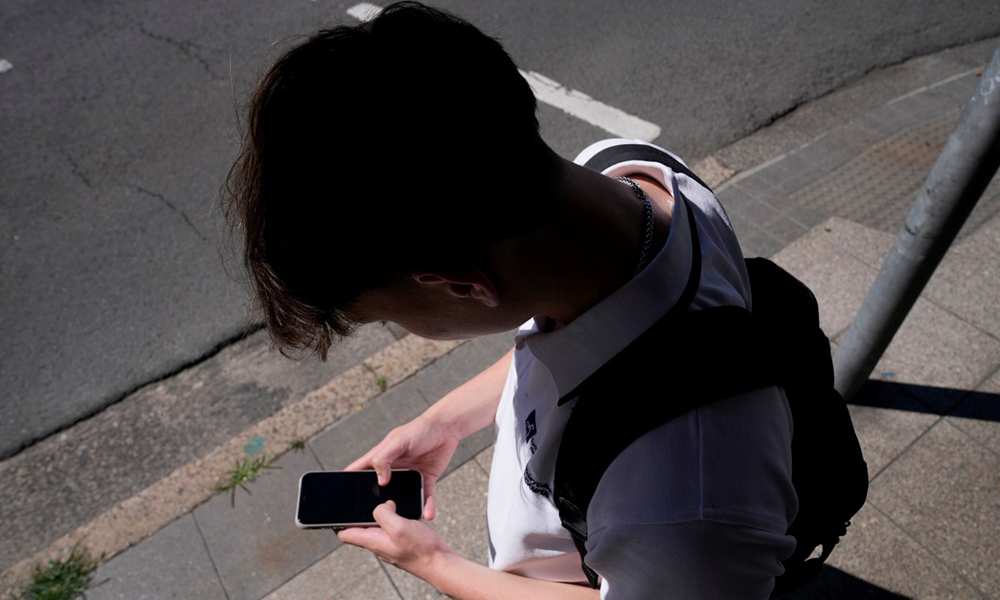
Australia is set to become the first country to implement a minimum age for social media use on Wednesday, with platforms like Instagram, TikTok and YouTube forced to block more than a million accounts, marking the beginning of an expected global wave of regulation.
From midnight, 10 of the biggest platforms will be required to block Australians aged under 16 or be fined up to A$49.5 million ($33 million), Reuters reported.
The law received harsh criticism from major technology companies and free speech advocates, but was praised by parents and child advocates.
The rollout closes out a year of speculation about whether a country can block children from using technology that is built into modern life. And it begins a live experiment that will be studied globally by lawmakers who want to intervene directly because they are frustrated by what they say is a tech industry that has been too slow to implement effective harm-minimisation efforts.
Governments from Denmark to Malaysia – and even some states in the U.S., where platforms are rolling back trust and safety features – say they plan similar steps, four years after a leak of internal Meta (META.O) documents showed the company knew its products contributed to body image problems and suicidal thoughts among teenagers while publicly denying the link existed.
“While Australia is the first to adopt such restrictions, it is unlikely to be the last,” said Tama Leaver, a professor of internet studies at Curtin University.
“Governments around the world are watching how the power of Big Tech was successfully taken on. The social media ban in Australia … is very much the canary in the coal mine.”
A spokesperson for the British government, which in July began forcing websites hosting pornographic content to block under-18 users, said it was “closely monitoring Australia’s approach to age restrictions.”
“When it comes to children’s safety, nothing is off the table,” they added.
Few will scrutinise the impact as closely as the Australians. The eSafety Commissioner, an Australian regulator tasked with enforcing the ban, hired Stanford University and 11 academics to analyse data on thousands of young Australians covered by the ban for at least two years.
Though the ban covers 10 platforms initially, including Alphabet’s (GOOGL.O), YouTube, Meta’s Instagram and TikTok, the government has said the list will change as new products appear and young users switch to alternatives.
Of the initial 10, all but Elon Musk’s X have said they will comply using age inference – guessing a person’s age from their online activity – or age estimation, which is usually based on a selfie. They might also check with uploaded identification documents or linked bank account details.
Musk has said the ban “seems like a backdoor way to control access to the internet by all Australians” and most platforms have complained that it violates people’s right to free speech.
For the social media businesses, the implementation marks a new era of structural stagnation as user numbers flatline and time spent on platforms shrinks, studies show.
Platforms say they don’t make much money showing advertisements to under-16s, but they add that the ban interrupts a pipeline of future users. Just before the ban took effect, 86% of Australians aged 8 to 15 used social media, the government said.
“The days of social media being seen as a platform for unbridled self-expression, I think, are coming to an end,” said Terry Flew, the co-director of University of Sydney’s Centre for AI, Trust and Governance.
Platforms responded to negative headlines and regulatory threats with measures like a minimum age of 13 and extra privacy features for teenagers, but “if that had been the structure of social media in the boom period, I don’t think we’d be having this debate,” he added.
Science & Technology
Ethiopian volcano erupts for first time in nearly 12,000 years
Ash from the eruption drifted across the region, spreading over Yemen, Oman, India, and parts of Pakistan.
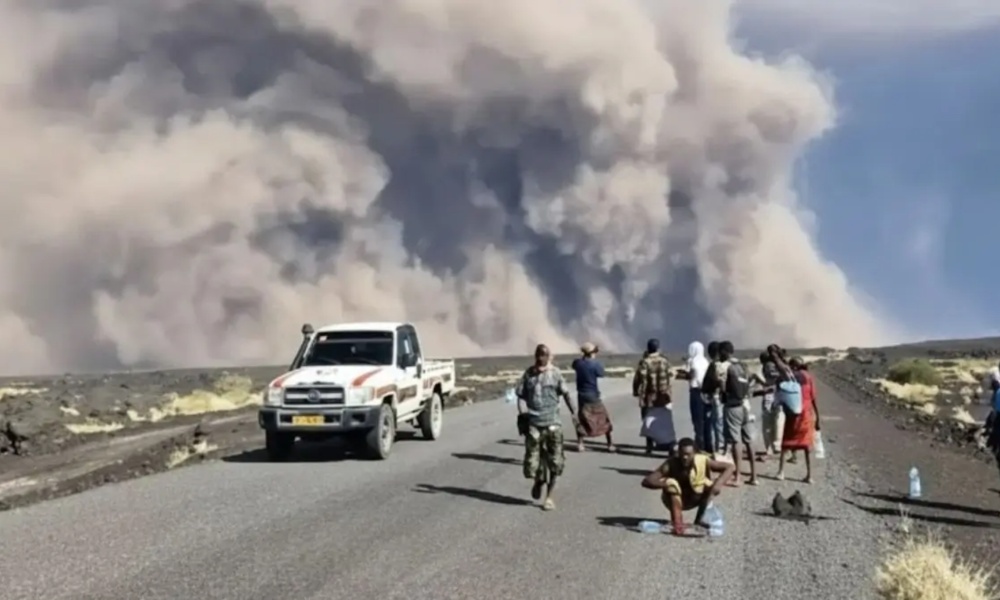
The Hayli Gubbi volcano in Ethiopia’s Afar region has erupted for the first time in almost 12,000 years, sending massive ash plumes soaring up to 14 kilometres into the atmosphere, according to the Toulouse Volcanic Ash Advisory Centre.
The eruption began on Sunday and lasted several hours. Hayli Gubbi, located around 800 kilometres northeast of Addis Ababa near the Eritrean border, sits within the geologically active Rift Valley, where two major tectonic plates meet. The volcano rises roughly 500 metres above the surrounding landscape.
Ash from the eruption drifted across the region, spreading over Yemen, Oman, India, and parts of Pakistan. Satellite imagery and social-media videos captured a towering column of white smoke billowing into the sky.
The Smithsonian Institution’s Global Volcanism Program notes that Hayli Gubbi has no recorded eruptions during the Holocene, the period dating back about 12,000 years to the end of the last Ice Age.
Volcanologist Simon Carn of Michigan Technological University also confirmed on Bluesky that the volcano had “no record of Holocene eruptions.”

A global outage at web-infrastructure firm Cloudflare began to ease on Tuesday afternoon after preventing people from accessing major internet platforms, including X and ChatGPT.
Cloudflare, whose network handles around a fifth of web traffic, said it started to investigate the internal service degradation around 6:40 a.m. ET. It has deployed a fix but some customers might still be impacted as it recovers service.
The incident marked the latest hit to major online services. An outage of Amazon’s cloud service last month caused global turmoil as thousands of popular websites and apps, including Snapchat, were inaccessible due to the disruption.
Cloudflare – whose shares were down about 5% in premarket trading – runs one of the world’s largest networks that helps websites and apps load faster and stay online by protecting them from traffic surges and cyberattacks.
The latest outage prevented users from accessing platforms such as Canva, X, and ChatGPT, prompting users to log outage reports with Downdetector.
Downdetector tracks outages by collating status reports from a number of sources. “We saw a spike in unusual traffic to one of Cloudflare’s services beginning at 11:20 UTC. That caused some traffic passing through Cloudflare’s network to experience errors,” the company said in an emailed statement.
“We are all hands on deck to make sure all traffic is served without errors.”
X and ChatGPT-creator OpenAI did not immediately respond to requests for comment. – REUTERS


Afghan Health Minister hails India visit as new chapter in bilateral ties

Power project signed to electrify 47,000 homes in Jawzjan

Ariana News to broadcast key AFC Champions League Two clash

Pakistani cleric condemns lifetime immunity for Army Chief as un-Islamic

Fazal Ur Rehman says Pakistan’s ‘attacks’ on Afghanistan are unjustifiable

Afghanistan economy under pressure as Pakistan shocks reshape trade flows

Gaza death toll tops 70,000, health ministry says

Iran rerouting more oil to China through Indonesia to dodge US sanctions

Islamic Emirate declines to attend Tehran meeting on Afghanistan

Cotton Industry in Crisis: Balkh farmers call for urgent action on exports

Tahawol: Return of 6.8 million Afghan refugees to IEA rule

Saar: Pakistan army chief’s allegations against Afghanistan

Tahawol: CSTO’s security concerns over Afghanistan

Saar: UNAMA’s activities in Afghanistan reviewed

Tahawol: Iran’s pledges to facilitate trade with Afghanistan discussed
-

 Latest News2 days ago
Afghanistan signs 30-year deal for marble mining in Daikundi
-

 Latest News4 days ago
Afghan border forces prevent illegal entry of hundreds into Iran
-

 Latest News3 days ago
Pakistan summons Afghan diplomat over deadly attack in North Waziristan
-

 Latest News3 days ago
Afghan health minister calls for medical cooperation between Kabul and New Delhi
-

 Latest News4 days ago
Japan allocates nearly $20 million in humanitarian aid for Afghanistan
-
 Latest News3 days ago
Karzai urges reopening of girls’ schools and universities for Afghanistan’s bright future
-
 Latest News2 days ago
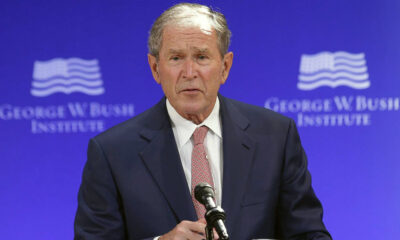
Bush Institute criticizes Trump administration’s Afghan immigration freeze
-

 Health4 days ago
India issues over 200 medical visas to Afghans in last four months