
Latest News
Dozens killed in widespread insurgent attacks over past few days

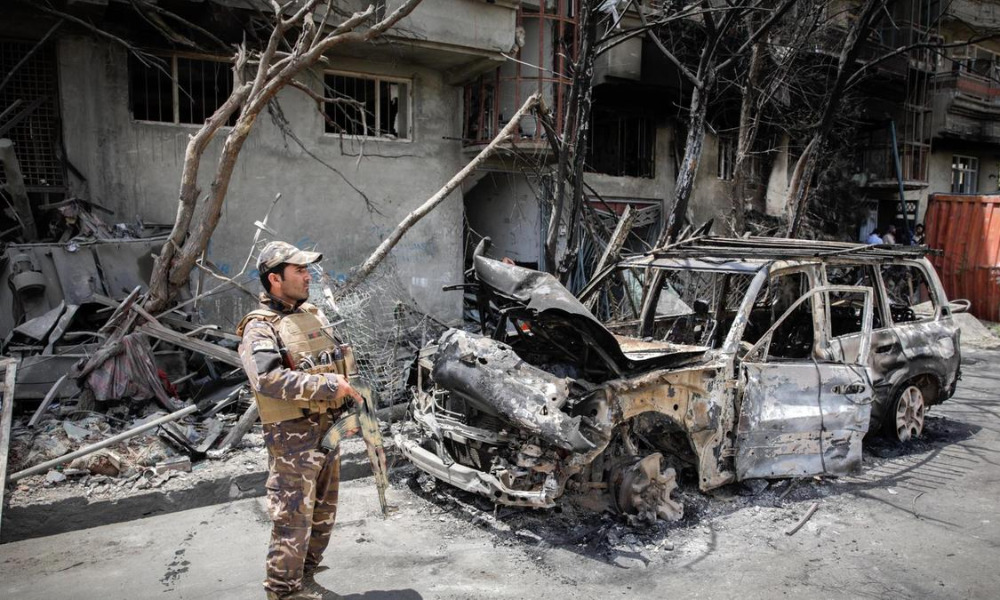
At least 20 people, including two district police chiefs, have been killed in Taliban attacks over the past few days – along with Monday’s killing of 13 Afghan security force members in Kunduz, reports indicate.
The uptick in attacks by the Taliban comes amid ongoing calls for a reduction in violence and the urgent need for peace talks.
Afghan leaders, including President Ashraf Ghani, have frequently called on the Taliban to reduce violence and agree to a ceasefire.
However, although the Taliban has refrained from launching attacks on US forces since the landmark Doha agreement in February, the group has continued its campaign of violence against Afghan security forces.
Despite a discussion on Friday between Ghani and Chairman of the High Council for National Reconciliation Abdullah Abdullah with US National Security Adviser Robert O’Brien, where he also called for urgent peace talks between the Afghan government and the Taliban, attacks by the Taliban have continued unabated.
Reports indicate that early Monday about 13 Afghan security forces members were killed in two Taliban attacks in the northern province of Kunduz. The Taliban reportedly also sustained casualties.
A Taliban spokesman, Zabihullah Mujahid, said on Twitter Monday that numerous security force members had been killed and wounded but he made no mention of Taliban casualties.
In another attack, on Sunday, three Taliban militants were killed while an Afghan Local Police (ALP) member and a civilian were wounded during a clash at a checkpoint.
Also on Sunday, two insurgents were killed and a police officer was wounded after the Taliban attacked a checkpoint in southern Helmand province.
On Saturday night, four Afghan police officers, including a district police chief, were killed in an IED explosion in eastern Paktika province.
In a similar attack, also on Saturday, in southern Zabul province, another police chief and a police officer were killed. Six other police officers were wounded.
The same night, three pro-government militiamen and three Taliban insurgents were killed in clashes at a checkpoint in Ghazni province.
Also on Saturday night, three civilians were killed and at least eight others wounded in a Taliban rocket attack in Kapisa province.
But in a statement issued on Sunday by the Taliban, the group stated the Afghan government had failed to uphold its end of the agreement and release all prisoners as agreed earlier this year.
Kabul, however, states it has already freed over 4,000 prisoners but that the remaining 600 are “too dangerous” to release.
The Taliban said in the statement: “The completion of the prisoner exchange process is one of the most fundamental issues of this [negotiation] process on top of which an end must also be put to violations which have seen an uptick in recent days.”
Meanwhile acting US ambassador to Kabul Ross Wilson said in a tweet on Sunday: “The Afghan people have made clear their impatience. Start intra-Afghan negotiations now so that discussions on a permanent and comprehensive ceasefire can begin.”




Latest News
Conflict with Pakistan deepens challenges for Afghan women, report finds
The findings underline the importance of sustained humanitarian engagement to address the evolving needs of communities affected by the conflict.
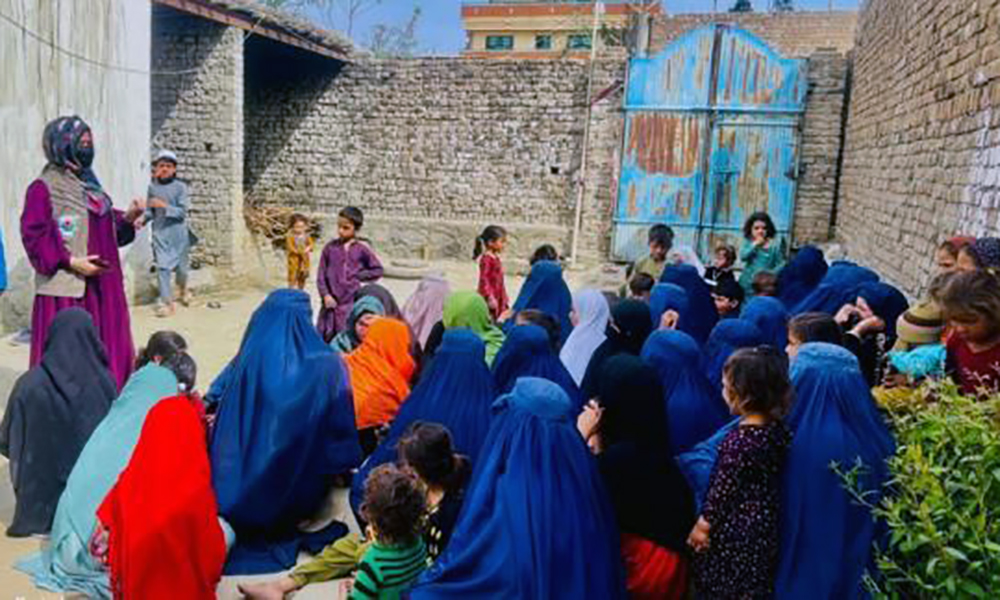
A new Gender Alert by humanitarian partners, including the United Nations Office for the Coordination of Humanitarian Affairs, highlights the growing impact of recent Afghanistan–Pakistan hostilities on women and girls across the country.
The report, developed by the Operational Gender Coordination Group with input from women’s organisations and aid workers, draws on field assessments conducted amid ongoing security constraints. It finds that cross-border airstrikes and clashes since late February have affected at least ten provinces, including Kabul, Khost and Nangarhar.
Women and girls account for more than half of those affected — part of an estimated 90,000 people impacted overall. Many families, including those previously displaced by the 2025 earthquake, have faced renewed displacement and economic strain.
Loss of income has emerged as a key concern, with many women reporting difficulties sustaining livelihoods due to insecurity and limited access to markets and supplies. Women also identified food, shelter and healthcare as priority needs, alongside concerns around safety and dignity.
Access to essential services has become more challenging in some areas. Assessments indicate that women face barriers to healthcare due to movement constraints, limited availability of female staff and logistical challenges. Humanitarian access is also uneven, with some communities reporting difficulties in receiving aid.
Food insecurity is increasing, with households adopting coping strategies such as reducing food intake. At the same time, concerns about safety have led many women to limit movement, affecting access to services, markets and daily activities.
The report also notes growing psychosocial stress, with women describing heightened anxiety and uncertainty amid the ongoing situation. Access to mental health support remains limited, particularly in affected and remote areas.
Humanitarian agencies are calling for continued support to ensure women and girls can access assistance, including targeted aid, improved service delivery and greater inclusion of women in response efforts.
The findings underline the importance of sustained humanitarian engagement to address the evolving needs of communities affected by the conflict.
International Sports
RCB, Gujarat Titans secure wins in Sunday IPL double-header
In the first match, Gujarat Titans defeated Lucknow Super Giants by seven wickets with eight balls to spare.

Two contrasting but equally compelling matches marked Sunday’s action in the Indian Premier League (IPL), with Gujarat Titans cruising to victory in the afternoon and Royal Challengers Bengaluru prevailing in a high-scoring evening clash.
In the first match, Gujarat Titans defeated Lucknow Super Giants by seven wickets with eight balls to spare. Lucknow posted 164/8 in their 20 overs, but Gujarat chased down the target comfortably, finishing on 165/3 in 18.4 overs.
Pacer Prasidh Krishna delivered a match-winning spell, taking 4/28 and earning Player of the Match honours. With the bat, captain Shubman Gill led from the front with 56 off 40 balls, while Jos Buttler added a quickfire 60, guiding Gujarat to a comfortable win.
The evening encounter at Mumbai’s Wankhede Stadium saw Royal Challengers Bengaluru defeat Mumbai Indians by 18 runs in a run-fest. Bengaluru posted a formidable 240/4 in their 20 overs, powered by a blistering 78 from Phil Salt and a half-century from captain Rajat Patidar.
Mumbai Indians mounted a strong chase, finishing on 222/5, with Sherfane Rutherford top-scoring with 71 off 31 balls. However, the target proved too steep as Bengaluru held their nerve to secure victory.
The results continue to shape an increasingly competitive early phase of the IPL season, with teams beginning to build momentum in the standings.
Monday’s match
Attention now turns to Monday’s fixture, where Sunrisers Hyderabad face Rajasthan Royals. Both sides will be aiming to strengthen their positions, with key players expected to play decisive roles in what promises to be another closely fought contest.
All IPL matches are being broadcast live and exclusively on Ariana Television Network (ATN) across Afghanistan.
Latest News
China establishes new Xinjiang county near sensitive border region
The county will fall under the administration of Kashgar Prefecture, a historic hub that has long served as a gateway between China and Central and South Asia.
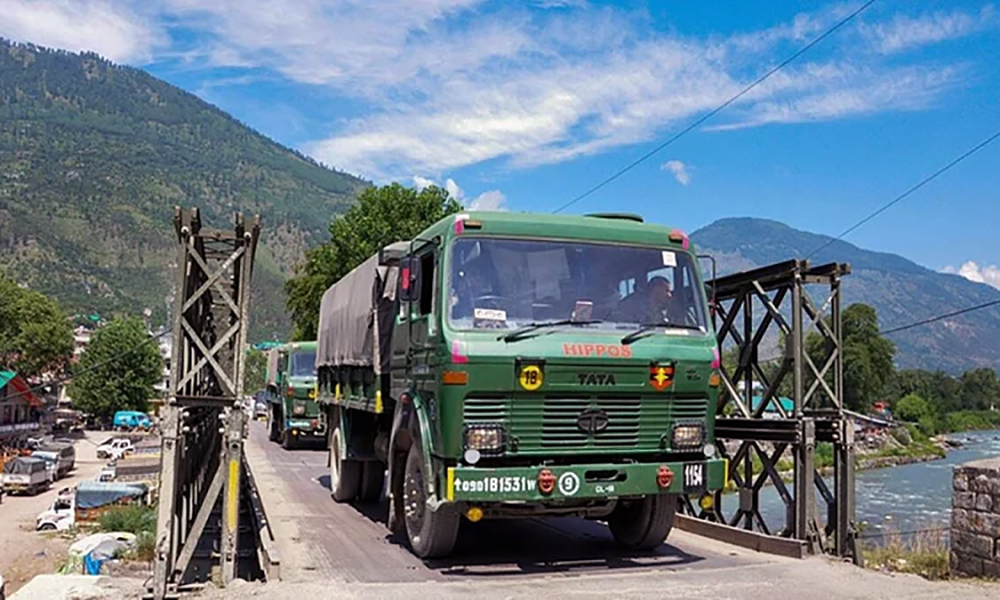
China has created a new county in its far-western Xinjiang Uyghur Autonomous Region, close to the borders with Afghanistan and Pakistan-administered Kashmir, in a move seen as reinforcing control over a strategically sensitive frontier.
The county, named Cenling, lies near the Karakoram Mountains and in proximity to the narrow Wakhan Corridor — a remote strip of Afghan territory that separates Tajikistan from Pakistan-administered Kashmir and links directly to China’s western border.
Authorities in Xinjiang announced the formation of the new administrative unit on March 26, though specific details about its boundaries and subdivisions have not been made public.
The county will fall under the administration of Kashgar Prefecture, a historic hub that has long served as a gateway between China and Central and South Asia.
The move marks the third new county established in Xinjiang in just over a year, following the creation of Hean and Hekang. Those earlier developments drew objections from India, which said parts of the jurisdictions overlap with its claimed territory in Ladakh, including areas of the disputed Aksai Chin.
Analysts say the creation of Cenling reflects Beijing’s growing emphasis on strengthening governance and security in its border regions. The area’s proximity to the Wakhan Corridor has long been viewed as strategically significant, particularly amid Chinese concerns about cross-border movement of militants.
The corridor has historically been seen as a potential route for members of the East Turkestan Islamic Movement, which China accuses of seeking to carry out attacks in Xinjiang.
Experts note that expanding administrative structures in frontier areas can help Beijing tighten oversight, improve local governance, and reinforce stability in regions that have experienced ethnic tensions and security challenges.
Kashgar also plays a key role in China’s regional connectivity ambitions, serving as a starting point for the China-Pakistan Economic Corridor, a multi-billion-dollar infrastructure network linking western China to the Arabian Sea through Pakistan-administered territory.


Conflict with Pakistan deepens challenges for Afghan women, report finds

RCB, Gujarat Titans secure wins in Sunday IPL double-header

Afghanistan–Uzbekistan forum secures $520 million in trade and investment deals

China establishes new Xinjiang county near sensitive border region

US military says it will start blockade of all ships going to and from Iran on Monday

IEA Supreme Leader issues Eid-ul-Fitr message urging unity and support for Islamic system

IEA supreme leader orders replacement of foreign terminology in official documents

Turkmenistan, Afghanistan discuss steps to speed up land acquisition for TAPI pipeline

IPL 2026 kicks off in under two weeks; Afghan players set to shine

Afghanistan hosts inaugural Afghanistan–Central Asia Consultative Dialogue to strengthen regional cooperation

Tahawol: Failure of US–Iran talks in Islamabad discussed

Saar: Iran–US talks in Islamabad end inconclusive

Tahawol: Historic US-Iran talks in Pakistan discussed

Saar: Talks between Iran and US in Pakistan discussed

Tawsia: New transit route with Tatarstan, MoU with Uzbekistan discussed
-

 Business3 days ago
Etihad Airways to expand Kabul–Abu Dhabi flights to daily service amid surging demand
-

 International Sports4 days ago
IPL 2026: Gujarat Titans edge Delhi Capitals in last-ball thriller
-

 International Sports4 days ago
FIFA appoints record number of match officials for 2026 World Cup
-
 Latest News4 days ago
US explores third-country resettlement for stranded Afghan allies in Qatar
-

 Regional4 days ago
Israel prepares for long conflict despite US–Iran ceasefire efforts
-

 Business4 days ago
Afghanistan faces economic strains following a ‘series of shocks’ last year
-

 Latest News3 days ago
UK backs Afghanistan–Pakistan talks, calls dialogue key to lasting peace
-
 Sport4 days ago
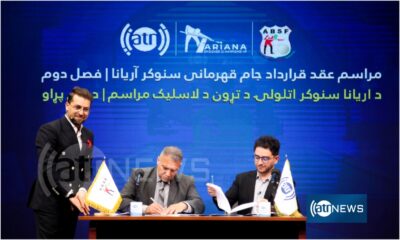
ATN seals Ariana Snooker Championship deal for five seasons