
Regional
Death toll in Karachi’s Gul Plaza fire rises to 27, dozens still missing

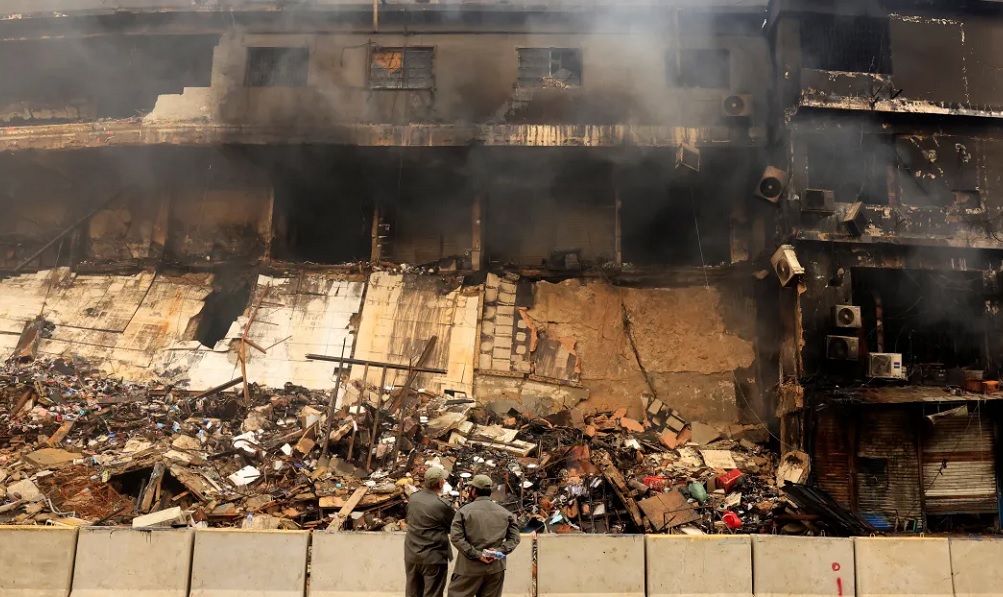
The death toll from a devastating fire at Karachi’s Gul Plaza shopping mall climbed to 27 on Tuesday as rescue teams continued search and clearance operations inside the severely damaged building, with more than 80 people still reported missing.
Police surgeon Dr Summaiya Syed told local media that 27 bodies have so far been taken to the Civil Hospital Karachi. She said DNA samples from around 50 families of missing persons have been collected for profiling and cross-matching to help identify victims.
The blaze, described as Karachi’s largest fire in more than a decade, broke out late Saturday at Gul Plaza, a sprawling multi-storey commercial complex housing around 1,200 shops in the city’s historic centre. Firefighters battled the inferno for over 24 hours before bringing it under control.
According to Syed, the list of missing persons currently stands at 81, though some names were duplicated, with 74 individuals confirmed as missing. She said samples have been taken from 14 bodies so far, with the identification of seven victims completed. DNA samples from both the bodies and relatives have been sent to the Sindh Forensic DNA Laboratory, while further testing will be conducted at the International Centre for Chemical and Biological Sciences at the University of Karachi.
Separately, Karachi South Deputy Commissioner Javed Nabi Khoso said rescue teams have cleared the ground and first floors of the building. He added that operations were ongoing on the upper levels, with teams attempting to access the second and third floors by cutting through metal grills.
Sindh Governor Kamran Tessori, speaking to a delegation of traders affected by the fire, proposed relocating them to a nearby parking plaza that he said was currently lying vacant. “We must learn from this tragedy,” the governor said, adding that the construction of unsafe commercial buildings in the city must be halted.
The incident also drew attention in parliament, where Pakistan Peoples Party lawmaker Shehla Raza acknowledged serious management failures at the site. She told the National Assembly that 24 of the mall’s 26 gates were closed at the time of the fire, complicating evacuation and rescue efforts. Raza also outlined the building’s history, noting that Gul Plaza was constructed in 1980 and later modified to add shops in parking areas and corridors.
Meanwhile, Muttahida Qaumi Movement-Pakistan (MQM-P) legislator Farooq Sattar called for the incident to be declared a national tragedy and urged the formation of an investigation committee. He also demanded the revival of the Department of Civil Defence and greater priority for Karachi in national policies.
Search and identification efforts remain ongoing as authorities continue to assess the full scale of the tragedy.



Regional
IRGC intelligence chief killed as wave of strikes continues against Iran’s leadership
The killings come against the backdrop of a rapidly intensifying conflict that began with large-scale strikes in late February and has since expanded across multiple fronts.
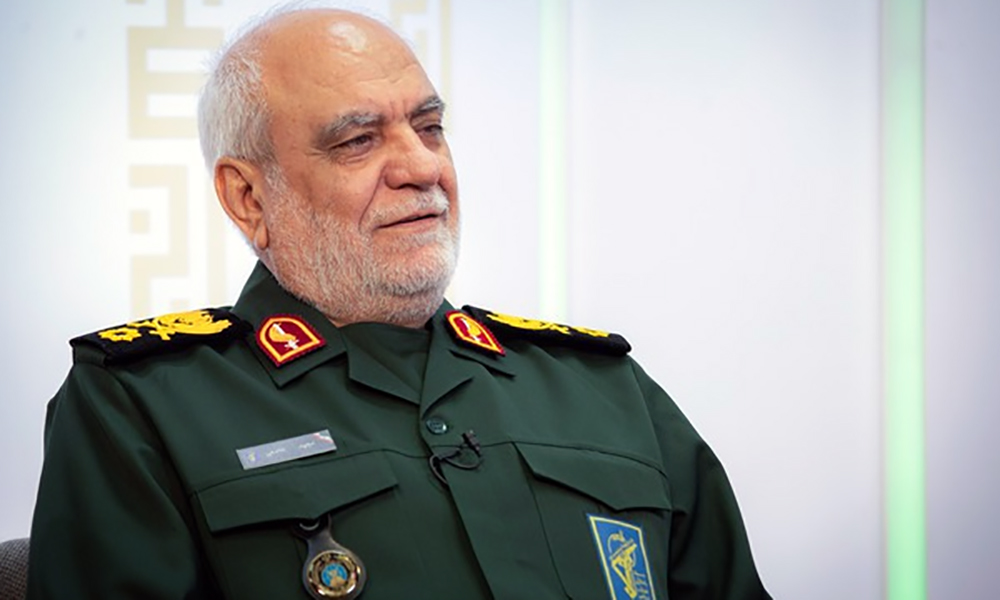
Iran has confirmed the death of Major General Majid Khademi, head of intelligence for the Islamic Revolutionary Guard Corps, in what analysts describe as the latest in a series of high-level killings targeting the country’s security leadership.
State media reported Khademi’s death on April 6 but did not immediately provide details on the circumstances. However, regional and Western sources say he was killed in a targeted strike, underscoring an intensifying campaign against senior Iranian officials amid escalating tensions in the Middle East.
Khademi had only recently taken up the role, replacing his predecessor Mohammad Kazemi, who was himself killed in a similar strike in 2025. The back-to-back deaths of intelligence chiefs highlight what observers see as a sustained effort to weaken Iran’s internal security and command structures.
Series of senior figures killed
Khademi’s killing comes amid a broader wave of assassinations and airstrikes that have removed several high-ranking Iranian figures in recent months.
Among those reported killed:
Ali Larijani, a senior political figure and former head of the Supreme National Security Council, reportedly died in an airstrike earlier this year; Gholamreza Soleimani, a key figure in Iran’s paramilitary Basij forces, was also reported killed in targeted operations; several other commanders linked to the IRGC and its external arm, the Quds Force, have been killed in strikes both inside Iran and across the region.
The killings come against the backdrop of a rapidly intensifying conflict that began with large-scale strikes in late February and has since expanded across multiple fronts. Military exchanges, including missile and drone attacks, have raised fears of a broader regional war.
Analysts say the apparent strategy of targeting senior leadership is aimed at disrupting Iran’s ability to coordinate military and intelligence operations. However, they warn it could also provoke further retaliation and deepen instability across an already volatile region.
Leadership strain and uncertainty
The loss of multiple senior figures in a short period has raised concerns about continuity within Iran’s leadership, particularly within the IRGC, which plays a central role in the country’s security and political system.
While Iranian authorities have moved quickly to appoint replacements, experts say repeated losses at the top level could affect decision-making and operational effectiveness, even as hardline factions appear to be consolidating influence.
For now, the killing of Khademi underscores the intensity of the ongoing conflict and highlights the growing risks facing Iran’s leadership, as the confrontation shows little sign of easing.
Regional
Iran claims it shot down US C-130 support aircraft in Isfahan
State-run Press TV shared images on Telegram purportedly showing wreckage from the downed plane.
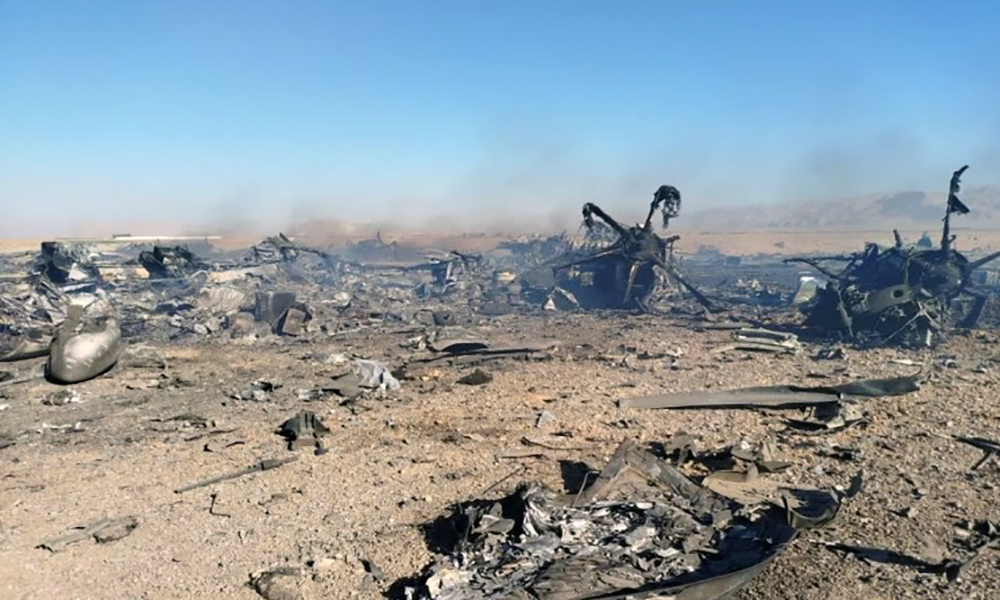
Iran on Sunday claimed that it successfully shot down a US C-130 support aircraft in the southern region of Isfahan. According to the semi-official Tasnim News Agency, the plane was destroyed “by heavy fire from a police special forces unit.”
The Islamic Revolutionary Guard Corps (IRGC) stated in a report carried by the state news agency IRNA that “joint operations involving the Aerospace Force, ground units, popular and Basij forces, law enforcement, and the Army successfully destroyed the enemy aircraft.”
State-run Press TV shared images on Telegram purportedly showing wreckage from the downed plane.
Some initial reports circulating on US social media claimed that, while rescuing the second crew member of an F-15 fighter jet previously downed over Iran, US forces may have destroyed their own plane to prevent it from falling into Iranian hands.
No official response has yet been provided by the United States regarding the Iranian claims.
The incident comes amid escalating regional tensions following the US and Israel’s joint offensive on Iran on February 28, which has resulted in more than 1,340 fatalities, including then-Supreme Leader Ali Khamenei.
In retaliation, Iran has launched drone and missile strikes targeting Israel, as well as US-affiliated locations in Jordan, Iraq, and Gulf countries. Tehran has also restricted the movement of ships through the strategic Strait of Hormuz.
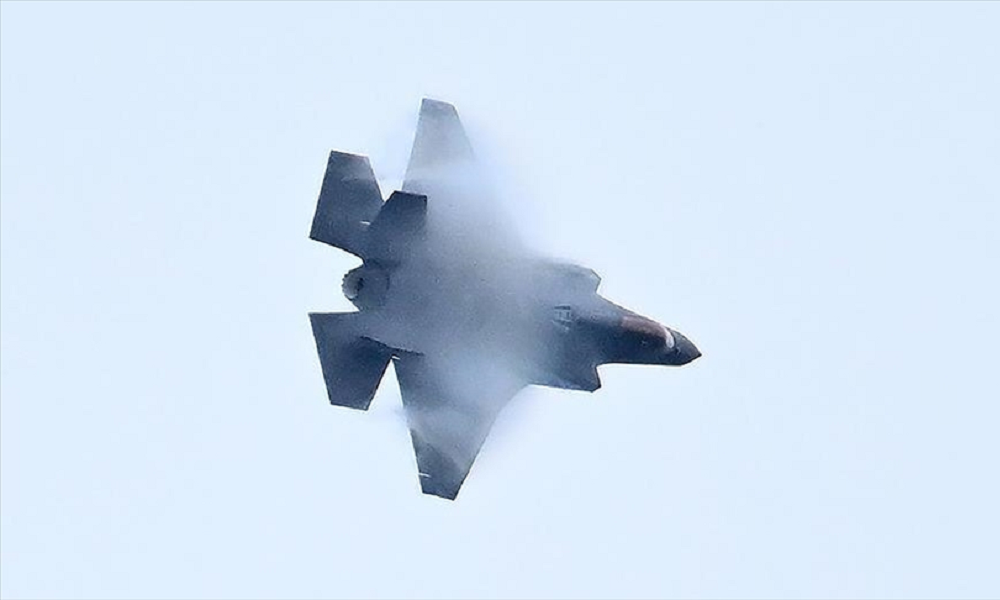
Iran’s Islamic Revolutionary Guards Corps (IRGC) claimed on Friday that it shot down a US F-35 fighter jet in central parts of the country, Iranian media reported.
Due to the destruction of the aircraft, the fate of the pilot remains unknown, the semi-official Tasnim News Agency reported, citing a statement by the IRGC.
This marks the second time Iran claimed it shot down a US F-35 amid the ongoing escalation since Feb. 28.
The US has not responded to the report as yet.
Iran had previously announced on March 19 that it had shot down a US F-35, a claim rejected by Washington.
Tehran also claimed on Thursday to have downed an Israeli F-16 jet.
Tensions in the region have remained high following a wave of US and Israeli airstrikes launched on February 28. Iranian sources say the strikes have resulted in more than 1,300 deaths, including senior leadership figures.
In response, Iran has carried out drone and missile attacks targeting Israel as well as locations in Jordan, Iraq, and several Gulf states hosting US military facilities. The ongoing exchanges have led to casualties, infrastructure damage, and disruptions to regional air traffic and global markets.


Millions of Afghans continue to rely on humanitarian health services

Karzai calls on UN to condemn Pakistan’s attacks on Afghan territory

Afghanistan, Uzbekistan sign $400 million trade deals in push to deepen ties

IPL 2026: Rain scuppers KKR vs PBKS match

Fragile progress as US–Iran tensions shift toward negotiations, says Khalilzad

IEA Supreme Leader issues Eid-ul-Fitr message urging unity and support for Islamic system

14 Pakistani soldiers killed after military post falls along Durand line: MoD

Afghan airstrikes target Pakistani military sites in retaliation for air attacks

Turkmenistan, Afghanistan discuss steps to speed up land acquisition for TAPI pipeline

IPL 2026 kicks off in under two weeks; Afghan players set to shine

Tahawol: Continuation of Middle East crisis discussed

Saar: Ongoing Kabul-Islamabad talks in China discussed

Tawsia: This week’s key economic developments in Afghanistan discussed

Tahawol: Start of talks between Kabul-Islamabad in China discussed

Saar: Ongoing US and Israeli attacks on Iran discussed
-
 Latest News2 days ago
IEA supreme leader orders replacement of foreign terminology in official documents
-
 Latest News2 days ago
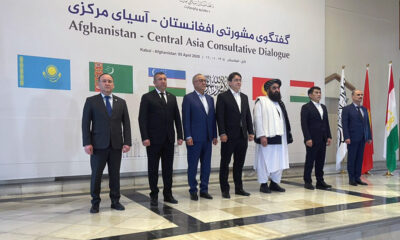
Afghanistan hosts inaugural Afghanistan–Central Asia Consultative Dialogue to strengthen regional cooperation
-
 Business4 days ago
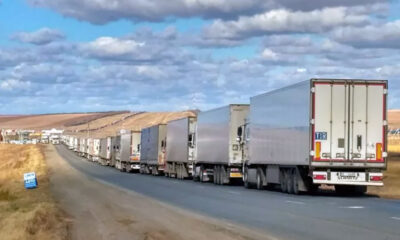
Tripartite agreement to launch new Russia–Turkmenistan–Afghanistan transit corridor
-
 Latest News4 days ago
China says Afghanistan–Pakistan peace talks show progress
-

 Business3 days ago
Kazakhstan eyes rare metals mining projects in Afghanistan and Rwanda
-
 Regional4 days ago
Iran claims it shot down US F-35 jet
-

 Latest News5 days ago
IEA confirms sending delegation to China for talks with Pakistan
-
 Regional4 days ago
Kuwait’s Mina al-Ahmadi oil refinery hit by drones, fires break out