
Latest News
Daesh militants moving from Middle East to Afghanistan: SCO chief

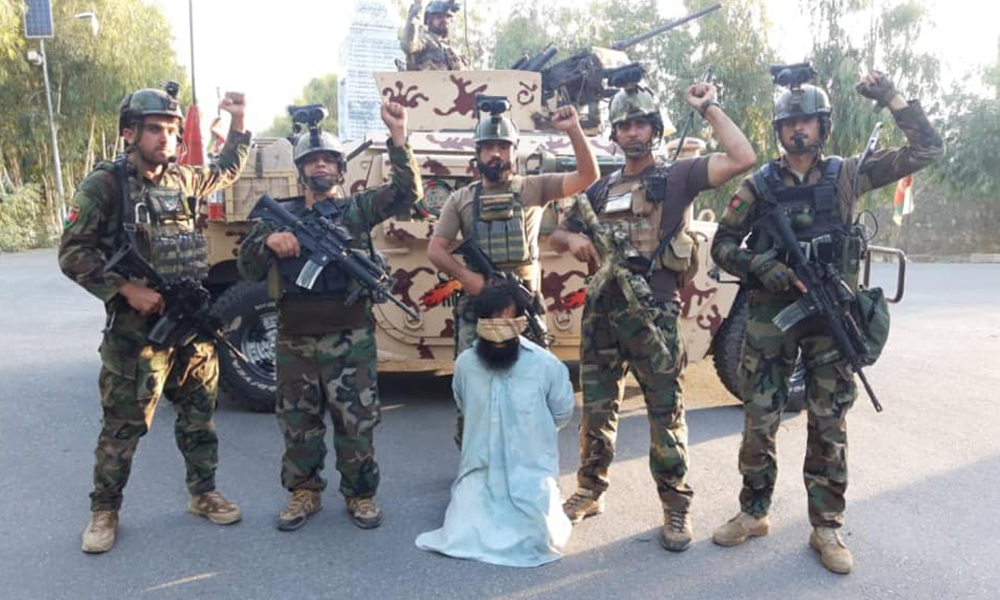
The secretary-general of the Shanghai Cooperation Organization (SCO) Vladimir Norov said on Friday ISIS (Daesh) militants have moved to Afghanistan from the Middle East and posed a threat to regional security.
Speaking at a webinar organized by the Islamabad Policy Research Institute, Norov said he was concerned about the deteriorating situation along the border regions of Afghanistan.
Norov said: “According to the SCO regional anti-terrorist structure, the numbers of fighters arriving in the north of the country [Afghanistan] are growing.”
These militants were moved from Syrian and Iraqi conflict zones and posed a threat to the SCO member states, he added.
Norov also said that Daesh members use information and communication technologies in Afghanistan to promote the ideology of terrorism and manage the terror group’s sleeper cells.
Jumakhon Giyosov, the SCO Director of the Executive Committee of the Regional Anti-Terrorist Structure, also said the growing number of Daesh militants in Afghanistan was a serious threat to the region.
“There is an increase in the number of militants arriving in northern Afghanistan, whose leaders are actively interacting with the leaders of the other terrorist organizations,” Giyosov said.
He added that the transfer of experienced militants from Syria to Afghanistan has posed threats to the region including Central Asia.
This comes after security sources confirmed earlier this month that China and Tajikistan have increased the number of border troops and outposts along their borders with Afghanistan.
An Ariana News reporter also reported having seen the increase in military presence after flying over the area in a helicopter.
According to border guards in Badakhshan, the two neighboring countries have ramped up their military presence in case the Daesh threat increases should a peace deal be sealed with the Taliban.

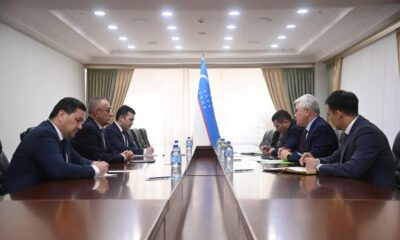



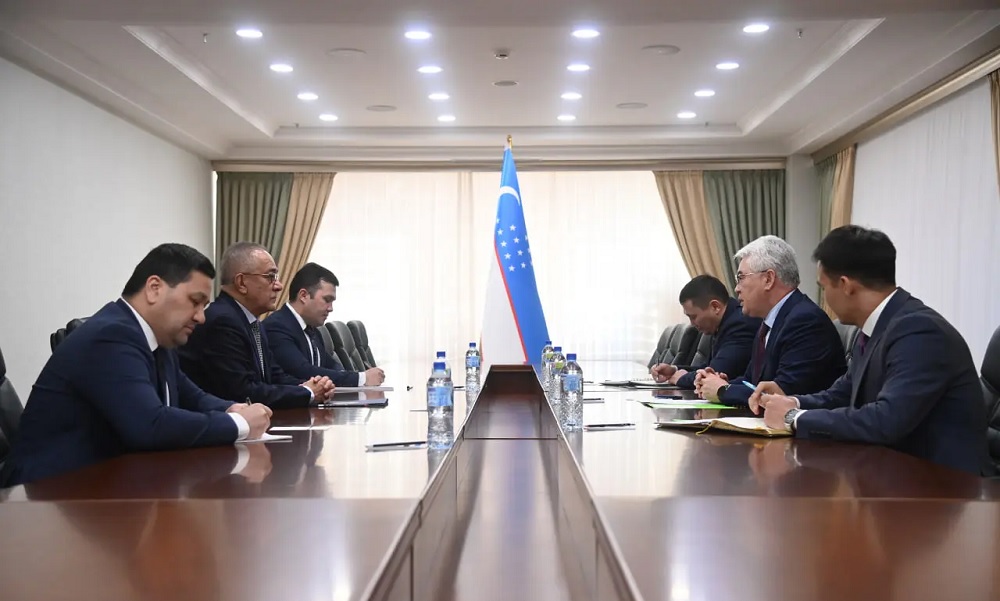
Ismatulla Irgashev, Special Representative of the President of Uzbekistan for Afghanistan, met on Tuesday with Beibut Atamkulov, Kazakhstan’s Ambassador to Uzbekistan, to discuss bilateral cooperation on Afghanistan.
The two sides highlighted their commitment to maintaining regular dialogue aimed at addressing the Afghan issue, according to a statement issued by Uzbekistan foreign ministry.
Atamkulov praised Uzbekistan’s efforts to help shape a unified regional position on Afghanistan.
The meeting also included discussions on involving Afghanistan in regional connectivity initiatives, particularly the implementation of the Trans-Afghan railway project.
Officials described the meeting as constructive and reaffirmed mutual interest in further developing practical cooperation between Tashkent and Astana.
Latest News
Pakistan, Kazakhstan stress importance of stability in Afghanistan, support regional projects
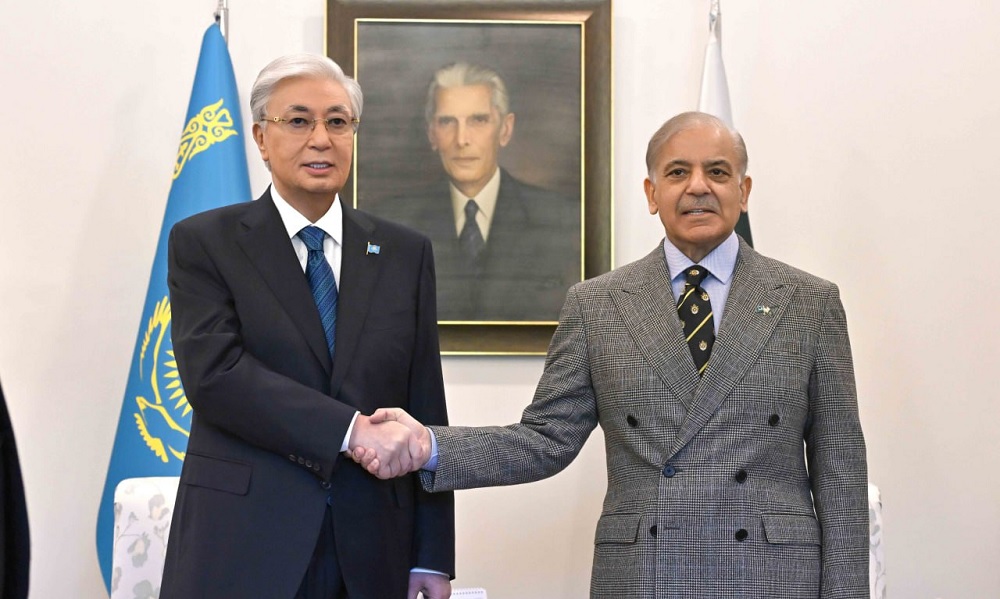
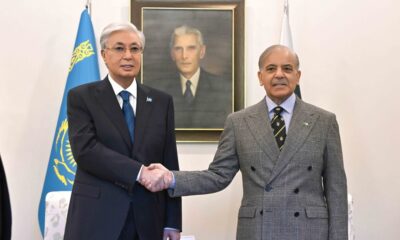
Pakistan and Kazakhstan have highlighted the importance of peace and stability in Afghanistan, calling it a key requirement for advancing regional cooperation. The remarks came in a joint statement issued after Kazakh President Kassym-Jomart Tokayev’s visit to Islamabad.
The two leaders stressed that Afghan territory must not be used for activities that threaten the security of other countries. They also agreed that integrating Afghanistan into regional economic and connectivity initiatives would benefit both the Afghan people and the wider region.
Islamabad and Astana reaffirmed their commitment to expanding international multimodal transport corridors linking the two countries, including the Kazakhstan–Turkmenistan–Afghanistan–Pakistan, Kazakhstan–Uzbekistan–Afghanistan–Pakistan, and Kazakhstan–Kyrgyzstan–China–Pakistan routes.
Prime Minister Shehbaz Sharif welcomed President Tokayev’s proposal to link Central and South Asia through the Trans-Afghan railway corridor. Both sides instructed their relevant authorities to study the development of the Kazakhstan–Turkmenistan–Afghanistan–Pakistan railway line.
Latest News
US Justice Department to seek death penalty for Afghan suspect in National Guard shooting
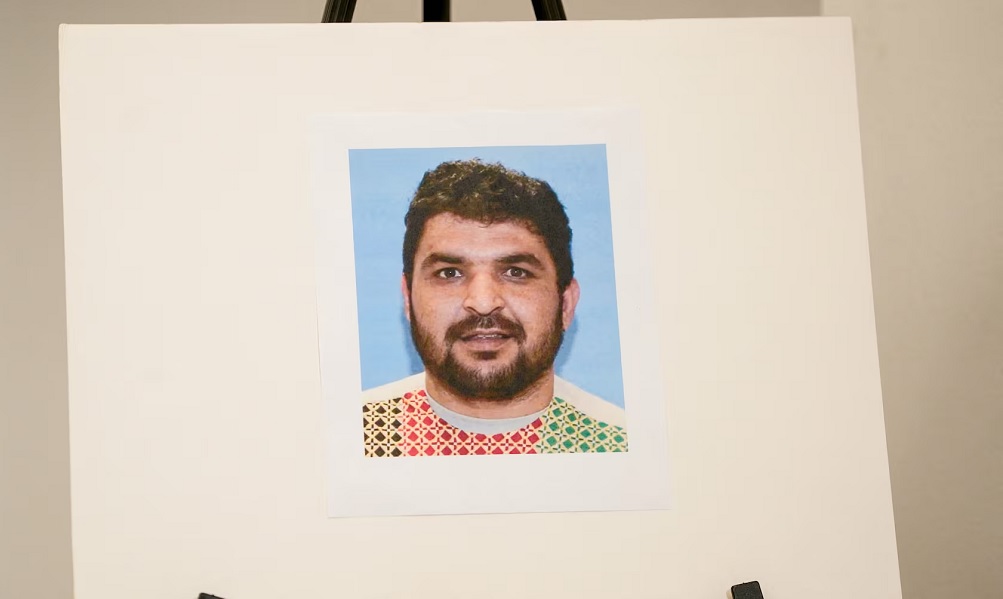
The U.S. Justice Department has announced that it intends to seek the death penalty for Rahmanullah Lakanwal, the man accused of shooting two members of the National Guard near the White House in November, an incident that left one guard member dead and another injured.
Lakanwal, who previously worked with U.S. agencies in Afghanistan before relocating to the United States in 2021, appeared in a federal court this week and pleaded not guilty to nine charges, including first-degree murder.
Prosecutors told the judge they are pursuing “death-eligible charges.”
According to U.S. court documents, Lakanwal is accused of traveling from Washington state to the capital, where he allegedly attacked the two National Guard officers.
A third guard member detained him shortly after the incident. One of the victims, Sarah Beckstrom, died a day later, while the second, Andrew Wolfe, remains under medical care.
Court filings claim Lakanwal had obtained a pistol shortly before the attack and had also purchased ammunition. Prosecutors say he conducted online searches related to Washington, D.C., before the shooting.
Lakanwal is scheduled to appear for his next court hearing in early May.


Uzbekistan, Kazakhstan discuss cooperation on Afghanistan

Pakistan, Kazakhstan stress importance of stability in Afghanistan, support regional projects

US Justice Department to seek death penalty for Afghan suspect in National Guard shooting

Terrorist threat in Afghanistan must be taken seriously, China tells UNSC

More than 100 Afghan nationals released from UAE prisons

Turkey withdraws from Afghanistan-Pakistan mediation amid rising tensions

ICG report says Pakistan most impacted by IEA’s return in Afghanistan

Afghanistan–China joint market opens in Kabul

Pakistan approves re-export of stranded Afghan transit trade cargo

ATN secures broadcast rights to Carabao Cup semis across Afghanistan

Tahawol: Discussion on UNSC meeting on Daesh threats

Saar: Rising expectations for US-Iran talks in Oman

Tahawol: Regional security concerns regarding Afghanistan reviewed

Saar: Upcoming negotiations between Iran-US discussed

Tahawol: Afghanistan’s bid to engage with SCO
-

 Sport4 days ago
AFC Futsal Asian Cup: Afghanistan to face Iran in crucial Group D clash
-

 Sport5 days ago
T20 World Cup 2026: Afghanistan national cricket team arrives in India
-

 Sport3 days ago
AFC Futsal Asian Cup 2026: Final eight confirmed
-

 Latest News5 days ago
Afghanistan granted 30,000 Hajj quota for 2026
-

 Sport3 days ago
Afghanistan in new kit for T20 World Cup warm-up against Scotland
-

 Sport4 days ago
Iran see off spirited Afghanistan to finish top of Group D
-

 Sport2 days ago
Japan trumps Afghanistan 6-0 in AFC Futsal Asian Cup quarter-final
-
 Latest News5 days ago
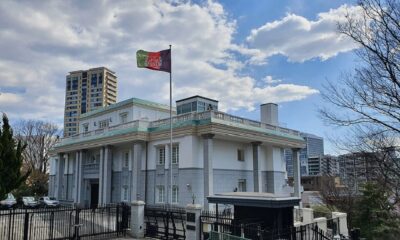
Afghan Embassy in Japan suspends operations