
Latest News
Civil society groups hit out at govt, calling it a ‘dictator’ system

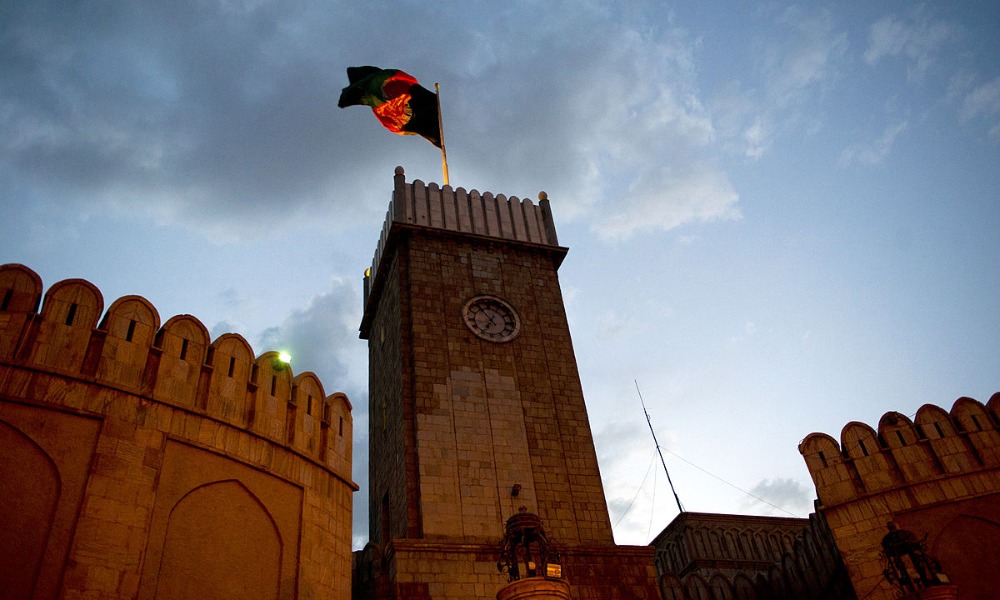
Seven Civil Society Organizations have jointly slammed government for compromising on democratic values, and went as far as to label government a “dictatorship” and Afghanistan a country its people no longer consider safe to live in.
In a position paper on Afghanistan’s Peace Process: Do Not Compromise on Demecratic Values & Civic Rights in the Intra-Afghan Peace Talks, the group said “the incumbent government is steeped in wide-spread corruption that has jeopardized and brought into question the essence of their governance.
They stated the current form of democracy is not ideal and is in fact a nominal one.
“The government epitomizes dictatorship. Power has not been actually separated; autonomy of the three main powers is questionable; and the judiciary is now working under the command of the President leaving judicial institutions with little to no autonomy.
“Even independent commissions have lost their independence and are now under the command of the president,” the paper stated.
The group noted that Afghans have no physical, psychological, nor legal security and every day is marked by a loss of a dear one. People live in “utter fear”, the group said.
The group also pointed out that over the past 20 years, Afghanistan has made enormous strides but despite this and considering the level of financial aid, and military support Afghanistan has received, these achievements could have been far greater in number and in size especially in remote provinces that still remain severely underprivileged and underserved.
The group stated that given that existing circumstances in Afghanistan are more concerning then ever, achievements made are also under serious threat.
The sharp increase in targeted killings has caused the civil society work space to shrink and activists are being restricted at a rapid pace, they said.
According to the group, human rights, particularly those of women, have deteriorated the most. “Many conservative groups have formed in the country which threaten many of Afghans’ contemporary achievements including freedom of speech, democratic ideals, and the civil society.
“Mullah Ansari of Herat, Jihadi Leader of Takhar, and Gulbuddin Hekmatyar in Kabul are a few among many others who have rebelled and who are chronically
instigating their constituents against Afghanistan’s democratic ideals,” the paper read.
On the issue of killings of civil society activists, the group said government has “no workable mechanism in place for the protection of our civil society activists, human rights defenders and journalists, and for them, their protection is clearly not a priority.”
“Civil society activists, human rights defenders, and journalists are being systematically targeted and killed,” the group stated.
They stated that recent targeted killings have adversely affected people’s emotional and psychological wellbeing to a point where people now live every moment of their lives in fear.
“People have been severely discouraged, they no longer have the willpower, the desire or the motivation to create or innovate or to initiate civic undertakings.”
The group also questioned the legality and legitimacy of political governance in the country. Given that provincial council elections should have been held three years ago, the group stated that these official bodies have since been functioning illegally.
The group also stated that “independence of the three state powers is critically questionable”, the paper stated adding that “the president has always exploited his power and authority and has brought into question the independency of the other two powers” – that being parliament and the judiciary.
The group also stated that “wide-spread corruption has resulted in turbulence among the masses, decreasing social services to the lowest. Government’s accountability against its work and decisions is poor and access to information is also very limited.”
On the issue of the peace process, the group of seven said: “Despite months of negotiations, there has yet been no sensible and concrete results obtained by either of the sides, and an exacerbation of the problem is that the negotiating sides are yet to agree on the agenda and procedures of the negotiations.
The group also decried the fact that many local stakeholders including civil society and the youth have been excluded form the negotiations.
The group also asks what could the outcome be should Washington’s new peace plan be implemented.
It was made clear in the paper that should an interim government be the only way to resolve the crisis then the United Nations bust safeguard Afghanistan’s achievements.

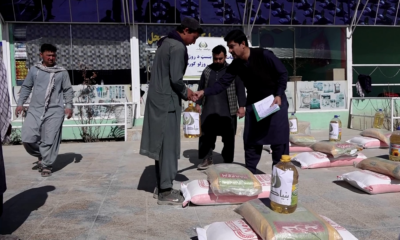





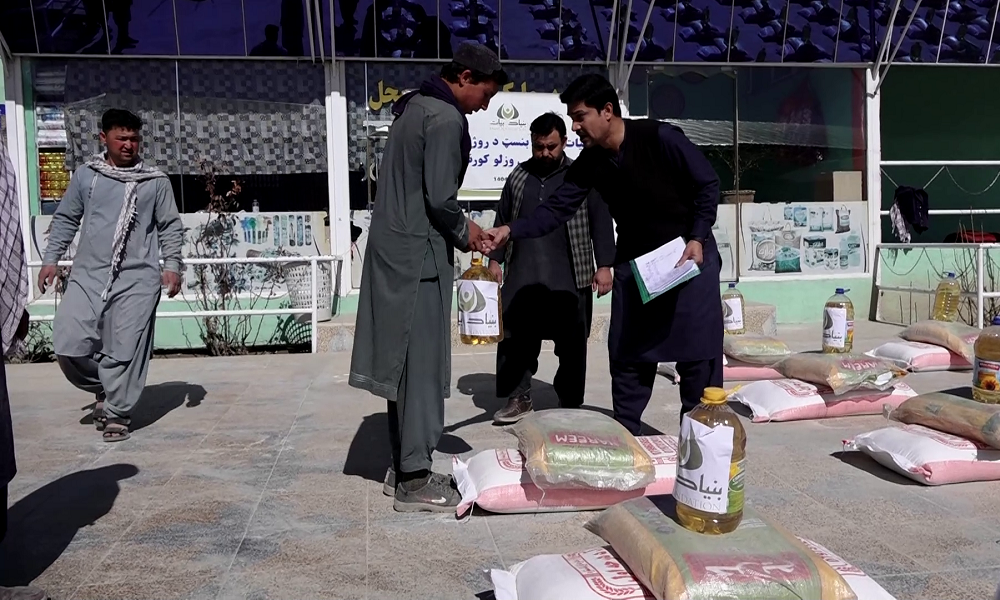
The Bayat Foundation has continued its Ramadan assistance campaign, distributing food packages to dozens of vulnerable families in Ghazni province, following similar efforts this week in Farah province.
The initiative forms part of the foundation’s broader humanitarian outreach during the holy month of Ramadan — a period marked by charity and community support — aimed at helping families facing severe poverty and economic hardship.
In Ghazni, aid packages containing flour, rice and cooking oil were distributed to underprivileged households after a needs assessment identified eligible beneficiaries, including migrant families and those without breadwinners.
Haji Mohammad Ismail, Deputy Head of the Bayat Foundation, said the Ghazni distribution is part of the organization’s annual Ramadan program carried out across multiple provinces.
“As part of the Bayat Foundation’s annual Ramadan assistance program, which is distributed every year during the holy month, we are pleased to be in Ghazni city today to distribute aid to a number of deserving migrant families,” he said, adding that the campaign is continuing in Kabul and other regions.
Earlier this week in Farah province, the foundation delivered similar food packages after survey teams assessed needs across various districts and villages.
Friadoon Abdullah, the foundation’s representative in Farah, said the aid was directed to the most vulnerable families identified through that process.
Established in 2006 by Dr. Ehsanullah Bayat, the Bayat Foundation is one of Afghanistan’s largest private charitable organizations.
Over the past two decades, it has implemented emergency relief efforts, seasonal food assistance programs, healthcare initiatives, educational support, and infrastructure projects, including the construction of mosques, health centers and schools, as well as providing access to clean drinking water in underserved communities.
Beneficiaries in Ghazni meanwhile expressed gratitude for the timely support.
“We are a family of six, we have no breadwinner, and we thank the Bayat Foundation for helping us,” said one recipient.
Another beneficiary said: “We are grateful to the Bayat Foundation for assisting us during the blessed month of Ramadan.”
Foundation officials say the Ramadan campaign will continue through the end of the holy month, with further distributions planned nationwide as part of its ongoing commitment to supporting vulnerable communities across Afghanistan.
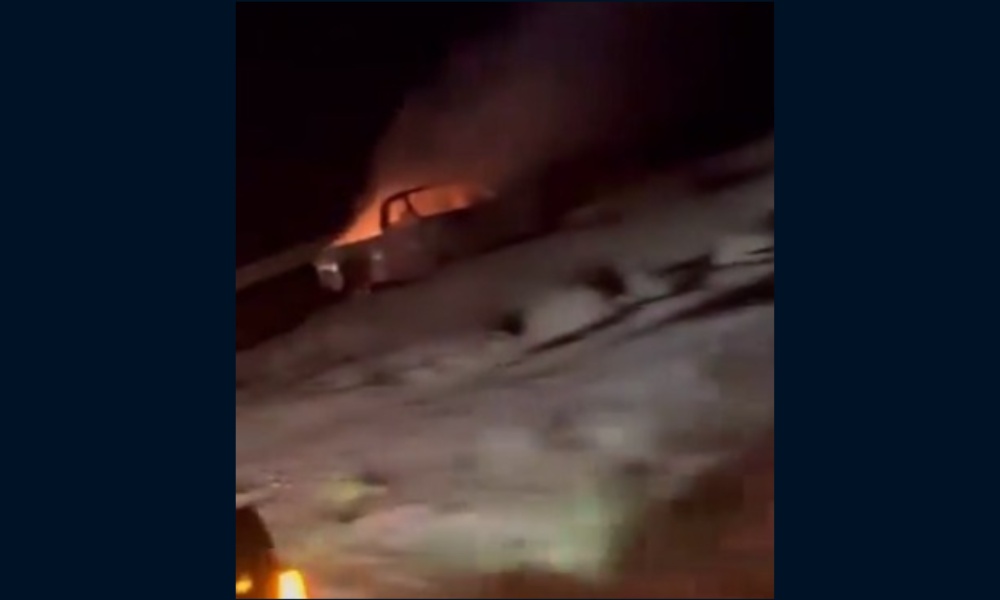
Dozens of Afghan migrants were killed or injured after Iranian forces opened fire on a vehicle carrying them in Sistan and Baluchestan province, local human rights group Haalvsh reported.
According to Haalvsh, the incident occurred on Tuesday, February 24, when Iranian forces chased the vehicle without issuing any legal warning to stop. The forces fired directly at the vehicle, causing it to overturn and catch fire.
Two people were killed, and more than 20 others were injured, six of them critically, the organization said.
International Sports
USA’s gold-medal Winter Olympics hockey game averages 26 million viewers
The contest, which began at 8:15 a.m. ET, was the most-watched sporting event on record in the U.S. with a start time before 9 a.m. ET, according to the Nielsen data.

The United States’ gold-medal victory against Canada on Sunday at the Milano Cortina Olympics averaged 26 million viewers in the U.S. on NBC and Peacock.
The 2-1 overtime win gave the Americans their first gold medal in men’s ice hockey since the 1980 Winter Olympics in Lake Placid, N.Y.
The North American audience when Jack Hughes scored the winning goal was nearly 35 million, including 8.7 million in Canada, per the Canadian Broadcasting Corporation.
The contest, which began at 8:15 a.m. ET, was the most-watched sporting event on record in the U.S. with a start time before 9 a.m. ET, according to the Nielsen data.
It also was the second most-watched hockey game in NBC history, trailing Canada’s overtime win against the U.S. in the gold-medal game at the 2010 Vancouver Games.
Overall, the Olympic Games in Italy averaged 23.5 million viewers in the U.S., a 96% increase over Beijing in 2022 and the most-watched Winter Olympics since 2014 in Sochi, Russia. – Reuters


Tahawol: IEA’s military response against Pakistan discussed

Saar: Discussion on silence over Pakistan’s attacks in Afghanistan

Narendra Modi holds high-level talks after historic address to Knesset

Bayat Foundation expands Ramadan aid to families in Ghazni province

Iran promises flexibility at nuclear talks amid threat of US strikes

AFC Futsal Asian Cup 2026: Day One Review

IEA releases three Pakistani soldiers to mark Ramadan

AFC Futsal Asian Cup: Afghanistan to face Iran in crucial Group D clash

Afghanistan’s Chief of Armed Forces underscores readiness and equipment for national defense

Afghanistan welcomes investment and technology partnerships with India
Tahawol: IEA’s military response against Pakistan discussed
Saar: Discussion on silence over Pakistan’s attacks in Afghanistan

Tahawol: Reviewing relations between Pakistan, Qatar and Afghanistan

Saar: Efforts to expand trade with Uzbekistan discussed

Tahawol: Reactions to Pakistan’s attacks on Afghanistan discussed
-
 Latest News5 days ago
Mujahid: Afghanistan will target perpetrators, not civilians
-
 Latest News4 days ago
Russia estimates up to 23,000 terrorists present in Afghanistan
-
 Latest News5 days ago
Afghanistan vows retaliation after Pakistan launches air strikes
-
Latest News3 days ago
IEA rejects Russia’s claims of foreign militants in Afghanistan
-
 Latest News4 days ago
UNAMA reports civilian casualties from Pakistani airstrikes in Afghanistan
-
 Latest News4 days ago
UK’s Reform party pledges visa ban affecting Afghanistan and five other states
-

 International Sports3 days ago
AFC Champions League Elite gears up for Round of 16 as league stage concludes
-

 Sport2 days ago
Richard Pybus appointed as head coach of Afghanistan’s national cricket team