
Latest News
Chad President Idriss Deby killed in battle

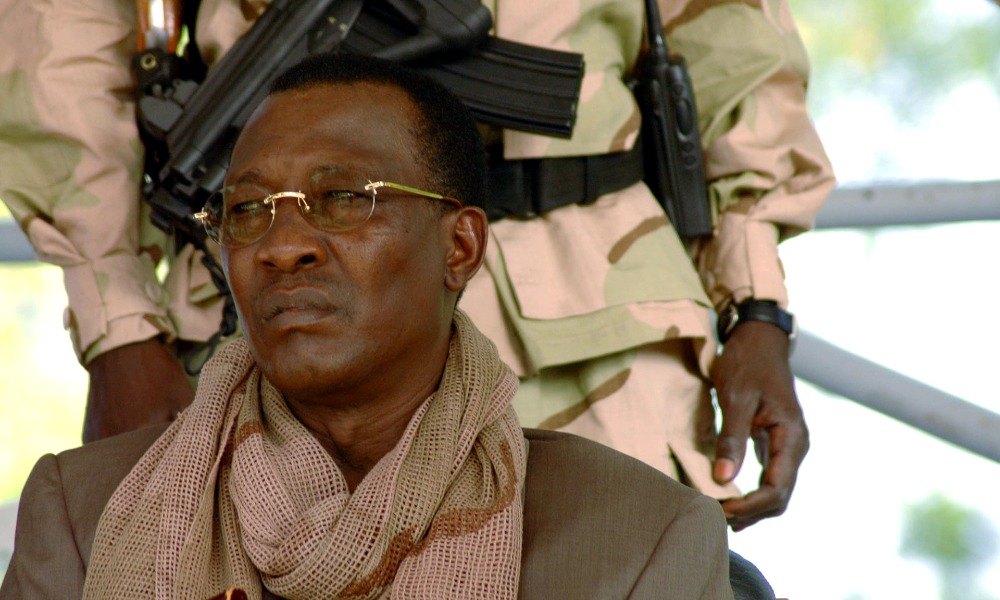
Chad’s President Idriss Deby, who ruled his country for more than 30 years and was an important Western ally in the fight against Islamist militants in Africa, has been killed in a battle against rebels in the north.
His son, Mahamat Idriss Deby Itmo, was named interim president by a transitional council of military officers, army spokesman Azem Bermendao Agouna said on state television.
Deby, 68, took power in a rebellion in 1990 and was one of Africa’s longest-ruling leaders, surviving numerous coup attempts and rebellions. His death could deepen Chad’s problems, and those of its allies.
On the domestic front, the military is divided and the opposition bridling against years of repressive rule.
Internationally, France and the United States will be hoping their counter-terrorism efforts are not now pushed off course. France said that it had lost “brave friend” and Chad “a great soldier”.
He was killed just after he was declared winner of a presidential election that would have given him a sixth term in office. Most of the opposition boycotted the vote.
Deby – who often joined soldiers on the battlefront in his military fatigues – visited troops on the frontline on Monday after rebels based across the northern frontier in Libya advanced hundreds of km (miles) south toward the capital N’Djamena.
“Marshal Idriss Deby Itno, as he did each time that the institutions of the republic were gravely threatened, took control of operations during the heroic combat led against the terrorists from Libya. He was wounded during the fighting and died once repatriated to N’Djamena,” Bermendao said.
The government and National Assembly have been dissolved and a nationwide curfew imposed from 6 p.m. to 5 a.m.
“The National Council of Transition reassures the Chadian people that all measures have been taken to guarantee peace, security and the republican order,” Bermendao said.
The military council said it would lead a transition for a period of 18 months leading to free and fair elections.
Deby had pushed through a new constitution in 2018 that would have allowed him to stay in power until 2033. He said before last week’s election: “I know in advance that I will win, as I have done for the last 30 years.”
He was dealing with mounting public discontent over his management of Chad’s oil wealth and crackdowns on opponents. In the election results, Deby claimed 79% of the vote.
A Reuters reporter in N’Djamena said people were in a panic as news of his death spread, fearing that fighting could break out in the city. Many were fleeing to the outskirts and roads were jammed with traffic.
Western countries had counted on Deby as an ally in the fight against Islamist militants, including Boko Haram in the Lake Chad Basin and groups linked to al Qaeda and Islamic State in the Sahel.
France, the former colonial power, had based its Sahel counter-terrorism operations in N’Djamena. Chad had announced in February the deployment of 1,200 troops to complement 5,100 French soldiers in the area.
The French presidency praised Deby and affirmed its support for Chad’s stability and territorial integrity. In a statement, it noted the formation of the interim council headed by Mahamat Idriss Deby Itmo but said it hoped there would be a quick and peaceful return to civilian rule.
Déby’s death could mean tremendous uncertainty for Chad, said Nathaniel Powell, author of a history of French military involvement in Chad.
“The swift announcement of the establishment of a military council and naming his son Mahamat as head of state however indicates regime continuity,” Powell told Reuters.
“This probably aims to counter any coup-making efforts from within the security establishment and to reassure Chad’s international partners…that they can still count on the country for its continued contributions to international counter-terrorist efforts in the Sahel.”
A regional diplomat said the naming of Deby’s son as interim president was problematical as the speaker of parliament should have taken power on his death.
“That in itself is a coup,” the diplomat told Reuters. “He has been grooming the son for some time.”
The latest rebel actions had already caused alarm in Washington and other Western capitals.
Fighters of the Libya-based Front for Change and Concord in Chad (FACT) attacked a border post on election day then advanced hundreds of kilometres (miles) south through the vast country.
But the Chadian military appeared to have slowed its progress about 300 km (185 miles) from N’Djamena.
The rebels acknowledged on Monday they suffered losses on Saturday but said they were back on the move on Sunday and Monday.
Deby loved to vist troops on the frontlines. He joined the army in the 1970s when Chad was engaged in a long civil war. He received military training in France and returned to Chad in 1978, throwing his support behind President Hissène Habré and eventually becoming commander-in-chief of the armed forces.
He seized power in 1990, leading a rebel army in a three-week offensive staged from neighbouring Sudan to topple Habre, a man accused of widespread human rights abuses.





Latest News
Muttaqi heads to Moscow for 8th Moscow format meeting
Takal added that the Moscow Format meeting is scheduled to begin on Monday, October 5, in Moscow.
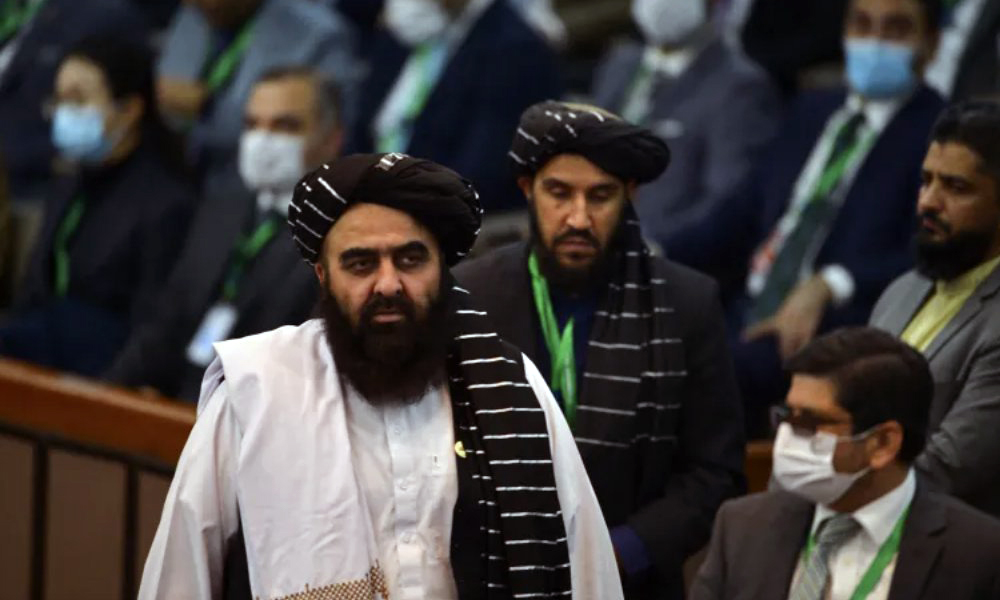
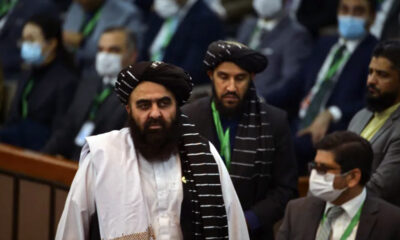
Afghanistan’s Foreign Minister Amir Khan Muttaqi has traveled to Moscow to participate in the eighth meeting of the Moscow Format on Afghanistan.
According to Afghanistan’s Ministry of Foreign Affairs, Muttaqi is expected to meet with Russian Foreign Minister Sergey Lavrov and other senior officials during his visit to discuss issues related to Afghanistan.
Hafiz Zia Ahmad Takal, head of the ministry’s public relations department, said discussions at the eighth consultative meeting will focus on Afghanistan’s current situation and the country’s relations with the region.
Takal added that the Moscow Format meeting is scheduled to begin on Monday, October 5, in Moscow.
Latest News
Mansour: Unjustified bloodshed is forbidden, whether Afghan or Pakistani
At the same time, Mansour stressed that the situation should not escalate into indiscriminate bloodshed.
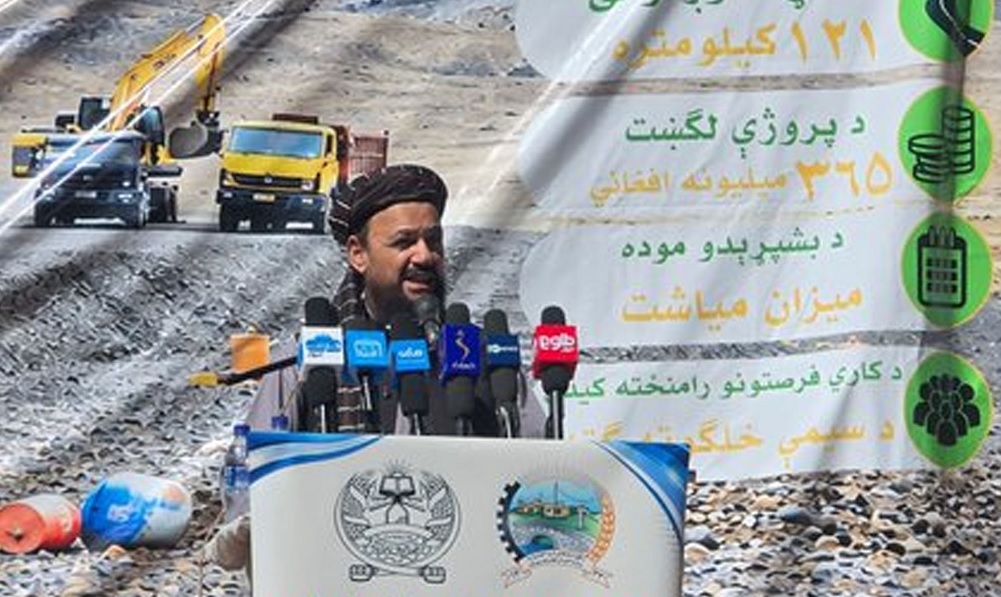
Abdul Latif Mansour, Afghanistan’s Minister of Rural Rehabilitation and Development, says the Islamic Emirate considers the unjustified shedding of Afghan and Pakistani blood forbidden, as both sides are Muslims.
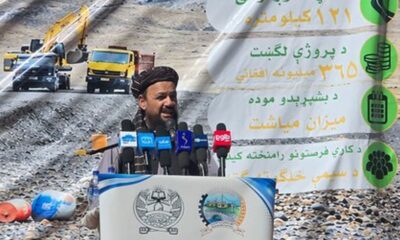
Mansour made the remarks at the inauguration of the Wakhan road in Badakhshan on Sunday, while responding to Pakistan’s recent attacks on Afghanistan.
He said some people become emotional over Pakistani bombings, but stressed that Afghanistan needs to become self-reliant enough to defend its citizens.
“We must build this system to the point where we become self-reliant and can defend every Afghan in such a way that we can neutralize the person causing harm in his own country,” Mansour said.
He acknowledged that the current system has not yet achieved full self-reliance, but said efforts are underway to strengthen Afghanistan’s ability to defend its people.
At the same time, Mansour stressed that the situation should not escalate into indiscriminate bloodshed.
“We consider the unjustified shedding of our own people’s blood forbidden, and we also consider the shedding of Pakistani blood forbidden because they are Muslims,” he said.
Pakistani military officials have repeatedly accused Afghanistan of allowing militant attacks on Pakistan to be planned or carried out from Afghan territory.
The Islamic Emirate has rejected the allegations, saying Afghanistan is not responsible for Pakistan’s security problems.
Latest News
Afghanistan inaugurates 121 km Wakhan road to China border
Mansour described the project as politically, strategically and economically important.
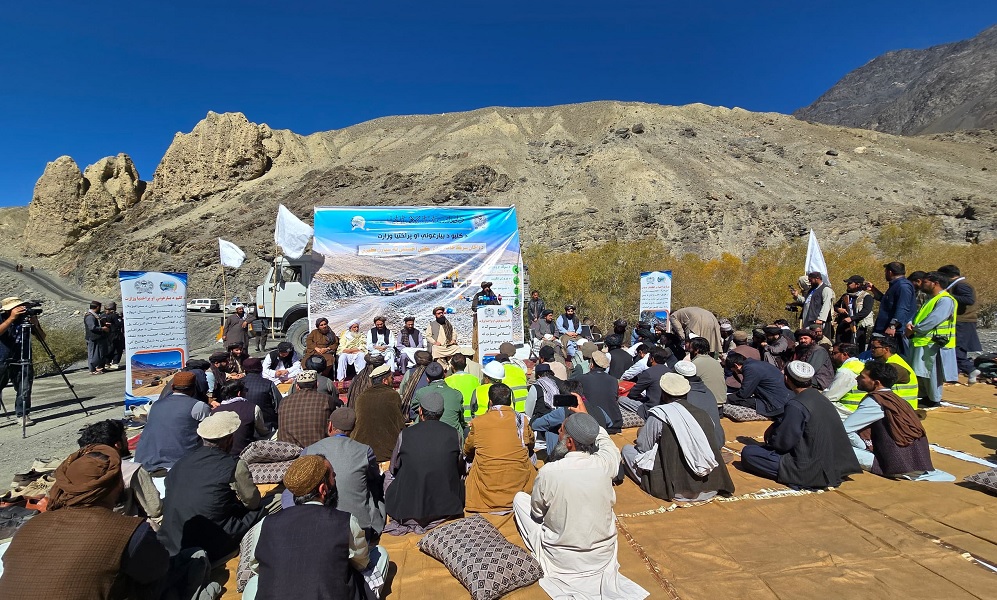
A 121-kilometer gravel road from the Sarhad-e Broghil in Wakhan district of Badakhshan to the Chinese border was officially opened today, Sunday, October 4.
Abdul Latif Mansour, Minister of Rural Rehabilitation and Development, said at the inauguration ceremony that the road includes 66 culverts and four major bridges, while a total of 3,100 meters of retaining walls have been built along parts of the route.
According to Mansour, 365 million afghanis from the Islamic Emirate’s development budget were spent on the construction and graveling of the road.
Mansour described the project as politically, strategically and economically important.
Rahmatullah Najib, governor of Badakhshan, also said at the ceremony that security has been ensured across the province and that there are no security problems in any part of Badakhshan.


ACL: Sorkh Poshan extend perfect run with 1-0 win over Khurasan

Tahawol: Doha process seeks new cooperation opportunities

ACL: Toofan Herat crush Sarsabz Yashlar 3-0

Saar: Moscow forum 8th consultative meeting on Afghanistan

Muttaqi heads to Moscow for 8th Moscow format meeting

Saudi energy group signs major Afghanistan deals covering gas exploration and pipeline plans

Khalilzad: Afghanistan ready to attract major investment

Messi returns to Inter Miami after Argentina retirement

Imam Abu Hanifa exhibition to draw exhibitors from more than 20 countries

Maryam Nawaz says Punjab faces greater security threats from neighbouring provinces
Tahawol: Doha process seeks new cooperation opportunities
Saar: Moscow forum 8th consultative meeting on Afghanistan

Tahawol: Escalation of internal political crisis in Pakistan discussed

Saar: Continuation of crisis in the Middle East discussed

Tawsia: Review of three key economic developments in Afghanistan
-
 Latest News3 days ago
Four members of one family killed in Helmand in Pakistan airstrike
-
 Regional5 days ago
US imposes sanctions on 13 tied to Iran weapons procurement
-
 Sport2 days ago
ACB announces Afghanistan squads for Bangladesh, Zimbabwe series
-
 Business5 days ago
Afghanistan, Tajikistan seek stronger trade and investment ties
-
 Latest News4 days ago
Moscow to host 8th meeting of Afghanistan consultations on October 5
-
 Latest News5 days ago
WATCH: Woman rescued after 14 years of alleged confinement in Helmand
-
 Latest News3 days ago
Russia expects to ease Afghanistan-Pakistan tensions at Moscow Format meeting
-
 Sport3 days ago
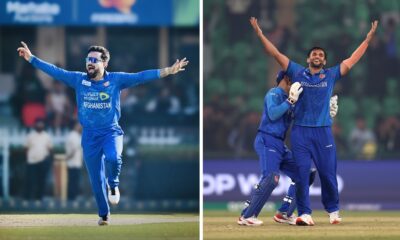
Rashid Khan, Azmatullah Omarzai maintain top spots in ICC ODI rankings