
Business
Balkh factory owners concerned about ongoing economic crisis

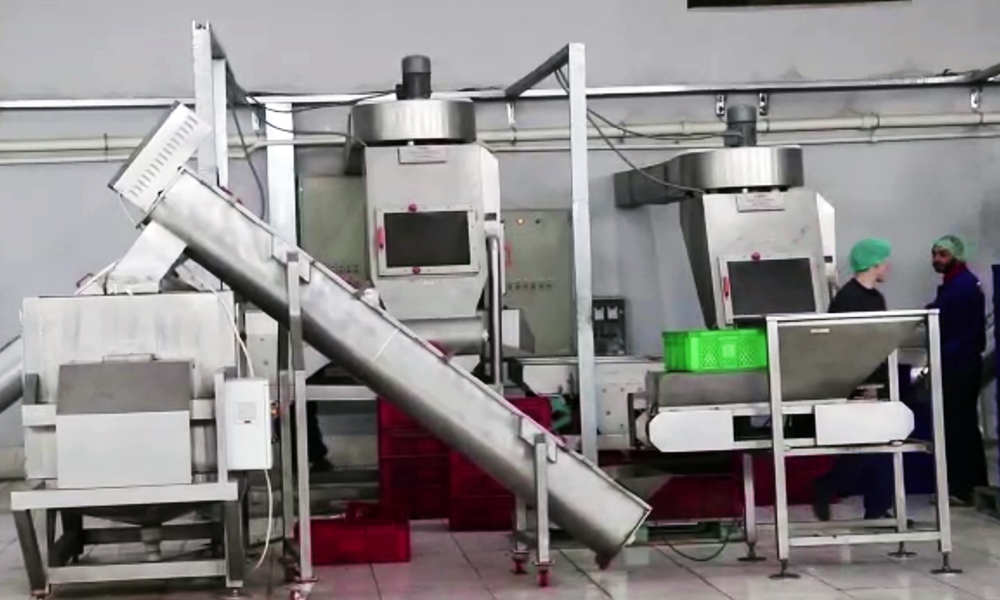
Balkh Chamber of Industries and Mine said that 90 percent of factories in the province are under extreme financial duress due to the economic crisis gripping Afghanistan.
According to officials, their problems stem from limited access to funds in bank accounts and to the limited support provided by the authorities.
Officials urged the Islamic Emirate of Afghanistan (IEA) to support domestic manufacturers and said if they did, export volumes would increase.
One member of the chamber said however that they were optimistic about the future.
“Factories are restarting their activities day by day. It has increased now. We are optimistic about the future. As you know factories produce employment opportunities… (factories) will impact the economy,” said Sayed Ismail Hussaini, a member of the Balkh chamber.
Some local businessmen said that they have been struggling since the takeover by the IEA in August.
“We export to European countries and to Russia. Now 80 percent of our work faced problems,” Sayed Hamidullah, head of a factory in Balkh.
Balkh women, employed in local factories, meanwhile called on the IEA to provide more job opportunities for women.
“The weather is cold, we face many problems, all should keep in mind the situation of women,” said Zaiba, one female factory worker.
“Big factories in Balkh should be reopened, because people face problems, unemployment has increased,” said Gull Chaman another woman.
“We call on the government to reopen factories in Balkh,” said Fatima.






Business
Afghanistan, Kazakhstan envoys discuss expanding trade and regional connectivity
Ambassador Shakeeb thanked Kazakhstan for its continued support and constructive engagement with Afghanistan, particularly in efforts aimed at peace and economic development.

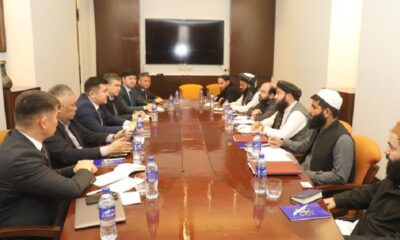
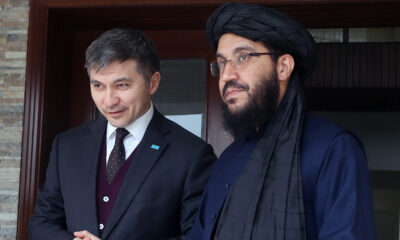
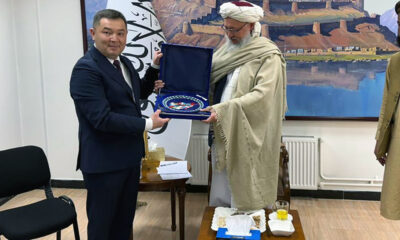
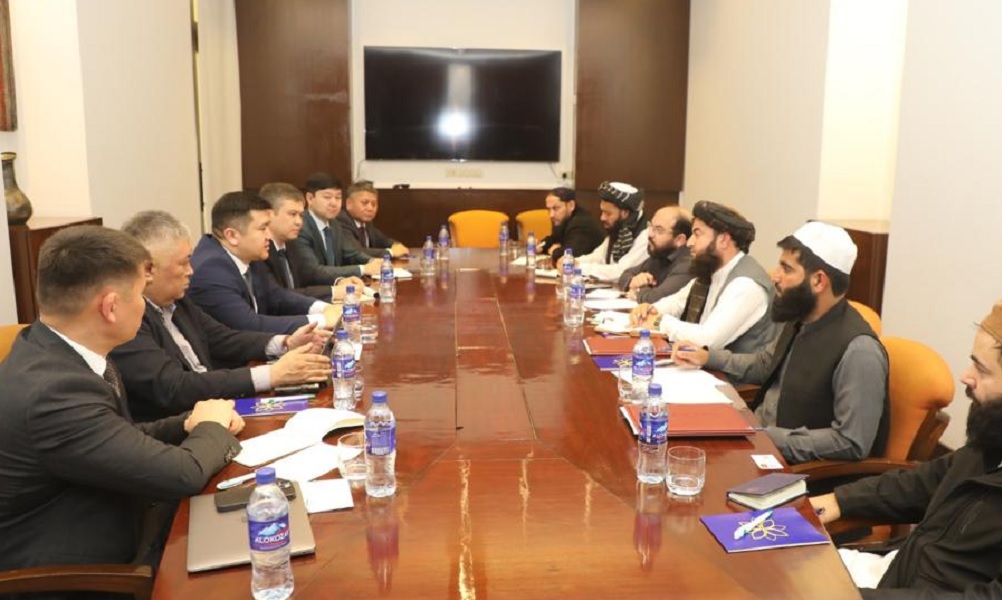
Afghanistan’s Ambassador to Pakistan, Sardar Ahmad Shakeeb, has met with Kazakhstan’s Ambassador to Pakistan, Yerzhan Kistafin, to explore ways to strengthen bilateral relations and advance regional cooperation.
The two envoys exchanged views on Afghanistan–Kazakhstan ties, regional connectivity, and major infrastructure initiatives, as well as the opportunities and challenges facing regional trade. Discussions also touched on Kazakhstan’s role in promoting regional stability and other matters of mutual interest.
Ambassador Shakeeb thanked Kazakhstan for its continued support and constructive engagement with Afghanistan, particularly in efforts aimed at peace and economic development.
He expressed hope that the proposed $3 billion joint trade agreement, once finalized, would bring tangible benefits to both countries and contribute to broader regional economic integration.
Ambassador Kistafin reaffirmed Kazakhstan’s support for stability and economic growth in Afghanistan, highlighting his country’s involvement in key regional connectivity and trade projects.
He said the current security and stability situation in Afghanistan has increased Kazakhstan’s confidence in expanding regional trade and transit, and praised the efforts of the Islamic Emirate in this regard.
He also stressed the need for coordinated regional efforts to ensure lasting stability, sustainable economic development, and the smooth movement of goods and transit across the region.
Business
Mahirood Customs leads Iran’s exports to Afghanistan
More than 1.5 million tonnes of goods were exported to Afghanistan through the border crossing during this period.
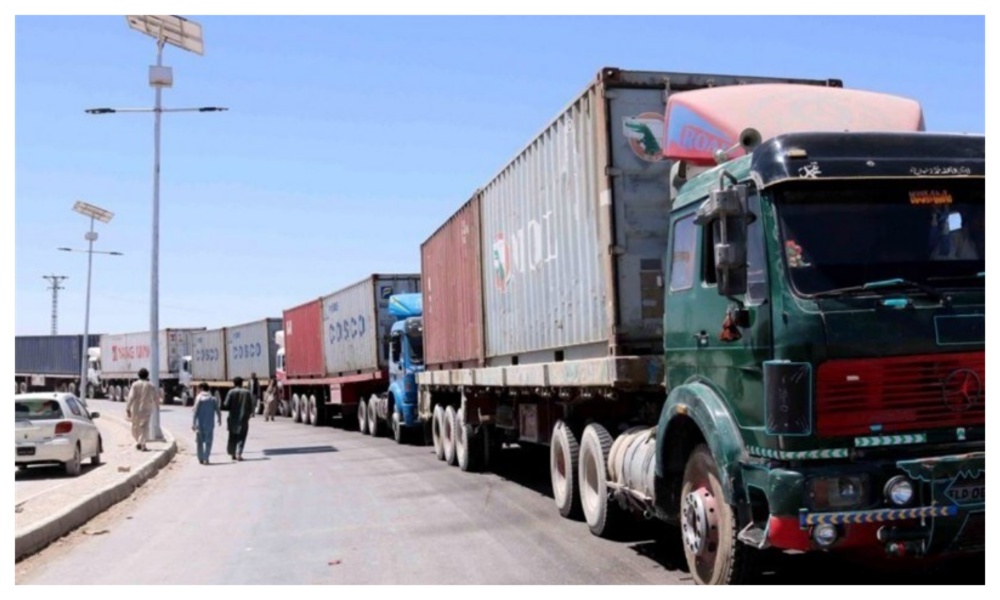
Mahirood Customs in South Khorasan province has become Iran’s main export gateway to Afghanistan, accounting for 36 percent of the country’s total exports to its eastern neighbor, Iranian officials said.
South Khorasan Governor Seyed Mohammadreza Hashemi told local media that Mahirood ranked first among Iran’s 71 active customs points during the first eight months of the current Iranian year.
More than 1.5 million tonnes of goods were exported to Afghanistan through the border crossing during this period.
Official customs figures show that Iran’s total exports to Afghanistan exceeded 4.26 million tonnes in the first eight months of the year, with Mahirood handling the largest share, Hashemi said.
He attributed the strong performance to South Khorasan’s strategic location, improved border infrastructure, effective planning, close cooperation with traders, and coordinated efforts by government agencies.
Hashemi said the expansion of exports via Mahirood Customs is contributing to economic growth, job creation, and stronger economic diplomacy for the province.
He added that continued support for exporters and streamlined customs procedures could further increase South Khorasan’s share of the Afghan market and other target markets in the future.


Tahawol: Global concerns over migration escalation discussed

Islamic Emirate’s army now self-sufficient, says chief of army staff

Afghan health minister attends second WHO summit in India

Saar: Calls for Afghanistan’s balanced, economy-oriented foreign policy discussed

Afghanistan-Kazakhstan banking ties discussed in Kabul meeting

Afghanistan U19 cricket team defeats India A U19

Afghanistan economy under pressure as Pakistan shocks reshape trade flows

Gaza death toll tops 70,000, health ministry says

India set to establish pharmaceutical factories in Afghanistan: MoIC

Afghanistan offers tax breaks, free land to attract Indian investors
Tahawol: Global concerns over migration escalation discussed
Saar: Calls for Afghanistan’s balanced, economy-oriented foreign policy discussed

Tahawol: Discussion on regional countries’ meetings on Afghanistan

Saar: Regional efforts to address Afghanistan-Pakistan issues discussed

Tahawol: Officials say interactions must be based on realities
-

 Latest News5 days ago
US delivers second batch of Afghan Black Hawk helicopters to Peru
-

 Latest News4 days ago
Germany speeds up admission of Afghans from Pakistan
-

 Sport4 days ago
IPL 2026 Auction set for Abu Dhabi with $28.6 million purse at stake
-
 Business4 days ago
Afghan economy posts second year of growth despite deep structural challenges
-
 Latest News4 days ago
Afghanistan to establish independent oil and gas authority
-

 Sport4 days ago
ATN to broadcast ‘The Best FIFA Football Awards 2025’
-

 Latest News4 days ago
US intelligence chief warns of ‘direct threat’ from suspected terrorists inside the country
-

 International Sports5 days ago
ILT20: Jahangir powers Dubai Capitals to nine-run win over Abu Dhabi Knight Riders