
Latest News
Afghanistan worst place in the world for women and children: UN

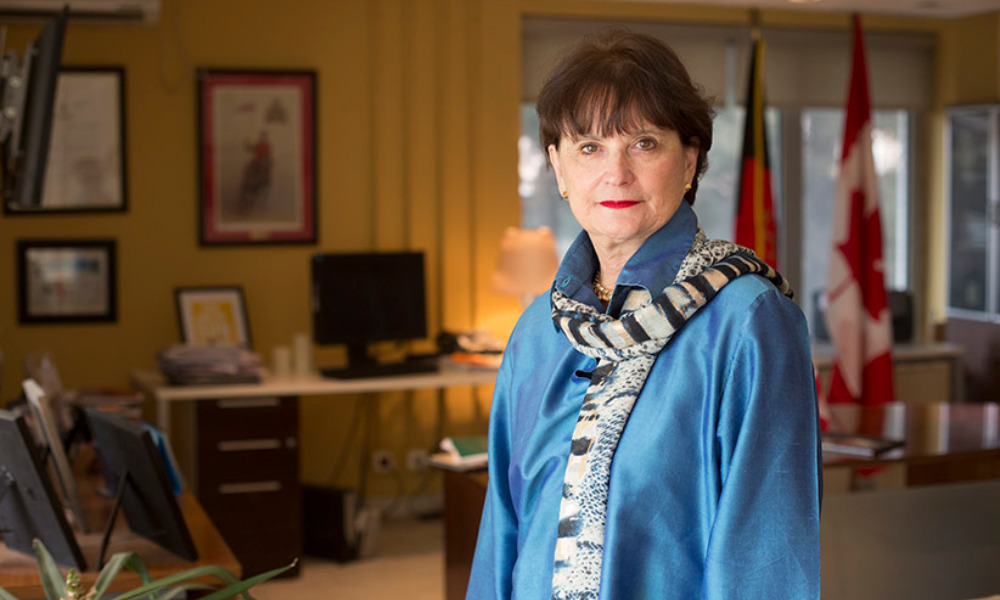
The Secretary-General’s Special Representative for Afghanistan, and Head of the UN Assistance Mission in Afghanistan (UNAMA), Deborah Lyons, said Thursday Afghanistan remains the worst country for women and children.
“Despite significant progress in the last two decades, Afghanistan remains one of the worst places in the world to be a woman, and one of the worst to be a child,” she briefed the Security Council on the situation in Afghanistan.
She said that the level of violence on the battlefield remains deeply worrying.
“The last few weeks have seen near-record numbers of security incidents, including egregious attacks by spoilers targeting civilians involved in the peace process.”
Deborah calls on all warring parties to reduce the level of violence.
It comes as the main obstacle, the prisoner swap process between the Afghan government and the Taliban, ahead of the intra-Afghan talks has been removed.
National Security Council spokesman Javid Faisal said Thursday the prisoner release process has almost ended and peace talks can now start.
He said: “It is imperative that intra-Afghan peace talks begin as soon as possible.
“The Islamic Republic of Afghanistan has received our commandos held hostage by the Taliban, after which the government released the remaining 400 convicts, except the few for which our partners have reservations. Diplomatic efforts are ongoing. We expect direct talks to start promptly,” he said.
Meanwhile, Deborah Lyons urged the two sides to consider a humanitarian ceasefire as one of the first items on the agenda of Intra- Afghan negotiations.
“For Afghanistan’s most vulnerable people, the stakes could not be higher. I urge all member states to amplify this call as the negotiations begin. And the negotiations will begin,” she noted.
“After four decades of war, the people of Afghanistan have more reason than ever to hope that this devastating conflict may come to an end,” UN envoy said.
“After four decades of war, the people of #Afghanistan have more reason than ever to hope that this devastating conflict may come to an end,” UN envoy @DeborahLyonsUN tells Security Council. More: https://t.co/N3lhm8supy pic.twitter.com/0JTnVDPaLu
— UNAMA News (@UNAMAnews) September 3, 2020
Deborah Lyons also emphasized the need for women’s participation in the coming Intra-Afghan negotiations that could pave the way to end the long-term war in the war-weary country.
“We all know that talking will not be enough. Women’s rights are already emerging as one of the most difficult issues confronting the conflict parties as they enter negotiations, and one where any compromises could pose, will pose, a difficult dilemma for member states,” she said.
“The issue will be more central, this issue of women’s rights will be more central in the Afghan peace process than we have ever seen in any other peace negotiation in recent memory.”
She noted that it is women’s representation at the peace table that offers the best opportunity to ensure that their own rights are upheld and that their vision for elements of a peaceful Afghanistan is reflected in all aspects of the talks.
“I commend the women members of the Islamic Republic negotiating team and other peace structures for their energetic outreach and substantive preparations for intra-Afghan talks.”
“As of this moment, we are not yet aware of any women’s representation on the Taliban side, but we remain hopeful that they, too, will find a way of meaningfully including women, the other 50 percent of the population, in their negotiation team,” Lyons added.






Latest News
Only one of three Afghan suspects was on US terror watch list of 18,000
The Office of the Director of National Intelligence has identified nearly 2,000 Afghans with suspected terror ties and continues to share intelligence with law enforcement agencies.
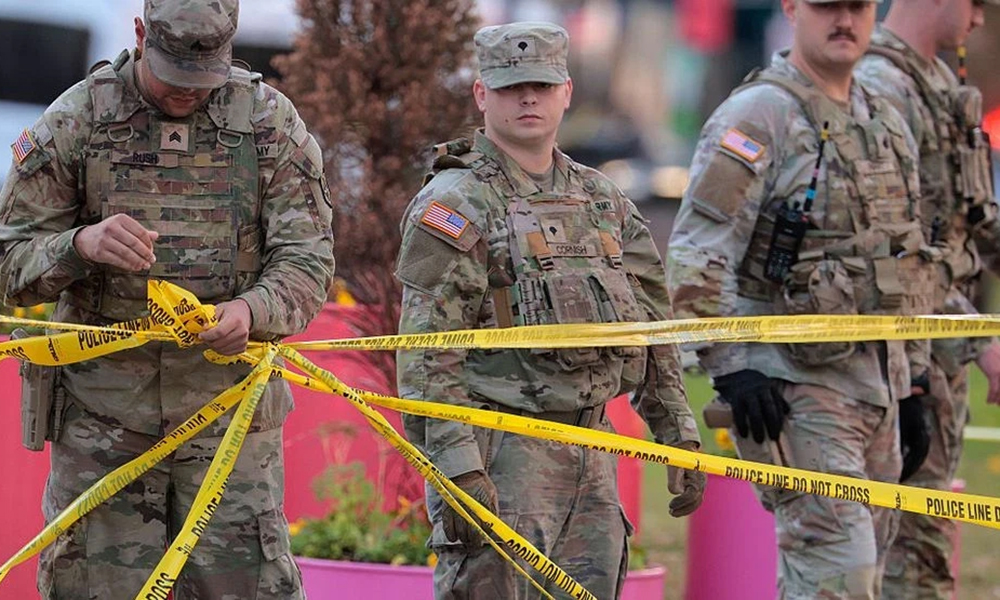
U.S. authorities are reviewing a classified terror watch list of about 18,000 people after it emerged that only one of three Afghan nationals arrested in recent high-profile cases was on the list, the New York Post reported, citing an intelligence source.
According to the NY Post, the revelation has raised concerns that some suspects may have been radicalized after arriving in the United States. The issue gained renewed attention following last month’s shooting of National Guard members in Washington, DC.
National Counterterrorism Center Director Joe Kent told lawmakers at a December 11 hearing that around 18,000 known or suspected terrorists entered the U.S. over a four-year period under the previous administration. Since then, officials have been combing through the database to assess potential threats and examine how certain individuals were admitted into the country.
Jaan Shah Safi was the only one of three recently arrested Afghan nationals listed in the Terrorist Identities Datamart Environment (TIDE), the U.S. government’s central terror database. Safi, who arrived in the U.S. in 2021 under Operation Allies Welcome, is accused of providing weapons and other support to ISIS-K. U.S. officials say he remains in ICE custody pending removal proceedings.
The other two suspects — Rahmanullah Lakanwal, charged with killing a National Guard member in Washington, and Mohammad Dawood Alokozay of Texas, accused of threatening a suicide attack — were not on the watch list, according to the Post. Intelligence officials cited in the report said this suggests they may have been radicalized after entering the United States.
The Post said the Office of the Director of National Intelligence has identified nearly 2,000 Afghans with suspected terror ties and continues to share intelligence with law enforcement agencies.
The issue has reignited debate over the vetting process used during the rapid evacuation of Afghans in 2021, when more than 100,000 people were brought to the United States.
Lawmakers and officials quoted by the New York Post called for closer scrutiny of those admitted during that period, amid growing political and public concern over national security and immigration policy.
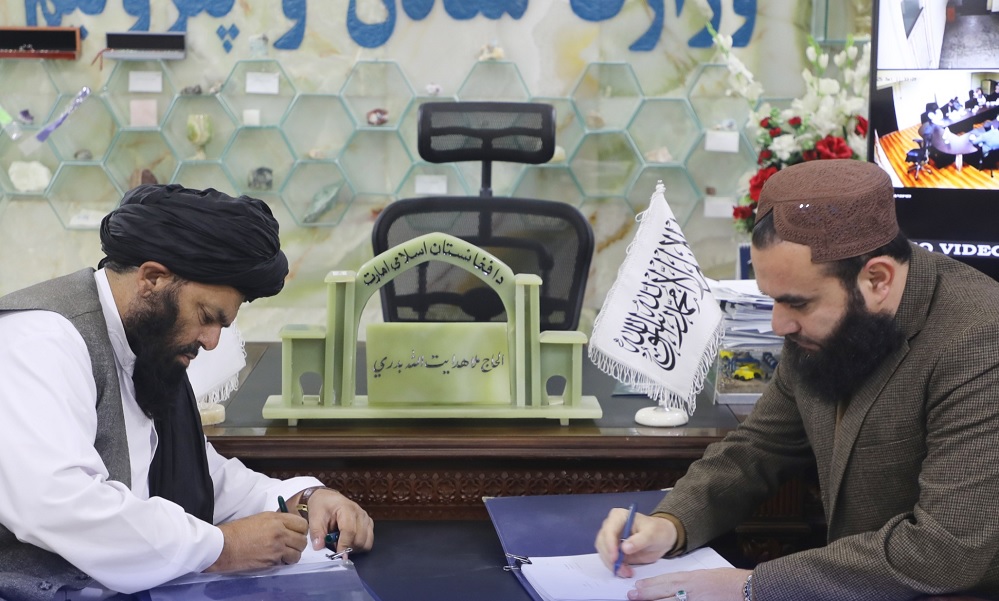
The Ministry of Mines and Petroleum of Afghanistan has signed a 30-year agreement with a private company to extract marble in Daikundi province.
Under the contract, the company will invest AFN 283 million in exploring and mining marble at the “Mesh-Uliya” site, spanning 16.74 square kilometers in central Daikundi.
Hedayatullah Badri, Minister of Mines and Petroleum, stated that the marble will be processed domestically before being exported abroad. He added that the Mesh-Uliya project is expected to create around 200 jobs, and the company is committed to supporting local communities through social initiatives.
Economic experts highlight that such investments, especially those focusing on domestic processing, are crucial for job creation, boosting exports, and strengthening the national economy. Analysts further note that the project will improve local infrastructure, expand social services, and enhance the economic and social well-being of Daikundi residents.
Since the return of the Islamic Emirate to power, efforts to develop Afghanistan’s mining sector have intensified, with multiple contracts signed in areas including cement, copper, iron, and lapis lazuli, involving both domestic and international companies.


Dubai Capitals and MI Emirates register key wins in ILT20

Only one of three Afghan suspects was on US terror watch list of 18,000

Afghanistan participates in Global Handball Congress as Asia reaffirms support

Afghan health minister hails India’s support, calls medical visas vital for patients

Imran Khan calls for street movement, urges public to reclaim rights

Afghanistan economy under pressure as Pakistan shocks reshape trade flows

Gaza death toll tops 70,000, health ministry says

India set to establish pharmaceutical factories in Afghanistan: MoIC

Afghanistan offers tax breaks, free land to attract Indian investors

Iran rerouting more oil to China through Indonesia to dodge US sanctions

Tahawol: CSTO’s security concerns over Afghanistan

Saar: UNAMA’s activities in Afghanistan reviewed

Tahawol: Iran’s pledges to facilitate trade with Afghanistan discussed

Saar: Discussion on severe tensions between Kabul and Islamabad

Tawsia: India’s enthusiasm for investing in Afghanistan discussed
-

 International Sports5 days ago
ILT20: Abu Dhabi Knight Riders end Desert Vipers’ unbeaten run in dramatic one-run win
-
 Latest News3 days ago
Afghan border forces prevent illegal entry of hundreds into Iran
-
 Latest News2 days ago
Pakistan summons Afghan diplomat over deadly attack in North Waziristan
-
 Latest News3 days ago
Japan allocates nearly $20 million in humanitarian aid for Afghanistan
-
 Latest News2 days ago
Afghan health minister calls for medical cooperation between Kabul and New Delhi
-
 Latest News2 days ago
Karzai urges reopening of girls’ schools and universities for Afghanistan’s bright future
-
 Health4 days ago
Afghanistan seeks India’s support in standardizing traditional medicine
-
 Business4 days ago
Afghanistan-Kazakhstan banking ties discussed in Kabul meeting