
Business
Afghanistan, Pakistan agree to abandon barter trade, establish banking relationships

Afghanistan and Pakistan agreed to abandon barter trade and to establish banking relationships during the two-day talks in Kabul, the Islamic Emirate’s spokesman Zabihullah Mujahid announced late Thursday.
The agreement came during talks between Afghan delegation led by Acting Minister of Industry and Commerce, Nooruddin Azizi, and the Pakistani delegation led by Federal Secretary of Commerce Muhammad Khurram Agha.
It was agreed that the Pakistani side will facilitate the transfer of goods from international containers to regional containers in the ports of Karachi in the next six months, Mujahid said in a statement.
An agreement was made regarding preferential trade, where both sides will give tariff preferences to those 10 items of export goods, 8 of which are agricultural and 2 items are industrial.
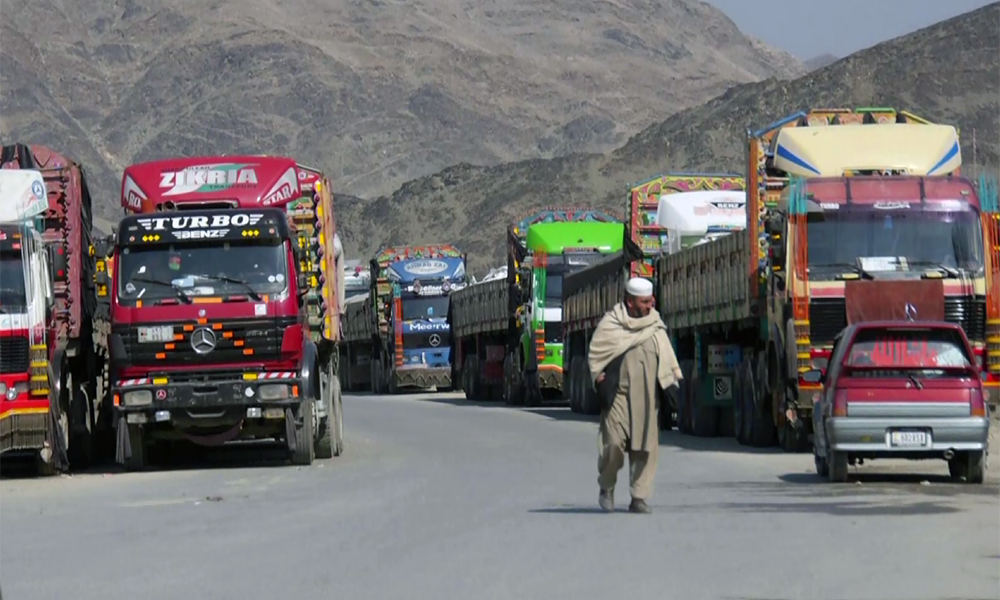
The sides agreed on a temporary free license for truck traffic for one year as a trial period, which will be implemented from May 2024.
They also reached an agreement regarding the transfer of goods through the airports of the two countries in the form of multi-modal air transit, which will start in the next two months.
As part of Pakistan’s recent measures regarding Afghanistan’s transit goods, it was agreed that within a week, the mandatory bank guarantee should be removed and insurance should be used as before, in consultation with the parties, the necessary measures will be taken to remove other obstacles.
The export of coal from Afghanistan to Pakistan was also discussed and the Pakistani side expressed its readiness to buy it at the international price, according to the statement.
Earlier Pakistan’s Charge d’Affaires for Afghanistan, Ubaid-ur-Rehman Nizamani said in a video message on Wednesday that the recent trade talks in Kabul had been “successful” and that he hoped this would give fresh impetus to bilateral trade between the two countries.









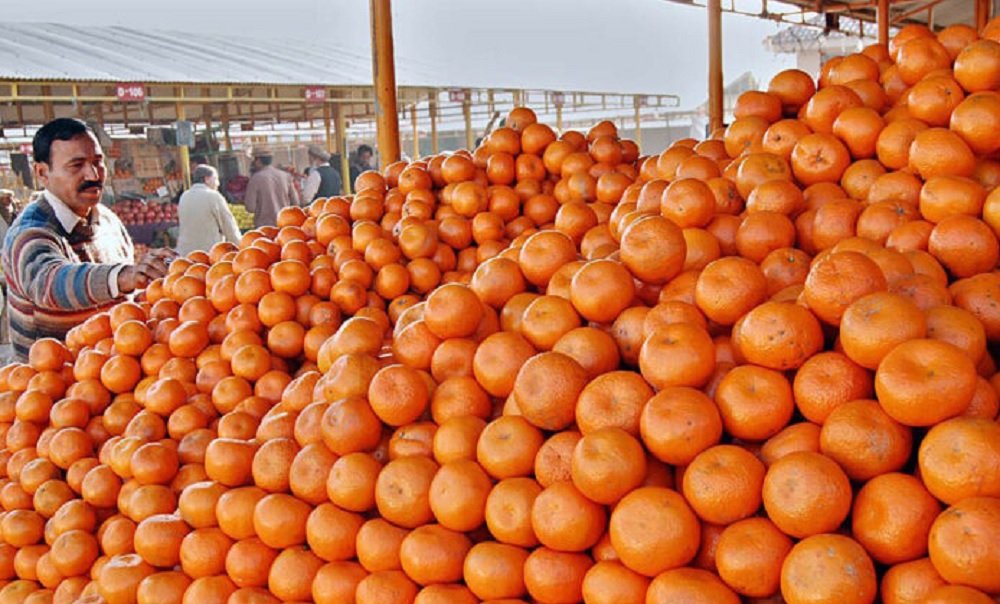
Pakistan’s kinno exports remain far below potential as regional tensions, high freight costs and weak government support continue to choke the citrus trade.
Despite being a leading global citrus producer, Pakistan is expected to export just 400,000–450,000 tonnes of kinno in the 2025–26 season, compared with an estimated capacity of 700,000–800,000 tonnes.
Exports in 2024–25 stood at around 350,000–400,000 tonnes, mainly to Russia, the UAE, Saudi Arabia, Afghanistan, Indonesia and Central Asia. While better fruit quality this season has raised hopes, persistent crossing disruptions—especially with Afghanistan—and transport bottlenecks have offset gains.
Growers say prices have collapsed sharply, forcing panic sales. Rates for large kinno have fallen from over Rs120 per kg early in the season to as low as Rs75, while smaller fruit is selling for Rs35–40 per kg amid weak demand.
Industry leaders warn the crisis is crippling processing units and jobs. More than 100 factories reportedly failed to open this season, with dozens more shutting down as exports stall. Cold storages in Sargodha are nearly full, putting fruit worth millions of dollars at risk of spoilage, while growers fear losses of up to Rs10 billion.
Exporters are urging the government to urgently resolve issues, subsidise logistics, and help access alternative markets, warning that prolonged inaction could devastate farmers, workers and the wider economy.

Iranian President Masoud Pezeshkian has said that Tehran will facilitate trade and economic exchanges with Afghanistan, including easing procedures at customs and local marketplaces.
He made the remarks during a televised interview following his visit to South Khorasan province, which shares a border with Afghanistan.
Pezeshkian, in a separate event addressing local business leaders, highlighted the province’s strategic advantages, citing its rich mineral resources, proximity to neighboring countries such as Afghanistan and Pakistan, and access to the ocean via the Chabahar port. He described the region as “a golden opportunity not found everywhere,” emphasizing its potential for economic growth and cross-border commerce.


Tahawol: Return of 6.8 million Afghan refugees to IEA rule

Saar: Pakistan army chief’s allegations against Afghanistan

Turkish intelligence captures a Daesh member near the Durand Line

Dozens of needy families in Kabul receive winter aid from Bayat Foundation

Nearly seven million Afghan refugees return home since Islamic Emirate’s takeover

Afghanistan economy under pressure as Pakistan shocks reshape trade flows

Gaza death toll tops 70,000, health ministry says

Iran rerouting more oil to China through Indonesia to dodge US sanctions

Islamic Emirate declines to attend Tehran meeting on Afghanistan

Cotton Industry in Crisis: Balkh farmers call for urgent action on exports
Tahawol: Return of 6.8 million Afghan refugees to IEA rule
Saar: Pakistan army chief’s allegations against Afghanistan

Tahawol: CSTO’s security concerns over Afghanistan

Saar: UNAMA’s activities in Afghanistan reviewed

Tahawol: Iran’s pledges to facilitate trade with Afghanistan discussed
-

 Latest News2 days ago
Afghanistan signs 30-year deal for marble mining in Daikundi
-
 Latest News4 days ago
Afghan border forces prevent illegal entry of hundreds into Iran
-

 Latest News3 days ago
Pakistan summons Afghan diplomat over deadly attack in North Waziristan
-
 Latest News3 days ago
Afghan health minister calls for medical cooperation between Kabul and New Delhi
-

 Latest News4 days ago
Japan allocates nearly $20 million in humanitarian aid for Afghanistan
-

 Latest News3 days ago
Karzai urges reopening of girls’ schools and universities for Afghanistan’s bright future
-
 Health5 days ago
Afghanistan seeks India’s support in standardizing traditional medicine
-
 Business5 days ago
Afghanistan-Kazakhstan banking ties discussed in Kabul meeting