
Latest News
Afghanistan on ‘countdown to catastrophe’ as winter looms

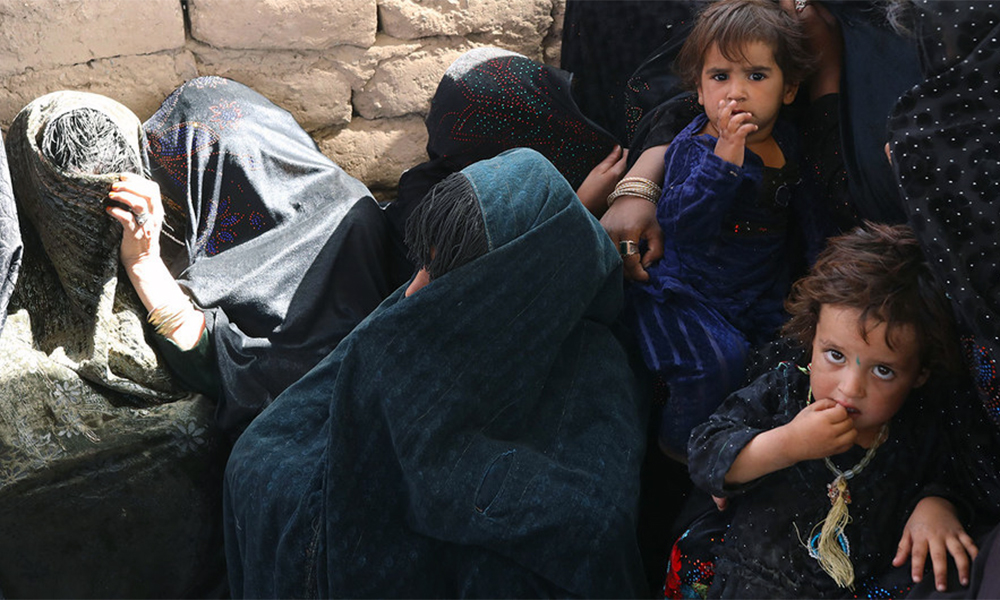
The combined shocks of drought, conflict, COVID-19 and an economic crisis in Afghanistan, have left more than half the population facing a record level of acute hunger, according to a new UN assessment published on Monday.
The latest Integrated Food Security Phase Classification (IPC) report co-led by the Food and Agriculture Organization (FAO) and World Food Programme (WFP), revealed that the lives, livelihoods and access to food for 22.8 million people will be severely impacted.
“It is urgent that we act efficiently and effectively to speed up and scale up our delivery in Afghanistan before winter cuts off a large part of the country, with millions of people – including farmers, women, young children and the elderly – going hungry in the freezing winter”, said FAO Director-General QU Dongyu. “It is a matter of life or death”.
According to the report, more than one-in-two Afghans will face Phase 3 crisis or Phase 4 emergency levels of acute food insecurity from November through to March (winter) and will require an urgent international response to prevent a humanitarian catastrophe.
“We cannot wait and see humanitarian disasters unfolding in front of us – it is unacceptable”, he added.
This is the highest number of acutely food insecure people ever recorded by the UN, during 10 years of conducting IPC analyses in Afghanistan.
And globally, the country is home to one of the largest number of people facing acute hunger.
“Hunger is rising and children are dying”, said WFP Executive Director David Beasley.
“We can’t feed people on promises – funding commitments must turn into hard cash, and the international community must come together to address this crisis, which is fast spinning out of control”.
Among those at risk are 3.2 million children under five, who are expected to suffer from acute malnutrition by the end of the year.
Last month, WFP and the UN Children’s Fund (UNICEF) warned that without immediate life-saving treatment, one million children risked dying from severe acute malnutrition.
And for the first time, urban residents are suffering from food insecurity at similar rates to rural communities.
“Afghanistan is now among the world’s worst humanitarian crises – if not the worst – and food security has all but collapsed”, said the WFP chief.
“This winter, millions of Afghans will be forced to choose between migration and starvation unless we can step up our life-saving assistance, and unless the economy can be resuscitated”.
To meet rising needs, the UN will need to mobilize resources at unprecedented levels, yet the UN’s Humanitarian Response Plan remains only a third funded.
“We are on a countdown to catastrophe and if we don’t act now, we will have a total disaster on our hands”, Beasley said.









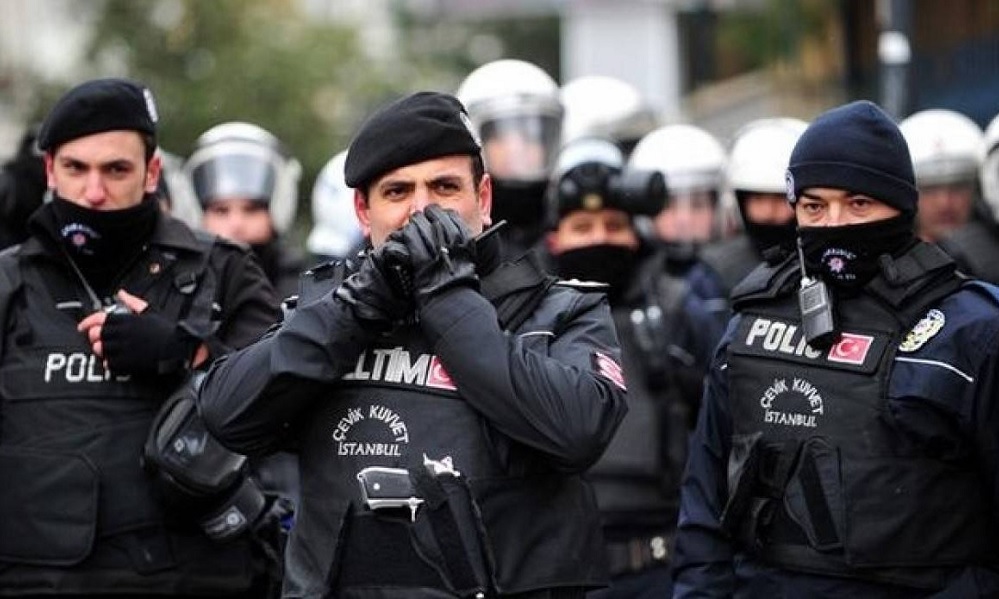
Turkish intelligence agents have captured a senior member of Daesh near the Durand Line, reportedly preventing planned suicide attacks in Turkey and other countries, according to Turkey’s state-run Anadolu Agency on Monday.
The suspect, identified as Mehmet Goren, is a Turkish citizen. He was apprehended during a covert operation and transferred to Turkey. Details on the timing of the operation or the involvement of Afghan and Pakistani authorities were not disclosed.
According to the report, Goren had risen through the ranks of Daesh and was allegedly tasked with carrying out suicide bombings in Turkey, Pakistan, Afghanistan, and Europe.
Daesh has a history of deadly attacks in Turkey, including the January 1, 2017 shooting at an Istanbul nightclub that killed 39 people.
Anadolu Agency reported that Goren’s arrest also provided intelligence on the group’s recruitment strategies and planned activities.
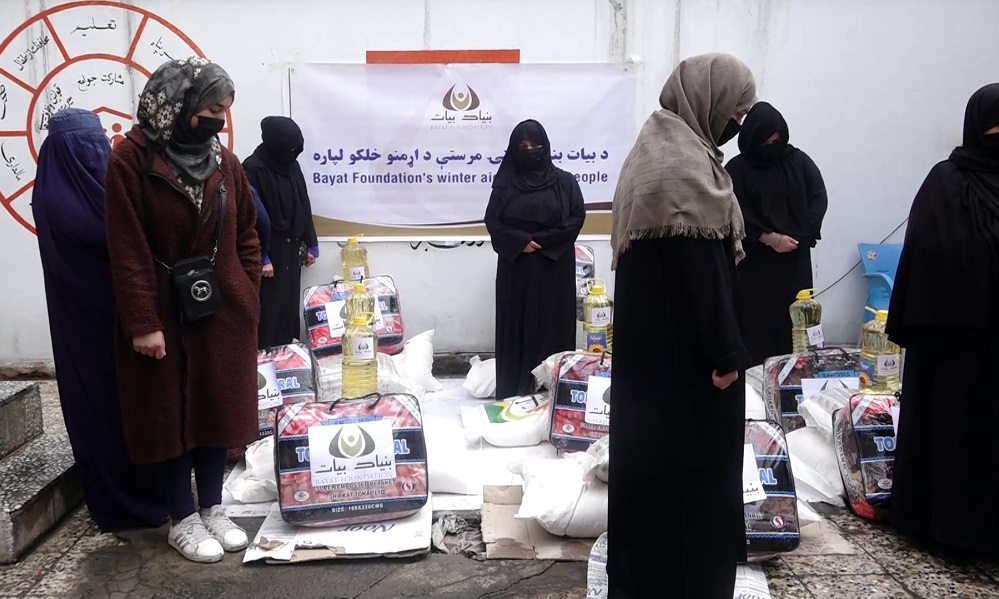
Dozens of needy families in Kabul’s fifth district have received essential winter assistance from the Bayat Foundation, as part of ongoing efforts to ease hardship during the cold season and worsening economic conditions.
According to foundation officials, the aid package includes staple food items such as flour, rice, and cooking oil, along with warm blankets to help families cope with freezing temperatures. Haji Mohammad Ismail, Deputy Head of Bayat Foundation, said the distribution began in Kabul and will soon be expanded to other provinces.
“Our assistance includes flour, rice, cooking oil, and blankets,” Ismail said. “Today, we started distributing these items in Kabul’s fifth district, and God willing, the aid will reach other provinces in the near future.”
Afghanistan continues to face widespread poverty, unemployment, and food insecurity, with many families struggling to meet basic needs, particularly during winter when access to work and heating becomes more difficult.Humanitarian organizations and charitable foundations have stepped up relief efforts to support those most affected.
Beneficiaries welcomed the assistance, describing it as a lifeline. “May God bless you for helping the poor. We had nothing and no work,” said one recipient. Another added, “Thank you for your help. Our flour was almost finished.”
Bayat Foundation officials stressed that winter aid distributions will continue in Kabul and other provinces in the coming days, as part of their broader commitment to supporting needy families across the country.

Since the Islamic Emirate came to power, approximately 6.8 million Afghans have returned home, either voluntarily or forcibly, from neighboring countries and other nations, according to the Minister of Refugees and Repatriation.
Mawlawi Abdul Kabir, speaking at a meeting on finalizing a draft plan for a permanent migration solution in Afghanistan, added that 1.3 million Afghans have been internally displaced due to natural disasters during the same period.
With winter approaching, widespread poverty and severe cold are threatening thousands of lives. Meanwhile, the forced expulsion of Afghan migrants from neighboring countries, particularly Iran and Pakistan, continues.
The Islamic Emirate has repeatedly urged neighboring states to allow migrants to return voluntarily. According to UNHCR, over two million Afghans have returned from Iran and Pakistan since the start of 2025.


Tahawol: Return of 6.8 million Afghan refugees to IEA rule

Saar: Pakistan army chief’s allegations against Afghanistan

Turkish intelligence captures a Daesh member near the Durand Line

Dozens of needy families in Kabul receive winter aid from Bayat Foundation

Nearly seven million Afghan refugees return home since Islamic Emirate’s takeover

Afghanistan economy under pressure as Pakistan shocks reshape trade flows

Gaza death toll tops 70,000, health ministry says

Afghanistan offers tax breaks, free land to attract Indian investors

Iran rerouting more oil to China through Indonesia to dodge US sanctions

Islamic Emirate declines to attend Tehran meeting on Afghanistan
Tahawol: Return of 6.8 million Afghan refugees to IEA rule
Saar: Pakistan army chief’s allegations against Afghanistan

Tahawol: CSTO’s security concerns over Afghanistan

Saar: UNAMA’s activities in Afghanistan reviewed

Tahawol: Iran’s pledges to facilitate trade with Afghanistan discussed
-

 Latest News2 days ago
Afghanistan signs 30-year deal for marble mining in Daikundi
-
 Latest News4 days ago
Afghan border forces prevent illegal entry of hundreds into Iran
-
 Latest News3 days ago
Pakistan summons Afghan diplomat over deadly attack in North Waziristan
-
 Latest News2 days ago
Afghan health minister calls for medical cooperation between Kabul and New Delhi
-

 Latest News4 days ago
Japan allocates nearly $20 million in humanitarian aid for Afghanistan
-

 Latest News3 days ago
Karzai urges reopening of girls’ schools and universities for Afghanistan’s bright future
-
 Health5 days ago
Afghanistan seeks India’s support in standardizing traditional medicine
-

 World5 days ago
US readies new Russia sanctions if Putin rejects peace deal, Bloomberg News reports