
Business
Afghani falls to record low amid pressing currency shortage

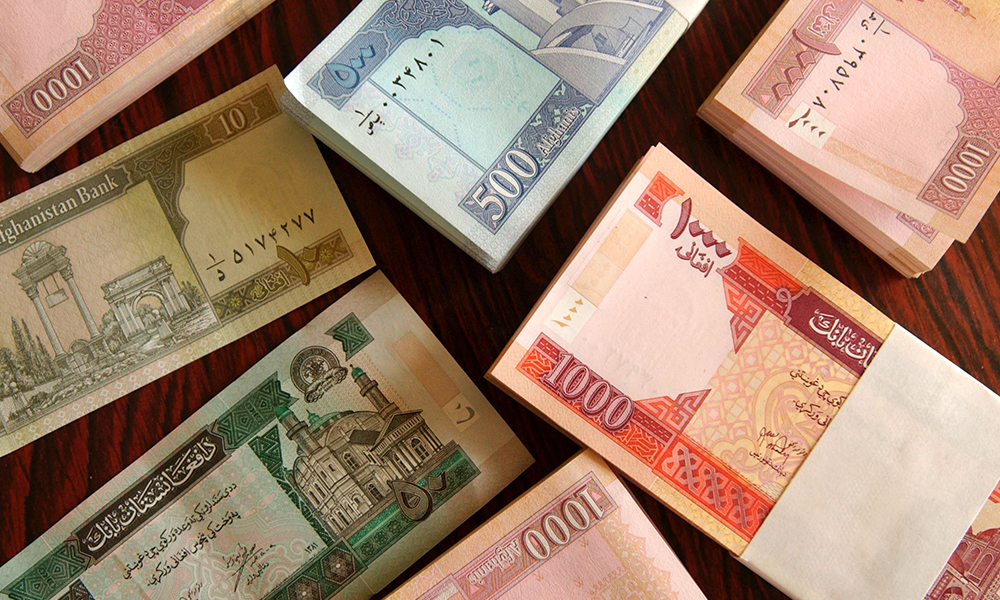
Economists are warning of an acute currency shortage in Afghanistan and the subsequent economic predicament as the Afghani has plummeted to its record low in trading.
The United Nations Development Programme (UNDP) issued a report earlier this week urging prompt actions to prevent the Afghan banking system from collapsing, which is now “in disarray” featuring inadequate liquidity and decreased deposits.
The largest currency exchange market in Kabul now has been crowded with people and the Afghani has dropped to its all-time low.
Before the Islamic Emirate of Afghanistan (IEA)’s takeover of Kabul in mid-August, one U.S. dollar was equal to about 70 Afghanis. But now the exchange rate hovers around 90 Afghanis to the dollar. The continued depreciation of the Afghan currency sparked fears among residents, with many flocking to the exchange market.
“Unfortunately in these two weeks the Afghan currency has been dropping down against foreign currencies with one dollar costing 95.5 Afghanis last week. Then the Afghanistan Bank released a statement that they will put 10 million U.S. dollars into the market, more than the 2.5 million dollars they actually took out. However, the price [of the U.S. dollar] didn’t go down but unfortunately have increased day by day,” said Zirak, spokesman from the all money dealers of Afghanistan.
Zirak said the country’s currency shortage was fueled by the combination of its assets frozen by the United States, the increasing domestic demand for U.S. dollars, as well as banks’ restrictions on dollar withdrawal.
The UNDP report noticed that non-performing loans in Afghanistan had increased from around 30 percent at the end of 2020 to 57 percent in September this year.
With the current trend and withdrawal restrictions, approximately 40 percent of the country’s deposit base will be lost by the end of 2021, said the report.
The currency shortage also comes along with rising prices. Some residents and businessmen in Kabul said that the prices of major commodities, such as food and fuel, have almost doubled compared with last year.
A Kabul resident is calling for the U.S. to release the frozen assets to save people’s lives.
“The U.S. blocked the money of Afghanistan, leading to the economic downturn. The poverty rate has reached its peak and people will die, so we urge the U.S. to release money of Afghanistan because [if not,] sure the people will die,” said Mustafa Bahram.




Business
Afghanistan, Kyrgyzstan aim to boost trade to $1 billion
Both sides welcomed the steady growth in trade between the two countries in recent years and agreed on the strategic goal of increasing bilateral trade to reach $1 billion.
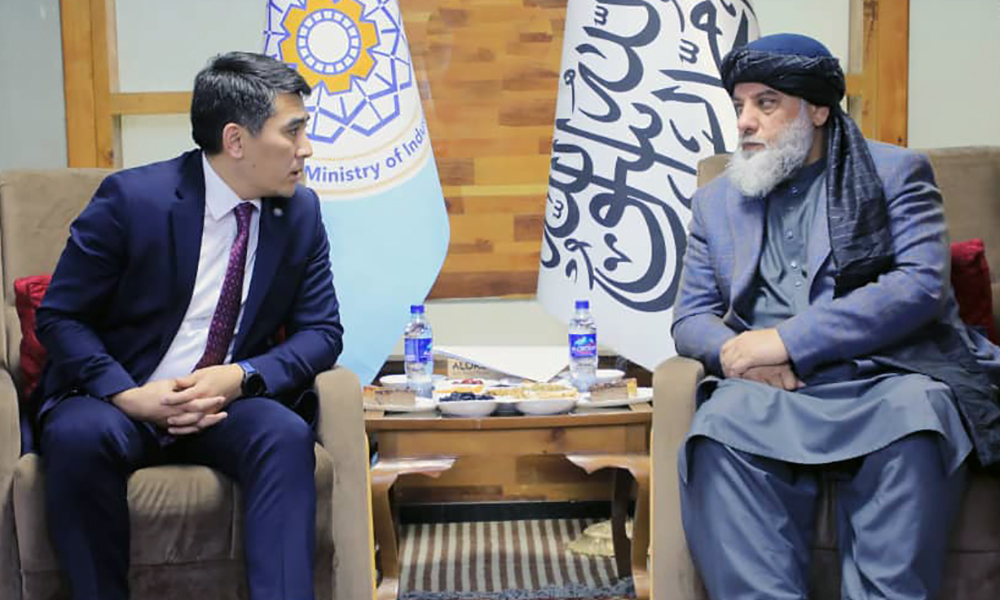
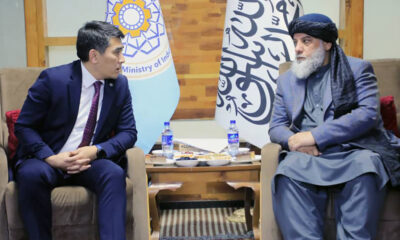
Afghanistan’s Minister of Industry and Commerce, Nooruddin Azizi, met with Kairat Tursunkulov, Deputy Foreign Minister of Kyrgyzstan, in Kabul this week to discuss ways to strengthen economic and trade ties between the two countries.
The meeting was also attended by Turdakun Sadykov, Kyrgyzstan’s ambassador to Afghanistan.
Azizi expressed appreciation for Kyrgyzstan’s participation in the recent Afghanistan–Central Asia consultative meeting and underlined the importance of expanding bilateral trade and economic cooperation.
Tursunkulov described Afghanistan and Kyrgyzstan as “brotherly nations” with strong cultural connections. He extended an invitation for Azizi to visit Kyrgyzstan to further enhance collaboration.
Both sides welcomed the steady growth in trade between the two countries in recent years and agreed on the strategic goal of increasing bilateral trade to reach $1 billion.
In addition, Azizi highlighted ongoing construction projects in Kyrgyzstan and suggested that Afghan construction companies and skilled workers could contribute their expertise to support development efforts in the country.
Business
Kazakhstan eyes rare metals mining projects in Afghanistan and Rwanda
As Kazakhstan looks to expand its global mining footprint, the exploration of rare metals in Afghanistan and Rwanda marks a significant step towards diversifying its mining interests.

Kazakhstan is actively exploring mining opportunities in Afghanistan and Rwanda, focusing on rare metals, as part of a broader strategy to expand its resource development portfolio. According to a report by Kazinform, Tau-Ken Samruk, Kazakhstan’s national mining company, is conducting laboratory studies on mineral samples obtained from both countries.
The announcement was made by Iran Sharkhan, Kazakhstan’s Vice Minister of Industry and Construction, during the Geoscience & Exploration Central Asia 2026 event. Sharkhan emphasized the substantial resource potential in Afghanistan and Rwanda, noting that current efforts are directed towards evaluating the legal and regulatory frameworks in these countries, as well as verifying the geological prospects before proceeding with potential mining operations.
The laboratory testing, which is taking place at Tau-Ken Samruk’s facilities and additional labs in Kazakhstan’s Karaganda region, involves comprehensive analysis of base metals, rare metals, and rare earth elements from the two countries. These tests will determine the viability of large-scale mining operations in the future.
Sharkhan further indicated that if the laboratory results confirm promising geological findings, more detailed plans for mining projects will be disclosed in the coming months.
The report also highlighted that Kazakhstan’s major mining companies have already invested nearly 150 billion tenge into scientific research in the country’s mining sector, reinforcing the nation’s commitment to advancing its mining industry on both the local and international stages.
As Kazakhstan looks to expand its global mining footprint, the exploration of rare metals in Afghanistan and Rwanda marks a significant step towards diversifying its mining interests.
Business
Tripartite agreement to launch new Russia–Turkmenistan–Afghanistan transit corridor
The agreement is scheduled to be finalized on the sidelines of the Kazan Forum 2026, according to Russian media reports.
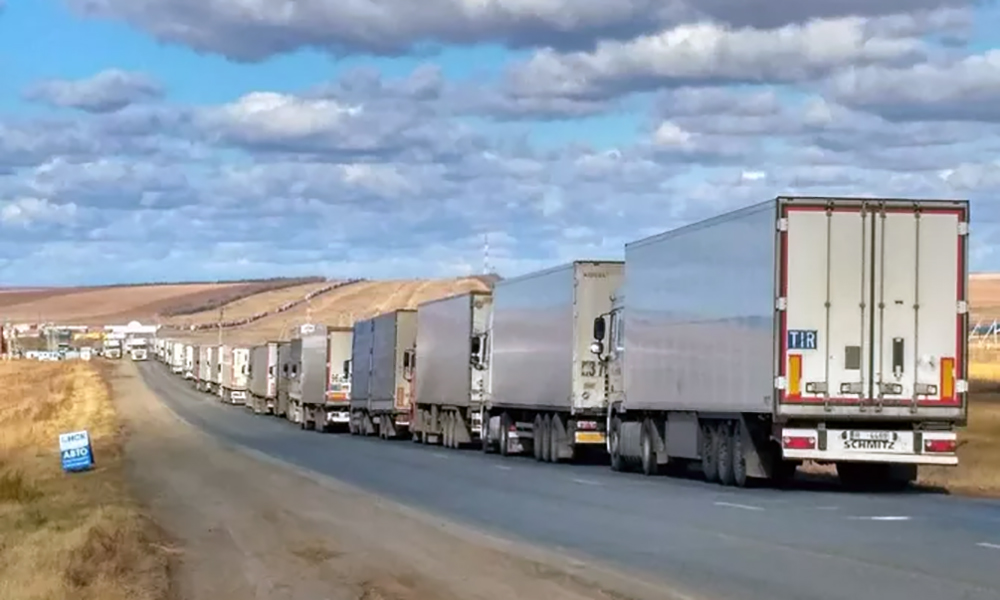
A tripartite agreement to establish a new trade and transit corridor linking Russia’s Republic of Tatarstan, Turkmenistan, and Afghanistan is expected to be signed in May, opening a fresh route for the movement of goods between Russia and Afghanistan.
The agreement is scheduled to be finalized on the sidelines of the Kazan Forum 2026, according to Russian media reports. The proposed corridor is seen as a strategic alternative to existing routes, particularly the North–South Corridor, which has faced disruptions due to ongoing tensions in Iran.
Rustam Khabibullin, head of the Russian Business Center in Afghanistan, said the new route could significantly streamline cargo transport between Russia and Afghanistan. He added that the corridor may also attract companies from Europe and Asia seeking more stable and reliable logistics options.
Afghanistan is considered a key supporter of the initiative. Once operational, the corridor is expected to facilitate direct shipments from Tatarstan to Afghanistan, reducing reliance on indirect transit routes through Central Asia.
The development has been welcomed by members of Afghanistan’s private sector, who say that expanding transit infrastructure and logistics networks could boost trade and contribute to economic growth.
In recent years, Afghanistan has emerged as an important market for Tatarstan’s halal products. According to reports, Afghan imports of halal goods from Tatarstan reached $51.7 million in 2025, marking a notable increase compared to the previous year. However, much of this trade has so far been conducted indirectly via third countries.
The planned corridor is expected to enhance direct trade links and improve efficiency in regional commerce.


Afghanistan and Uzbekistan seek stronger ties in health sector

Afghanistan, Kyrgyzstan aim to boost trade to $1 billion

IRGC intelligence chief killed as wave of strikes continues against Iran’s leadership

Afghanistan U-17s open their CAFA campaign against Kyrgyzstan

Afghan community in California condemns Pakistani strikes amid growing global protests

IEA Supreme Leader issues Eid-ul-Fitr message urging unity and support for Islamic system

14 Pakistani soldiers killed after military post falls along Durand line: MoD

Afghan airstrikes target Pakistani military sites in retaliation for air attacks

Turkmenistan, Afghanistan discuss steps to speed up land acquisition for TAPI pipeline

IPL 2026 kicks off in under two weeks; Afghan players set to shine

Tahawol: Continuation of Middle East crisis discussed

Saar: Ongoing Kabul-Islamabad talks in China discussed

Tawsia: This week’s key economic developments in Afghanistan discussed

Tahawol: Start of talks between Kabul-Islamabad in China discussed

Saar: Ongoing US and Israeli attacks on Iran discussed
-
 Business3 days ago
Tripartite agreement to launch new Russia–Turkmenistan–Afghanistan transit corridor
-
 Latest News1 day ago
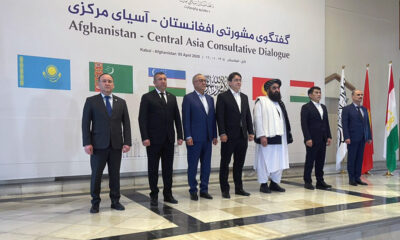
Afghanistan hosts inaugural Afghanistan–Central Asia Consultative Dialogue to strengthen regional cooperation
-
 Latest News3 days ago
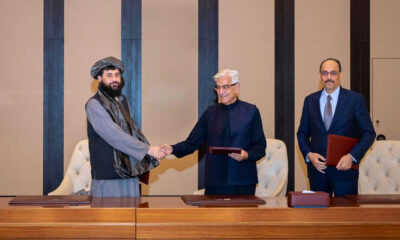
China says Afghanistan–Pakistan peace talks show progress
-

 Business2 days ago
Kazakhstan eyes rare metals mining projects in Afghanistan and Rwanda
-
 Latest News4 days ago
Afghanistan–Pakistan talks begin in China amid hopes for easing tensions
-

 Sport4 days ago
Late drama as Lucknow edge Delhi Capitals in IPL thriller
-

 Latest News4 days ago
Two Afghan brothers drown while fishing in Ireland
-
 Regional3 days ago
Iran claims it shot down US F-35 jet