
Business
ADB report states 70% of Afghan transit trade diverted through Iran

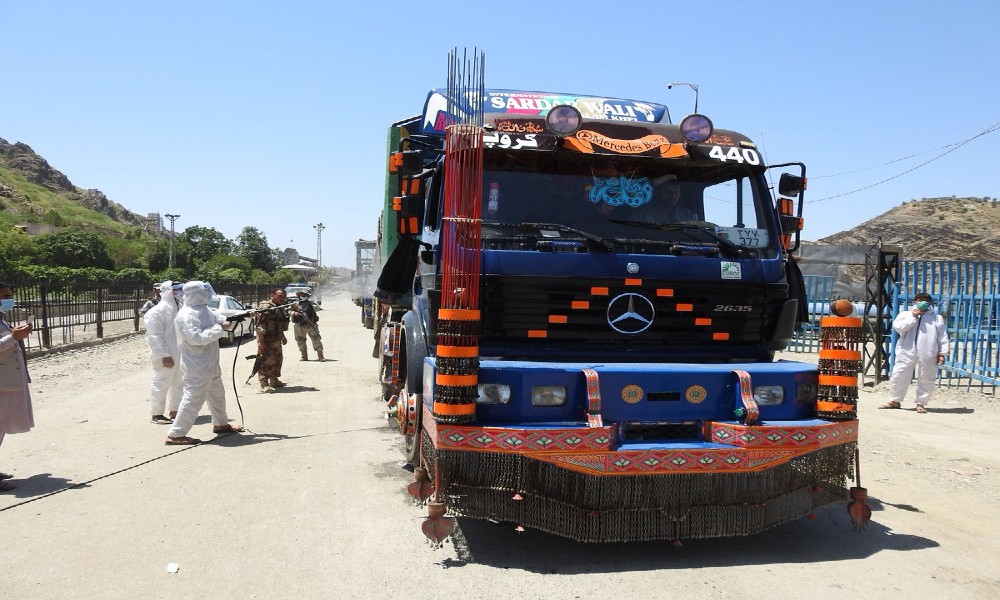
The Asian Development Bank (ADB) said in a recent report that although Afghanistan has traditionally relied on Pakistan as a gateway to international shipping routes, recent trends indicate that 70 percent of Afghan transit trade is now diverted through Iran.
The ADB’s Corridor Performance Measurement and Monitoring (CPMM) Annual Report 2019, published this week, stated that Pakistan is still facing challenges in terms of removing barriers for road transport.
This shift away from Pakistan has been driven by lower costs from foreign ports and more attractive security deposit and detention tariffs for transit containers from shipping lines that operate at Iran’s seaports.
The report stated that in addition, diesel fuel in Iran ($0.06 per liter) is significantly less expensive than in Pakistan ($0.86 per liter), which provides an additional edge in terms of cost competitiveness.
Also, in the absence of a formal agreement with Pakistan, shippers and carriers face uncertainty in transit procedures, it added.
The report further stated that the CPMM trade facilitation indicator (TFIs) reported longer average border-crossing time, although relatively unchanged average border-crossing cost.
Total average transport cost showed an improvement, but both measures of speeds showed that trucks did not move as fast compared to 2018. The average border-crossing time between Afghanistan and Pakistan increased to 38.2 hours.
The time to cross Chaman was 60.1 hours, ranked as the most time-consuming border crossing point in 2019.
Peshawar took 45.8 hours and ranked the third most time-consuming, the report stated.
These samples were estimated from commercial shipments carrying goods destined for Afghanistan as well as Central Asia.
Following the approval of its National Transport Policy in 2018, Pakistan embarked on a series of reforms and initiatives to address structural inefficiencies and impediments, to increase exports through lowering cost and lead time of transportation.
The report recommended the implementation of the national single-window system and port community system (PCS) to reduce cargo dwell time in seaports.
It said better parking area design and queuing systems could improve efficiency and speed up border crossing.
Pakistan does not yet have a domestic regulation on the international carriage of goods on road, which is a fundamental condition to implement the Carriage of Goods by Road (CMR).
The report also stated that greater adoption of freight on rail and inland waterways would reduce freight costs and boost low-unit value exports such as agricultural produce.
Afghanistan and Pakistan have however reactivated talks on the Afghanistan–Pakistan Transit Trade Agreement 2010, which aims to attract transit from Central Asia to seaports south of Pakistan, the report stated.





Business
Trans-Afghan Railway cost surges to over $7 billion as regional interest grows
The project includes approximately 760 kilometers of new railway construction inside Afghanistan, between Mazar-e Sharif and Torkham.

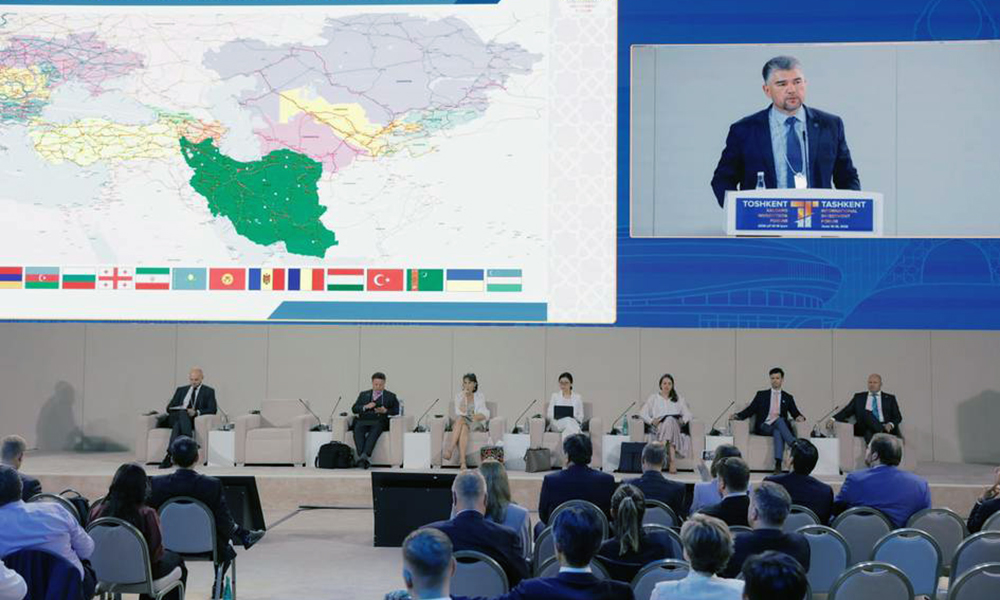
The estimated cost of the proposed Trans-Afghan Railway linking Uzbekistan, Afghanistan and Pakistan has risen to more than $7 billion, according to Uzbek Deputy Minister of Transport Jasurbek Choriyev.
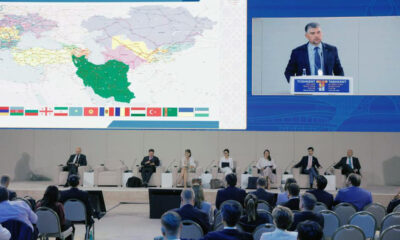
Speaking at the Tashkent International Investment Forum on June 18, Choriyev said the updated figure reflects ongoing technical assessments and the evolving scope of the project. Earlier estimates had placed the cost at around $4.8 billion.
He noted that a detailed feasibility study for the strategic railway is currently underway and is expected to be completed by the end of 2026.
Strategic regional corridor
The Trans-Afghan Railway is planned to establish a direct rail link from Termez in Uzbekistan through Mazar-e Sharif, Logar, Kharlachi and Torkham in Afghanistan, before continuing into Pakistan and connecting with major ports including Karachi.
The project includes approximately 760 kilometers of new railway construction inside Afghanistan, between Mazar-e Sharif and Torkham.
According to officials, the railway is expected to significantly reduce transport time between Central Asia and Pakistan—from around 35 days to as little as three to five days—while also lowering logistics costs.
Trade and cargo capacity
Choriyev said the railway could handle up to 20 million tons of cargo annually, doubling earlier estimates of 10 million tons.
He added that the corridor would provide Central Asian countries with faster access to global maritime trade routes and strengthen economic links between South Asia, Central Asia and CIS states, where combined trade exceeds $700 billion.
Officials also estimate that container transport costs along the route could be reduced by nearly three times compared to existing logistics pathways.
Financing and international interest
The deputy minister confirmed that several countries, including the United Arab Emirates and Qatar, have expressed interest in participating in the project. The Eurasian Development Bank has also indicated readiness to support financing.
Uzbek officials have been promoting the railway as a long-term strategic infrastructure project aimed at boosting regional connectivity and trade integration. While feasibility work continues through 2026, final investment and construction decisions are expected to follow upon completion of the study.
The project is widely seen as a key component of efforts to transform Afghanistan into a transit hub linking Central and South Asia.
Business
High-level Kazakh delegation arrives in Kabul as Afghanistan, Kazakhstan eye $3 billion trade target
Azizi noted that annual trade between Afghanistan and Kazakhstan currently stands at nearly $600 million, but both governments are working toward increasing bilateral trade to $3 billion in the coming years.
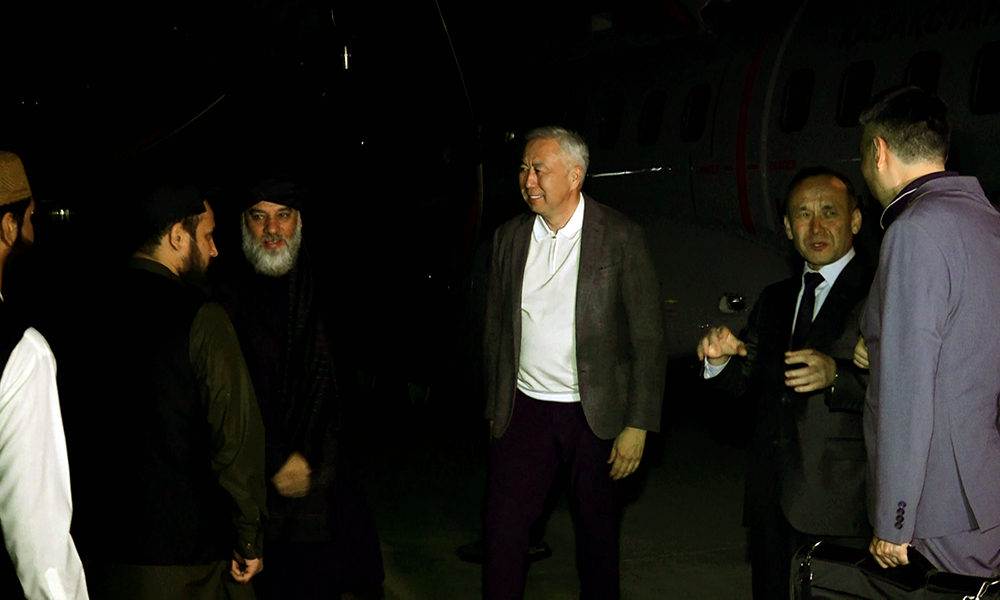
A high-level delegation from Kazakhstan, led by Deputy Prime Minister and Minister of National Economy Serik Zhumangarin, arrived in Kabul on Thursday night for talks aimed at expanding political, economic and trade cooperation between Afghanistan and Kazakhstan.
The visit is expected to focus on strengthening bilateral relations, increasing trade, promoting investment opportunities and enhancing regional economic connectivity.
Welcoming the delegation, Nooruddin Azizi, Afghanistan’s Minister of Industry and Commerce, said the visit reflects the growing partnership between Kabul and Astana and could play a significant role in deepening cooperation across multiple sectors.
According to Azizi, members of the Kazakh delegation are scheduled to meet with senior officials of the Islamic Emirate to discuss a broad range of political, economic and commercial issues. He described the visit as an opportunity to open a new chapter in bilateral relations.
“The presence of this high-level delegation demonstrates the commitment of both countries to expanding cooperation and strengthening long-term economic and political ties,” Azizi said.
Trade volume targeted to reach $3 billion
Azizi noted that annual trade between Afghanistan and Kazakhstan currently stands at nearly $600 million, but both governments are working toward increasing bilateral trade to $3 billion in the coming years.
He said Kazakhstan is currently one of Afghanistan’s major suppliers of wheat, flour and processed agricultural products, while Afghanistan has the potential to significantly expand exports of fresh and dried fruits to the Kazakh market.
According to the minister, Kazakhstan could become one of the most important alternative export destinations for Afghan traders as economic relations continue to develop.
Investment and business opportunities
The Kazakh delegation will also participate in a joint exhibition of Afghan and Kazakh products in Kabul, designed to showcase the production capabilities of both countries, strengthen commercial partnerships and create new opportunities for joint investment.
Azizi emphasized that Afghanistan has created favorable conditions for foreign investment and invited Kazakh businesses to invest in sectors including agriculture, industry, transport, transit and logistics.
He said the Afghan government is prepared to provide the necessary facilities and full support for foreign investors seeking opportunities in the country.
Experts see broader regional significance
Economic experts believe the visit extends beyond trade and investment, carrying important political and regional implications.
They say closer cooperation between Kabul and Astana could strengthen regional connectivity by expanding trade corridors, improving transit and transportation links, boosting agricultural exports and encouraging broader economic integration across Central and South Asia.
The visit comes as Afghanistan and Kazakhstan have steadily expanded cooperation in recent months in areas including trade, transit, cargo transportation, agricultural exports and regional economic initiatives.
Officials from both countries have repeatedly emphasized the importance of increasing bilateral trade, promoting joint investment projects and strengthening economic cooperation. Observers believe the current visit by the senior Kazakh delegation could mark another significant step toward achieving those objectives and advancing the two countries’ shared goal of expanding bilateral trade to $3 billion.
Business
Uzbekistan, Afghanistan push to expand trade and investment cooperation
Nearly 50 business representatives from both countries participated in an open dialogue aimed at addressing challenges facing entrepreneurs and identifying new opportunities for economic cooperation.
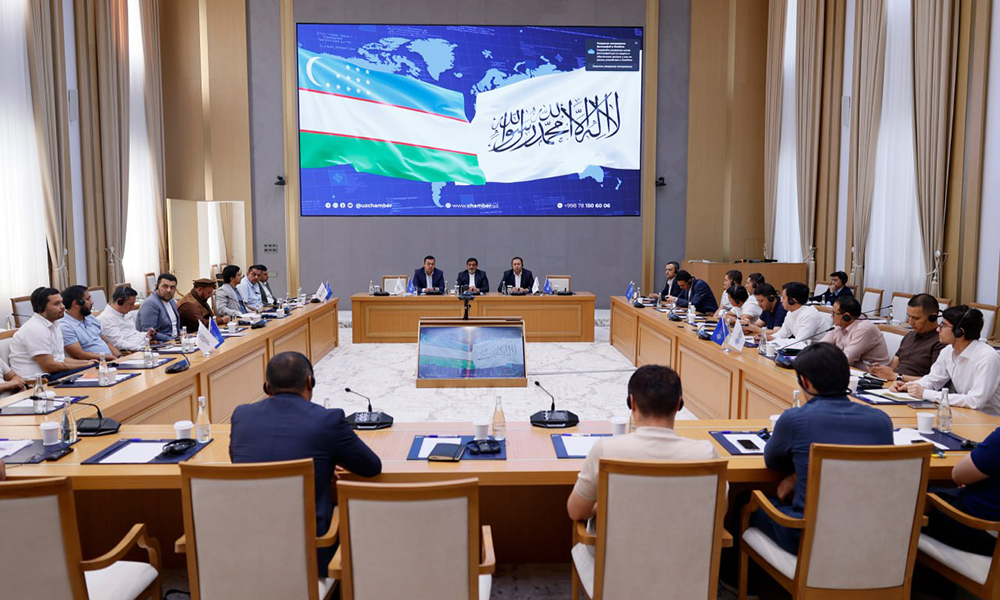
Business leaders from Uzbekistan and Afghanistan have reaffirmed their commitment to strengthening bilateral trade and investment, focusing on improved logistics, digital commerce, and closer cooperation between the private sectors of the two neighboring countries.
According to a statement issued by the Chamber of Commerce and Industry of Uzbekistan, nearly 50 business representatives from both countries participated in an open dialogue aimed at addressing challenges facing entrepreneurs and identifying new opportunities for economic cooperation.
The meeting was attended by Sukhrob Abdurakhmanov, Deputy Chairman of the Chamber of Commerce and Industry of Uzbekistan, and Sayed Karim Hashimi, Chairman of the Afghanistan Chamber of Commerce and Investment (ACCI).
Participants discussed key issues affecting business operations, explored ways to expand commercial partnerships, and exchanged views on measures to strengthen economic ties between the two countries.
Both sides stressed the importance of enhancing the effectiveness of the Uzbekistan–Afghanistan Business Council and introducing practical mechanisms to promptly resolve challenges facing private-sector companies.
A proposal was also presented to establish a trade warehouse and logistics center for Uzbek products in Afghanistan’s Naimabad region. Participants said the initiative could reduce transportation costs, shorten delivery times, and increase the volume of bilateral trade.
The discussions also highlighted the growing role of digital commerce, with both sides encouraging wider use of the Yarmarka.uzex.uz electronic trading platform to facilitate trade transactions, promote products, expand marketing opportunities, and strengthen transparent business relations.
At the conclusion of the meeting, the two sides agreed to continue working together to remove trade barriers, expand investment opportunities, and create a more favorable business environment for companies operating in both Uzbekistan and Afghanistan.
The talks underscore the two countries’ continued efforts to deepen economic engagement through improved cross-border logistics, digital trade solutions, and stronger business-to-business cooperation, with the proposed logistics hub expected to play a key role in boosting regional connectivity and commercial exchange.


Afghan-Kazakh Chamber of Commerce to be inaugurated in Kabul

Amnesty International warns of rising expulsions of Afghan refugees amid global crackdown

Peaceful Afghanistan key to dignified return of Afghan refugees: Pakistani PM

Pakistani Kashmir faces shutdown as protests leave more than 20 dead

Trans-Afghan Railway cost surges to over $7 billion as regional interest grows

Norway’s Viking-inspired World Cup team photo goes viral

Afghanistan announce squad for India series

Afghanistan, Russia sign military cooperation agreement

Major pharma firms eye investment in Afghanistan

Afghanistan expands oil production as investment in Amu Darya fields grows

Tawsia: Last week’s key economic developments discsused

Tahawol: Afghanistan–UN ongoing engagement discussed

Saar: Trump’s remarks on US military equipment in Afghanistan discussed

Tahawol: Passage of 3 Iranian tankers through US naval blockade discussed

Saar: Discussion on outcome of G7 summit in France
-
 Business2 days ago
Afghanistan signs $67 million contract for cement production in Samangan
-
 Latest News4 days ago
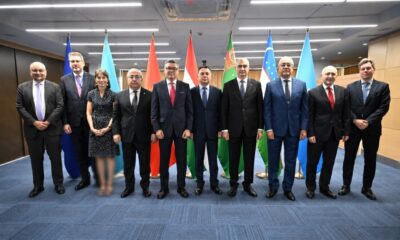
EU, Central Asian representatives meet in Kazakhstan to discuss Afghanistan cooperation
-

 Sport3 days ago
2nd ODI: India crush Afghanistan by 170 runs to seal series lead
-

 International Sports4 days ago
World Cup: Tunisia sack coach, appoint Herve Renard after 5-goal thrashing
-

 Latest News2 days ago
Trump says US may seek return of military equipment left in Afghanistan
-

 Latest News3 days ago
Afghan national pleads not guilty in deadly National Guard shooting near White House
-

 Health2 days ago
Polio cases in Afghanistan rise to six in 2026 as two new cases confirmed
-

 World3 days ago
G7 leaders express optimism for peace after Trump’s ‘very good’ Zelenskiy meeting