
Business
ADB approves $50 million grant for Afghanistan’s COVID vaccine campaign

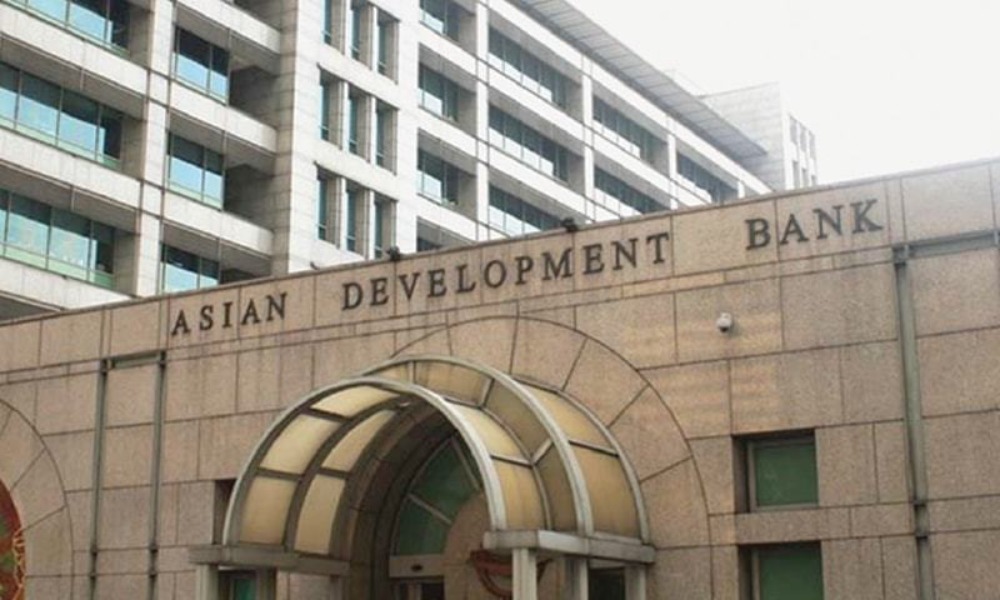
The Asian Development Bank (ADB) on Tuesday approved a $50 million grant to help the Afghan government procure and deploy safe, high-quality COVID-19 vaccines, and strengthen the country’s capacity to implement its vaccine program.
The ADB said in a statement that the project will support the National Plan for COVID-19 Vaccination in Afghanistan by procuring and transporting six million doses of COVID-19 vaccines for priority segments of the population, as determined by the government.
“As Afghanistan continues to grapple with COVID-19, this project will help ensure that safe and high-quality vaccines are made available to the Afghan people,” said ADB President Masatsugu Asakawa.
“Making vaccines available to vulnerable groups and strengthening Afghanistan’s immunization program will help to save lives and is a vital step toward recovery.
This support is part of ADB’s strong commitment to helping Afghanistan overcome the pandemic and achieve a sustainable economic recovery,” Asakawa said.
Under its national plan, the Afghan government aims to vaccinate all eligible people including vulnerable groups, approximately 60 percent of the total population.
ADB’s COVID-19 Vaccine Support Project will provide financing to procure vaccines for at least 2.6 million people, or about 11 percent of the eligible population, including through the COVID-19 Vaccines Global Access (COVAX)
Advance Market Commitment facility.
The grant will also strengthen the Ministry of Public Health’s capacity in planning,
communications, coordination, and implementation of the vaccine program at national and provincial levels.
According to the ADB, technical training including specialized gender sessions will ensure that vaccines are administered to women in a culturally sensitive manner and a waste management firm will be engaged to build capacity for proper disposal of medical waste.
ADB estimates that Afghanistan’s GDP contracted by five percent in 2020 as the pandemic forced business closures and disrupted supply chains.
Unemployment is projected to have risen from 23.9 percent in 2019 to 37.9 percent in 2020 adding to the negative pressures of increased costs of food,
housing, and health services.
ADB’s grant complements other development partners’ efforts and contributes to fostering growth in the Central Asia Regional Economic Cooperation region through addressing pandemic risks and cross-border health threats.
Afghan health officials meanwhile said Tuesday that the number of coronavirus infections has increased in Afghanistan recently.
The Ministry of Public Health said 176 new cases of COVID-19 and seven deaths were reported in the past 24 hours across Afghanistan.
According to the ministry 28 others recovered in the mentioned time.
The ministry warned a lockdown will be imposed in major cities including Kabul if people fail to take the necessary precautions to help curb the spread of the virus.



Business
Afghanistan, Belarus discuss expanding industrial and trade cooperation
Particular attention was given to companies producing tractors, industrial machinery, and equipment and vehicles used in the mining sector.
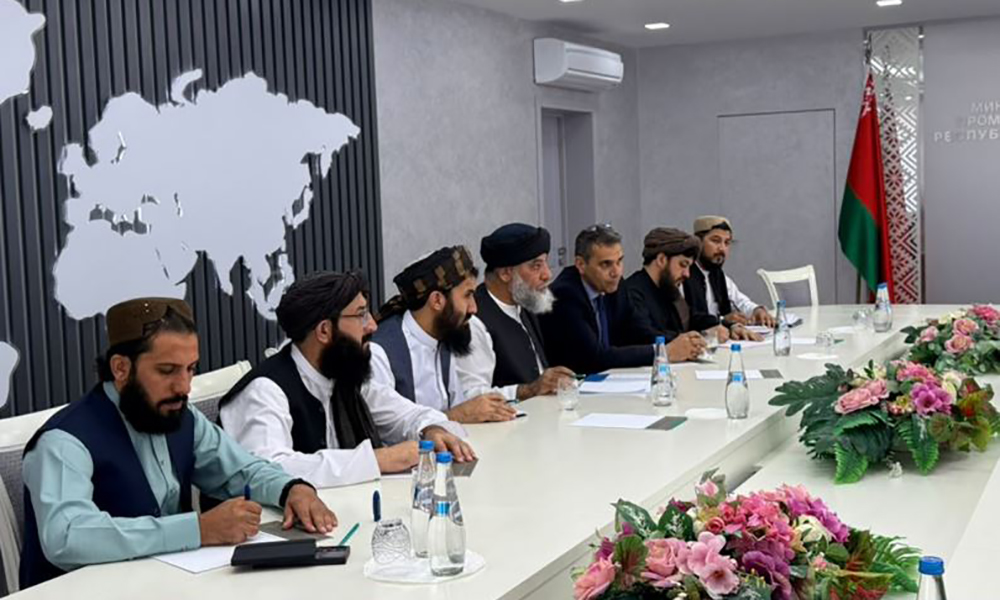
Afghanistan’s Minister of Industry and Commerce, Nooruddin Azizi, met with Belarus’ Minister of Industry during an official visit to the country.
The two sides discussed the establishment of manufacturing plants in Afghanistan, the regular organization of the Afghanistan-Belarus Business Forum, and follow-up on issues raised through the countries’ economic commission.
Belarusian officials expressed appreciation for Afghanistan’s participation in the country’s international industrial exhibition and voiced interest in expanding the presence of Belarusian manufacturing companies in Afghanistan.
Particular attention was given to companies producing tractors, industrial machinery, and equipment and vehicles used in the mining sector.
The second International Industrial Exhibition of Belarus is being held with the participation of around 500 companies from different countries. The exhibition has also attracted visitors from European and Asian countries.
Business
Afghanistan, Tajikistan seek stronger trade and investment ties
The two sides discussed increasing trade exchanges, establishing direct links between traders and investors, and organizing joint economic programs.
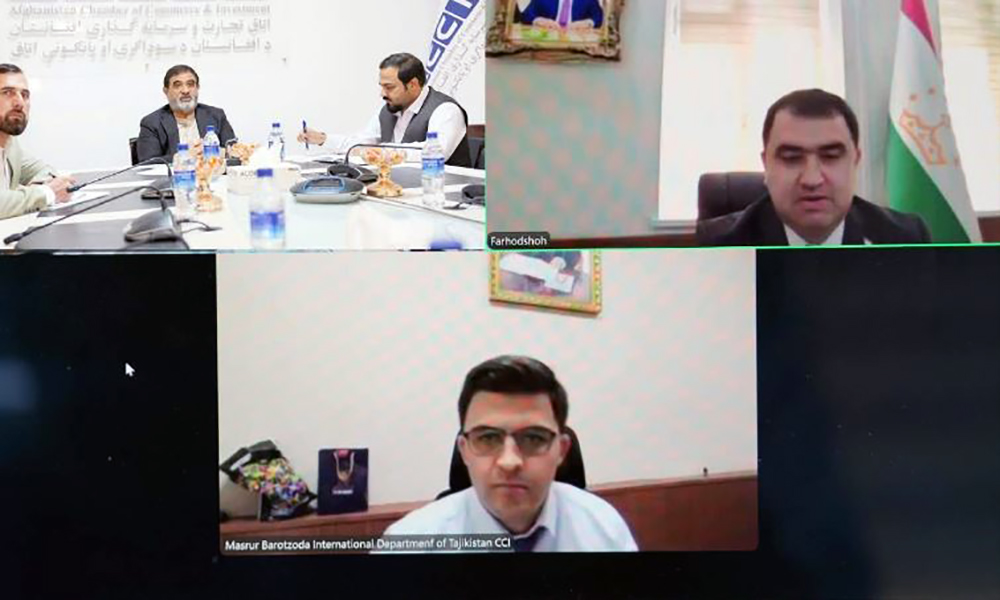
The heads of the chambers of commerce and industry of Afghanistan and Tajikistan have agreed to strengthen bilateral trade, promote investment and expand cooperation between the private sectors of the two countries.
Sayed Karim Hashemi, head of the Afghanistan Chamber of Commerce and Investment (ACCI), held an online meeting with Farhad Shah Rahman Alizoda, head of the Chamber of Commerce and Industry of Tajikistan, to discuss ways to expand economic ties.
The two sides discussed increasing trade exchanges, establishing direct links between traders and investors, and organizing joint economic programs.
Hashemi invited Tajik traders and investors to participate in the fifth Imam Abu Hanifa International Exhibition in Kabul.
Alizoda, meanwhile, invited an Afghan business delegation to attend a major trade and industrial exhibition in Dushanbe.
The two sides also stressed the importance of exchanging business delegations and developing long-term cooperation between the private sectors of Afghanistan and Tajikistan.
Business
Kazakhstan grain shipments to Afghanistan rise over 4-fold
Of the total, 7.2 million tons were transported for export, while 2.1 million tons were supplied to the domestic market.
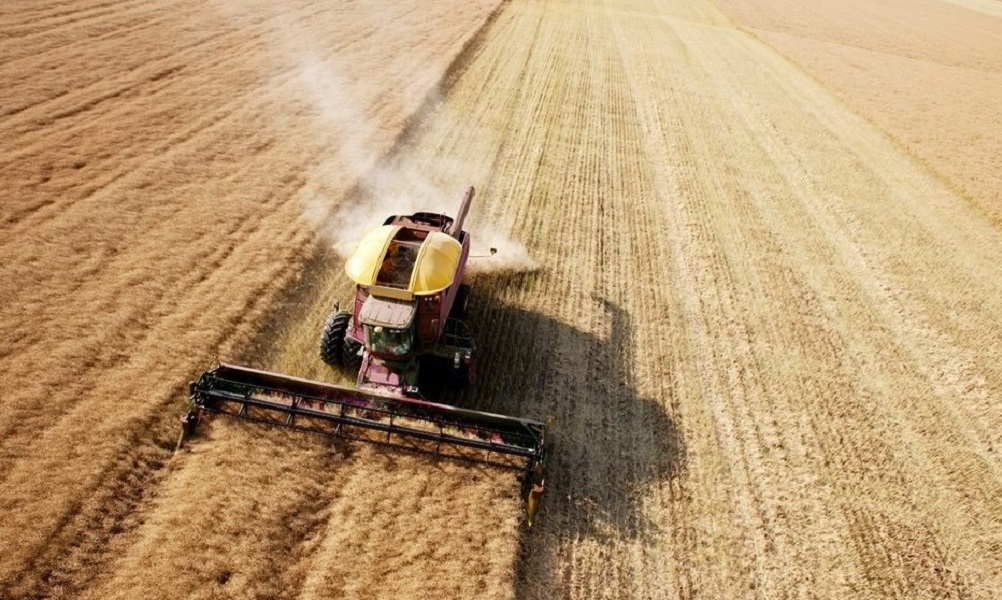
Grain shipments from Kazakhstan to Afghanistan increased 4.4 times in the first eight months of the year, reaching 655,000 tons, according to Kazakhstan’s Transport Vice Minister Zhanibek Taizhanov.
Speaking at a government meeting, Taizhanov said Kazakhstan transported 9.3 million tons of grain by rail during the period, a 13% increase compared with the same period in 2025.
Of the total, 7.2 million tons were transported for export, while 2.1 million tons were supplied to the domestic market.
Taizhanov said grain shipments to Central Asia increased by 37%, while shipments to China rose by 34%. Grain exports through Russian ports also increased by 9%.
Meanwhile, combined fodder exports rose by 38% to 2.6 million tons.
Earlier, Kazakhstan’s Vice Minister of Agriculture Azat Sultanov said the country plans to commission 15 additional vegetable storage facilities by the end of 2026, with a combined capacity of 129,000 tons.


India clinch Asian Games cricket gold after beating Pakistan

India says drug kingpin linked to Afghan heroin, meth deported from Turkey

DABS, Tajikistan’s Pamir Energy sign agreement on electricity supply to Badakhshan

Afghan envoy in Moscow stresses economic cooperation with region

Russian embassy expresses concern over civilian casualties in Pakistani airstrikes on Afghanistan

Saudi energy group signs major Afghanistan deals covering gas exploration and pipeline plans

Khalilzad: Afghanistan ready to attract major investment

Messi returns to Inter Miami after Argentina retirement

Imam Abu Hanifa exhibition to draw exhibitors from more than 20 countries

Maryam Nawaz says Punjab faces greater security threats from neighbouring provinces

Tahawol: Escalation of internal political crisis in Pakistan discussed

Saar: Continuation of crisis in the Middle East discussed

Tawsia: Review of three key economic developments in Afghanistan

Tahawol: Pakistan’s airstrikes on civilians in Afghanistan discussed

Tahawol: Improvement in Afghanistan-China relations discussed
-
 Latest News3 days ago
Four members of one family killed in Helmand in Pakistan airstrike
-
 Regional4 days ago
US imposes sanctions on 13 tied to Iran weapons procurement
-

 Sport5 days ago
Istiqlal Kabul beat Khurasan Faryab 2-0 with late goals
-

 Sport5 days ago
Afghanistan Champions League: Toofan Herat and Aino Mina Kandahar draw 1-1
-
 Business5 days ago
Kazakhstan grain shipments to Afghanistan rise over 4-fold
-

 Sport2 days ago
ACB announces Afghanistan squads for Bangladesh, Zimbabwe series
-
 Business4 days ago
Afghanistan, Tajikistan seek stronger trade and investment ties
-
 Latest News3 days ago
Moscow to host 8th meeting of Afghanistan consultations on October 5