
Latest News
Abdullah introduces list of cabinet nominees to Presidential Palace

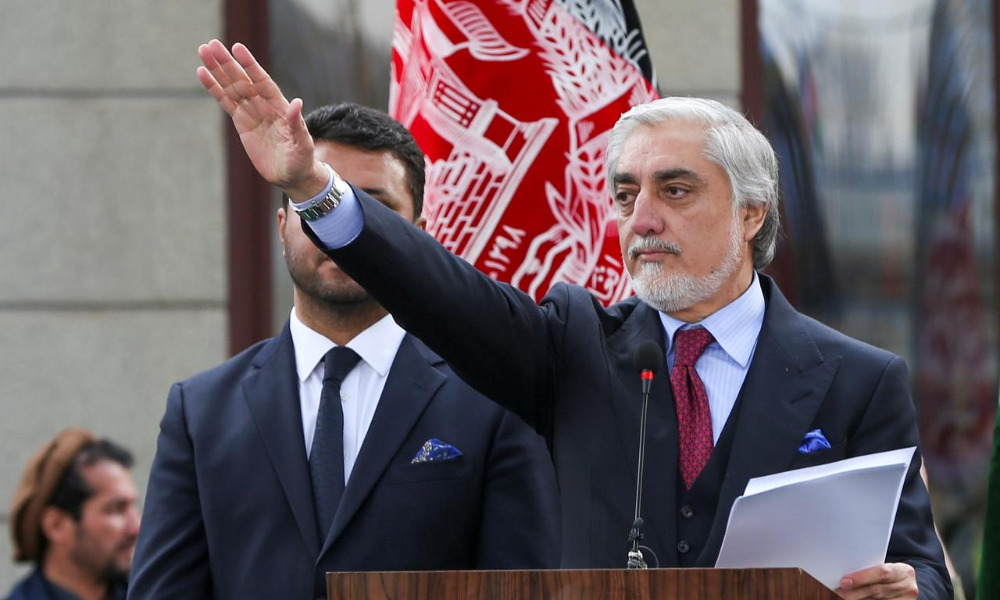
Abdullah Abdullah, the Chairman of the High Council for National Reconciliation has introduced a list of cabinet nominees to the Presidential Palace.
Sources close to Abdullah, however, say that there are still differences over the proposed list between Abdullah front-rows over seat distribution.
Figures listed as candidates for the designated-ministers; Massoud Andarabi for the Ministry of Interior Affairs, Fazl Ahmad Manavi for Ministry of Justice, Anwar al-Haq Ahadi for Ministry of Agriculture, Noor Rahman Akhlaqi for Ministry of Immigration, Mohebullah Samim for Ministry of Borders and Tribal Affairs, Mostafa Mastoor for Ministry of Peace, Masoumah Khavari for Ministry of Communications, Nisar Ahmad Ghoriani for Ministry of Commerce, Mansour Saadat Naderi for Ministry of Economy, Bashir Ahmad Tahianj for Ministry of Labor and Social Affairs, Kanishka Turkestani for Ministry of Higher Education, Abbas Basir for Ministry of Transport and Najib Agha Fahim, Candidate for Ministry of Martyrs and Disabled.
The list of ministerial nominees for Abdullah Abdullah’s share, however, has clashed within his party members.
Sources close to Abdullah say that the National Movement Party wants three ministries from Abdullah’s share and does not agree with this list.
According to sources, the National Movement has nominated Bashir Ahmad Tahianj for the Ministry of Agriculture, Qudratullah Zaki for the Ministry of Transportation and Kanishka Turkestani for the Ministry of Immigration.
But some other figures close to Abdullah deny the disagreements within the group.
On the other hand, the Independent Directorate of Local Governance says that 11 new provincial governors have been nominated by the president so far and that this process will continue. Abdullah Abdullah, according to the power-sharing agreement between him and Ghani, can introduce 50% of the Afghan cabinet members.
Arg and Sapidar Palace have not officially commented on the matter.






The Asian Football Confederation (AFC) has announced the postponement of several major club fixtures in its West Region competitions due to the rapidly deteriorating security situation in the Middle East.
In a statement released Monday, the AFC confirmed that the AFC Champions League Elite 2025/26 Round of 16 first-leg matches in the West Region — originally scheduled for Monday, March 2, and Tuesday, March 3 — will be rescheduled.
The decision affects top clubs from countries including Saudi Arabia, Iran, Qatar, the United Arab Emirates, Iraq, and Uzbekistan, many of whom were preparing for high-stakes knockout ties.
The postponements also extend to the AFC Champions League Two 2025/26 and the AFC Challenge League 2025/26, where West Region quarter-final first-leg matches set to take place between March 3 and 4 have been delayed until further notice.
These competitions feature emerging and mid-tier clubs from across West and Central Asia, for whom continental progression carries significant financial and sporting importance.
The move comes amid escalating military tensions across parts of the Middle East, with airstrikes and cross-border hostilities raising concerns about travel safety, airspace closures, and the security of players and supporters.
Several countries in the region have experienced heightened alert levels, leading to logistical complications for international sporting events.
Clubs from nations directly or indirectly affected by the conflict — including teams from Iran, Saudi Arabia, Qatar, and the United Arab Emirates — now face uncertainty over revised travel plans, fixture congestion, and potential impacts on domestic league schedules.
However, the AFC confirmed that matches involving clubs from the East Region — including sides from Japan, South Korea, China, Thailand, Australia, and other East and Southeast Asian nations — will proceed as originally scheduled across all AFC club competitions.
“The AFC will continue to closely monitor this rapidly evolving situation and remains resolute in ensuring the safety and security of all players, teams, officials, and fans,” the governing body said in its statement.
The postponements underscore how escalating geopolitical tensions are now reverberating beyond politics and security, disrupting one of Asia’s premier sporting competitions and affecting clubs, supporters, and broadcasters across the continent.
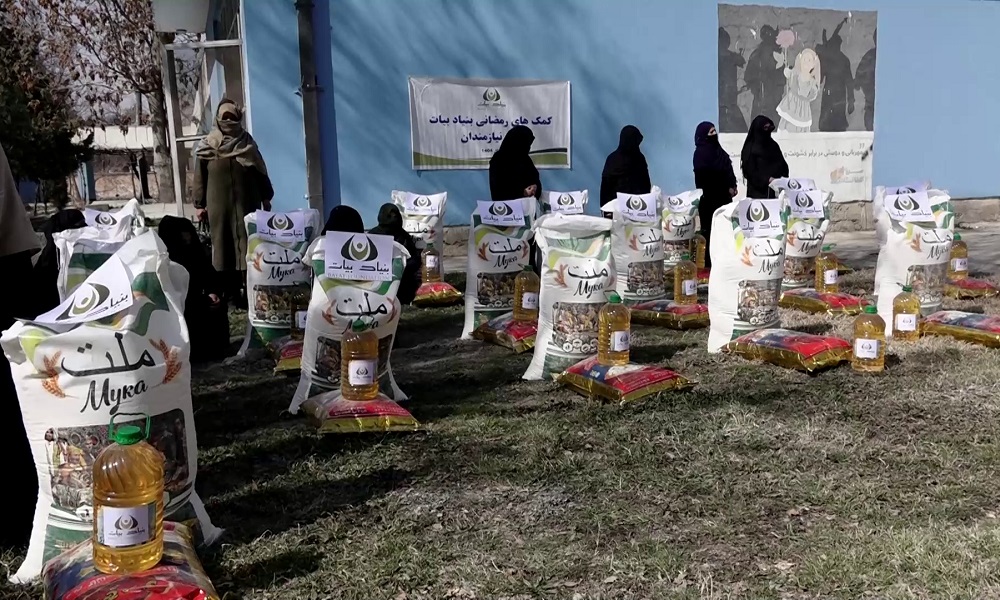
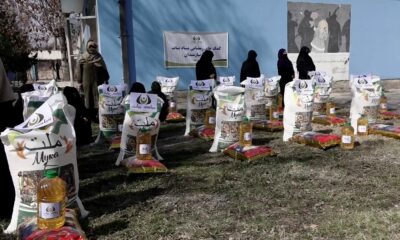
As Afghanistan continues to grapple with a severe humanitarian crisis compounded by economic hardship and heightened military tensions in the region, the Bayat Foundation has stepped up efforts to support vulnerable families in Kabul through its annual Ramadan assistance program.
This week, the foundation distributed food packages to dozens of struggling households in Kabul’s District 18. The packages include essential staples such as rice, flour, and cooking oil — basic necessities that many families are increasingly unable to afford amid high levels of unemployment, reduced incomes, and rising living costs.
Afghanistan remains one of the world’s most fragile humanitarian settings. Years of conflict, recurring natural disasters, economic isolation, and widespread poverty have left millions dependent on aid.
According to humanitarian agencies, a significant portion of the population faces food insecurity, with many families forced to skip meals or rely on limited assistance to survive. The situation has been further strained by recent regional tensions, which have disrupted trade routes and deepened economic uncertainty.
Speaking during the distribution, Haji Mohammad Esmail, Deputy Director of the Bayat Foundation, emphasized the organization’s ongoing commitment to assisting those in need.
“Continuing our annual Ramadan assistance [campaign], we are once again distributing aid this year. Today, we are in Kabul’s 18th district, providing food packages — including flour, oil, and rice — to a number of eligible families whose list was prepared by our team. Our assistance will continue both in Kabul and other provinces.”
For many recipients, the support offers not just food, but a measure of stability during an otherwise precarious time.
“I have no breadwinner at home; I am the one providing for my family. We are seven members,” said one woman receiving assistance. “Thank you — may God help you for assisting us poor people.”
Founded by Afghan businessman and philanthropist Dr Ehsanullah Bayat, the Bayat Foundation has been active in humanitarian and development work across Afghanistan for years. In addition to its annual Ramadan food drives, the organization has supported communities affected by earthquakes, floods, and harsh winters, provided healthcare initiatives, and contributed to educational and infrastructure projects in underserved areas.
As the holy month of Ramadan continues, the foundation says distributions will expand to other districts of Kabul and additional provinces, aiming to reach as many vulnerable families as possible during a period traditionally marked by charity, solidarity, and compassion.
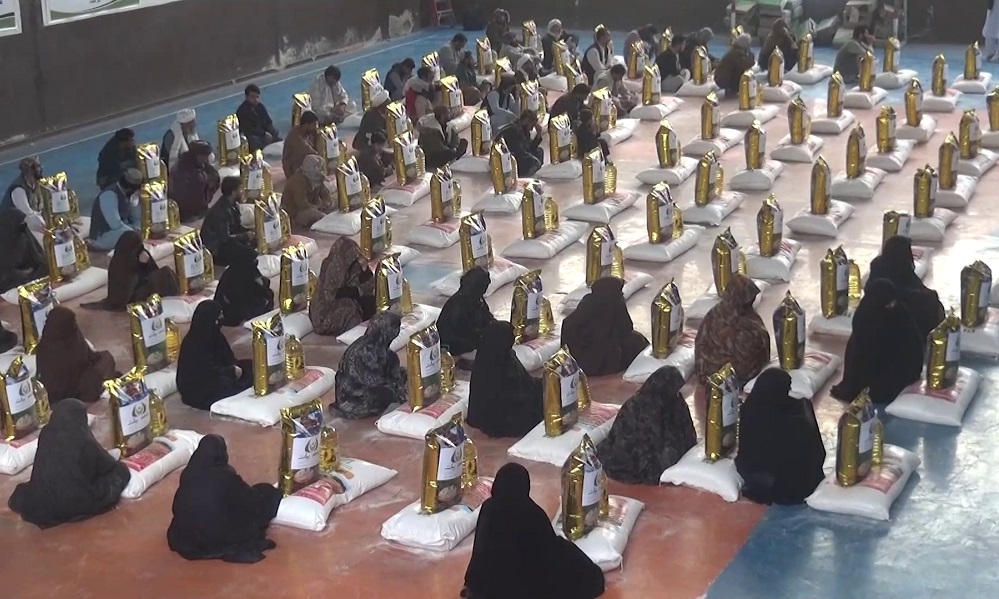
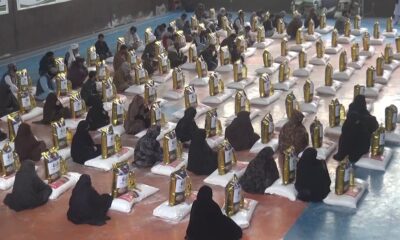
The Bayat Foundation has distributed Ramadan food assistance to dozens of needy families in Herat province, seeking to ease the burden on households struggling with deepening economic hardship.
Foundation officials said the food parcels — containing rice, flour, and cooking oil — have been delivered to impoverished families across the province.
The packages are designed to cover at least one month of essential food needs during the holy month of Ramadan, a time when many low-income families face increased expenses.
Afghanistan continues to confront widespread poverty, high unemployment, and food insecurity, with humanitarian agencies warning that millions remain in urgent need of assistance.
In Herat, local authorities say demand for basic food support remains particularly high, especially among returnees, daily wage laborers, and families without steady income.
Speaking during the distribution process, Sayed Noor Ahmad Shah Sadat, the Bayat Foundation’s representative in Herat, said the initiative is part of the organization’s annual Ramadan campaign.
“Today, on the occasion of the holy month of Ramadan, the Bayat Foundation provided assistance to deserving families. These packages include rice, flour, and oil. The goal of this program is to support poor families and help meet their basic needs, especially during Ramadan,” he said.
Recipients described the aid as timely and essential.
Jan Mohammad, a beneficiary, said the food parcels would sustain his family for weeks. “These packages help us a lot. They cover our needs for at least a month. I hope this continues. We are poor people — we have nothing,” he said.
Humaira, another recipient, emphasized the importance of ongoing support. “The poor should always be considered. If this assistance continues, no Muslim will be forced into hardship,” she said.
Faqir Ahmad, also among those assisted, expressed gratitude, noting that the supplies would meet his family’s needs for a month.
Local officials welcomed the initiative and encouraged other organizations to expand similar efforts. Baz Mohammad Sarwari, head of the Telecom Regulatory Authority in Herat, praised the foundation’s work.
“The Bayat Foundation is distributing aid to deserving families, and this is truly commendable. We hope these efforts continue and call on other humanitarian organizations to assist the needy,” he said.
Founded by Afghan businessman and philanthropist Dr Ehsanullah Bayat, the Bayat Foundation has long been involved in humanitarian activities across Afghanistan. In addition to its annual Ramadan food drives, the organization has provided emergency relief to communities affected by natural disasters, supported healthcare initiatives, and assisted returnee migrants and other vulnerable groups.
The foundation says its Ramadan campaign is ongoing not only in Herat but also in several other provinces, aiming to reach thousands of families in need across the country.


AFC postpones Champions League matches amid escalating Middle East tensions

Ayatollah’s wife dies from injuries sustained in airstrike on Tehran residence

Bayat Foundation assists needy families in Kabul amid ongoing humanitarian crisis

Needy families in Herat receive much-needed Ramadan aid from Bayat Foundation

Muttaqi, Araghchi emphasize need for de-escalation and diplomacy in phone talks

Pakistani military jet downed in Afghanistan’s Jalalabad, pilot captured alive

IEA releases three Pakistani soldiers to mark Ramadan

AFC Futsal Asian Cup: Afghanistan to face Iran in crucial Group D clash

Afghan Air Force conducts airstrikes in Islamabad, other cities

Afghanistan’s Chief of Armed Forces underscores readiness and equipment for national defense

Tahawol: Afghanistan and the Region Under the Shadow of Rising Tensions

Tahawol: Joint Israeli-US attacks on Iran discussed

Saar: Afghan retaliatory operations against Pakistan discussed

Tahawol: Carrying out retaliatory operations against Pakistan discussed

Saar: Resumption of retaliatory operations against Pakistan discussed
-
 Latest News2 days ago
Pakistani military jet downed in Afghanistan’s Jalalabad, pilot captured alive
-
 Latest News3 days ago
Afghan Air Force conducts airstrikes in Islamabad, other cities
-
 Latest News3 days ago
IEA: Special circle in Pakistan has launched mission to destabilize region
-

 World5 days ago
India’s Modi backs Israel in address at Israeli parliament
-
 Latest News3 days ago
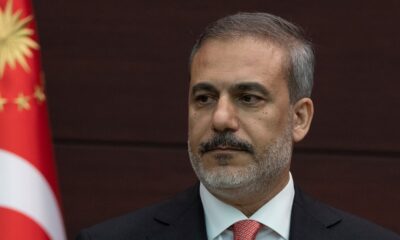
Turkey launches initiative to diffuse Afghanistan-Pakistan tension
-

 Regional4 days ago
Narendra Modi holds high-level talks after historic address to Knesset
-

 Latest News3 days ago
Afghans say they are united against Pakistan aggression
-

 Latest News4 days ago
Pakistan carries out airstrikes after Afghanistan launches retaliatory attacks