
Latest News
Abdullah delivers power sharing plan to Extended Troika

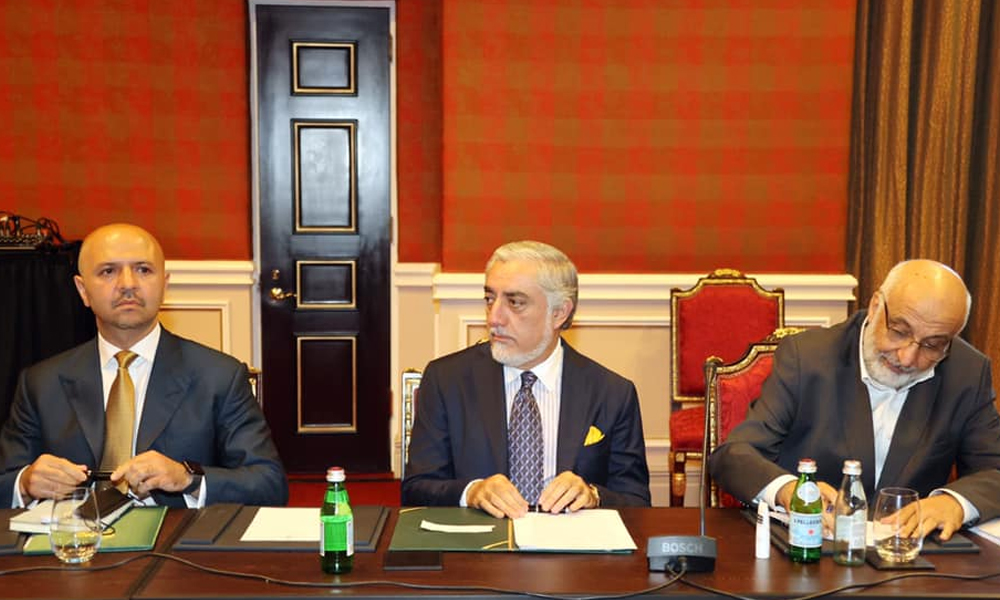
The chairman of the High Council for National Reconciliation Abdullah Abdullah handed over the government’s plan on resolving the current crisis to representatives attending the Extended Troika meeting in Doha, Qatar.
Abdullah says mediation is needed to speed up the process of reaching a political agreement with the Taliban.
Sources in Doha say that the plan that Abdullah handed in, titled “exiting the crisis”, has been shared with the Taliban.
The sources say the plan calls for the formation of a joint government.
Meanwhile, the representatives at the meeting in Doha insisted on the Taliban ending attacks on cities.
At the meeting were representatives from Russia, the United States, China and Pakistan, who called for a peaceful solution to the violence in Afghanistan.
“China is ready to play its part … China will work tirelessly with the international community, neighboring countries and the region,” said Yue Xiaoyong, China’s Special Envoy for Afghan Affairs of the Ministry of Foreign Affairs.
Pakistan also responded.
Pakistan’s Foreign Minister Shah Mahmood Qureshi said: “Our delegation is in Doha as I speak to you. It is in touch with all parties working for peace and stability in Afghanistan. In the peace and stability of Afghanistan, we have a clear interest.
“We will try and we will continue to do so.”
No clear outcome has yet emerged from the Doha talks.
State Department spokesman Ned Price meanwhile said Wednesday that “Ambassador Khalilzad said when he was present at the political talks yesterday that the international community would closely monitor the behavior of the Taliban. They must take steps to choose.”
The Taliban have not yet commented on the Afghan government’s plan.



Latest News
Karzai and Abdullah extend condolences on Khamenei’s death
On his X account, Karzai expressed deep sympathy and condolences to the Iranian government and people.
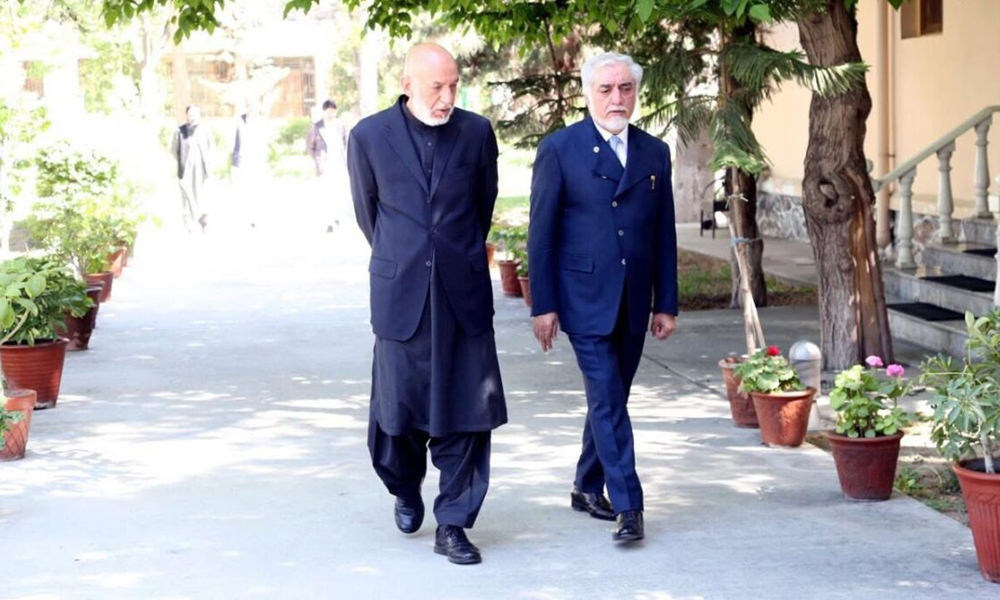
Former Afghan President Hamid Karzai and former head of the High Council for Peace Dr. Abdullah Abdullah have expressed sorrow over the reported killing of Iran’s leader Ayatollah Ali Khamenei.
The United States and Israel reportedly carried out joint attacks on several Iranian cities on Saturday.
Reports indicate that the attacks resulted in the deaths of Iran’s Supreme Leader Ayatollah Ali Khamenei, former President Mahmoud Ahmadinejad, and other high-ranking officials.
On his X account, Karzai expressed deep sympathy and condolences to the Iranian government and people.
He wrote: “I appreciate the continued support of the people of Afghanistan for him (Khamenei) and express my solidarity with the noble people of Iran. I pray for paradise for the martyrs and wish peace, security, and prosperity for our friend and brother country, Iran.”
Abdullah, on his Facebook page, said: “With great sorrow, the martyrdom of Iran’s leader Ayatollah Seyed Ali Khamenei, some of his family members and associates, and the recent martyrs has caused us deep grief.”
He prayed to Allah for patience, endurance, and great reward for the victims’ families and the Iranian people.
Latest News
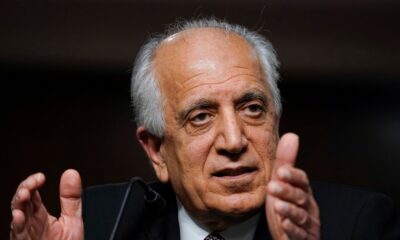
Khalilzad says Pakistan’s leadership misjudges Afghanistan, urges diplomacy
Khalilzad stated: “Pakistan’s demands from Afghanistan are so unreasonable that even the government of Pakistan is embarrassed to articulate them.”
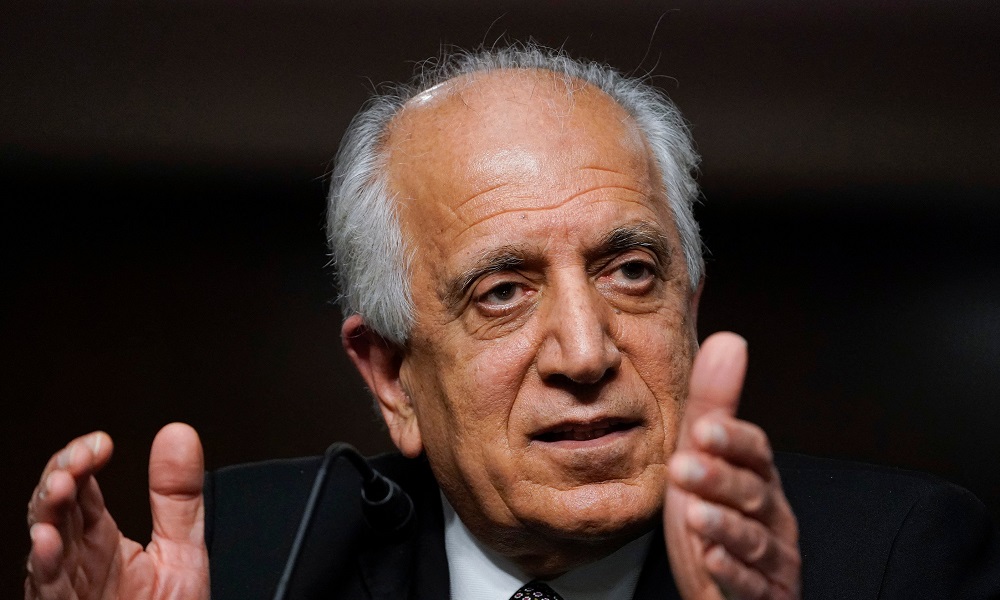
Former US special envoy for Afghanistan Zalmay Khalilzad has criticised Pakistan’s military leadership, saying it fundamentally misreads Afghanistan and wrongly assumes it can force Kabul to accept its demands through military pressure.
Khalilzad stated: “Pakistan’s demands from Afghanistan are so unreasonable that even the government of Pakistan is embarrassed to articulate them.”
His remarks come amid renewed tensions following Pakistani airstrikes on Afghan territory, which Kabul has condemned as violations of its sovereignty.
Khalilzad, who served as Washington’s Special Representative for Afghanistan Reconciliation and played a central role in negotiations leading to the 2020 Doha agreement between the United States and the Islamic Emirate of Afghanistan, argued that the current trajectory risks deepening instability in both countries.
He maintained that coercion would not produce lasting security outcomes.
According to Khalilzad, regional security threats are mutual and require coordinated responses rather than unilateral action.
Tensions between Kabul and Islamabad have escalated in recent months over accusations that armed groups operate from each other’s territory. Pakistan has repeatedly blamed Afghan-based militants for attacks inside its boundaries, while Afghan authorities have accused Pakistan of breaching international norms through strikes.
Khalilzad said diplomacy remains the most viable path forward. He noted that the Islamic Emirate of Afghanistan has expressed readiness to reach a bilateral understanding that would prevent either country’s territory from being used against the other.
“The Islamic Emirate of Afghanistan is ready to reach an agreement with Pakistan to prevent the use of each country’s territory against the other,” he said.
Concluding his remarks, Khalilzad described Pakistan as responsible for the latest escalation and urged both sides to return to dialogue, stressing that sustained diplomatic engagement — rather than force — offers the best chance of reducing tensions and promoting regional stability.
Latest News
Afghan air force strikes key Pakistani military installations in retaliatory operation
The ministry said preliminary assessments indicate the operations caused significant damage to the intended targets.

The Ministry of National Defense of the Islamic Emirate of Afghanistan announced that its Air Force conducted precise and coordinated aerial operations on Sunday against several key Pakistani military targets.
According to a statement from the ministry, the strikes targeted Nur Khan Airbase in Rawalpindi, the 12th Division headquarters in Quetta (Balochistan), the Khwazai Camp in Mohmand Agency of Khyber Pakhtunkhwa, as well as other major military facilities and command centers.
The ministry said preliminary assessments indicate the operations caused significant damage to the intended targets.
“These operations were carried out in response to the recent aerial incursions by the Pakistani military, which struck Kabul, Bagram, and several other regions,” the statement read.
The Ministry of National Defense further emphasized that any further violations of Afghan airspace or acts of aggression by hostile Pakistani elements will be met with a swift, decisive, and proportionate response.


Middle East nations condemn Iran’s missile and drone attacks

Iran casts doubt over participation in FIFA World Cup 2026 in US

Middle East conflict intensifies; UK base in Cyprus targeted

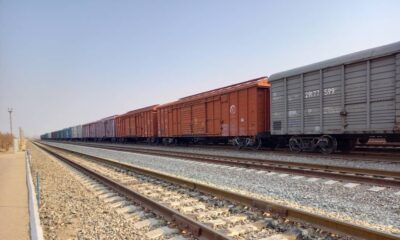
Afghanistan records 33% rise in railway cargo transport

Karzai and Abdullah extend condolences on Khamenei’s death

Pakistani military jet downed in Afghanistan’s Jalalabad, pilot captured alive

IEA releases three Pakistani soldiers to mark Ramadan

AFC Futsal Asian Cup: Afghanistan to face Iran in crucial Group D clash

Afghan Air Force conducts airstrikes in Islamabad, other cities

Afghanistan’s Chief of Armed Forces underscores readiness and equipment for national defense

Tahawol: Afghanistan and the Region Under the Shadow of Rising Tensions

Tahawol: Joint Israeli-US attacks on Iran discussed

Saar: Afghan retaliatory operations against Pakistan discussed

Tahawol: Carrying out retaliatory operations against Pakistan discussed

Saar: Resumption of retaliatory operations against Pakistan discussed
-
 Latest News2 days ago
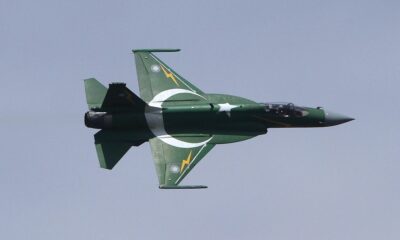
Pakistani military jet downed in Afghanistan’s Jalalabad, pilot captured alive
-
 Latest News3 days ago
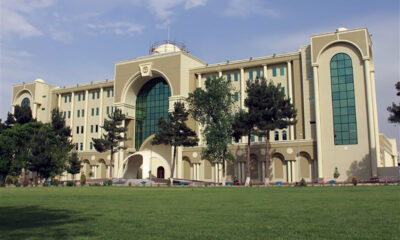
Afghan Air Force conducts airstrikes in Islamabad, other cities
-
 Latest News3 days ago
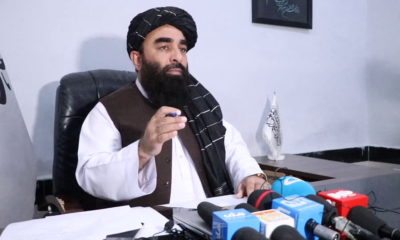
IEA: Special circle in Pakistan has launched mission to destabilize region
-
 World4 days ago
India’s Modi backs Israel in address at Israeli parliament
-
 Latest News3 days ago
Turkey launches initiative to diffuse Afghanistan-Pakistan tension
-
 Regional4 days ago
Narendra Modi holds high-level talks after historic address to Knesset
-

 Latest News3 days ago
Afghans say they are united against Pakistan aggression
-
 Latest News3 days ago
Pakistan carries out airstrikes after Afghanistan launches retaliatory attacks