
Latest News
A threat at Kabul’s southern gate: a security overview of Logar province

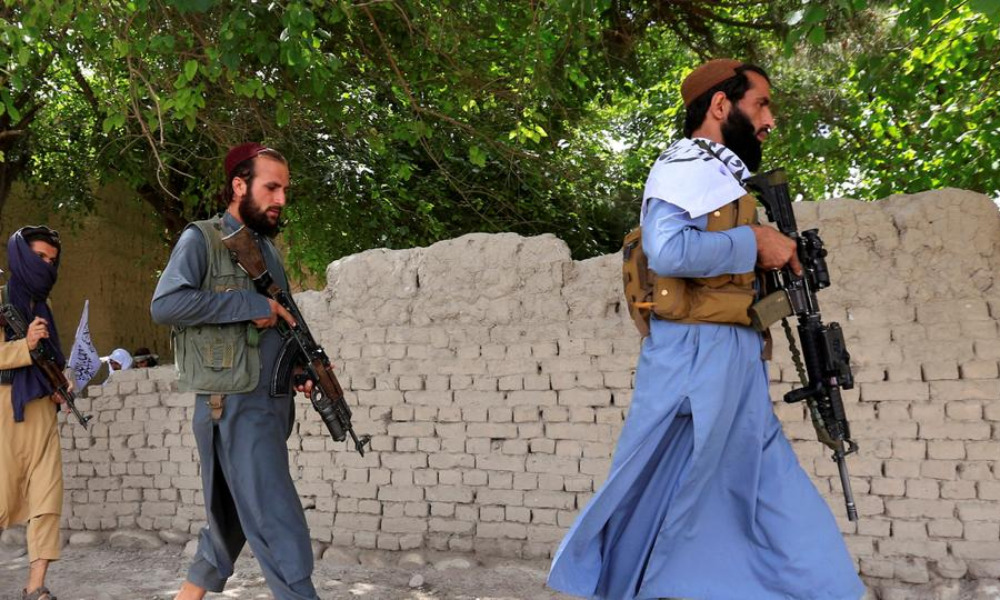
A Kabul-based security analyst and former high-ranking Afghan government official has said the increase in insurgent activity in “contested” Logar province might be part of an encirclement strategy of Kabul by the Taliban for when foreign troops withdraw.
In a new report by Afghanistan Analysts Network (AAN) the volatility of the strategic province, which is the southern gateway to Kabul, was highlighted earlier this month during a visit to Logar by President Ashraf Ghani.
During the president’s visit, the Taliban hit the provincial capital with eight mortar rounds during and after his speech.
In the days leading up to the president’s visit, the Taliban also carried out attacks on police checkpoints on the outskirts of the provincial capital.
According to AAN, the government only controls parts of three of Logar’s seven districts, which provides the Taliban with positions closer to Kabul than anywhere else.
In its report, AAN said between April and mid-July 2020 it had analyzed Logar’s trends of insecurity and found that residents blame the insurgent activity on poor government leadership. However, the government blames a lack of cooperation by the population on the situation.
AAN stated they also found significant popular sympathies for the Taliban – with the local perception being the group was the powerful entity in the war.
Logar, with its provincial capital Pul-e Alam located only about 60 kilometers to the south of the capital Kabul, is a strategically extremely important province.
The province’s second-largest town, Muhammad Agha, is situated only 23 kilometers beyond Kabul’s city limits.
Out of the six rural districts and the one surrounding Logar’s capital Pul-e Alam, the government officially claims to control three: the provincial capital, Khoshai and Muhammad Agha.
But AAN reports that security analysts and local sources give a different picture.
Local sources interviewed by AAN say the Taliban are present in many villages just four kilometers from Pul-e Alam. Villages there were targets of recent Afghan government forces’ clearing operations.
In the three southern districts – Baraki Barak, Charkh and Kharwar – the government only holds the district centers or small areas around them. Local residents said Khoshai was also contested, with half of the district controlled by the Taliban and half by the government. The situation in Azra is even more precarious, AAN reported.
This degree of control provides the Taliban with positions closer to the capital than in almost any other province.
Earlier this year, on 11 April 2020, residents of a number of districts, including residents of Pul-e Alam, gathered in Logar’s capital and called on the Taliban to cease their operations, stop attacking the Afghan army and get ready for peace talks with the Afghan government. The participants included tribal elders and pro-government people.
AAN reported that last year, Taliban activity particularly increased along the Logar part of the Kabul-Gardez highway. Pul-e Alam and Muhammad Agha districts combined accounted for many Taliban attacks in 2019.
This led to increased counter-operations by Afghan and international troops in autumn of 2019, including “unprecedented” levels of airstrikes and night raids along the highway, but also against Taliban logistic structures deeper in the province and particularly against insurgent networks operating from Logar into Kabul.
As a result, analysts registered the “highest level” of monthly conflict intensity on record in July 2019.
Although this had somewhat “diminished” Taleban operational capacities, there were still between over 40 and 60 Taliban attacks per month from May to September 2019.
On average, this was ten less than in 2018 when the season of significant fighting was longer, from April to October.
Local residents in Pul-e Alam and in the districts told AAN that since the beginning of the new Afghan year (April) and the start of the ‘spring fighting season’ in the country in late March, the Taliban have intensified attacks on government security posts throughout all districts of the province as well as on the outskirts of the provincial capital, and on a stronger scale than in any other year since the insurgency started in this province.
According to them, they have rarely experienced a day or two in which the Taliban have not carried out an attack.
A tribal elder in Charkh district told AAN that some years ago, he had invited the district governor and other officials to his home around 35 kilometers away from the district center, and the district governor had indeed come. But now, he said, the district governor could not come to his district center without a huge number of armed forces protecting him.
This trend has been confirmed by the Kabul based security analysts who said that the number of security incidents in March this year was three and a half times more in Logar province than in March 2019.
AAN also reported that the wave of assassinations of people working in the current political system continued over the entire period.
The most high-profile case was the kidnapping and shooting of former senator Abdul Wali Ahmadzai on June 9.
Ahmadzai had at the time been working for the Independent Directorate of Local Governance (IDLG).
A spokesman for the provincial governor accused the Taliban of the killing.
In March, a member of the Logar Provincial Council was assassinated in Kabul and in early June the Taliban shot dead two sisters, one of them reportedly the wife of an intelligence official at the Ministry of Interior, the other a visitor.
On 6 July, Nafisa Hejran, a female provincial council (PC) member, and her driver were wounded in a shooting in the provincial capital. Her colleague Nasir Ghairat, along with three guards, was killed in Kabul on 8 March.
Most residents of Logar that AAN spoke with, believe that the Taliban are behind the recent killings.
According to AAN, there are several reasons why many residents of Logar have a certain sympathy for the Taliban and why, according to some residents, they have contributed a large number of fighters to the Taliban.
A Logar resident told AAN that local Taliban ranks have been increased over recent years by former Afghan National Army and Afghan National Police members who did not extend their contracts.
“It is not clear, though, how much of this was voluntary or the result of coercion – the Taliban are able to pressure families when their sons return to their villages of origin – or whether this includes infiltration in order to obtain military training,” AAN reported.
A civil society activist said he thinks this is due to the “abnormal situation” of war.
He said people witness that when a government soldier is killed, he or his family are not taken care of by the government, but if a Taliban fighter is killed, the Taliban writes “poems praising him and his bravery is sung everywhere,” reported AAN.
According to the network, the activist said this contributes to pulling parts of the young generation toward the Taliban. He said under normal conditions everyone would prefer the presence of the government.
AAN also stated that at a higher level, the fact that the Taliban’s political office in Qatar includes two prominent representatives from Logar, Mullah Abas Stanakzai, and Mawlawi Shahabuddin Delawar, also contributes to a level of grassroots support, i.e. pride in being represented.
Almost all the respondents told AAN that the increasingly abusive behavior of government security forces – including the uprising forces and Afghan Local Police – have caused the people to be sympathetic to the Taliban, which in turn further enforced their presence in Logar.
In conclusion, AAN stated that for the Taliban, Logar’s strategic importance lies in its proximity to Kabul.
Together with consolidated positions in neighboring provinces such as Maidan Wardak, western Nangarhar and Surobi, the eastern-most district of Kabul (where fighting had increased recently), Logar is part of a belt that could cut off the capital from southern and eastern Afghanistan if the military situation escalates into an endgame scenario.
In Logar itself, they have been able to regularly attack the government forces in both the provincial capital and the districts.
To read the full report CLICK HERE https://www.afghanistan-

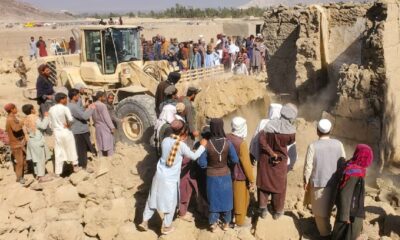

Afghanistan’s acting representative to the United Nations has formally raised concerns at the UN Security Council following overnight airstrikes this week it says were carried out by Pakistan inside Afghan territory.
Nasir Ahmad Faiq, acting chargé d’affaires of Afghanistan’s mission to the UN, announced on Monday that a formal complaint had been submitted regarding the strikes, which reportedly resulted in civilian casualties.
In a statement posted on X, Faiq called for “the immediate cessation of such actions, a thorough and impartial review, full respect for Afghanistan’s territorial integrity, and strict adherence to the Charter of the United Nations and international law.”
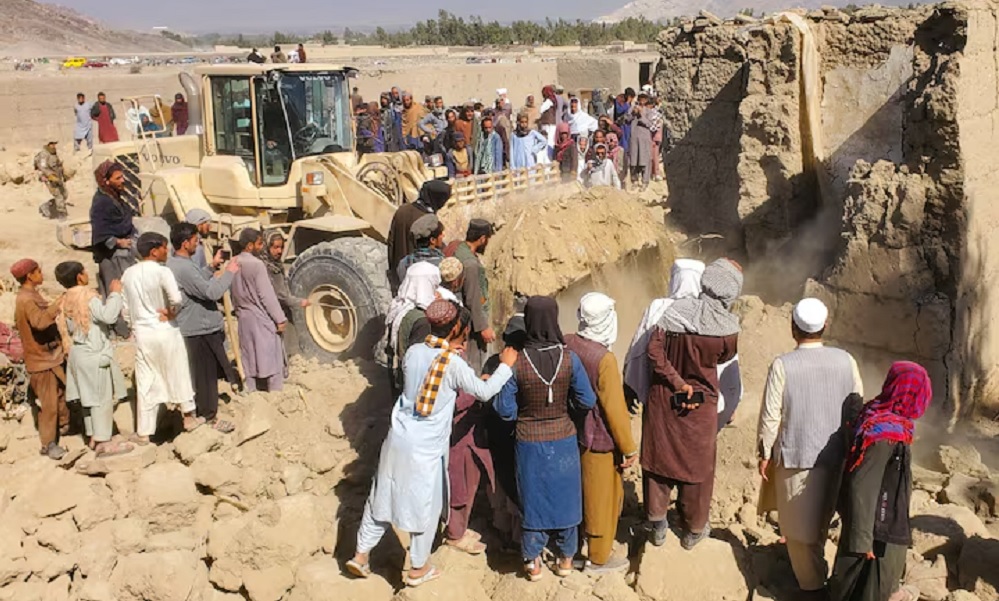
According to Afghan officials, the strikes took place late Saturday night in eastern Nangarhar and south-eastern Paktika provinces.
Authorities say dozens of civilians, including women and children, were killed or wounded when residential areas were hit.
Islamabad has previously maintained that it reserves the right to act against militant groups it says operate near or along the disputed Durand Line. Afghan officials, however, have consistently rejected allegations that Afghan territory is being used to launch attacks against Pakistan.
The latest incident comes amid heightened tensions between Kabul and Islamabad over security concerns and cross-Durand Line militancy, further complicating already fragile bilateral relations.
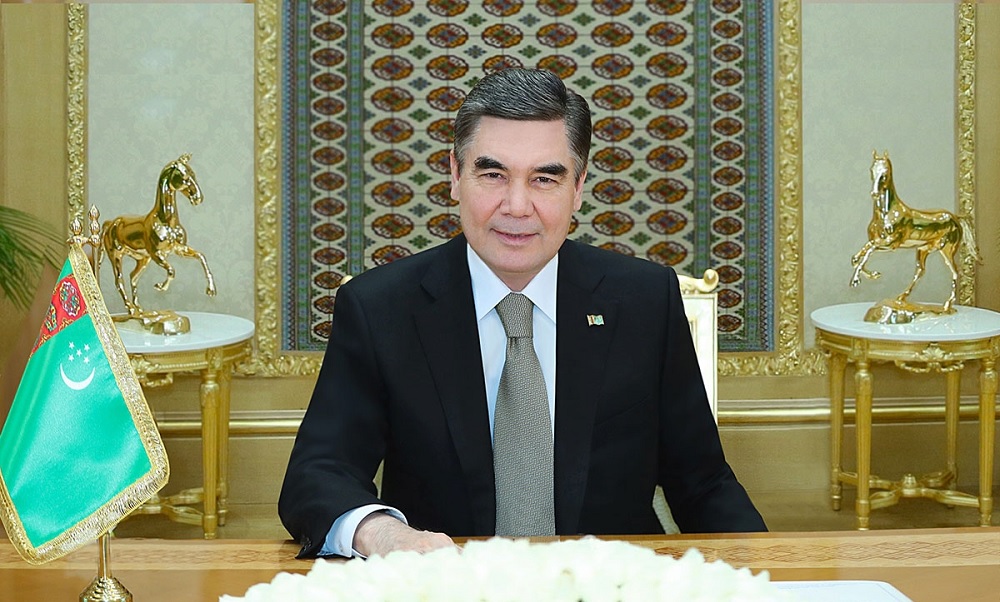
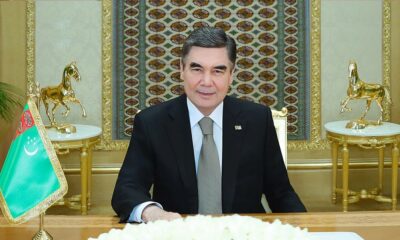
In an interview with Al Arabiya, former Turkmen President Gurbanguly Berdymukhamedov said international companies, including United States firms, are welcome to join the Turkmenistan–Afghanistan–Pakistan–India (TAPI) gas pipeline project.
Berdymukhamedov noted that while the project enjoys U.S. support, it will need to navigate longstanding regional tensions, as Afghanistan, Pakistan, and India have seen outbreaks of deadly fighting over the past year.
“This project, which enjoys international support, including from the United States, possesses immense potential in meeting the growing energy needs of South Asian nations. It also opens promising avenues for accessing the emerging markets of the Asia-Pacific region, the Near East, and the Middle East,” he said.
“The TAPI project is also of paramount importance for political stability and economic prosperity, maintaining high investment attractiveness,” Berdymukhamedov added.
Turkmenistan plans to complete the first section of the pipeline, reaching the Afghan city of Herat, by the end of 2026. No plans have yet been announced to extend the project further south.
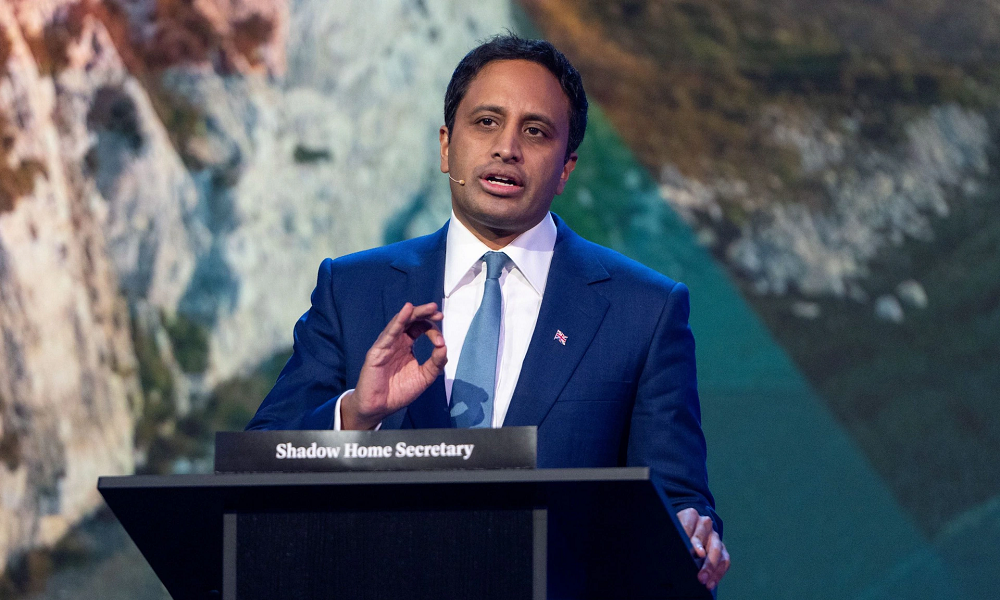
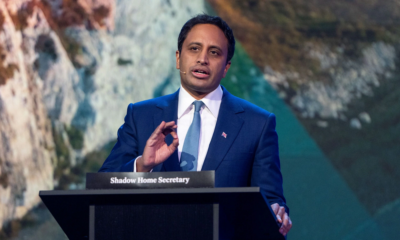
The British political party Reform UK, led by Nigel Farage, is set to impose a blanket visa ban on Afghanistan and five other countries — including Pakistan — as part of its proposed crackdown on illegal migration and states refusing to accept deported nationals.
In a speech set for Monday, the party’s newly appointed “shadow” home secretary, Zia Yusuf, will outline plans to halt all visas for diplomats, students, workers, VIPs and tourists from Pakistan, Somalia, Eritrea, Syria, Afghanistan and Sudan. Reform says these governments fail to cooperate in accepting back deported migrants and convicted criminals.
Pakistan received more than 160,000 UK visas last year, making it one of the biggest visa recipients. However, British officials say Islamabad accepts back only a small fraction of rejected asylum seekers and has resisted pressure to take back individuals convicted in high-profile criminal cases.
The move – which mirrors US President Donald Trump’s visa ban on 75 countries – would be a key element in Reform’s strategy to deport up to 288,000 illegal migrants from the UK on five charter flights a day.
On legal migration, Yusuf will say a Reform government would terminate all welfare payments to foreign nationals, including the 1.3 million currently receiving UC, up from around 900,000 in 2022.
Yusuf is expected to say that years of weak immigration enforcement have undermined public trust and that a Reform government would secure Britain’s borders and make people feel safe.


Afghanistan lodges complaint with UN over Pakistani airstrikes

US companies are welcome to join TAPI project: Turkmenistan’s ex-president

Mexican military kills cartel boss ‘El Mencho’ in US-backed raid

UK’s Reform party pledges visa ban affecting Afghanistan and five other states

Iran and U.S. to meet on Thursday for talks

AFC Futsal Asian Cup 2026: Day One Review

IEA releases three Pakistani soldiers to mark Ramadan

AFC Futsal Asian Cup: Afghanistan to face Iran in crucial Group D clash

Afghanistan’s Chief of Armed Forces underscores readiness and equipment for national defense

Afghanistan welcomes investment and technology partnerships with India

Tahawol: Repeat crimes by Pakistani military in Afghanistan discussed

Saar: Pakistani military regime’s airstrikes on Afghanistan

Tahawol: US military review for attack against Iran discussed

Saar: Afghanistan’s expanding ties with Central Asia discussed

Tawsia: Calls for implementing development and infrastructure projects
-
 Latest News5 days ago
Afghanistan’s Chief of Armed Forces underscores readiness and equipment for national defense
-
 Latest News4 days ago
Afghanistan welcomes investment and technology partnerships with India
-
 Sport4 days ago
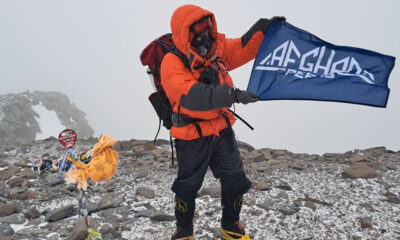
Afghan Peaks founder climbs Aconcagua to promote Afghanistan’s mountain potential
-

 Latest News3 days ago
Indian customs seize Chinese walnuts falsely declared as Afghan
-

 Business4 days ago
Pakistan allows re-export of stranded Afghan transit cargo
-
 Latest News3 days ago
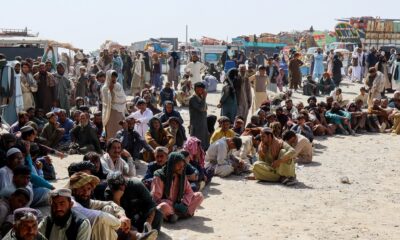
Pakistan’s Punjab to send home 20 more Afghans in repatriation drive
-

 Latest News4 days ago
Pakistan signals possible air strikes as Kabul releases Pakistani soldiers in goodwill move
-
 Latest News2 days ago
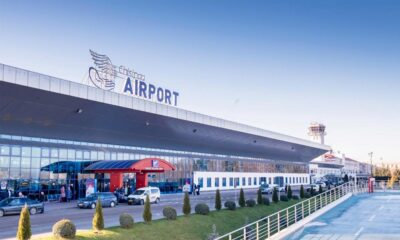
Moldova bans Afghan airlines over safety concerns