
World
Indonesia seizes 2.5 tons of crystal meth smuggled in from Afghanistan

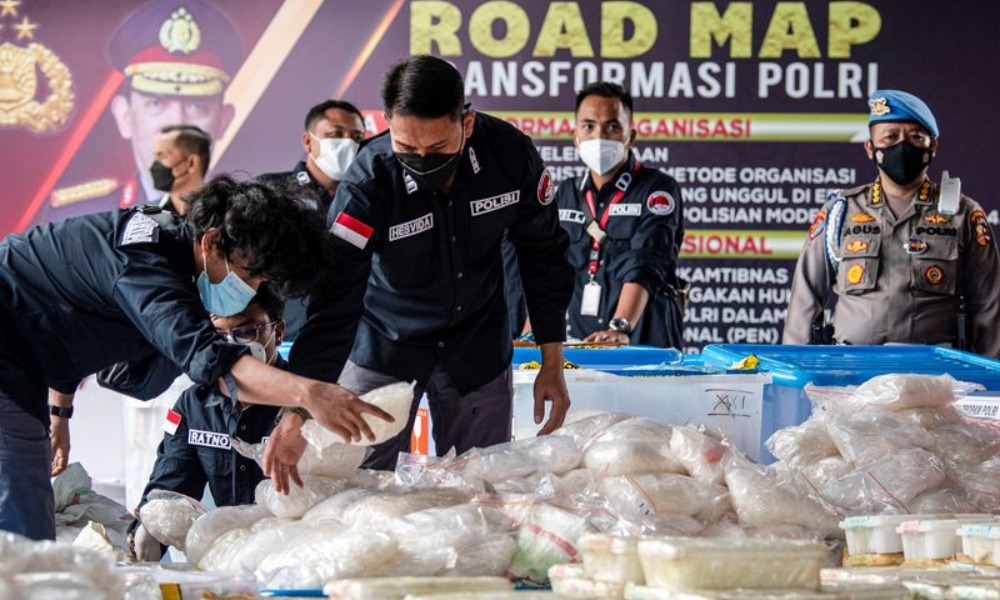
Indonesian authorities have seized 2.5 tons of crystal methamphetamine after a series of raids linked to an international smuggling ring spanning Afghanistan and Southeast Asia, police said.
Reuters reported the huge drug haul, estimated to be worth $82 million, was found after raids in three locations, including in the capital Jakarta and in Aceh, on the island of Sumatra, National Police Chief Listyo Sigit Prabowo said on Wednesday.
“We revealed that approximately 2.5 tons of methamphetamine drugs… entered Indonesia,” he told a news conference, where the drugs were displayed in plastic bags.
Police said one person was killed after resisting arrest during the raids and 18 had been arrested, including 17 Indonesian nationals and one Nigerian citizen, Reuters reported.
Agus Andrianto, head of criminal investigations at the national police, said the drugs entered Indonesian waters from Afghanistan last month.
Authorities said the drugs were shipped from Afghanistan via Malaysia.
In 2018, Indonesia seized 1.6 tonnes of crystal methamphetamine from a ship near the island of Batam.
The Southeast nation has among the strictest anti-narcotics laws globally, with drug trafficking punishable by death.
Indonesia faced international criticism in 2015 when it executed a number of foreign nationals, including two Australians who were leaders of the Bali Nine heroin trafficking ring, Reuters reported.








World
Earthquake of magnitude 7.8 strikes off southern Philippines, 15 feared killed
The Philippine seismology agency said at least nine strong aftershocks were felt across Mindanao on Monday morning, the highest at a magnitude 6.7.
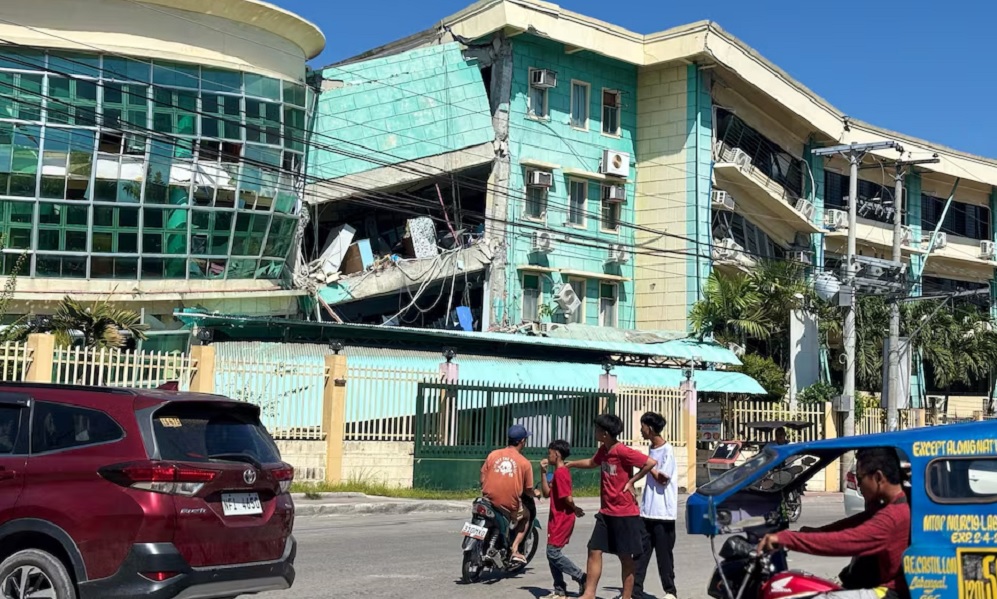
At least 15 people were feared dead in the southern Philippines on Monday after a powerful magnitude 7.8 earthquake struck off the island of Mindanao, triggering tsunami warnings across several countries.
The quake came early in the morning as schools were reopening in the Philippines after a long break, with the tremors felt strongly in a dozen provinces and 420 km (261 miles) away in the city of Manado on the Indonesian island of Sulawesi, Reuters reported.
Tsunami alerts were issued in the southern Philippines, northern Indonesia and the Malaysian state of Sabah on Borneo island after the quake with an epicentre located about 20 km (12.4 miles) off Mindanao’s Sarangani province.
Philippine authorities were assessing the damage from the quake, with the office of civil defence seeking to verifying initial reports that 15 people had been killed and 129 injured in the region, mostly from falling debris.
‘WE WILL NOT LEAVE MINDANAO BEHIND,’ PRESIDENT SAYS
President Ferdinand Marcos Jr ordered an immediate disaster response in Mindanao, an island the size of South Korea, with agencies directed to prepare relief supplies and evacuation centres and be ready for possible rescue operations.
“The national government is moving and we will not leave Mindanao behind,” he said in a statement.
It comes eight months after the Philippines suffered its deadliest tremor in 12 years when a shallow 6.9 magnitude quake hit off the island of Cebu, killing 79 people. Two powerful quakes struck Mindanao two weeks later, the strongest at a magnitude 7.4.
The Philippines and Indonesia experience hundreds of quakes each year and sit on tectonically complex parts of the “Pacific Ring of Fire”, a seismically active belt stretching from South America to the Russian Far East.
The Philippine seismology agency said at least nine strong aftershocks were felt across Mindanao on Monday morning, the highest at a magnitude 6.7.
The full extent of the damage was not yet clear and authorities said assessments were underway.
Video shared by the local government in General Santos, a city of about 700,000 people, showed the collapse of a building housing a fast food restaurant, with panicked onlookers fleeing as a cloud of dust spread quickly through the air.
One General Santos hospital was evacuated due to concerns about cracks on higher floors, while one of the buildings at the city’s Notre Dame of Dadiangas University collapsed, but no one was inside.
“I had to duck and shelter myself under the table. And it was very long and strong,” the university’s president Manuel de Leon told broadcaster DZMM.
Images from authorities in Sarangani province showed damaged shop fronts with collapsed signs, smashed windows and piles of rocks from crumbled concrete.
MILITARY DEPLOYED, MALAYSIA OFFERS ASSISTANCE
The Philippine military said its disaster response units had been deployed to affected areas.
A video shared by a local school the moment the quake struck showed a large group of children sitting on the floor swaying rapidly from side to side, some hugging teachers, before fleeing en masse as a makeshift shelter collapsed behind them.
Benjie Ancheta, police chief of Sarangani’s Alabel town, said the quake occurred during a police flag-raising ceremony, causing some people to faint.
“This is the strongest earthquake we’ve experienced,” Ancheta said by phone.
Malaysian Prime Minister Anwar Ibrahim said his government was ready to assist the Philippines.
“I pray for the safety and wellbeing of all those affected, wishing them strength and courage in the difficult days ahead,” Anwar posted on X.
INDONESIAN ISLANDERS MOVE TO HIGHER GROUND
The U.S. Tsunami Warning System said multiple countries could be affected and Australia initially warned of potential tsunami waves on its northern coasts. Japan’s meteorological agency issued an advisory and said a tsunami of 0.2 m or lower had been observed, with some disruption to ferries and precautionary beach closures.
Witnesses in Indonesia’s Manado said they felt the quake strongly. Only minor damage was reported, according to Abdul Muhari, spokesperson for Indonesia’s disaster mitigation agency.
A tsunami with a wave height up to 0.75 m was detected in some regions in North Sulawesi, where people started moving to safer areas, including residents of the remote Sangihe Islands, among the closest to the Philippines.
“They are now evacuating to the higher ground… away from the coast, to avoid the potential tsunami,” resident Jufry Dalita said, according to state news agency Antara.
World
EU faces risk of 1.3 million job losses amid energy price surge linked to Iran conflict
The Commission further noted that low-income households may face increased financial pressure, with transport fuel costs potentially rising by an additional 1.4% of income.
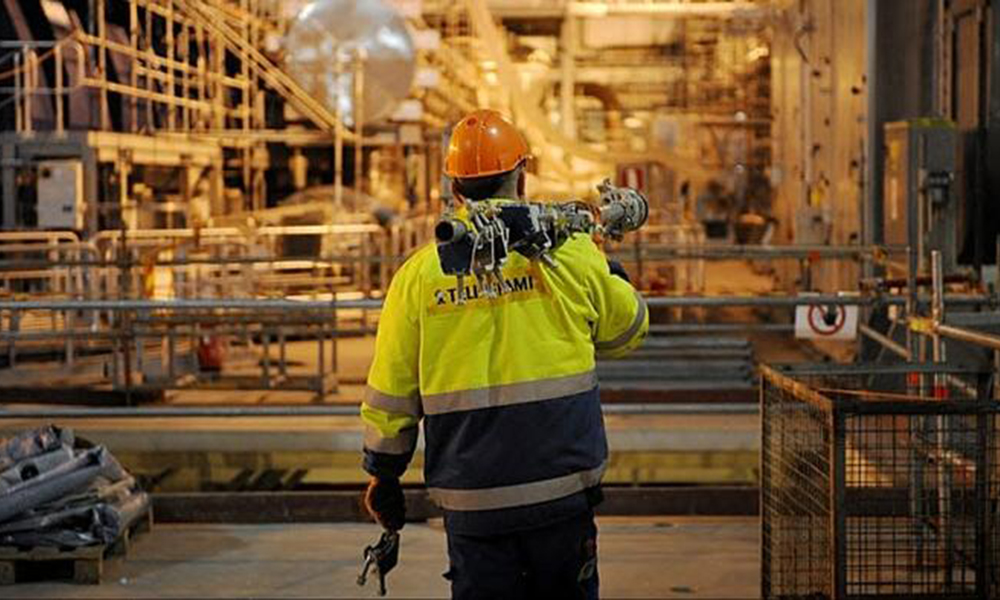
The European Union could lose up to 1.3 million jobs across key industrial sectors this year due to a sharp rise in energy prices triggered by the ongoing U.S.-Iran conflict, according to European Commission officials cited by Reuters.
EU Labour Commissioner Roxana Minzatu warned that energy-intensive industries are under severe pressure as geopolitical tensions in the Middle East continue to drive up global energy costs.
“Due to the war in the Middle East, up to 1.3 million jobs are at risk, particularly in energy-intensive industries,” Minzatu said during a press briefing.
According to Commission estimates, the automotive sector could be the hardest hit, with up to 600,000 jobs potentially affected. Other sectors at risk include construction, metals, chemicals, and transport, which could collectively lose around 56,000 jobs.
The report also highlights risks to emerging and green industries, with approximately 85,000 jobs in battery projects and nearly 58,852 jobs in solar manufacturing potentially affected. In the steel sector, an additional 4,500 jobs could be lost due to low-carbon transition measures.
The Commission further noted that low-income households may face increased financial pressure, with transport fuel costs potentially rising by an additional 1.4% of income.
The EU manufacturing sector currently employs around 30 million people, while services account for nearly 87 million jobs, underscoring the potential scale of economic impact.
The developments come amid heightened global concern over energy security and industrial stability as tensions between Washington and Tehran continue.
World
US House approves Ukraine aid and new Russia sanctions in rebuke to Trump
The vote comes amid continued fighting between Russia and Ukraine, with peace negotiations remaining stalled and both sides continuing missile and drone attacks.

The U.S. House of Representatives has approved legislation providing new aid to Ukraine and imposing tougher sanctions on Russia, in a move that highlights growing divisions within President Donald Trump’s Republican Party.
The Ukraine Support Act passed by a vote of 226 to 195, with 18 Republicans joining Democrats in support of the measure after lawmakers used a rare procedural move to force it onto the House floor.
The legislation authorizes more than $1 billion in assistance for Ukraine, along with up to $8 billion in direct loans to support the country’s defence and reconstruction efforts. It also includes new sanctions targeting Russia’s financial sector, energy industry, mining operations and government officials.
The vote comes amid continued fighting between Russia and Ukraine, with peace negotiations remaining stalled and both sides continuing missile and drone attacks.
Reuters reported that the bill represents the latest challenge to Trump’s influence within his party. It follows another recent vote in which a group of Republicans joined Democrats to support efforts aimed at limiting U.S. military involvement in the conflict with Iran without congressional approval.
Despite its passage in the House, the future of the Ukraine Support Act remains uncertain. The measure must still be approved by the Senate, where Republican leaders have so far declined to bring similar Russia sanctions legislation to a vote, saying they are awaiting guidance from the White House.
Even if it clears the Senate, the bill is expected to face a presidential veto.
Support for Ukraine has become increasingly divisive in Washington since Trump returned to office in January 2025. While many lawmakers from both parties continue to back Kyiv, some senior Republicans have adopted a more cautious approach toward further U.S. involvement.
Ukraine’s Ambassador to the United States, Olha Stefanishyna, welcomed the House vote, calling it an important step that demonstrates continued bipartisan support for Ukraine.


UN warns of mounting pressures facing Afghans despite relative stability

Tahawol: The Shadow of War Returns to the Middle East

Saar: New report on US troop withdrawal from Afghanistan

IEA calls for greater engagement with Afghanistan ahead of UN Security Council meeting

Debutant Suthar shines as India secure Test victory over Afghanistan

Afghanistan signs $46 million deal to develop standard laboratory complexes

Large blast near Beit Shemesh part of pre-planned test: Israeli defense firm

Trump returns from China with stability but little progress

Afghanistan announce squad for India series

Afghanistan, Russia sign military cooperation agreement
Tahawol: The Shadow of War Returns to the Middle East
Saar: New report on US troop withdrawal from Afghanistan

SAAR: UN Security Council Holds Quarterly Meeting on Afghanistan

Tahawol: Impact of Middle East crisis on aid transfers to Afghanistan

Saar: Calls to strengthen economic and trade cooperation discussed
-

 Sport4 days ago
Gaikwad set to replace injured Kohli for Afghanistan ODI Series
-

 Sport5 days ago
Afghanistan name squad for A-team tri-series in Sri Lanka
-

 Business5 days ago
Afghanistan highlights strategic connectivity role at Termez Dialogue
-

 International Sports4 days ago
Eight Goalkeepers Set to Shine at the 2026 FIFA World Cup
-

 Latest News5 days ago
Kohli ruled out of Afghanistan ODI series with hamstring injury
-

 Latest News5 days ago
Belarusian defense minister warns Afghanistan-Pakistan tensions could fuel extremism in CSTO states
-

 Latest News5 days ago
Italian PM condemns ‘horrific’ killing of four migrant workers in Calabria, vows justice
-

 Business5 days ago
Afghanistan, Uzbekistan move to strengthen transit and trade cooperation