
Latest News
US military forces to stay decades in Afghanistan

Published by Washington Post
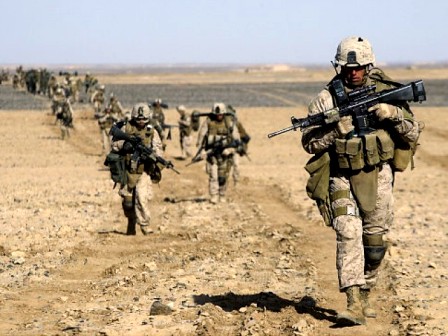
Top U.S. military commanders, who only a few months ago were planning to pull the last American troops out of Afghanistan by year’s end, are now quietly talking about an American commitment that could keep thousands of troops in the country for decades.
The shift in mind-set, made possible by President Obama’s decision last fall to cancel withdrawal plans, reflects the Afghan government’s vulnerability to continued militant assault and concern that terrorist groups such as al-Qaeda continue to build training camps whose effect could be felt far beyond the region, said senior military officials.
President Obama will keep 9,800 troops in Afghanistan through most of 2016
At a news conference Thursday, Oct. 15, President Obama says the U.S. will maintain 9,800 troops in Afghanistan through most of 2016 and will not go down to a normal embassy presence by the end of 2016, but instead will keep 5,500 troops at a small number of bases. (AP)
The new American outlook marks a striking change for Obama, who campaigned on a promise to bring American troops home and has said repeatedly that he does not support the “idea of endless war.” And it highlights a major shift for the American military, which has spent much of the past decade racing to hit milestones as part of its broader “exit strategy” from Afghanistan and Iraq. These days, that phrase has largely disappeared from the military’s lexicon.
In its place, there is a broad recognition in the Pentagon that building an effective Afghan army and police force will take a generation’s commitment, including billions of dollars a year in outside funding and constant support from thousands of foreign advisers on the ground.
“What we’ve learned is that you can’t really leave,” said a senior Pentagon official with extensive experience in Afghanistan and Iraq who like others spoke on the condition of anonymity to describe internal discussions. “The local forces need air support, intelligence and help with logistics. They are not going to be ready in three years or five years. You have to be there for a very long time.”
Senior U.S. commanders have also been surprised by al-Qaeda’s resilience and ability to find a haven in the Afghan countryside, as well as the Taliban’s repeated seizure of large tracts of contested territory.
[Pentagon has new authority to strike Islamic State in Afghanistan]
In November, the U.S. military sent a company of elite U.S. Rangers to southeastern Afghanistan to help Afghan counterterrorism forces destroy an al-Qaeda training camp in a “fierce fight” that lasted for several days.
The training camp was “absolutely massive,” said Brig. Gen. Wilson Shoffner, a military spokesman in Afghanistan.
“No matter what happens in the next couple of years Afghanistan is going to have wide ungoverned spaces that violent extremist organizations can take advantage of,” Shoffner said. “The camp that developed in southeastern Kandahar is an example of what can happen.”
There are now 9,800 U.S. troops in Afghanistan, some of them advising local forces and some focused on hunting down al-Qaeda and other hard-line militants. Plans call for Obama to halve that force by the time he leaves office, but he could defer the decision to the next president.
The U.S. military’s current thinking reflects its painful experience in Iraq, where Iraqi army forces collapsed less than three years after American forces left in 2011.
And it’s echoed in the arguments made by many Republican and Democratic foreign policy advisers, looking beyond the Obama presidency, for a significant long-term American presence. “This is not a region you want to abandon,” said Michèle Flournoy, a former Pentagon official who would probably be considered a top candidate for defense secretary in a Hillary Clinton administration. “So the question is what do we need going forward given our interests?”
[Taliban is targeting Afghan cities]
In Helmand province, where American troops suffered the heaviest losses of the war, Afghan units have struggled to hold on to territory taken by American forces from the Taliban in 2011 and 2012. “There’s a real will-to-fight issue there,” said a senior military official in Kabul.
Senior American commanders said that the Afghan troops in the province have lacked effective leaders as well as the necessary weapons and ammunition to hold off persistent Taliban attacks. Some Afghan soldiers in Helmand have been fighting in tough conditions for years without a break to see family, leading to poor morale and high desertion rates.
Gen. John F. Campbell, the top American commander, has sent Special Operations forces to the province to help direct American airstrikes and provide help with planning. An American soldier was killed and two others were wounded this month fighting alongside the Afghans.
In addition, about 300 U.S. troops in Helmand are advising Afghan commanders at the corps level, well removed from the front lines.
The American support is designed to arrest the immediate losses, but building an effective and sustainable fighting force that can manage contested areas such as Helmand province, will take many years, U.S. military officials said.
Foreign officials say the Afghan units lack effective mid-level officers and sergeants who can lead troops in combat and are not captive to patronage networks that dominate the country and sap soldier morale. Seeding the force with mid-level officers often requires bringing in young leaders from outside the current system and training them from scratch.
“I think a generational approach has value,” Shoffner said.
Senior U.S. officials point to improvements in areas such as evacuating wounded troops from the battlefield. As recently as 2013, it took the Afghan army 24 hours on average to get medical assistance to wounded troops. Now help usually arrives in four hours, still longer than desired. But other critical goals, such as building an effective resupply system for the country or a capable air force, cannot be accomplished in a few years. Many of the American pilots flying in Afghanistan have 10 to 15 years of experience.
“How long does it take to grow a 15-year pilot? It takes about 15 years,” Shoffner said. “We’re starting a little late with the air force.”
Senior U.S. military officials and some former Obama administration officials increasingly compare the U.S. government’s plans for Afghanistan to its approach to South Korea, where it has maintained tens of thousands of troops for decades. Other top officials cite the example of Colombia, where the United States has long provided training, money and contractors.
[The war in Afghanistan is turning even more chaotic. Read these stories to catch up.]
“Our presence right now helps serve as a significant bulwark against instability and at a cost that I think is reasonable to bear,” said Daniel Feldman, who until recently served as the Obama administration’s special representative for Afghanistan and Pakistan. “Particularly if we’re not proposing a significant combat role, I think the American people would be open to the argument of sticking with Afghanistan.”
U.S. officials said that in Afghan President Ashraf Ghani they have a willing and reliable partner who can provide bases to attack terrorist groups, not just in Afghanistan but also throughout South Asia, for as long as the threat in the chronically unstable region persists.
The difference between Afghanistan and other long-term American commitments in South Korea and Colombia is that Afghanistan remains a far more dangerous and unstable place for American personnel. Even though Afghan troops have assumed the lead combat role throughout the country, with U.S. troops in an advisory role, Americans still face real dangers and have taken recent casualties there.
In some cases, senior U.S. officials have been surprised by the Taliban comeback in the past year. Emboldened by the departure of most foreign forces, Taliban fighters have seized district centers, inflicted heavy losses on government forces and temporarily overrun a provincial capital. Now, Afghan forces must also grapple with an aggressive local branch of the Islamic State.
Some officials hold out hope that a long-term military presence might be unnecessary, if hoped-for peace talks with the Taliban make progress. The Afghan government has asked Pakistan, home to many Taliban leaders, to push the militants into talks.
A generational U.S. footprint “doesn’t need to be the case,” said Jeff Eggers, a former senior White House official with long experience working on Afghanistan and Pakistan. “The Korea model is not necessary if the peace process moves forward — that’s the preferred path for all parties.”
The obstacles to peace talks, though, are huge. Senior officials in Kabul and Islamabad, Pakistan, are riven by suspicion, and the Taliban remains deeply fractured following the revelation that its longtime leader, Mohammad Omar, has been dead for more than two years.

International Sports
FIFA, TikTok and Atlanta unite to tackle hate speech ahead of World Cup clash
Since its launch during the FIFA World Cup Qatar 2022, the service has reviewed more than 250 million posts and comments, identifying and removing over 30 million harmful messages.
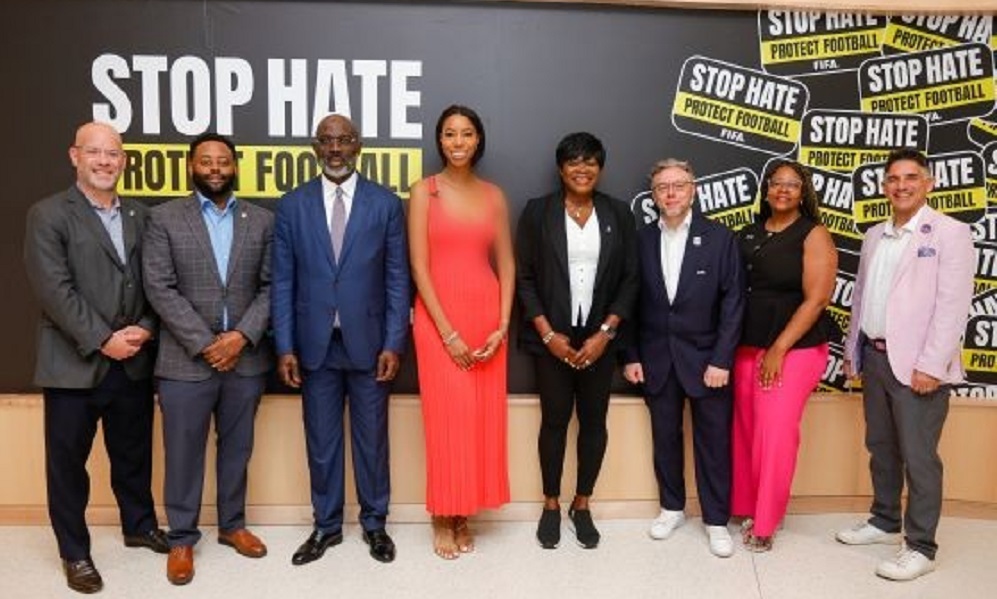
FIFA marked the International Day for Countering Hate Speech by bringing together football legends, policymakers, technology experts and community leaders in Atlanta to discuss practical solutions for combating discrimination and abuse in football and society.
The event, titled “Stop Hate, Protect Football – What Actually Works Against Hate Speech?”, was held at the National Center for Civil and Human Rights on the eve of the FIFA World Cup 2026 match between Czechia and South Africa at Atlanta Stadium.
Organised in partnership with TikTok and the City of Atlanta, the gathering focused on moving beyond awareness campaigns to identify concrete actions that can help eliminate racism, discrimination and hate speech both online and offline.
Former Liberia president and FIFA Players’ Voice Panel honorary captain George Weah joined former Nigeria international Mercy Akide, Atlanta Chief Impact Officer Candace Stanciel, TikTok Global Senior Director of Public Policy Eric Ebenstein, and U.S. Soccer referee mentor David Gerson on the discussion panel.
Weah reflected on his own experiences of racial abuse during his playing career and stressed the importance of protecting football’s values. “Football is not just a game of chance, it’s a game of unity,” Weah said.
“There are a lot of elements that want to destroy the game. Football is a game of peace and a game of unity. If we allow these things to continue, the beautiful game will be destroyed.”
He added that education remains a vital tool in the fight against discrimination. “We are trying to educate young people so they grow into loving people, not just people who love the game. Discrimination has no place in our society.”
Moderated by Atlanta-based sports journalist Simone Scott, the discussion examined the changing nature of hate speech in both digital and physical spaces. Panelists explored ways to identify effective interventions and transform institutional commitments into measurable results.
Candace Stanciel praised FIFA’s efforts to engage host cities and promote human rights through sport. “The panel gave us an opportunity to think about where the challenges are, what we’re doing that really works, and what commitments we can make,” she said.
“With an international experience like FIFA, we get to really talk about human rights on a global scale.”
Akide said the event highlighted the importance of collective action. “It made me feel empowered,” she said.
“We must bring everybody together and include everyone in this effort. Listening to the panel makes me want to do even more.”
A key focus of the event was FIFA’s Social Media Protection Service (SMPS), which monitors and removes abusive content targeting players, teams and officials across social media platforms.
Since its launch during the FIFA World Cup Qatar 2022, the service has reviewed more than 250 million posts and comments, identifying and removing over 30 million harmful messages.
The system remains active throughout the ongoing FIFA World Cup 2026. Since the tournament began on June 11, more than 3.8 million posts and comments have been reviewed, with approximately 388,000 removed after being classified as abusive or harmful.
By comparison, 287,000 posts and comments were removed during the entirety of the 2022 World Cup.
The Atlanta forum forms part of FIFA’s broader Global Stand Against Racism initiative, which seeks to drive long-term change through education programmes, fan engagement and support resources for football associations around the world.
The event concluded with a commitment ceremony in which each panellist pledged specific actions to help combat hate speech in their respective communities, reinforcing the message that eliminating discrimination requires a united effort from every level of the game.
The discussion also echoed concerns raised by United Nations Secretary-General António Guterres on the International Day for Countering Hate Speech.
In his message marking the occasion, Guterres described hate speech as “the first step down the path of dehumanisation” and warned that it is increasingly being amplified by artificial intelligence and unregulated digital platforms.
He said algorithms often reward outrage and division, helping harmful content spread more rapidly online.
The UN has also highlighted the growing threat posed by AI-generated deepfakes, synthetic images and other forms of online abuse, particularly targeting women and vulnerable groups.
Guterres stressed that freedom of expression should never be used as a justification for harmful messages, while calling for greater accountability, stronger information integrity and increased public control over online experiences.
Latest News
Trump says US may seek return of military equipment left in Afghanistan
Previously, Zabihullah Mujahid, spokesman for the Islamic Emirate, rejected US calls for the return of the equipment.
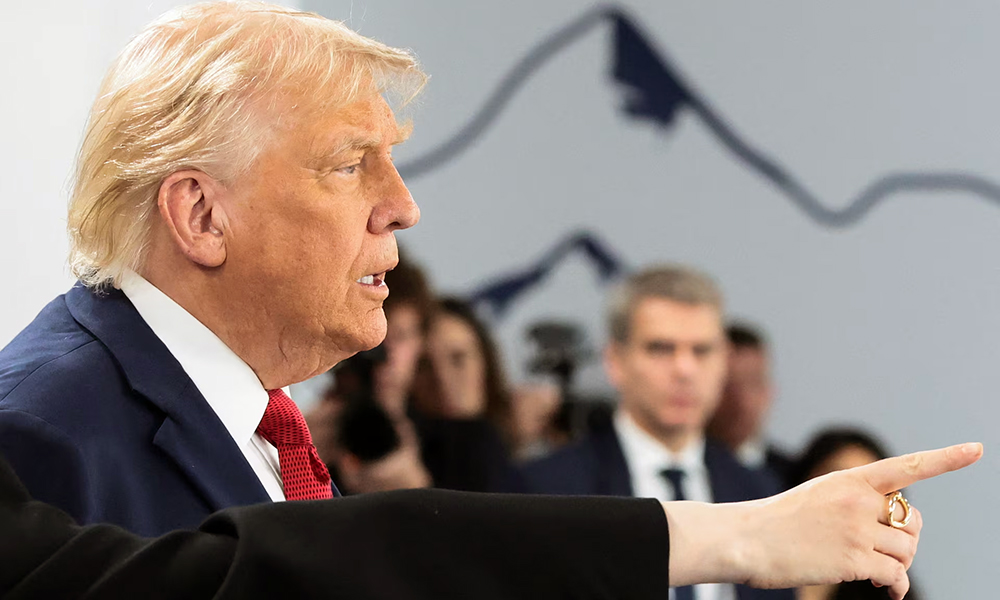
US President Donald Trump has said Washington may seek to recover military equipment left behind in Afghanistan during the 2021 withdrawal of American forces under the administration of former President Joe Biden.
Speaking to reporters on the sidelines of the G7 Summit, Trump criticized Biden’s handling of the US withdrawal from Afghanistan, describing it as a “horrible retreat” and claiming that American forces should have removed all military equipment before leaving the country.
“I was going to get out. We were going to get out with dignity and pride. Take 100% of the equipment,” Trump said. He added that while the equipment is now “a little old,” the United States “may get it all back,” calling the issue largely symbolic.
The US Department of Defense estimated in June 2022 that approximately $7.12 billion worth of military equipment remained in Afghanistan following the withdrawal, including aircraft, ground vehicles, and hundreds of thousands of weapons.
Trump’s remarks come as he continues to criticize the Biden administration’s foreign policy, particularly its decision to end America’s nearly two-decade military presence in Afghanistan.
At the time, officials in the Biden administration defended the withdrawal, arguing that much of the equipment had been transferred to the former Afghan government and was later seized after the collapse of the Afghan security forces. Former President Joe Biden also acknowledged that US expectations that Afghan forces would hold off the Islamic Emirate proved to be incorrect.
The remarks also revive a longstanding dispute over the military equipment left in Afghanistan. Previously, Zabihullah Mujahid, spokesman for the Islamic Emirate, rejected US calls for the return of the equipment, saying it was considered “war booty” belonging to the Islamic Emirate.
Mujahid also argued that the United States should be held accountable for the consequences of its 20-year military presence in Afghanistan, accusing Washington of causing destruction and preventing the country’s development.

Amir Khan Muttaqi, the Foreign Minister of the Islamic Emirate of Afghanistan, held a telephone conversation with Rosemary DiCarlo, the United Nations Under-Secretary-General for Political and Peacebuilding Affairs, to discuss humanitarian assistance and ongoing cooperation between Afghanistan and the United Nations.
According to a statement released by the Foreign Ministry, DiCarlo expressed appreciation for the facilitation and cooperation provided by the Islamic Emirate in support of humanitarian activities. She described these measures as important for ensuring that aid reaches those in need in an effective and timely manner.
The UN official also briefed the Afghan foreign minister on recent developments concerning the United Nations Assistance Mission in Afghanistan (UNAMA) and outlined the organization’s ongoing efforts in the country.
Both sides emphasized the continuation of mutual understanding, constructive interaction, and further cooperation.


FIFA, TikTok and Atlanta unite to tackle hate speech ahead of World Cup clash

Polio cases in Afghanistan rise to six in 2026 as two new cases confirmed

Trump says US may seek return of military equipment left in Afghanistan

Messi hat-trick powers Argentina to 3-0 victory over Algeria in World Cup opener

The 14-point US-Iran pact as read by US official

Norway’s Viking-inspired World Cup team photo goes viral

Afghanistan announce squad for India series

Afghanistan, Russia sign military cooperation agreement

Major pharma firms eye investment in Afghanistan

Afghanistan expands oil production as investment in Amu Darya fields grows

Tahawol: Passage of 3 Iranian tankers through US naval blockade discussed

Saar: Discussion on outcome of G7 summit in France

Tahawol: New chapter in regional cooperation discussed

Saar: Extension of UNAMA Mission in Afghanistan discussed

Tahawol: US and Iran’s preliminary agreement to end war
-
 Latest News3 days ago
TAPI project advances in Afghanistan as 84kms of pipeline laid
-
 Regional4 days ago
Iran banks hit by major cyber attack
-
 Latest News5 days ago
Central Asia–Afghanistan dialogue underscores regional connectivity and stability
-

 International Sports3 days ago
World Cup 2026: Havertz, Ayari and Balogun lead Golden Boot standings
-
 Latest News4 days ago
Afghan officials press Chinese delegation on Mes Aynak mining project
-
 Latest News4 days ago
WFP navigates complex route to deliver emergency food aid to Afghan schoolchildren
-

 Sport5 days ago
India beat Afghanistan by 7 wickets despite Gurbaz century in ODI opener
-
 Business5 days ago
Iranian private sector delegation arrives in Kabul to boost trade and investment cooperation