
Latest News
Major Challenges Emerging as Tensions Rise in NUG

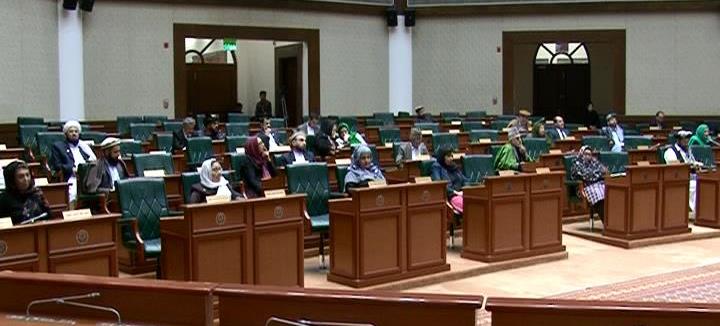
 A number of Afghan Senators have expressed concern over the current situation of the country; citing the continuation of tensions between National Unity Government (NUG) leaders would cause the government to face more challenges.
They have declared that the continuation of these challenges is not acceptable and will have adverse consequences on the country.
“People are concerning over the current situation of the country and the rise of tensions between the government leaders,” said Senator Gulalay Akbari.
Senator Jamauddin Geyanwal said, “The differences among government leaders caused the security situation worsening day by day and terrorist groups become more powerful.”
Senator Nadir Baloch also said, “We are concerning over the prejudice and ethnocentrism actions of government leaders and we demand security forces to not be affected by these issues.”
Meanwhile, Senators emphasized that the differences among leaders should be seriously investigated.
“Honesty, trust and implementation of the political agreement are very essential at the current situation and the problems should be seriously investigated,” said senator Muhammad Alam Izadyar.
With the two year of anniversary of Afghanistan National Unity Government approached in September, long-simmering tensions between president Ghani and CEO, Abdullah Abdullah have broken out into the open.
In mid-August remarks to his supporters, Abdullah made his most public and indirect complaints to date, calling Ghani unfit for presidency.
He said that his counsel was being ignored by Ghani, his position within the government was being marginalized, and his demands for reforms were going unmet.
Although the two leaders have since met one-on-one and attended Afghanistan’s Independence day celebrations together on Aug.17, the complicated power-sharing balance within the government, and with its critics on the outside, shows little sign of being resolved anytime soon.
The US-brokered agreement that formed the national unity government and ended a dispute over the outcome of Afghanistan’s 2014 presidential election set up an ambitious his former electoral rival Abdullah as Chief Executive, a new position.
Abdullah often accompanies Ghani on state visits, but otherwise he appears to have made limited progress at integrating himself into government decision-making chains.
Over the past two years, the two leaders have fought-up until now largely behind the scenes-over almost all major cabinet appointment and control of the process of reforming Afghanistan electoral law and administration.

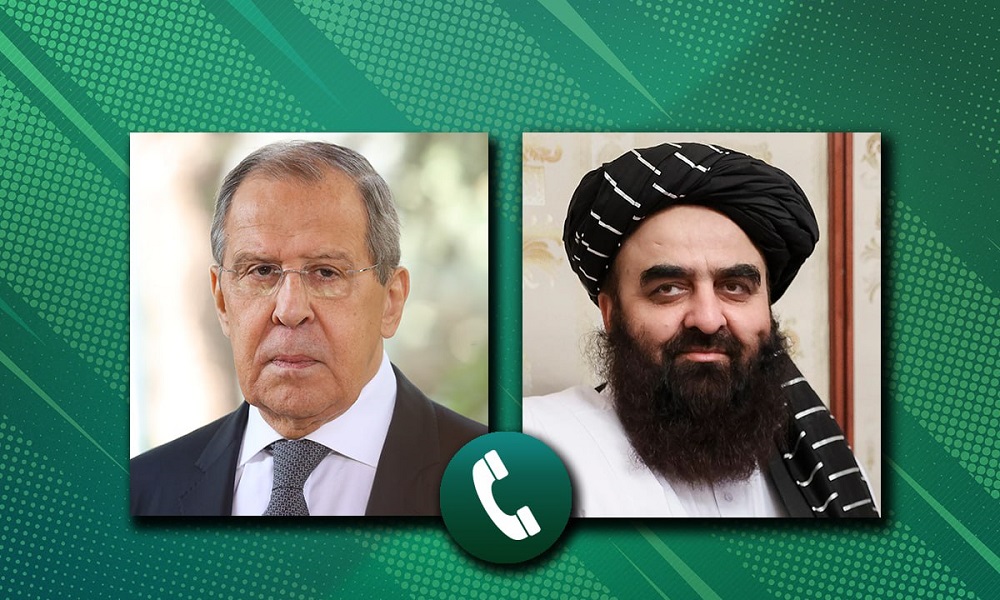
Sergey Lavrov, Russia’s foreign minister, said during a telephone conversation with Amir Khan Muttaqi, the foreign minister of the Islamic Emirate, that differences between Kabul and Islamabad should be resolved through political and diplomatic means.
According to a statement from the Russian Foreign Ministry, the two sides also discussed the prospects for reducing military and political tensions in relations between Afghanistan and Pakistan.
During the call, the Russian foreign minister also discussed the regional situation, including the negative and destabilizing consequences of the recent attacks on Iran.
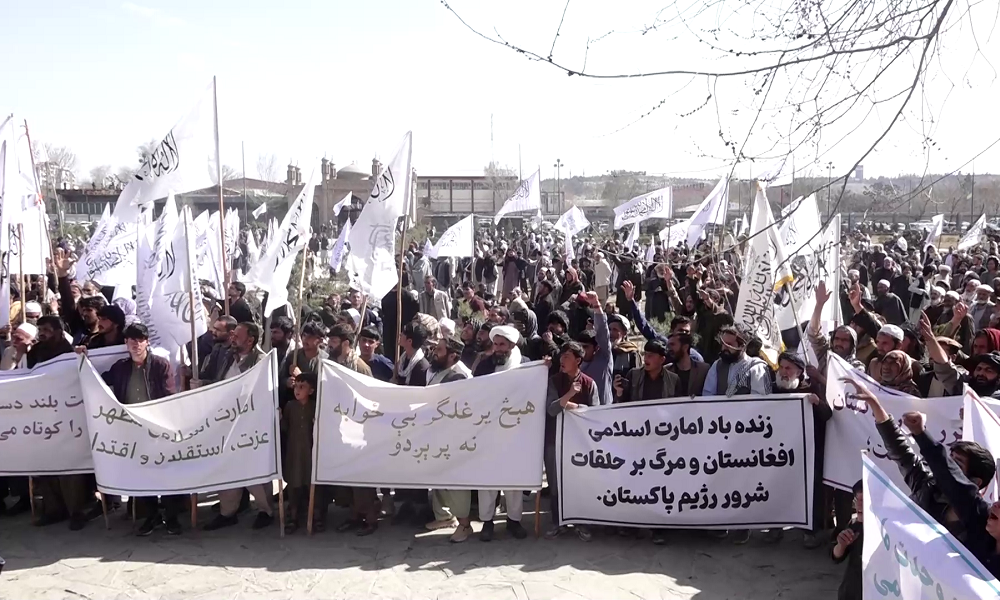
On the ninth day of continued airstrikes by the Pakistani military regime on parts of Afghanistan, hundreds of residents of Kabul gathered at Eidgah Mosque to condemn the attacks and the killing of civilians.
These protests were also held on Friday in several other provinces against the ongoing Pakistani airstrikes.
The protest gatherings, in response to what is perceived as a violation of Afghanistan’s national sovereignty, carried messages condemning the attacks and supporting the legitimate defense of the Islamic Emirate forces.
The organizers stated that the people of Afghanistan are united against any form of aggression and will defend the country’s territorial integrity alongside the security forces.
Protesters also called on the people of Pakistan not to remain silent about their government’s attacks on Afghanistan and to prevent further assaults by condemning them.
Participants expressed support for retaliatory actions by the Islamic Emirate forces and emphasized that they will stand alongside the country’s military if necessary.
One of the organizers of the march said, “We call on the international community and Islamic countries to stop Pakistan’s military aggression.”
Another organizer stated, “Afghans have never bowed to anyone in history and have defeated superpowers.”
Meanwhile, participants, chanting slogans such as “Death to Pakistan” and “Long live the legitimate defense of the Islamic Emirate,” urged the international community to take a stance against what they call violations of Afghanistan’s sovereignty.
A participant in Kabul emphasized, “We will not allow anyone to trespass on our land.”
This protest in Kabul sends a clear message to Pakistan: the unity of the Afghan people and their joint defense alongside the security forces of the country’s territorial integrity against the Pakistani military regime.
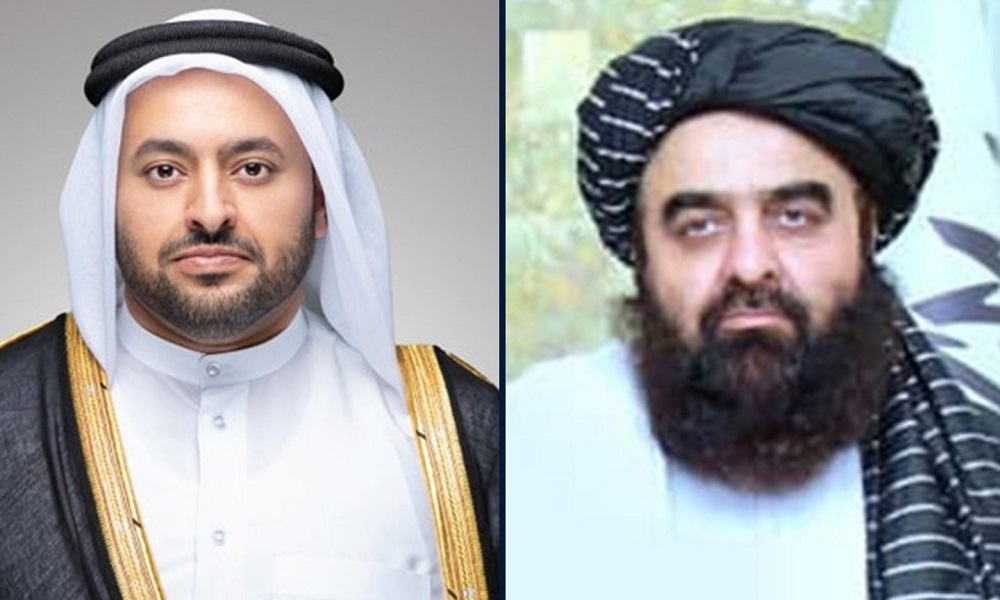
Amir Khan Muttaqi, Foreign Minister of the Islamic Emirate of Afghanistan, said in a telephone conversation with Mohammed bin Abdulaziz Al-Khulaifi, Qatar’s Minister of State for Foreign Affairs, that the spread of war to Gulf countries is condemnable and must be stopped.
According to a statement from the Ministry of Foreign Affairs, Muttaqi emphasized that the Islamic Emirate considers respect for national sovereignty, national security and the territorial integrity of countries to be an important principle, and prefers diplomacy to resolve problems instead of escalating violence.
Qatar’s Minister of State for Foreign Affairs said the region is going through difficult times, adding that Iran has launched ballistic missiles and unmanned aerial vehicles toward Qatar, most of which were intercepted.
He stated that Qatar is a land of peace and has always emphasized the peaceful resolution of conflicts around the world.
During the telephone conversation, the two sides also discussed what they described as the continuation of Pakistan’s military regime’s aggressions against Afghanistan.


Tawsia: Impact of regional crisis on Afghan projects discussed

Russian foreign minister urges diplomatic solution to Kabul–Islamabad tensions

Afghans rally across provinces to condemn ongoing Pakistani airstrikes

Spread of war to Gulf nations condemnable, must be stopped: IEA FM

UN reports 185 civilian casualties in Afghanistan amid Pakistan clashes

Pakistani military jet downed in Afghanistan’s Jalalabad, pilot captured alive

Afghan Air Force conducts airstrikes in Islamabad, other cities

IEA releases three Pakistani soldiers to mark Ramadan

Afghanistan’s Chief of Armed Forces underscores readiness and equipment for national defense

Afghanistan welcomes investment and technology partnerships with India
Tawsia: Impact of regional crisis on Afghan projects discussed

Saar: Sixth day of US–Israel war with Iran reviewed

Tahawol: Discussion on ongoing US–Israel war with Iran

Saar: Turkiye’s efforts to revive ceasefire between Kabul-Islamabad

Tahawol: Discussion on ongoing conflicts between Afghanistan and Pakistan
-

 Latest News5 days ago
Afghan air force strikes key Pakistani military installations in retaliatory operation
-
 Regional5 days ago
Middle East conflict intensifies; UK base in Cyprus targeted
-

 Regional5 days ago
Ayatollah’s wife dies from injuries sustained in airstrike on Tehran residence
-
 Latest News3 days ago
Amir Khan Muttaqi, Zhao Xing discuss regional security and violations of Afghan territory
-
 Latest News4 days ago
UNAMA calls for immediate halt to Afghanistan–Pakistan cashes
-

 International Sports4 days ago
AFC postpones Champions League matches amid escalating Middle East tensions
-

 Business5 days ago
Afghanistan records 33% rise in railway cargo transport
-
 Regional4 days ago
US Embassy, Consulates in Pakistan suspend visa services over security concerns