
Latest News
Afghanistan Deemed Most Insecure Place for Female Journalists

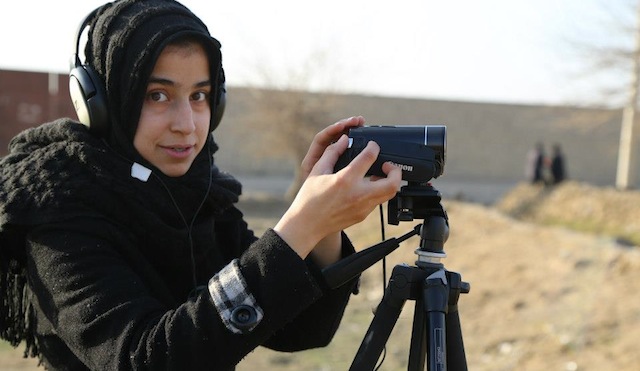
 Reporters Without Borders- Reporters Sans Frontières (RSF) has called Afghanistan the most insecure place for female journalists; Urging the Afghan government to provide better and secure conditions for journalists in the country.
“Violence against journalists must be ended. The first priority should be securing the environment for journalists,” said Reza Moeni, representative of RSF from Iran.
Farida Nikzad, representative of women journalists in South Asia said, “The problems facing journalists in the current geography have made Afghanistan the most dangerous country for female journalists.”
The issue of journalists security and tracking cases are the main factors that the government wants to have more focus on them.
“Currently, the war is ongoing in more than 15 parts of the country, and Afghan journalists are in a bad and difficult situation,” said Shah Hussain Murtazawi, President’s deputy spokesman.
Sidiq Sidiqi, spokesman of the interior ministry also said, “The issue of journalists security and tracking violence cases against journalists will be the priority of this ministry from now on.”
While Afghan journalists have made great strides in establishing media outlets and providing Afghans with comprehensive coverage of local and national events in recent years, there are still many challenges being faced by local and foreign journalists alike, namely, harassment, threats and lack of support from government authorities, reported by CJEF .
According to a female journalist who heads a radio station in Balkh province, being a female journalist is particularly challenging. They face sexual harassment and threats from officials, strangers and sometimes even family members.
Cultural constraints on women in Afghanistan often restrict them to work inside the office, instead of venturing out to do field work. In many places in Afghanistan, the idea of women undertaking public roles and working is considered taboo.
Additionally, there is pressure on women working in the media from family elders to quit their jobs in order to avoid wider repercussions for the entire family, or because they view the career as unseemly. Lack of training and resources for women in the media is also a serious issue.
In September 2014, Palwasha Tokhi Meranzai, a female Afghan journalist, was killed inside her home by an unknown assailant.
She had received a death threat relating to her reporting about a month before her murder; despite evidence that the motive was tied to her profession, Afghan security services persist in treating it as a robbery.
Since early 2013, press freedom organizations have noted a decrease in the number of women currently working as journalists in Afghanistan due to the culture of fear created by religious militants such as the Taliban and related organizations.


The Supreme Leader of the Islamic Emirate of Afghanistan (IEA), Sheikh Hibatullah Akhundzada, has said that the general amnesty announced following the Islamic Emirate’s return to power in 2021 was aimed at preventing revenge and helping restore security and stability across the country.
According to IEA deputy spokesman Hamdullah Fitrat, Akhundzada made the remarks during a meeting in Kandahar with governors, heads of Ulema councils, appellate court chiefs, tribal elders, and religious scholars from nine provinces in northeastern and northwestern Afghanistan.
Addressing the gathering, Akhundzada said the Islamic Emirate had instructed its fighters not to seek retribution against former government officials, security personnel, or others associated with the previous administration.
“We prevented the Mujahideen from taking revenge and prohibited them from doing so,” he said. “We told them to lay down their weapons; we would not kill them and would not hold them accountable. They laid down their weapons, and we granted them amnesty.”
The general amnesty was announced shortly after the Islamic Emirate took control of Afghanistan in August 2021, ending two decades of conflict between the former Western-backed government and the IEA. The move was widely presented by the authorities as an effort to encourage reconciliation and prevent further bloodshed during the transition of power.
Akhundzada said that after years of war and suffering, Afghans should be encouraged to forgive one another and move beyond longstanding grievances. He urged religious leaders and community elders to promote reconciliation and help prevent old disputes from being passed on to future generations.
He added that lasting peace requires communities to reject cycles of revenge and hostility, warning that unresolved conflicts could continue to fuel divisions if left unaddressed.
The meeting was also attended by officials from the Kandahar Ulema Council, the Supreme Court, the Central Darul Ifta, the Religious Publications Evaluation Department, and a number of teachers and madrasa administrators.
Latest News
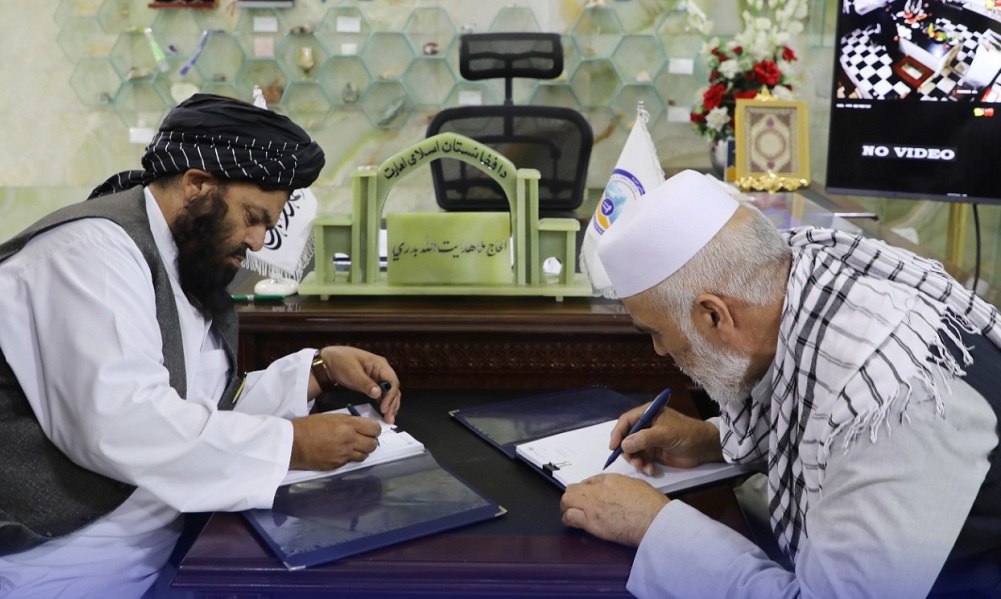
Afghanistan signs $20 million contract for salt mining in Herat
According to the ministry, the project covers an area of 9.7 square kilometers and involves an investment of approximately $20.045 million. The contract has been awarded for a period of 15 years.
Latest News
Belarusian defense minister warns Afghanistan-Pakistan tensions could fuel extremism in CSTO states
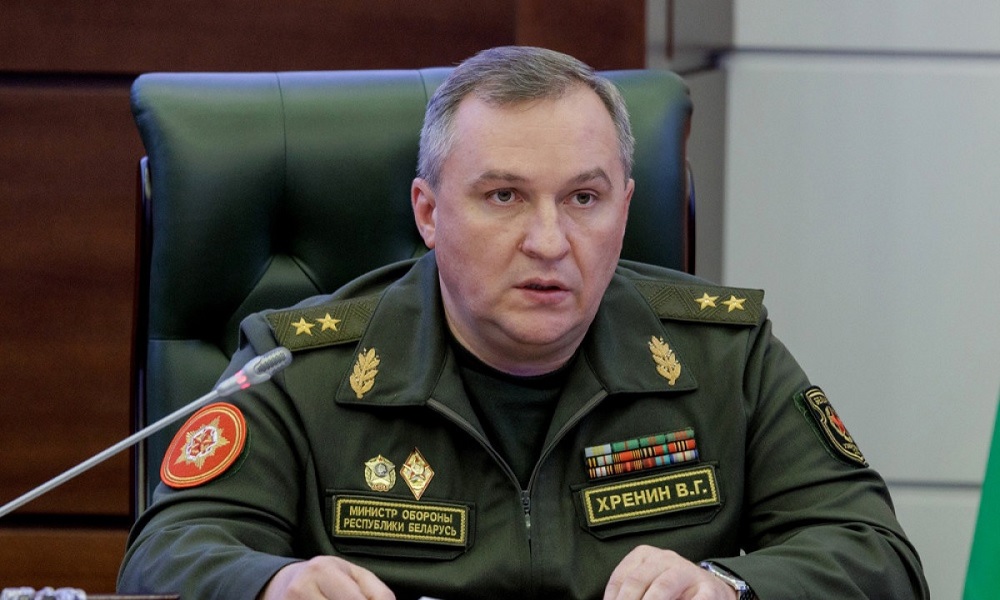
Belarusian Defense Minister Viktor Khrenin has warned that the conflict between Afghanistan and Pakistan could trigger a humanitarian crisis and create conditions for the spread of extremist ideologies and terrorist groups into member states of the Collective Security Treaty Organization (CSTO).
Speaking at a meeting of the CSTO Defence Ministers Council in Moscow, Khrenin said the security situation within the organization’s area of responsibility had not improved since last year, citing emerging threats in Central Asia and developments in Iran.
Khrenin called on CSTO countries to increase participation in joint military training activities and expand cooperation with other states and organizations that share the bloc’s security principles.
The Collective Security Treaty Organization (CSTO) is a Russia-led military alliance established in 2002 that brings together Russia, Belarus, Kazakhstan, Kyrgyzstan, Tajikistan and Armenia.
Regional countries including Russia have repeatedly raised concerns about security threat from Afghanistan.
The Islamic Emirate, however, has dismissed the concern reiterating that it will not allow Afghanistan’s soil to be used against other countries.


Tahawol: Discussion on fear of internal disputes in Iran

IEA leader says General Amnesty helped bring security and stability to Afghanistan

Afghanistan highlights strategic connectivity role at Termez Dialogue

Afghanistan signs $20 million contract for salt mining in Herat

Kohli ruled out of Afghanistan ODI series with hamstring injury

New Afghanistan-China transport corridor launched via Turkmenistan

Afghanistan signs $46 million deal to develop standard laboratory complexes

Large blast near Beit Shemesh part of pre-planned test: Israeli defense firm

Trump returns from China with stability but little progress

Afghanistan announce squad for India series
Tahawol: Discussion on fear of internal disputes in Iran

Tahawol: Welcoming Qatar’s cooperation with Afghanistan discussed

Saar: Former President’s strong criticism of Pakistan’s policies discussed

Tahawol: China’s efforts to host next round of Urumqi talks

Saar: Upcoming UNSC meeting on Afghanistan situation discussed
-

 Sport5 days ago
Afghanistan to play in Diamond Jubilee Tournament opener against Maldives
-
 Latest News3 days ago
Russian business official proposes visa-free travel between Russia and Afghanistan
-

 International Sports4 days ago
EMF EURO 2026 heads toward decisive group-stage finale in Bratislava
-

 Sport5 days ago
All eyes on Ahmedabad as RCB face Gujarat Titans in IPL Final
-
 Business5 days ago
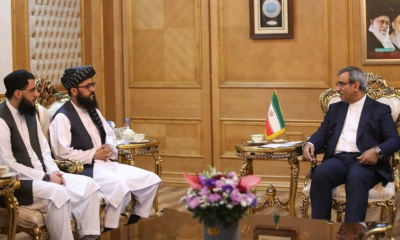
Iran’s Khorasan Razavi governor calls for greater economic cooperation with Afghanistan
-
 Latest News3 days ago
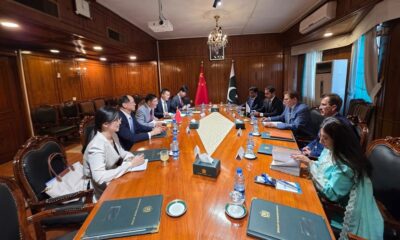
China and Pakistan’s special envoys for Afghanistan discuss Urumqi Process
-

 Sport3 days ago
Afghanistan edge Maldives 1-0 in four-nation tournament opener
-

 Sport3 days ago
Six Afghan cricketers selected for 2026 Lanka Premier League